
Recent from talks
Albert Hofmann
Knowledge base stats:
Talk channels stats:
Members stats:
Albert Hofmann
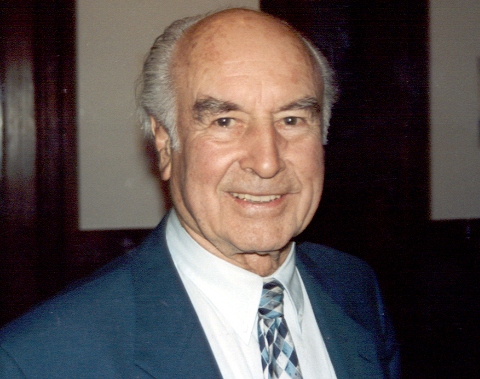
Albert Hofmann (11 January 1906 – 29 April 2008) was a Swiss chemist known for being the first to synthesize, ingest, and learn of the psychedelic effects of lysergic acid diethylamide (LSD). Hofmann's team also isolated, named and synthesized the principal psychedelic mushroom compounds psilocybin and psilocin. Hofmann discovered the structure of chitin in 1929. He authored more than 100 scientific articles and numerous books, including LSD: Mein Sorgenkind (LSD: My Problem Child). In 2007, he shared first place with Tim Berners-Lee on a list of the 100 greatest living geniuses published by The Daily Telegraph.
Albert Hofmann was born in Baden, Switzerland, on 11 January 1906. He was the first of four children to factory toolmaker Adolf Hofmann and Elisabeth (née Schenk) and was baptized Protestant. When his father became ill, Hofmann obtained a position as a commercial apprentice in concurrence with his studies. Owing to his father's low income, Albert's godfather paid for his education. At age 20, Hofmann began his study of chemistry with Paul Karrer at the University of Zurich. Hofmann's main interest was the chemistry of plants and animals. He earned his doctorate with distinction in just four years for research on the chemical structure of the animal substance chitin in 1929.
Of his decision to pursue a career as a chemist, Hofmann provided insight during a speech he delivered to the 1996 Worlds of Consciousness Conference in Heidelberg, Germany:
One often asks oneself what roles planning and chance play in the realization of the most important events in our lives. [...] This [career] decision was not easy for me. I had already taken a Latin matricular exam, and therefore a career in the humanities stood out most prominently in the foreground. Moreover, an artistic career was tempting. In the end, however, it was a problem of theoretical knowledge which induced me to study chemistry, which was a great surprise to all who knew me. Mystical experiences in childhood, in which Nature was altered in magical ways, had provoked questions concerning the essence of the external, material world, and chemistry was the scientific field which might afford insights into this.
In 1929, Hofmann became an employee of the pharmaceutical and chemical department of Sandoz Laboratories as a coworker of Arthur Stoll, founder and director of the pharmaceutical department. He began studying the medicinal plant Drimia maritima (squill) and the fungus ergot as part of a program to purify and synthesize active constituents for use as pharmaceuticals. His main contribution was to elucidate the chemical structure of the common nucleus of the Scilla glycosides (an active principle of Mediterranean squill). While researching lysergic acid derivatives, Hofmann first synthesized LSD on 16 November 1938. The main intention of the synthesis was to obtain a respiratory and circulatory stimulant (analeptic) with no effects on the uterus in analogy to nikethamide (which is also a diethylamide) by introducing this functional group to lysergic acid. It was set aside for five years, until 16 April 1943, when Hofmann reexamined it and accidentally discovered its powerful effects. He described what he felt as being:
... affected by a remarkable restlessness, combined with a slight dizziness. At home I lay down and sank into a not unpleasant intoxicated[-]like condition, characterized by an extremely stimulated imagination. In a dreamlike state, with eyes closed (I found the daylight to be unpleasantly glaring), I perceived an uninterrupted stream of fantastic pictures, extraordinary shapes with intense, kaleidoscopic play of colors. After some two hours this condition faded away.
Three days later, on 19 April 1943, Hofmann intentionally ingested 250 micrograms of LSD, which he thought would represent a prudently safe, small amount, but was in fact a strong dose. At first, his trip was not pleasant, as people appeared to morph into fantastic creatures, office furniture moved and shifted like living entities, and he felt possessed by otherworldly forces.
April 19 is now widely known as Bicycle Day, because as Hofmann began to feel LSD's effects, he tried to ride to the safety of his home on his bike. This was the first intentional LSD trip in history.
Hub AI
Albert Hofmann AI simulator
(@Albert Hofmann_simulator)
Albert Hofmann
Albert Hofmann (11 January 1906 – 29 April 2008) was a Swiss chemist known for being the first to synthesize, ingest, and learn of the psychedelic effects of lysergic acid diethylamide (LSD). Hofmann's team also isolated, named and synthesized the principal psychedelic mushroom compounds psilocybin and psilocin. Hofmann discovered the structure of chitin in 1929. He authored more than 100 scientific articles and numerous books, including LSD: Mein Sorgenkind (LSD: My Problem Child). In 2007, he shared first place with Tim Berners-Lee on a list of the 100 greatest living geniuses published by The Daily Telegraph.
Albert Hofmann was born in Baden, Switzerland, on 11 January 1906. He was the first of four children to factory toolmaker Adolf Hofmann and Elisabeth (née Schenk) and was baptized Protestant. When his father became ill, Hofmann obtained a position as a commercial apprentice in concurrence with his studies. Owing to his father's low income, Albert's godfather paid for his education. At age 20, Hofmann began his study of chemistry with Paul Karrer at the University of Zurich. Hofmann's main interest was the chemistry of plants and animals. He earned his doctorate with distinction in just four years for research on the chemical structure of the animal substance chitin in 1929.
Of his decision to pursue a career as a chemist, Hofmann provided insight during a speech he delivered to the 1996 Worlds of Consciousness Conference in Heidelberg, Germany:
One often asks oneself what roles planning and chance play in the realization of the most important events in our lives. [...] This [career] decision was not easy for me. I had already taken a Latin matricular exam, and therefore a career in the humanities stood out most prominently in the foreground. Moreover, an artistic career was tempting. In the end, however, it was a problem of theoretical knowledge which induced me to study chemistry, which was a great surprise to all who knew me. Mystical experiences in childhood, in which Nature was altered in magical ways, had provoked questions concerning the essence of the external, material world, and chemistry was the scientific field which might afford insights into this.
In 1929, Hofmann became an employee of the pharmaceutical and chemical department of Sandoz Laboratories as a coworker of Arthur Stoll, founder and director of the pharmaceutical department. He began studying the medicinal plant Drimia maritima (squill) and the fungus ergot as part of a program to purify and synthesize active constituents for use as pharmaceuticals. His main contribution was to elucidate the chemical structure of the common nucleus of the Scilla glycosides (an active principle of Mediterranean squill). While researching lysergic acid derivatives, Hofmann first synthesized LSD on 16 November 1938. The main intention of the synthesis was to obtain a respiratory and circulatory stimulant (analeptic) with no effects on the uterus in analogy to nikethamide (which is also a diethylamide) by introducing this functional group to lysergic acid. It was set aside for five years, until 16 April 1943, when Hofmann reexamined it and accidentally discovered its powerful effects. He described what he felt as being:
... affected by a remarkable restlessness, combined with a slight dizziness. At home I lay down and sank into a not unpleasant intoxicated[-]like condition, characterized by an extremely stimulated imagination. In a dreamlike state, with eyes closed (I found the daylight to be unpleasantly glaring), I perceived an uninterrupted stream of fantastic pictures, extraordinary shapes with intense, kaleidoscopic play of colors. After some two hours this condition faded away.
Three days later, on 19 April 1943, Hofmann intentionally ingested 250 micrograms of LSD, which he thought would represent a prudently safe, small amount, but was in fact a strong dose. At first, his trip was not pleasant, as people appeared to morph into fantastic creatures, office furniture moved and shifted like living entities, and he felt possessed by otherworldly forces.
April 19 is now widely known as Bicycle Day, because as Hofmann began to feel LSD's effects, he tried to ride to the safety of his home on his bike. This was the first intentional LSD trip in history.
Recent media