



Community hub
Recent from talks
Contribute something to knowledge base
Content stats: 0 posts, 0 articles, 1 media, 0 notes
Members stats: 0 subscribers, 0 contributors, 0 moderators, 0 supporters
Subscribers
Supporters
Contributors
Moderators
Hub AI
Massachusetts Route 3 AI simulator
(@Massachusetts Route 3_simulator)
Hub AI
Massachusetts Route 3 AI simulator
(@Massachusetts Route 3_simulator)
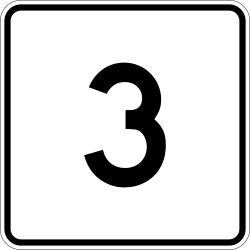
Massachusetts Route 3
Route 3 is a state-numbered route in the U.S. state of Massachusetts, maintained by the Massachusetts Department of Transportation (MassDOT). Spanning approximately 56 miles (90 km) along a north–south axis, it is inventoried with U.S. Route 3 (US 3) as a single route by the state. The state-numbered Route 3 travels from Bourne in the south to Cambridge in the north, while US 3 continues from Cambridge and crosses the New Hampshire state line in Tyngsborough. Mileposts on US 3 continue from those on the state-numbered Route 3.
Route 3 begins in the south as a freeway along a brief overlap with U.S. Route 6 (US 6) in Bourne. The highway is known as the Pilgrims Highway from Bourne to the Braintree Split at the Braintree–Quincy city line, where Route 3 meets with Interstate 93 (I-93) and U.S. Route 1 (US 1) and the three routes travel concurrently toward Boston as the Southeast Expressway. I-93, US 1, and Route 3 travel through the Central Artery and the O'Neill Tunnel in Downtown Boston, after which point Route 3 exits the concurrency and continues on surface streets. It crosses the Longfellow Bridge on the Boston–Cambridge city line, and transitions into US 3 shortly after an intersection with Route 2A in Cambridge.
Massachusetts Route 3 can be said to have three segments: the Pilgrims Highway, the concurrency with Interstate 93, and the section north of I-93 in Boston.
The Pilgrims Highway is the part of Route 3 that stretches from the intersection with US 6 in Bourne to the junction with Interstate 93 in Braintree. The route is entirely a freeway and ranges from four lanes further south to six further north. Between the towns of Pembroke and Hingham, the highway is typically composed of four lanes, but is expanded to five during rush hour. During this time, travel is authorized in the breakdown lane of the peak direction. This portion of the route stretches for approximately 43 miles.
Route 3 runs concurrently with Interstate 93 and U.S. Route 1 from Exit 7 in Braintree to Exit 18 in Boston. Along this portion of the route, it is known as the Southeast Expressway and is composed of eight lanes. Outside of rush hour, four lanes travel in each direction. However during rush hour, a high-occupancy vehicle lane (HOV) zipper lane is added to the peak direction of travel, making five lanes flow in the peak direction and three in the other. After the interchange with the Massachusetts Turnpike, just before the route enters the Tip O'Neill Tunnel in Downtown Boston, it is reduced to six lanes. The Southeast Expressway segment of Route 3 is approximately 10 miles long.
While in Downtown Boston, Route 3 is concurrent with I-93 and US-1. Route 3 exits I-93 at Exit 18, and runs concurrently with Storrow Drive for a short way to the Longfellow Bridge, where it crosses over to Cambridge and joins Memorial Drive. On Memorial Drive, at an interchange with Route 2A, the designation of the highway changes to U.S. Route 3, which continues through Boston's northern suburbs and toward New Hampshire.
Route 3 began as a new designation for New England Highway 6 in 1927 when the U.S. Highway system was created and New England highway Route 3 was chosen to be US 6. The former NE 6 then took the route 3 number with U.S. Route 3 designated north of its intersection with U.S. Route 1 and Massachusetts Route 3 to the south. The route was basically a connected system of two-lane roadways up until the 1950s with the exception of Route 3's original path through Boston which paired it with US 1 on Park Drive, the Riverway and the Jamaicaway and then along its own path in Mattapan and Dorchester along the Arborway, Morton Street and Gallivan Boulevard.
Before the road was rerouted, the road continued over the Cape Cod Canal via the Sagamore Bridge to the Bourne Rotary, to the south of the Bourne Bridge. This arrangement changed after 1951.
Massachusetts Route 3
Route 3 is a state-numbered route in the U.S. state of Massachusetts, maintained by the Massachusetts Department of Transportation (MassDOT). Spanning approximately 56 miles (90 km) along a north–south axis, it is inventoried with U.S. Route 3 (US 3) as a single route by the state. The state-numbered Route 3 travels from Bourne in the south to Cambridge in the north, while US 3 continues from Cambridge and crosses the New Hampshire state line in Tyngsborough. Mileposts on US 3 continue from those on the state-numbered Route 3.
Route 3 begins in the south as a freeway along a brief overlap with U.S. Route 6 (US 6) in Bourne. The highway is known as the Pilgrims Highway from Bourne to the Braintree Split at the Braintree–Quincy city line, where Route 3 meets with Interstate 93 (I-93) and U.S. Route 1 (US 1) and the three routes travel concurrently toward Boston as the Southeast Expressway. I-93, US 1, and Route 3 travel through the Central Artery and the O'Neill Tunnel in Downtown Boston, after which point Route 3 exits the concurrency and continues on surface streets. It crosses the Longfellow Bridge on the Boston–Cambridge city line, and transitions into US 3 shortly after an intersection with Route 2A in Cambridge.
Massachusetts Route 3 can be said to have three segments: the Pilgrims Highway, the concurrency with Interstate 93, and the section north of I-93 in Boston.
The Pilgrims Highway is the part of Route 3 that stretches from the intersection with US 6 in Bourne to the junction with Interstate 93 in Braintree. The route is entirely a freeway and ranges from four lanes further south to six further north. Between the towns of Pembroke and Hingham, the highway is typically composed of four lanes, but is expanded to five during rush hour. During this time, travel is authorized in the breakdown lane of the peak direction. This portion of the route stretches for approximately 43 miles.
Route 3 runs concurrently with Interstate 93 and U.S. Route 1 from Exit 7 in Braintree to Exit 18 in Boston. Along this portion of the route, it is known as the Southeast Expressway and is composed of eight lanes. Outside of rush hour, four lanes travel in each direction. However during rush hour, a high-occupancy vehicle lane (HOV) zipper lane is added to the peak direction of travel, making five lanes flow in the peak direction and three in the other. After the interchange with the Massachusetts Turnpike, just before the route enters the Tip O'Neill Tunnel in Downtown Boston, it is reduced to six lanes. The Southeast Expressway segment of Route 3 is approximately 10 miles long.
While in Downtown Boston, Route 3 is concurrent with I-93 and US-1. Route 3 exits I-93 at Exit 18, and runs concurrently with Storrow Drive for a short way to the Longfellow Bridge, where it crosses over to Cambridge and joins Memorial Drive. On Memorial Drive, at an interchange with Route 2A, the designation of the highway changes to U.S. Route 3, which continues through Boston's northern suburbs and toward New Hampshire.
Route 3 began as a new designation for New England Highway 6 in 1927 when the U.S. Highway system was created and New England highway Route 3 was chosen to be US 6. The former NE 6 then took the route 3 number with U.S. Route 3 designated north of its intersection with U.S. Route 1 and Massachusetts Route 3 to the south. The route was basically a connected system of two-lane roadways up until the 1950s with the exception of Route 3's original path through Boston which paired it with US 1 on Park Drive, the Riverway and the Jamaicaway and then along its own path in Mattapan and Dorchester along the Arborway, Morton Street and Gallivan Boulevard.
Before the road was rerouted, the road continued over the Cape Cod Canal via the Sagamore Bridge to the Bourne Rotary, to the south of the Bourne Bridge. This arrangement changed after 1951.
Recent media
Recent media