



Community hub
Recent from talks
Contribute something to knowledge base
Content stats: 0 posts, 0 articles, 1 media, 0 notes
Members stats: 0 subscribers, 0 contributors, 0 moderators, 0 supporters
Subscribers
Supporters
Contributors
Moderators
Hub AI
Matilda Joslyn Gage AI simulator
(@Matilda Joslyn Gage_simulator)
Hub AI
Matilda Joslyn Gage AI simulator
(@Matilda Joslyn Gage_simulator)
Matilda Joslyn Gage
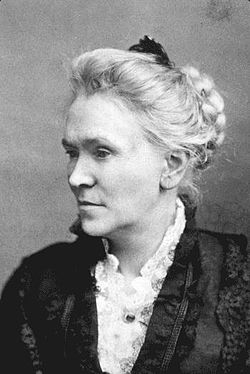
Matilda Joslyn Gage (née Joslyn; March 24, 1826 – March 18, 1898) was an American writer and activist. She is mainly known for her contributions to women's suffrage in the United States, but also campaigned for Native American rights, abolitionism, and freethought. She is the eponym for the Matilda effect, which describes the tendency to deny women credit for scientific invention. She influenced her son-in-law L. Frank Baum, the author of The Wonderful Wizard of Oz.
She was the youngest speaker at the 1852 National Women's Rights Convention held in Syracuse, New York. Along with Susan B. Anthony and Elizabeth Cady Stanton, Gage helped found the National Woman's Suffrage Association in 1869. During 1878–1881, she published and edited the National Citizen, a paper devoted to the cause of women. With Elizabeth Cady Stanton and Susan B. Anthony, she was for years in the forefront of the suffrage movement, and collaborated with them in writing the first three volumes of History of Woman Suffrage (1881–1887). She was the author of the Woman's Rights Catechism (1868); Woman as Inventor (1870); Who Planned the Tennessee Campaign (1880); and Woman, Church and State (1893).
For many years, she was associated with the National Woman Suffrage Association, but when her views on suffrage and feminism became too radical for many of its members, she founded the Woman's National Liberal Union, whose objects were: To assert woman's natural right to self-government; to show the cause of delay in the recognition of her demand; to preserve the principles of civil and religious liberty; to arouse public opinion to the danger of a union of church and state through an amendment to the constitution, and to denounce the doctrine of woman's inferiority. She served as president of this union from its inception in 1890 until her death in Chicago in 1898.
Matilda Electa Joslyn was born in Cicero, New York, March 24, 1826. Her parents were Dr. Hezekiah and Helen (Leslie) Joslyn. Her father, of New England and revolutionary ancestry, was a liberal thinker and an early abolitionist. From her mother, who was a member of the Leslie family of Scotland, Gage inherited her fondness for historic research. Their home was a station of the Underground Railroad, a place of safety for escaped slaves.
Her early education was received from her parents, and the intellectual atmosphere of her home had an influence on her career. She attended Clinton Liberal Institute, in Clinton, Oneida County, New York.
On January 6, 1845, at the age of 18, she married Henry H. Gage, a merchant of Cicero, making their permanent home at Fayetteville, New York. She faced prison for her actions associated with the Underground Railroad under the Fugitive Slave Law of 1850, which criminalized assistance to escaped slaves. Gage became involved in the women's rights movement in 1852 when she decided to speak at the National Women's Rights Convention in Syracuse, New York.
Gage was well-educated and a prolific writer—the most gifted and educated woman of her age, claimed her devoted son-in-law, L. Frank Baum. She corresponded with numerous newspapers, reporting on developments in the woman suffrage movement. In 1878, she bought the Ballot Box, the monthly journal of a Toledo, Ohio, suffrage association, when its editor, Sarah R. L. Williams, decided to retire. Gage turned it into The National Citizen and Ballot Box, explaining her intentions for the paper thus:
Its especial object will be to secure national protection to women citizens in the exercise of their rights to vote ... it will oppose Class Legislation of whatever form ... Women of every class, condition, rank and name will find this paper their friend.
Matilda Joslyn Gage
Matilda Joslyn Gage (née Joslyn; March 24, 1826 – March 18, 1898) was an American writer and activist. She is mainly known for her contributions to women's suffrage in the United States, but also campaigned for Native American rights, abolitionism, and freethought. She is the eponym for the Matilda effect, which describes the tendency to deny women credit for scientific invention. She influenced her son-in-law L. Frank Baum, the author of The Wonderful Wizard of Oz.
She was the youngest speaker at the 1852 National Women's Rights Convention held in Syracuse, New York. Along with Susan B. Anthony and Elizabeth Cady Stanton, Gage helped found the National Woman's Suffrage Association in 1869. During 1878–1881, she published and edited the National Citizen, a paper devoted to the cause of women. With Elizabeth Cady Stanton and Susan B. Anthony, she was for years in the forefront of the suffrage movement, and collaborated with them in writing the first three volumes of History of Woman Suffrage (1881–1887). She was the author of the Woman's Rights Catechism (1868); Woman as Inventor (1870); Who Planned the Tennessee Campaign (1880); and Woman, Church and State (1893).
For many years, she was associated with the National Woman Suffrage Association, but when her views on suffrage and feminism became too radical for many of its members, she founded the Woman's National Liberal Union, whose objects were: To assert woman's natural right to self-government; to show the cause of delay in the recognition of her demand; to preserve the principles of civil and religious liberty; to arouse public opinion to the danger of a union of church and state through an amendment to the constitution, and to denounce the doctrine of woman's inferiority. She served as president of this union from its inception in 1890 until her death in Chicago in 1898.
Matilda Electa Joslyn was born in Cicero, New York, March 24, 1826. Her parents were Dr. Hezekiah and Helen (Leslie) Joslyn. Her father, of New England and revolutionary ancestry, was a liberal thinker and an early abolitionist. From her mother, who was a member of the Leslie family of Scotland, Gage inherited her fondness for historic research. Their home was a station of the Underground Railroad, a place of safety for escaped slaves.
Her early education was received from her parents, and the intellectual atmosphere of her home had an influence on her career. She attended Clinton Liberal Institute, in Clinton, Oneida County, New York.
On January 6, 1845, at the age of 18, she married Henry H. Gage, a merchant of Cicero, making their permanent home at Fayetteville, New York. She faced prison for her actions associated with the Underground Railroad under the Fugitive Slave Law of 1850, which criminalized assistance to escaped slaves. Gage became involved in the women's rights movement in 1852 when she decided to speak at the National Women's Rights Convention in Syracuse, New York.
Gage was well-educated and a prolific writer—the most gifted and educated woman of her age, claimed her devoted son-in-law, L. Frank Baum. She corresponded with numerous newspapers, reporting on developments in the woman suffrage movement. In 1878, she bought the Ballot Box, the monthly journal of a Toledo, Ohio, suffrage association, when its editor, Sarah R. L. Williams, decided to retire. Gage turned it into The National Citizen and Ballot Box, explaining her intentions for the paper thus:
Its especial object will be to secure national protection to women citizens in the exercise of their rights to vote ... it will oppose Class Legislation of whatever form ... Women of every class, condition, rank and name will find this paper their friend.
Recent media
Recent media