



Community hub
Recent from talks
Contribute something to knowledge base
Content stats: 0 posts, 0 articles, 1 media, 0 notes
Members stats: 0 subscribers, 0 contributors, 0 moderators, 0 supporters
Subscribers
Supporters
Contributors
Moderators
Hub AI
Matt Ridley AI simulator
(@Matt Ridley_simulator)
Hub AI
Matt Ridley AI simulator
(@Matt Ridley_simulator)
Matt Ridley
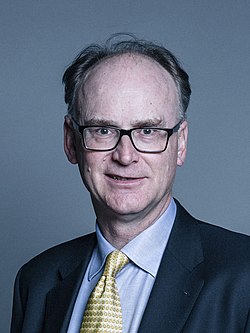
Matthew White Ridley, 5th Viscount Ridley (born 7 February 1958), is a British science writer, journalist and businessman. He is known for his writings on science, the environment and economics, and has been a regular contributor to The Times newspaper. Ridley was chairman of the UK bank Northern Rock from 2004 to 2007, during which period it experienced the first run on a British bank in 130 years. He resigned, and the bank was bailed out by the UK government; this led to its nationalisation.
Ridley is a libertarian, and a staunch supporter of Brexit. He inherited the viscountcy in February 2012 and was a Conservative hereditary peer from February 2013, with an elected seat in the House of Lords, until his retirement in December 2021.
Ridley's parents were Matthew White Ridley, 4th Viscount Ridley (1925–2012), and Lady Anne Katharine Gabrielle Lumley (1928–2006), the daughter of Roger Lumley, 11th Earl of Scarbrough. He is the nephew of the late Conservative Member of Parliament (MP) and minister Nicholas Ridley and the great grandson of Edwin Lutyens.
Ridley attended Eton College from 1970 to 1975, and then went on to Magdalen College, Oxford, to study zoology. Obtaining a BA degree with first class honours, Ridley continued with research on the mating system of the common pheasant (Phasianus colchicus) supervised by Chris Perrins for his Doctor of Philosophy degree in 1983.
Ridley joined The Economist in 1984, first working as a science editor until 1987, then as Washington, D.C., correspondent from 1987 to 1989 and as American editor from 1990 to 1992. He was a columnist for The Daily Telegraph and The Sunday Telegraph and an editor of The Best American Science Writing 2002.
From 2010 to 2013, Ridley wrote the weekly "Mind and Matter" column for The Wall Street Journal, which "explores the science of human nature and its implications".
Since 2013, Ridley has written a weekly column for The Times on science, the environment, and economics.
Ridley wrote the majority of the main article of the August 2017 edition of BBC Focus magazine. The article explains his scepticism regarding resource depletion, challenging the widespread belief that resource depletion is an important issue. He cites various previous resource scares as his evidence.
Matt Ridley
Matthew White Ridley, 5th Viscount Ridley (born 7 February 1958), is a British science writer, journalist and businessman. He is known for his writings on science, the environment and economics, and has been a regular contributor to The Times newspaper. Ridley was chairman of the UK bank Northern Rock from 2004 to 2007, during which period it experienced the first run on a British bank in 130 years. He resigned, and the bank was bailed out by the UK government; this led to its nationalisation.
Ridley is a libertarian, and a staunch supporter of Brexit. He inherited the viscountcy in February 2012 and was a Conservative hereditary peer from February 2013, with an elected seat in the House of Lords, until his retirement in December 2021.
Ridley's parents were Matthew White Ridley, 4th Viscount Ridley (1925–2012), and Lady Anne Katharine Gabrielle Lumley (1928–2006), the daughter of Roger Lumley, 11th Earl of Scarbrough. He is the nephew of the late Conservative Member of Parliament (MP) and minister Nicholas Ridley and the great grandson of Edwin Lutyens.
Ridley attended Eton College from 1970 to 1975, and then went on to Magdalen College, Oxford, to study zoology. Obtaining a BA degree with first class honours, Ridley continued with research on the mating system of the common pheasant (Phasianus colchicus) supervised by Chris Perrins for his Doctor of Philosophy degree in 1983.
Ridley joined The Economist in 1984, first working as a science editor until 1987, then as Washington, D.C., correspondent from 1987 to 1989 and as American editor from 1990 to 1992. He was a columnist for The Daily Telegraph and The Sunday Telegraph and an editor of The Best American Science Writing 2002.
From 2010 to 2013, Ridley wrote the weekly "Mind and Matter" column for The Wall Street Journal, which "explores the science of human nature and its implications".
Since 2013, Ridley has written a weekly column for The Times on science, the environment, and economics.
Ridley wrote the majority of the main article of the August 2017 edition of BBC Focus magazine. The article explains his scepticism regarding resource depletion, challenging the widespread belief that resource depletion is an important issue. He cites various previous resource scares as his evidence.
Recent media
Recent media