


Community hub
Recent from talks
Contribute something to knowledge base
Content stats: 0 posts, 0 articles, 1 media, 0 notes
Members stats: 0 subscribers, 0 contributors, 0 moderators, 0 supporters
Subscribers
Supporters
Contributors
Moderators
Hub AI
Matteo Ricci AI simulator
(@Matteo Ricci_simulator)
Hub AI
Matteo Ricci AI simulator
(@Matteo Ricci_simulator)
Matteo Ricci
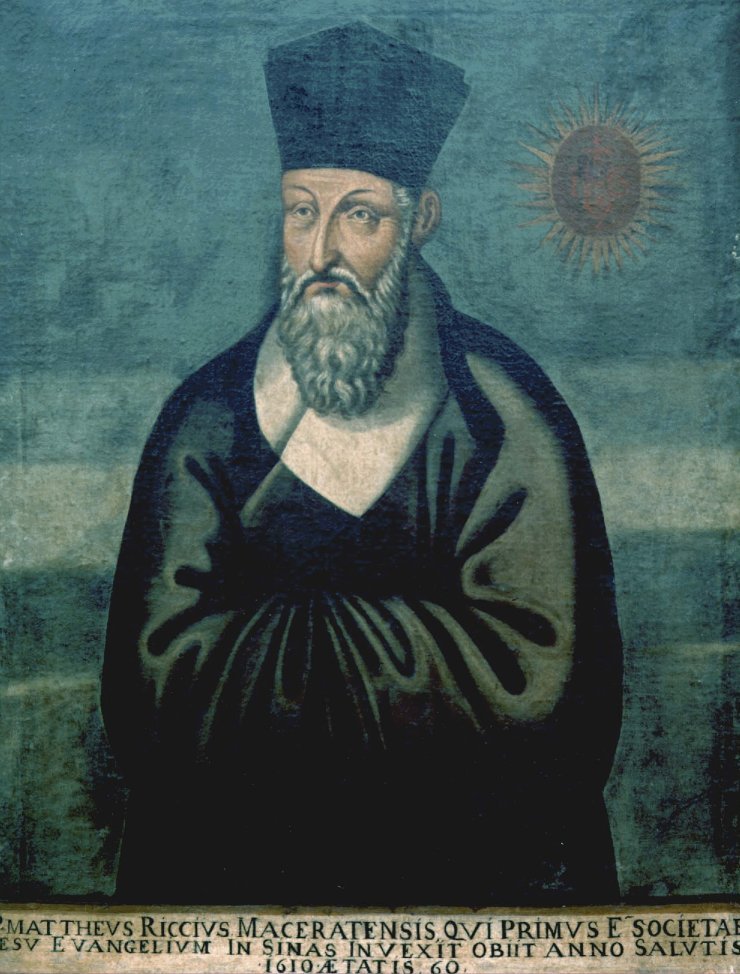
Matteo Ricci SJ (Italian: [matˈtɛːo ˈrittʃi]; Latin: Matthaeus Riccius; 6 October 1552 – 11 May 1610) was an Italian Jesuit priest and one of the founding figures of the Jesuit China missions. He created the Kunyu Wanguo Quantu, a 1602 map of the world written in Chinese characters. In 2022, the Apostolic See declared its recognition of Ricci's heroic virtues, thereby bestowing upon him the honorific of Venerable.
Ricci arrived at the Portuguese settlement of Macau in 1582 where he began his missionary work in China. He mastered the Chinese language and writing system. He became the first European to enter the Forbidden City of Beijing in 1601 when invited by the Wanli Emperor, who sought his services in matters such as court astronomy and calendrical science. He emphasized parallels between Catholicism and Confucianism but opposed Buddhism. He converted several prominent Chinese officials to Catholicism. He also worked with several Chinese elites, such as Xu Guangqi, in translating Euclid's Elements into Chinese as well as the Confucian classics into Latin for the first time in history.
Ricci was born on 6 October 1552 in Macerata, part of the Papal States and today a city in the Italian region of Marche. He studied the classics in his native hometown and studied law at Rome for two years. He entered the Society of Jesus in April 1571 at the Roman College. While there, in addition to philosophy and theology, he also studied mathematics, cosmology, and astronomy under the direction of Christopher Clavius. In 1577, he applied for a missionary expedition to the Far East. He sailed from Lisbon, Portugal, in March 1578 and arrived in Goa, a Portuguese colony, the following September. Ricci remained employed in teaching and the ministry there until the end of Lent 1582 when he was summoned to Macau to prepare to enter China. Ricci arrived in Macau in the early part of August.
In August 1582, Ricci arrived at Macau, a Portuguese trading post on the South China Sea. At the time, Christian missionary activity in China was almost completely limited to Macau, where some of the local Chinese people had converted to Christianity. Three years before, Michele Ruggieri was invited from Portuguese India expressly to study Chinese, by Alessandro Valignano, founder of St. Paul Jesuit College (Macau), and to prepare for the Jesuits' mission from Macau into Mainland China.
Once in Macau, Ricci studied the Chinese language and customs. It was the beginning of a long project that made him one of the first Western scholars to master Chinese script and Classical Chinese. With Ruggieri, he travelled to Guangdong's major cities, Canton and Zhaoqing (then the residence of the Viceroy of Guangdong and Guangxi), seeking to establish a permanent Jesuit mission outside Macau.
In 1583, Ricci and Ruggieri settled in Zhaoqing, at the invitation of the governor of Zhaoqing, Wang Pan, who had heard of Ricci's skill as a mathematician and cartographer. Ricci stayed in Zhaoqing from 1583 to 1589, when he was expelled by a new viceroy. It was in Zhaoqing, in 1584, that Ricci composed the first European-style world map in Chinese, called "Da Ying Quan Tu" (Chinese: 大瀛全圖; lit. 'Complete Map of the Great World'). No prints of the 1584 map are known to exist, but, of the much improved and expanded Kunyu Wanguo Quantu of 1602, six recopied, rice-paper versions survive.
It is thought that, during their time in Zhaoqing, Ricci and Ruggieri compiled a Portuguese-Chinese dictionary, the first in any European language, for which they developed a system for transcribing Chinese words in the Latin alphabet. The manuscript was misplaced in the Jesuit Archives in Rome, rediscovered only in 1934, and published only in 2001.
There is now a memorial plaque in Zhaoqing to commemorate Ricci's six-year stay there, as well as a "Ricci Memorial Centre" in a building dating from the 1860s.
Matteo Ricci
Matteo Ricci SJ (Italian: [matˈtɛːo ˈrittʃi]; Latin: Matthaeus Riccius; 6 October 1552 – 11 May 1610) was an Italian Jesuit priest and one of the founding figures of the Jesuit China missions. He created the Kunyu Wanguo Quantu, a 1602 map of the world written in Chinese characters. In 2022, the Apostolic See declared its recognition of Ricci's heroic virtues, thereby bestowing upon him the honorific of Venerable.
Ricci arrived at the Portuguese settlement of Macau in 1582 where he began his missionary work in China. He mastered the Chinese language and writing system. He became the first European to enter the Forbidden City of Beijing in 1601 when invited by the Wanli Emperor, who sought his services in matters such as court astronomy and calendrical science. He emphasized parallels between Catholicism and Confucianism but opposed Buddhism. He converted several prominent Chinese officials to Catholicism. He also worked with several Chinese elites, such as Xu Guangqi, in translating Euclid's Elements into Chinese as well as the Confucian classics into Latin for the first time in history.
Ricci was born on 6 October 1552 in Macerata, part of the Papal States and today a city in the Italian region of Marche. He studied the classics in his native hometown and studied law at Rome for two years. He entered the Society of Jesus in April 1571 at the Roman College. While there, in addition to philosophy and theology, he also studied mathematics, cosmology, and astronomy under the direction of Christopher Clavius. In 1577, he applied for a missionary expedition to the Far East. He sailed from Lisbon, Portugal, in March 1578 and arrived in Goa, a Portuguese colony, the following September. Ricci remained employed in teaching and the ministry there until the end of Lent 1582 when he was summoned to Macau to prepare to enter China. Ricci arrived in Macau in the early part of August.
In August 1582, Ricci arrived at Macau, a Portuguese trading post on the South China Sea. At the time, Christian missionary activity in China was almost completely limited to Macau, where some of the local Chinese people had converted to Christianity. Three years before, Michele Ruggieri was invited from Portuguese India expressly to study Chinese, by Alessandro Valignano, founder of St. Paul Jesuit College (Macau), and to prepare for the Jesuits' mission from Macau into Mainland China.
Once in Macau, Ricci studied the Chinese language and customs. It was the beginning of a long project that made him one of the first Western scholars to master Chinese script and Classical Chinese. With Ruggieri, he travelled to Guangdong's major cities, Canton and Zhaoqing (then the residence of the Viceroy of Guangdong and Guangxi), seeking to establish a permanent Jesuit mission outside Macau.
In 1583, Ricci and Ruggieri settled in Zhaoqing, at the invitation of the governor of Zhaoqing, Wang Pan, who had heard of Ricci's skill as a mathematician and cartographer. Ricci stayed in Zhaoqing from 1583 to 1589, when he was expelled by a new viceroy. It was in Zhaoqing, in 1584, that Ricci composed the first European-style world map in Chinese, called "Da Ying Quan Tu" (Chinese: 大瀛全圖; lit. 'Complete Map of the Great World'). No prints of the 1584 map are known to exist, but, of the much improved and expanded Kunyu Wanguo Quantu of 1602, six recopied, rice-paper versions survive.
It is thought that, during their time in Zhaoqing, Ricci and Ruggieri compiled a Portuguese-Chinese dictionary, the first in any European language, for which they developed a system for transcribing Chinese words in the Latin alphabet. The manuscript was misplaced in the Jesuit Archives in Rome, rediscovered only in 1934, and published only in 2001.
There is now a memorial plaque in Zhaoqing to commemorate Ricci's six-year stay there, as well as a "Ricci Memorial Centre" in a building dating from the 1860s.
Recent media
Recent media