


Community hub
Recent from talks
Contribute something to knowledge base
Content stats: 0 posts, 0 articles, 1 media, 0 notes
Members stats: 0 subscribers, 0 contributors, 0 moderators, 0 supporters
Subscribers
Supporters
Contributors
Moderators
Hub AI
Maurice, Prince of Orange AI simulator
(@Maurice, Prince of Orange_simulator)
Hub AI
Maurice, Prince of Orange AI simulator
(@Maurice, Prince of Orange_simulator)
Maurice, Prince of Orange
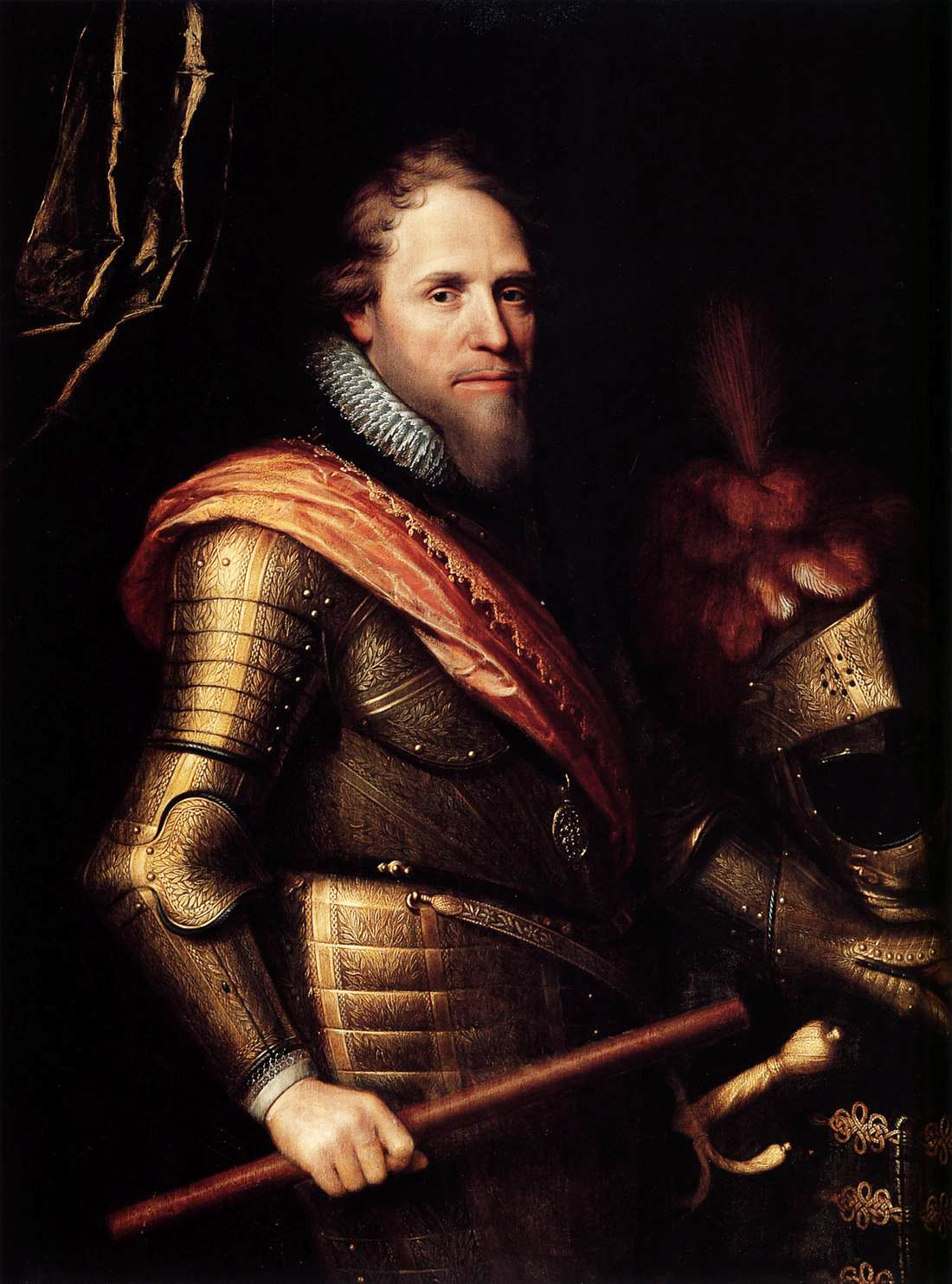
Maurice of Orange (Dutch: Maurits van Oranje; 14 November 1567 – 23 April 1625) was stadtholder of all the provinces of the Dutch Republic—except Friesland—from 1585 until his death. Prior to inheriting the title Prince of Orange from his elder half-brother, Philip William, in 1618, he was known as Maurice of Nassau.
Born in Dillenburg, Nassau, Maurice was educated at the Heidelberg University and the University of Leiden. He succeeded his father, William the Silent, as stadtholder of Holland and Zeeland in 1585, and later assumed the same position in Utrecht, Guelders, and Overijssel (1590), and Groningen (1620). As Captain-General and Admiral of the Union, Maurice reorganized the Dutch States Army, transforming the Dutch Revolt into a disciplined and effective military campaign.
Working alongside the Land's Advocate of Holland, Johan van Oldenbarnevelt, Maurice led a series of key victories that drove Spanish forces from much of the northern and eastern Netherlands. He gained wide recognition as one of the foremost military strategists of his time, particularly for his innovations in siege warfare and the development of a modern military drill system. He is widely credited with pioneering training methods that drew from classical principles outlined by Vegetius, forming the basis for early modern European armies.
During the Twelve Years' Truce (1609–1621), a theological and political conflict broke out within the Republic, culminating in a power struggle between Maurice and Oldenbarnevelt. The dispute ended with Oldenbarnevelt's arrest and execution by beheading in 1619, a controversial act that marked a shift in Maurice's political role. After the truce, his military campaigns saw little further success.
Maurice died in The Hague in 1625 without legitimate issue. He was succeeded by his half-brother, Frederick Henry. The island of Mauritius was named in his honor.
Maurice was the son of William the Silent and Anna of Saxony and was born at the castle of Dillenburg. He was named after his maternal grandfather, the Elector Maurice of Saxony, who was also a noted general.
Maurice never married but was the father of illegitimate children by Margaretha van Mechelen (including Willem of Nassau, Lord of the Lek, and Louis of Nassau, Lord of De Lek and Beverweerd) and Anna van de Kelder. He was raised in Dillenburg by his uncle Johan of Nassau ("Jan the Old"). Together with his cousin, Willem Lodewijk, he studied in Heidelberg and later in Leiden where he met Simon Stevin. The States of Holland and Zeeland paid for his studies, as their father had run into financial problems after spending his entire fortune in the early stages of the Dutch revolt.
Only 16 when his father was murdered in Delft in 1584, he soon was appointed to his father's office of stadtholder (Stadhouder). The monarchs of England and France had been requested to accept sovereignty but had refused. This had left Maurice as the only acceptable candidate for the position of Stadtholder. He became stadtholder of Holland and Zeeland in 1585, of Guelders, Overijssel and Utrecht in 1590 and of Groningen and Drenthe in 1620 (following the death of Willem Lodewijk, who had been stadtholder there and in Friesland).
Maurice, Prince of Orange
Maurice of Orange (Dutch: Maurits van Oranje; 14 November 1567 – 23 April 1625) was stadtholder of all the provinces of the Dutch Republic—except Friesland—from 1585 until his death. Prior to inheriting the title Prince of Orange from his elder half-brother, Philip William, in 1618, he was known as Maurice of Nassau.
Born in Dillenburg, Nassau, Maurice was educated at the Heidelberg University and the University of Leiden. He succeeded his father, William the Silent, as stadtholder of Holland and Zeeland in 1585, and later assumed the same position in Utrecht, Guelders, and Overijssel (1590), and Groningen (1620). As Captain-General and Admiral of the Union, Maurice reorganized the Dutch States Army, transforming the Dutch Revolt into a disciplined and effective military campaign.
Working alongside the Land's Advocate of Holland, Johan van Oldenbarnevelt, Maurice led a series of key victories that drove Spanish forces from much of the northern and eastern Netherlands. He gained wide recognition as one of the foremost military strategists of his time, particularly for his innovations in siege warfare and the development of a modern military drill system. He is widely credited with pioneering training methods that drew from classical principles outlined by Vegetius, forming the basis for early modern European armies.
During the Twelve Years' Truce (1609–1621), a theological and political conflict broke out within the Republic, culminating in a power struggle between Maurice and Oldenbarnevelt. The dispute ended with Oldenbarnevelt's arrest and execution by beheading in 1619, a controversial act that marked a shift in Maurice's political role. After the truce, his military campaigns saw little further success.
Maurice died in The Hague in 1625 without legitimate issue. He was succeeded by his half-brother, Frederick Henry. The island of Mauritius was named in his honor.
Maurice was the son of William the Silent and Anna of Saxony and was born at the castle of Dillenburg. He was named after his maternal grandfather, the Elector Maurice of Saxony, who was also a noted general.
Maurice never married but was the father of illegitimate children by Margaretha van Mechelen (including Willem of Nassau, Lord of the Lek, and Louis of Nassau, Lord of De Lek and Beverweerd) and Anna van de Kelder. He was raised in Dillenburg by his uncle Johan of Nassau ("Jan the Old"). Together with his cousin, Willem Lodewijk, he studied in Heidelberg and later in Leiden where he met Simon Stevin. The States of Holland and Zeeland paid for his studies, as their father had run into financial problems after spending his entire fortune in the early stages of the Dutch revolt.
Only 16 when his father was murdered in Delft in 1584, he soon was appointed to his father's office of stadtholder (Stadhouder). The monarchs of England and France had been requested to accept sovereignty but had refused. This had left Maurice as the only acceptable candidate for the position of Stadtholder. He became stadtholder of Holland and Zeeland in 1585, of Guelders, Overijssel and Utrecht in 1590 and of Groningen and Drenthe in 1620 (following the death of Willem Lodewijk, who had been stadtholder there and in Friesland).
Recent media
Recent media