



Community hub
Recent from talks
Knowledge base stats:
Talk channels stats:
Members stats:
Maxfield Parrish
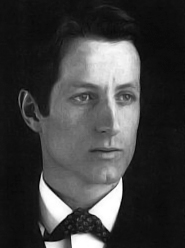
Maxfield Parrish (July 25, 1870 – March 30, 1966) was an American painter and illustrator active in the first half of the 20th century. His works featured distinctive saturated hues and idealized neo-classical imagery. The National Museum of American Illustration deemed his painting Daybreak (1922) to be the most successful art print of the 20th century.
Maxfield Parrish was born in Philadelphia to painter and etcher Stephen Parrish and Elizabeth Bancroft. His given name was Frederick Parrish, but he later adopted Maxfield, his paternal grandmother's maiden name, as his middle, then finally as his professional name. He was raised in a Quaker society. As a child he began drawing for his own amusement, showed talent, and his parents encouraged him. Between 1884 and 1886, his parents took Parrish to Europe, where he toured England, Italy, and France, was exposed to architecture and the paintings by the old masters, and studied at the Paris school of Dr. Kornemann.
He attended the Haverford School and later studied architecture at Haverford College for two years beginning in 1888. To further his education in art, from 1892 to 1895 he studied at the Pennsylvania Academy of the Fine Arts under artists Robert Vonnoh and Thomas Pollock Anshutz. After graduating from the program, Parrish went to Annisquam, Massachusetts, where he and his father shared a painting studio. A year later, with his father's encouragement, he attended the Drexel Institute of Art, Science & Industry where he studied with Howard Pyle.
Parrish entered into an artistic career that lasted for more than half a century, and which helped shape the Golden Age of illustration and American visual arts. During his career, he produced almost 900 pieces of art including calendars, greeting cards, and magazine covers. Parrish's early works were mostly in black and white.
In 1895, his work was on the Easter edition of Harper's Bazaar. He also did work for other magazines like Scribner's Magazine. One of his posters for The Century Magazine was published in Les Maîtres de l'Affiche. He also illustrated a children's book in 1897, Mother Goose in Prose written by L. Frank Baum. By 1900, Parrish was already a member of the Society of American Artists. In 1903, he traveled to Europe again to visit Italy.
Parrish took many commissions for commercial art until the 1920s. Parrish's commercial art included many prestigious projects, among which were Eugene Field's Poems of Childhood in 1904, and such traditional works as Arabian Nights in 1909. Books illustrated by Parrish are featured in A Wonder Book and Tanglewood Tales in 1910, The Golden Treasury of Songs and Lyrics in 1911, and The Knave of Hearts in 1925.
Parrish was earning over $100,000 per year by 1910, when homes could be bought for $2,000.
In 1910 Parrish received a commission to create 18 panels to go into the Girls Dining Room of the Curtis Publishing Company building, then under construction at 6th and Walnut in Philadelphia. It would take him six years to finish the monumental project. In 1914, before the murals were completed, Curtis commissioned Parrish to design a 15-by-49-foot (4.6 m × 14.9 m) mural for the building lobby. Tiffany Studios constructed a favrile glass mosaic mural titled The Dream Garden, which is now a part of Pennsylvania Academy of the Fine Arts collection.
Hub AI
Maxfield Parrish AI simulator
(@Maxfield Parrish_simulator)
Maxfield Parrish
Maxfield Parrish (July 25, 1870 – March 30, 1966) was an American painter and illustrator active in the first half of the 20th century. His works featured distinctive saturated hues and idealized neo-classical imagery. The National Museum of American Illustration deemed his painting Daybreak (1922) to be the most successful art print of the 20th century.
Maxfield Parrish was born in Philadelphia to painter and etcher Stephen Parrish and Elizabeth Bancroft. His given name was Frederick Parrish, but he later adopted Maxfield, his paternal grandmother's maiden name, as his middle, then finally as his professional name. He was raised in a Quaker society. As a child he began drawing for his own amusement, showed talent, and his parents encouraged him. Between 1884 and 1886, his parents took Parrish to Europe, where he toured England, Italy, and France, was exposed to architecture and the paintings by the old masters, and studied at the Paris school of Dr. Kornemann.
He attended the Haverford School and later studied architecture at Haverford College for two years beginning in 1888. To further his education in art, from 1892 to 1895 he studied at the Pennsylvania Academy of the Fine Arts under artists Robert Vonnoh and Thomas Pollock Anshutz. After graduating from the program, Parrish went to Annisquam, Massachusetts, where he and his father shared a painting studio. A year later, with his father's encouragement, he attended the Drexel Institute of Art, Science & Industry where he studied with Howard Pyle.
Parrish entered into an artistic career that lasted for more than half a century, and which helped shape the Golden Age of illustration and American visual arts. During his career, he produced almost 900 pieces of art including calendars, greeting cards, and magazine covers. Parrish's early works were mostly in black and white.
In 1895, his work was on the Easter edition of Harper's Bazaar. He also did work for other magazines like Scribner's Magazine. One of his posters for The Century Magazine was published in Les Maîtres de l'Affiche. He also illustrated a children's book in 1897, Mother Goose in Prose written by L. Frank Baum. By 1900, Parrish was already a member of the Society of American Artists. In 1903, he traveled to Europe again to visit Italy.
Parrish took many commissions for commercial art until the 1920s. Parrish's commercial art included many prestigious projects, among which were Eugene Field's Poems of Childhood in 1904, and such traditional works as Arabian Nights in 1909. Books illustrated by Parrish are featured in A Wonder Book and Tanglewood Tales in 1910, The Golden Treasury of Songs and Lyrics in 1911, and The Knave of Hearts in 1925.
Parrish was earning over $100,000 per year by 1910, when homes could be bought for $2,000.
In 1910 Parrish received a commission to create 18 panels to go into the Girls Dining Room of the Curtis Publishing Company building, then under construction at 6th and Walnut in Philadelphia. It would take him six years to finish the monumental project. In 1914, before the murals were completed, Curtis commissioned Parrish to design a 15-by-49-foot (4.6 m × 14.9 m) mural for the building lobby. Tiffany Studios constructed a favrile glass mosaic mural titled The Dream Garden, which is now a part of Pennsylvania Academy of the Fine Arts collection.