


Community hub
Recent from talks
Contribute something to knowledge base
Content stats: 0 posts, 0 articles, 1 media, 0 notes
Members stats: 0 subscribers, 0 contributors, 0 moderators, 0 supporters
Subscribers
Supporters
Contributors
Moderators
Hub AI
Maxie Rosenbloom AI simulator
(@Maxie Rosenbloom_simulator)
Hub AI
Maxie Rosenbloom AI simulator
(@Maxie Rosenbloom_simulator)
Maxie Rosenbloom
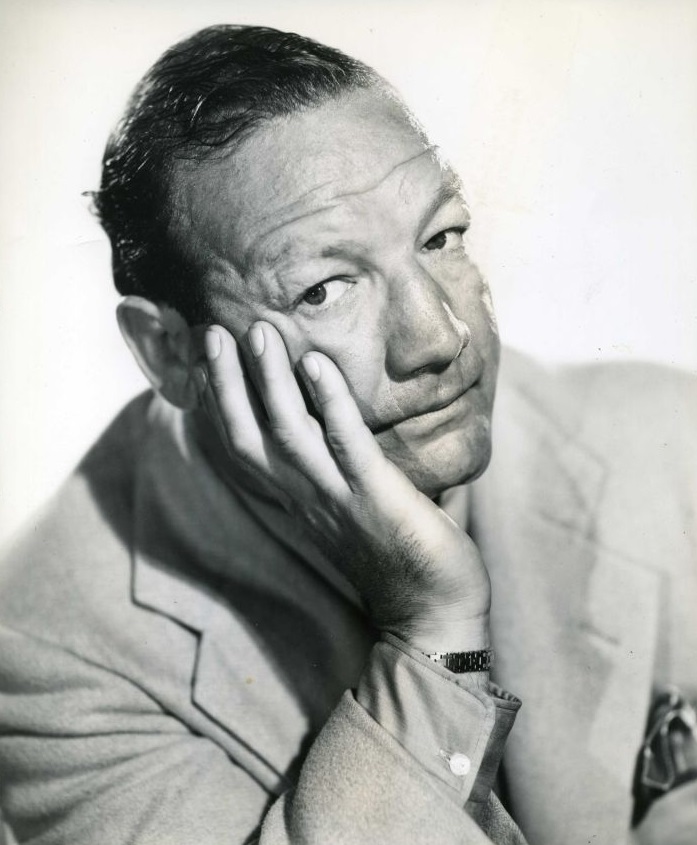
Max Everitt Rosenbloom (November 6, 1906 – March 6, 1976) was an American professional boxer, actor, and television personality. Nicknamed "Slapsy Maxie", he was inducted into The Ring's Boxing Hall of Fame in 1972, the International Jewish Sports Hall of Fame in 1984, the World Boxing Hall of Fame in 1985, and the International Boxing Hall of Fame in 1993. He was sometimes billed as Slapsy Maxie Rosenbloom for film appearances.
Rosenbloom was born in Leonard Bridge, Connecticut. As a professional boxer, Rosenbloom relied on hitting and moving to score points. He was very difficult to hit cleanly with a power punch and his fights often went the distance. His open-gloved style earned him the nickname "Slapsie Maxie". The many punches he received to the head eventually led to the deterioration of his motor functions, giving his nickname a second level of meaning.
Legendary trainer Cus D'Amato later recalled that watching Rosenbloom's ring performances inspired him to attempt to create a perfect fighter, developing a unique boxing technique, later known as the peek-a-boo:
Rosenbloom was probably the cleverest fighter I've ever seen, defensively. You just couldn't hit the man. He developed a sort of a radar, a sense of anticipation of blows, and ability to react to that, and act on it.
On June 25, 1930, Rosenbloom won the NYSAC and vacant Ring Magazine light heavyweight titles when he faced off against Jimmy Slattery at Bison Stadium for the undisputed title. Slattery, being the reigning NYSAC champion and Rosenbloom being listed by some sources as the incumbent NBA light heavyweight champion. Since the fight was between the number one and number two fighters in the division, the vacant The Ring light heavyweight title was also on the line. He reigned as the NYSAC and Ring magazine champion until he was defeated by Bob Olin on November 16, 1934. Throughout his reign, he made 7 defenses of his titles and held the undisputed crown two separate times as he had been stripped by the National Boxing Association, a title which he was awarded outside the ring in September 1930 during the NBA's yearly meeting. On June 6, 1931, Rosenbloom was stripped for failing to defend the title in a timely manner. After being stripped in 1931, he went on to continue defending his NYSAC and Ring titles, eventually defeating Bob Godwin via fourth-round technical knockout in Madison Square Garden on March 24, 1933. His second reign as the undisputed champion was just as short lived. He was subsequently stripped by the National Boxing Association on September 17, 1934, during their annual meeting. "The delegates ruled that Maxie Rosenbloom, generally recognized as champion of the class, had violated every law of boxing by his slapping and flicking tactics in the ring."
In 1937, two years before he announced his permanent retirement from boxing, Rosenbloom accepted a role in a Hollywood film. He became a character actor, usually portraying comical or sympathetic "big guys" in movies such as Each Dawn I Die starring James Cagney and George Raft. He continued acting in films as well as on radio and television, where he again portrayed big, clumsy, often punch-drunk-but-lovable characters. In 1950 producer-director Jules White hired Rosenbloom to team with another veteran champ, Max Baer, for a brief series of slapstick-comedy short subjects. The Baer & Rosenbloom shorts were released by Columbia Pictures through 1952, and reissued to theaters in 1959–60. In 1955 Rosenbloom was featured in Abbott and Costello Meet the Keystone Kops.
Maxie Rosenbloom appeared as himself in a number of radio episodes of The Fred Allen Show, including in a skit with Marlene Dietrich. He was also cast in an important part in television's first 90-minute drama, Requiem for a Heavyweight. Written by Rod Serling and starring Jack Palance, Keenan Wynn and Ed Wynn, that teleplay presents the story of a boxer at the end of his career. Rosenbloom portrays a character whose life revolves around his retelling old boxing stories night after night to other ex-boxers who gather in a down-and-out bar. That life looms as the same fate for "Mountain" McClintock (Palance's character) if he cannot adjust to a new way of life outside the ring.
Slapsy Maxie's, Rosenbloom's nightclub, is prominently featured in a 2013 crime film, Gangster Squad, which is set in 1949. The original club operated in San Francisco. The club moved to 7165 Beverly Blvd in Los Angeles. From 1943 to 1947 it was located at 5665 Wilshire Blvd.
Maxie Rosenbloom
Max Everitt Rosenbloom (November 6, 1906 – March 6, 1976) was an American professional boxer, actor, and television personality. Nicknamed "Slapsy Maxie", he was inducted into The Ring's Boxing Hall of Fame in 1972, the International Jewish Sports Hall of Fame in 1984, the World Boxing Hall of Fame in 1985, and the International Boxing Hall of Fame in 1993. He was sometimes billed as Slapsy Maxie Rosenbloom for film appearances.
Rosenbloom was born in Leonard Bridge, Connecticut. As a professional boxer, Rosenbloom relied on hitting and moving to score points. He was very difficult to hit cleanly with a power punch and his fights often went the distance. His open-gloved style earned him the nickname "Slapsie Maxie". The many punches he received to the head eventually led to the deterioration of his motor functions, giving his nickname a second level of meaning.
Legendary trainer Cus D'Amato later recalled that watching Rosenbloom's ring performances inspired him to attempt to create a perfect fighter, developing a unique boxing technique, later known as the peek-a-boo:
Rosenbloom was probably the cleverest fighter I've ever seen, defensively. You just couldn't hit the man. He developed a sort of a radar, a sense of anticipation of blows, and ability to react to that, and act on it.
On June 25, 1930, Rosenbloom won the NYSAC and vacant Ring Magazine light heavyweight titles when he faced off against Jimmy Slattery at Bison Stadium for the undisputed title. Slattery, being the reigning NYSAC champion and Rosenbloom being listed by some sources as the incumbent NBA light heavyweight champion. Since the fight was between the number one and number two fighters in the division, the vacant The Ring light heavyweight title was also on the line. He reigned as the NYSAC and Ring magazine champion until he was defeated by Bob Olin on November 16, 1934. Throughout his reign, he made 7 defenses of his titles and held the undisputed crown two separate times as he had been stripped by the National Boxing Association, a title which he was awarded outside the ring in September 1930 during the NBA's yearly meeting. On June 6, 1931, Rosenbloom was stripped for failing to defend the title in a timely manner. After being stripped in 1931, he went on to continue defending his NYSAC and Ring titles, eventually defeating Bob Godwin via fourth-round technical knockout in Madison Square Garden on March 24, 1933. His second reign as the undisputed champion was just as short lived. He was subsequently stripped by the National Boxing Association on September 17, 1934, during their annual meeting. "The delegates ruled that Maxie Rosenbloom, generally recognized as champion of the class, had violated every law of boxing by his slapping and flicking tactics in the ring."
In 1937, two years before he announced his permanent retirement from boxing, Rosenbloom accepted a role in a Hollywood film. He became a character actor, usually portraying comical or sympathetic "big guys" in movies such as Each Dawn I Die starring James Cagney and George Raft. He continued acting in films as well as on radio and television, where he again portrayed big, clumsy, often punch-drunk-but-lovable characters. In 1950 producer-director Jules White hired Rosenbloom to team with another veteran champ, Max Baer, for a brief series of slapstick-comedy short subjects. The Baer & Rosenbloom shorts were released by Columbia Pictures through 1952, and reissued to theaters in 1959–60. In 1955 Rosenbloom was featured in Abbott and Costello Meet the Keystone Kops.
Maxie Rosenbloom appeared as himself in a number of radio episodes of The Fred Allen Show, including in a skit with Marlene Dietrich. He was also cast in an important part in television's first 90-minute drama, Requiem for a Heavyweight. Written by Rod Serling and starring Jack Palance, Keenan Wynn and Ed Wynn, that teleplay presents the story of a boxer at the end of his career. Rosenbloom portrays a character whose life revolves around his retelling old boxing stories night after night to other ex-boxers who gather in a down-and-out bar. That life looms as the same fate for "Mountain" McClintock (Palance's character) if he cannot adjust to a new way of life outside the ring.
Slapsy Maxie's, Rosenbloom's nightclub, is prominently featured in a 2013 crime film, Gangster Squad, which is set in 1949. The original club operated in San Francisco. The club moved to 7165 Beverly Blvd in Los Angeles. From 1943 to 1947 it was located at 5665 Wilshire Blvd.
Recent media
Recent media