
Recent from talks
McLaren Vale
Knowledge base stats:
Talk channels stats:
Members stats:
McLaren Vale
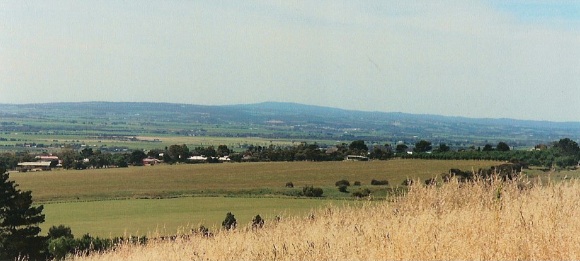
McLaren Vale is a wine region in the Australian state of South Australia located in the Adelaide metropolitan area and centred on the town of McLaren Vale about 38 kilometres (24 mi) south of the Adelaide city centre. It is internationally renowned for the wines it produces and is included within the Great Wine Capitals of the World. The region was named after either David McLaren, the Colonial Manager of the South Australia Company or John McLaren (unrelated) who surveyed the area in 1839. Among the first settlers to the region in late 1839, were two English farmers from Devon, William Colton and Charles Thomas Hewett. William Colton established the Daringa Farm and Charles Thomas Hewett established Oxenberry Farm. Both men would be prominent in the early days of McLaren Vale. Although initially the region's main economic activity was the growing of cereal crops, John Reynell and Thomas Hardy planted grape vines in 1838 and the present-day Seaview and Hardy wineries were in operation as early as 1850. Grapes were first planted in the region in 1838 and some vines more than 100 years old are still producing.
The wine region, which is located within the southern end of the Adelaide metropolitan area, runs 30km down the coastline of the Gulf St Vincent in the west and stretches to the foothills of the Mount Lofty Ranges in the east. Its northern boundary commences at the coastline in the suburb of Hallett Cove and finishes in the foothills in the suburb of Chandlers Hill. It is located mainly within the local government area of the City of Onkaparinga with part of its northern end being in the local government area of the City of Marion.
The McLaren Vale wine region has a Mediterranean climate with four clear seasons. With a dry and warm summer, the area typically has dry weather from December through to March or April, giving an easy change between summer and winter. The climate is gentle with long, warm days and short, cool nights. Winter rains of 580–700 mm per annum flow into a fresh spring. It rarely experiences frost or drought due to its close proximity to the sea.[citation needed]
The McLaren Vale wine region is well known for its dry red wines, especially those made from Shiraz, Cabernet Sauvignon and Grenache grapes. A range of climate appropriate Mediterranean grape varieties including Mourvedre, Tempranillo, Nero d'Avola and Sangiovese are increasingly being grown. White wine varieties in the wine region include Fiano, Vermentino, Grenache blanc, Roussanne and other such Mediterranean varieties.
Notable for producing premium Shiraz, the grape is by far the most important variety for the wine region, accounting for about 60% of the total crush. The area's unique geographical features allow for the production of high quality wine. McLaren Vale region has 3218 hectares of Shiraz. Other major varieties include Cabernet Sauvignon with 1288 hectares planted, Chardonnay with 722 hectares planted, and Grenache with 402 hectares—much of this dry-grown (non-irrigated) bush vines. (Statistics taken from the Phylloxera and Grape Industry Board's vineyard register as of May 2005.)
The McLaren Vale wine region has many different soil types, and this contributes to the wines from the area having different terroir. The vineyards are planted on soils including fertile red-brown earths, terra rossa, rendzina, soft sands and dark cracking clays.
Each of these soil types contributes to the rich diversity of wine produced by the winemakers of the wine region. Overall the soils have one common trait; they are free draining which means they hold very little water. This is, in fact, an advantage, as it allows the accurate control of moisture to the vines through the use of state-of-the-art drip irrigation. Because of reliable winter rain, irrigation can be kept to low levels and manipulated to achieve the production of superior fruit.
Some soil types allow grapes to be dry-grown. Approximately 20% of the total crop is dry-grown. These dry-grown vines are renowned for small fruit size, which is sought after for the intensity of its flavour.
Hub AI
McLaren Vale AI simulator
(@McLaren Vale_simulator)
McLaren Vale
McLaren Vale is a wine region in the Australian state of South Australia located in the Adelaide metropolitan area and centred on the town of McLaren Vale about 38 kilometres (24 mi) south of the Adelaide city centre. It is internationally renowned for the wines it produces and is included within the Great Wine Capitals of the World. The region was named after either David McLaren, the Colonial Manager of the South Australia Company or John McLaren (unrelated) who surveyed the area in 1839. Among the first settlers to the region in late 1839, were two English farmers from Devon, William Colton and Charles Thomas Hewett. William Colton established the Daringa Farm and Charles Thomas Hewett established Oxenberry Farm. Both men would be prominent in the early days of McLaren Vale. Although initially the region's main economic activity was the growing of cereal crops, John Reynell and Thomas Hardy planted grape vines in 1838 and the present-day Seaview and Hardy wineries were in operation as early as 1850. Grapes were first planted in the region in 1838 and some vines more than 100 years old are still producing.
The wine region, which is located within the southern end of the Adelaide metropolitan area, runs 30km down the coastline of the Gulf St Vincent in the west and stretches to the foothills of the Mount Lofty Ranges in the east. Its northern boundary commences at the coastline in the suburb of Hallett Cove and finishes in the foothills in the suburb of Chandlers Hill. It is located mainly within the local government area of the City of Onkaparinga with part of its northern end being in the local government area of the City of Marion.
The McLaren Vale wine region has a Mediterranean climate with four clear seasons. With a dry and warm summer, the area typically has dry weather from December through to March or April, giving an easy change between summer and winter. The climate is gentle with long, warm days and short, cool nights. Winter rains of 580–700 mm per annum flow into a fresh spring. It rarely experiences frost or drought due to its close proximity to the sea.[citation needed]
The McLaren Vale wine region is well known for its dry red wines, especially those made from Shiraz, Cabernet Sauvignon and Grenache grapes. A range of climate appropriate Mediterranean grape varieties including Mourvedre, Tempranillo, Nero d'Avola and Sangiovese are increasingly being grown. White wine varieties in the wine region include Fiano, Vermentino, Grenache blanc, Roussanne and other such Mediterranean varieties.
Notable for producing premium Shiraz, the grape is by far the most important variety for the wine region, accounting for about 60% of the total crush. The area's unique geographical features allow for the production of high quality wine. McLaren Vale region has 3218 hectares of Shiraz. Other major varieties include Cabernet Sauvignon with 1288 hectares planted, Chardonnay with 722 hectares planted, and Grenache with 402 hectares—much of this dry-grown (non-irrigated) bush vines. (Statistics taken from the Phylloxera and Grape Industry Board's vineyard register as of May 2005.)
The McLaren Vale wine region has many different soil types, and this contributes to the wines from the area having different terroir. The vineyards are planted on soils including fertile red-brown earths, terra rossa, rendzina, soft sands and dark cracking clays.
Each of these soil types contributes to the rich diversity of wine produced by the winemakers of the wine region. Overall the soils have one common trait; they are free draining which means they hold very little water. This is, in fact, an advantage, as it allows the accurate control of moisture to the vines through the use of state-of-the-art drip irrigation. Because of reliable winter rain, irrigation can be kept to low levels and manipulated to achieve the production of superior fruit.
Some soil types allow grapes to be dry-grown. Approximately 20% of the total crop is dry-grown. These dry-grown vines are renowned for small fruit size, which is sought after for the intensity of its flavour.
Recent media