
Recent from talks
Mellismo
Knowledge base stats:
Talk channels stats:
Members stats:
Mellismo
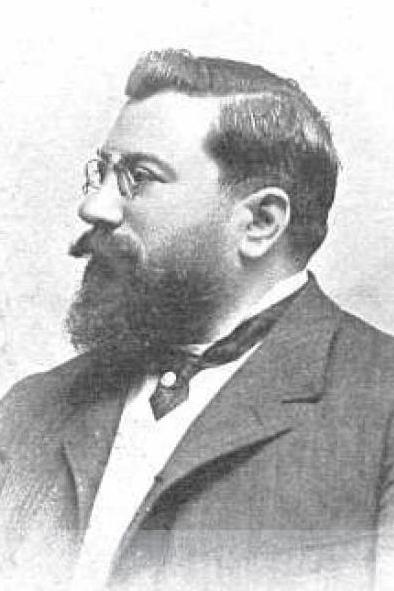
Mellismo (Spanish: [meˈʎismo]) was a political practice of the Spanish political right in the early 20th century. Born within Carlism, it was designed and championed by Juan Vázquez de Mella, who became its independent political leader after the 1919 breakup. The strategy consisted of an attempt to build a grand ultra-Right party, which in turn would ensure transition from liberal democracy of Restauración to corporative Traditionalist monarchy. Following secession from Carlism Mellismo assumed formal shape of Partido Católico-Tradicionalista, but it failed as an amalgamating force and decomposed shortly afterwards. Mellismo refers both to the political faction led by Mella and its strategy, and Mella's theoretical conception, which is nonetheless considered an integral component of Carlist ideology. In historiography its followers are usually referred to as Mellistas, though initially the term Mellados seemed to prevail. Occasionally they are also named Tradicionalistas, but the term is extremely ambiguous and might denote also other concepts.
Generally historiographical works do not refer to Mellismo or to Mellistas prior to 1910; press of the era started to use this term as late as 1919. When discussing internal groupings within Carlism in the early years of the 20th century, scholars refer to the faction more inclined towards alliances with other parties as "posibilistas", while those tending to side with a deposed leader marqués de Cerralbo are dubbed "cerralbistas"; this is also how Vázquez de Mella preferred to refer to himself. However, he started to gain supporters and admirers of his own already in the 1890s, initially lured by his charismatic oratory skills rather than by his theoretical vision or specific political strategy. In fact, his stand might have seemed puzzling: he declared himself enemy of the Restoration system but advocated political alliances with established parties, enthusiastically took part in electoral game but was engaged in conspiracy to stage military coup in 1898–1900, supported minimalist electoral coalitions but preached maximalist objectives, claimed doctrinal Traditionalist orthodoxy but remained in uneasy relationship with the king and revealed cautious penchant towards non-dynastical solutions.
After "La Octubrada", a series of minor Carlist 1900 revolts, Mella sought refuge in Portugal and remained there for a few years, estranged also by the claimant who officially dubbed those involved traitors. Having obtained royal pardon in 1903 he resumed parliamentarian career in 1905. As Carlist leaders were usually in their 60s or older, Vázquez de Mella emerged as the most dynamic representative of mid-age generation and most charismatic Carlist politician at all, as a theorist presiding over general overhaul of Carlism. His position consolidated mostly thanks to harangues delivered both in the Cortes and at public gatherings; he did not hold official party positions except in its press tribune, El Correo Español. His personal prestige soon became sort of a problem for both the claimant and the then political leader, Matías Barrio y Mier, appointed to keep the Cerralbistas in check. On orders of Carlos VII Barrio pursued cautious policy of electoral alliances, confronting possibilist vision of malmenorismo-guided coalitions and trying to curb Vázquez de Mella's influence in Correo. As one of his last political decisions in 1909 the claimant appointed a relatively unknown academic, Bartolomé Feliú y Pérez, as successor of the ailing Barrio; the decision came as a blow to supporters of de Mella, considering him obvious candidate for leadership.
Following death of Carlos VII his son as the new Carlist king Jaime III found himself pressed by the Cerralbistas to dismiss Feliú; he opted for a compromise, confirming the nomination but appointing Mella as his own personal secretary. After few months the two spent together in 1910 Vázquez de Mella ceased, disillusioned – rather mutually – with his new monarch. During the Cortes campaign of 1910 Mellismo first emerged as a strategy: while Feliú authorized local accords strictly conditioned by dynastic claims, Vázquez de Mella mounted an anti-revolutionary, ultra-conservative, Catholic coalition with Antonio Maura and his faction of the Conservatives. During the next 2 years the group already dubbed Mellistas sabotaged Jefe Delegado, their campaign directed against Feliú as incompetent leader and steering clear of the alliance question. In 1912 Mella accused Feliú of illegitimately holding the jefatura and demanded his deposition, threatening the claimant with rejecting his rule as deprived of "legitimacy of execution". Don Jaime gave in and by the end of 1912 he re-appointed de Cerralbo as president of Junta Superior.
Some scholars claim that with de Cerralbo increasingly fascinated by Vázquez de Mella though also aging, tired of conflict and irresolute, the latter assumed actual command of party structures, while Carlist policy was increasingly formed by Mellismo. The parliamentarian contingent was clearly dominated by Vázquez de Mella's personality; nearly half of its members were Mellistas anyway, the other ones mostly vacillating and only Feliú and Llorens prepared to take a decisive stand. In the 30-member party top body, Junta Superior, around one third were leaning towards Mellismo, including regional jefes of Vascongadas, Catalonia and Valencia. As de Cerralbo re-organized the national executive forming 10 dedicated sections, Mella monopolized the ones of propaganda and press while other Mellistas dominated in electoral and organization ones. El Correo Español kept having been a battlefield with Don Jaime struggling to retain his influence, but it was getting increasingly dominated by Mellistas, especially Peñaflor.
With Don Jaime hardly contactable in Austria following outbreak of the Great War, the Mellistas took almost full control of the party; the Carlist Cortes campaigns of 1914, 1916 and 1918 were visibly marked by Mellista-nurtured long-term strategy. With dramatically declining turnover at the polls and growing fragmentation of two partidos turnistas, it was becoming evident that political system of Restauración was crumbling. Mella nurtured a plan for minimalist alliance of the Right, leading in turn to emergence of a maximalist ultra-Right party, possibly a new incarnation of Traditionalism. That formation was supposed to do away with liberal democracy – a strategy dubbed by some scholars as "catastrofismo" – and ensure passage to Traditionalist, corporative system, with dynastical question parked in obscurity. Though in 1914 provincial jefes were largely left free to conclude any electoral alliances that might produce best possible results, Vázquez de Mella and Maura kept working that they took form of Carlist-Maurist accords. During the 1916 campaign Vázquez de Mella for the first time explicitly referred to a future union of extrema derecha, new terms like "mauro-mellistas", "mauro-jaimistas" or "carlomauristas" entered into circulation and Maura started to make vague anti-system references of altering "ambiente de la vida pública". The strategy, however, demonstrated its limitations. Alliances did not outlive electoral campaigns; Jaimist candidates kept winning around 10 mandates, hardly an impressive improvement compared to the 1890s or 1900s; finally, in regions with strong local identity some party militants grumbled that fuerismo might suffer in a hypothetical ultra-Right alliance.
Following outbreak of the Great War earlier demonstrated pro-German Mellist sympathies turned into a full-blown campaign. Though booklets or lectures technically supported Spanish neutrality, they raised sentiment favoring Central Powers and aimed against Britain. After 1916, when pro-Entente feelings were gaining strength, the focus of Mellistas shifted to preventing a would-be Spanish joining the Allies. The claimant, during most of the war unreachable in his Austrian residence, remained ambiguous; officially he supported neutrality, in private leaning towards Entente and sending notes not disavowing pro-German tones of the Mellistas. Scholars differ as to how the World War One issue related to Mellismo. Very few consider it central and even reduce the outlook to pro-German stance. Most suggest that it stemmed from ideological Mellista vision, quote passages praising anti-Liberal German regime and lambasting Masonic, democratic, parliamentarian British and French systems. Some comments suggest that victory of the Central Powers was expected to facilitate takeover of Spanish political scene by extreme Right, while there are students who suggest that the war issue was of no relevance at all.
In 1918 Mellismo seemed to have been losing ground: electoral alliances failed to produce major gains, course of the Great War made pro-German attitude pointless and undermined position of its advocates, some regional jefaturas kept voicing dissent and de Cerralbo, increasingly tired of his own double-loyalty, finally managed to get his resignation accepted, temporarily replaced by another Mellista, Cesáreo Sanz Escartín. In early 1919 the claimant was released from his house arrest in Austria, arrived in Paris and after 2 years of almost total silence came out with 2 manifestos. In somewhat unclear circumstances published in early February in Correo Español, they explicitly denounced disobedience of unnamed Carlist leaders failing to sustain neutral policy and indicated that command structures of the party would be re-organized.
Hub AI
Mellismo AI simulator
(@Mellismo_simulator)
Mellismo
Mellismo (Spanish: [meˈʎismo]) was a political practice of the Spanish political right in the early 20th century. Born within Carlism, it was designed and championed by Juan Vázquez de Mella, who became its independent political leader after the 1919 breakup. The strategy consisted of an attempt to build a grand ultra-Right party, which in turn would ensure transition from liberal democracy of Restauración to corporative Traditionalist monarchy. Following secession from Carlism Mellismo assumed formal shape of Partido Católico-Tradicionalista, but it failed as an amalgamating force and decomposed shortly afterwards. Mellismo refers both to the political faction led by Mella and its strategy, and Mella's theoretical conception, which is nonetheless considered an integral component of Carlist ideology. In historiography its followers are usually referred to as Mellistas, though initially the term Mellados seemed to prevail. Occasionally they are also named Tradicionalistas, but the term is extremely ambiguous and might denote also other concepts.
Generally historiographical works do not refer to Mellismo or to Mellistas prior to 1910; press of the era started to use this term as late as 1919. When discussing internal groupings within Carlism in the early years of the 20th century, scholars refer to the faction more inclined towards alliances with other parties as "posibilistas", while those tending to side with a deposed leader marqués de Cerralbo are dubbed "cerralbistas"; this is also how Vázquez de Mella preferred to refer to himself. However, he started to gain supporters and admirers of his own already in the 1890s, initially lured by his charismatic oratory skills rather than by his theoretical vision or specific political strategy. In fact, his stand might have seemed puzzling: he declared himself enemy of the Restoration system but advocated political alliances with established parties, enthusiastically took part in electoral game but was engaged in conspiracy to stage military coup in 1898–1900, supported minimalist electoral coalitions but preached maximalist objectives, claimed doctrinal Traditionalist orthodoxy but remained in uneasy relationship with the king and revealed cautious penchant towards non-dynastical solutions.
After "La Octubrada", a series of minor Carlist 1900 revolts, Mella sought refuge in Portugal and remained there for a few years, estranged also by the claimant who officially dubbed those involved traitors. Having obtained royal pardon in 1903 he resumed parliamentarian career in 1905. As Carlist leaders were usually in their 60s or older, Vázquez de Mella emerged as the most dynamic representative of mid-age generation and most charismatic Carlist politician at all, as a theorist presiding over general overhaul of Carlism. His position consolidated mostly thanks to harangues delivered both in the Cortes and at public gatherings; he did not hold official party positions except in its press tribune, El Correo Español. His personal prestige soon became sort of a problem for both the claimant and the then political leader, Matías Barrio y Mier, appointed to keep the Cerralbistas in check. On orders of Carlos VII Barrio pursued cautious policy of electoral alliances, confronting possibilist vision of malmenorismo-guided coalitions and trying to curb Vázquez de Mella's influence in Correo. As one of his last political decisions in 1909 the claimant appointed a relatively unknown academic, Bartolomé Feliú y Pérez, as successor of the ailing Barrio; the decision came as a blow to supporters of de Mella, considering him obvious candidate for leadership.
Following death of Carlos VII his son as the new Carlist king Jaime III found himself pressed by the Cerralbistas to dismiss Feliú; he opted for a compromise, confirming the nomination but appointing Mella as his own personal secretary. After few months the two spent together in 1910 Vázquez de Mella ceased, disillusioned – rather mutually – with his new monarch. During the Cortes campaign of 1910 Mellismo first emerged as a strategy: while Feliú authorized local accords strictly conditioned by dynastic claims, Vázquez de Mella mounted an anti-revolutionary, ultra-conservative, Catholic coalition with Antonio Maura and his faction of the Conservatives. During the next 2 years the group already dubbed Mellistas sabotaged Jefe Delegado, their campaign directed against Feliú as incompetent leader and steering clear of the alliance question. In 1912 Mella accused Feliú of illegitimately holding the jefatura and demanded his deposition, threatening the claimant with rejecting his rule as deprived of "legitimacy of execution". Don Jaime gave in and by the end of 1912 he re-appointed de Cerralbo as president of Junta Superior.
Some scholars claim that with de Cerralbo increasingly fascinated by Vázquez de Mella though also aging, tired of conflict and irresolute, the latter assumed actual command of party structures, while Carlist policy was increasingly formed by Mellismo. The parliamentarian contingent was clearly dominated by Vázquez de Mella's personality; nearly half of its members were Mellistas anyway, the other ones mostly vacillating and only Feliú and Llorens prepared to take a decisive stand. In the 30-member party top body, Junta Superior, around one third were leaning towards Mellismo, including regional jefes of Vascongadas, Catalonia and Valencia. As de Cerralbo re-organized the national executive forming 10 dedicated sections, Mella monopolized the ones of propaganda and press while other Mellistas dominated in electoral and organization ones. El Correo Español kept having been a battlefield with Don Jaime struggling to retain his influence, but it was getting increasingly dominated by Mellistas, especially Peñaflor.
With Don Jaime hardly contactable in Austria following outbreak of the Great War, the Mellistas took almost full control of the party; the Carlist Cortes campaigns of 1914, 1916 and 1918 were visibly marked by Mellista-nurtured long-term strategy. With dramatically declining turnover at the polls and growing fragmentation of two partidos turnistas, it was becoming evident that political system of Restauración was crumbling. Mella nurtured a plan for minimalist alliance of the Right, leading in turn to emergence of a maximalist ultra-Right party, possibly a new incarnation of Traditionalism. That formation was supposed to do away with liberal democracy – a strategy dubbed by some scholars as "catastrofismo" – and ensure passage to Traditionalist, corporative system, with dynastical question parked in obscurity. Though in 1914 provincial jefes were largely left free to conclude any electoral alliances that might produce best possible results, Vázquez de Mella and Maura kept working that they took form of Carlist-Maurist accords. During the 1916 campaign Vázquez de Mella for the first time explicitly referred to a future union of extrema derecha, new terms like "mauro-mellistas", "mauro-jaimistas" or "carlomauristas" entered into circulation and Maura started to make vague anti-system references of altering "ambiente de la vida pública". The strategy, however, demonstrated its limitations. Alliances did not outlive electoral campaigns; Jaimist candidates kept winning around 10 mandates, hardly an impressive improvement compared to the 1890s or 1900s; finally, in regions with strong local identity some party militants grumbled that fuerismo might suffer in a hypothetical ultra-Right alliance.
Following outbreak of the Great War earlier demonstrated pro-German Mellist sympathies turned into a full-blown campaign. Though booklets or lectures technically supported Spanish neutrality, they raised sentiment favoring Central Powers and aimed against Britain. After 1916, when pro-Entente feelings were gaining strength, the focus of Mellistas shifted to preventing a would-be Spanish joining the Allies. The claimant, during most of the war unreachable in his Austrian residence, remained ambiguous; officially he supported neutrality, in private leaning towards Entente and sending notes not disavowing pro-German tones of the Mellistas. Scholars differ as to how the World War One issue related to Mellismo. Very few consider it central and even reduce the outlook to pro-German stance. Most suggest that it stemmed from ideological Mellista vision, quote passages praising anti-Liberal German regime and lambasting Masonic, democratic, parliamentarian British and French systems. Some comments suggest that victory of the Central Powers was expected to facilitate takeover of Spanish political scene by extreme Right, while there are students who suggest that the war issue was of no relevance at all.
In 1918 Mellismo seemed to have been losing ground: electoral alliances failed to produce major gains, course of the Great War made pro-German attitude pointless and undermined position of its advocates, some regional jefaturas kept voicing dissent and de Cerralbo, increasingly tired of his own double-loyalty, finally managed to get his resignation accepted, temporarily replaced by another Mellista, Cesáreo Sanz Escartín. In early 1919 the claimant was released from his house arrest in Austria, arrived in Paris and after 2 years of almost total silence came out with 2 manifestos. In somewhat unclear circumstances published in early February in Correo Español, they explicitly denounced disobedience of unnamed Carlist leaders failing to sustain neutral policy and indicated that command structures of the party would be re-organized.
Recent media