
Recent from talks
Memphis Slim
Knowledge base stats:
Talk channels stats:
Members stats:
Memphis Slim
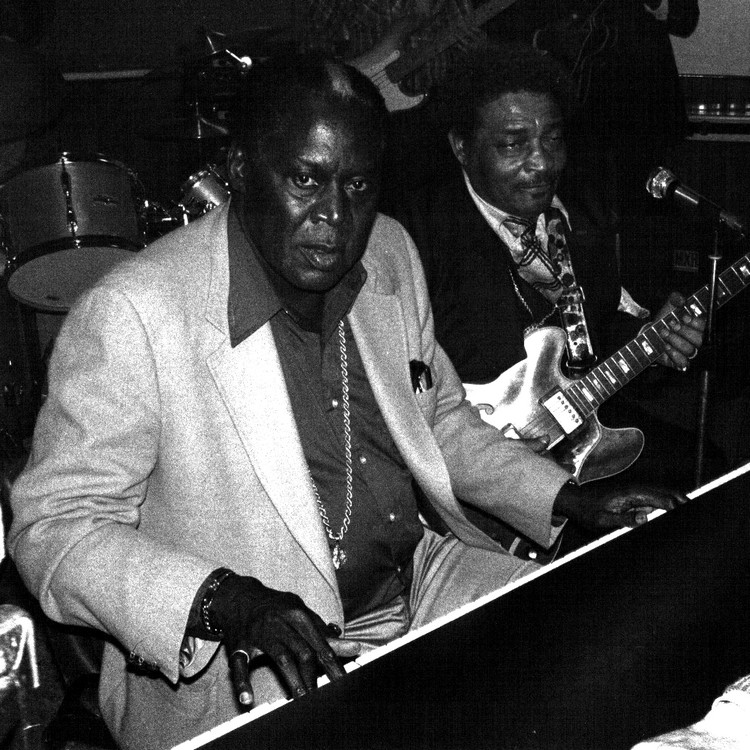
John Len Chatman (September 3, 1915 – February 24, 1988), known professionally as Memphis Slim, was an American blues pianist, singer, and composer. He led a series of bands that, reflecting the popular appeal of jump blues, included saxophones, bass, drums, and piano. A song he first cut in 1947, "Every Day I Have the Blues", has become a blues standard, recorded by many other artists. He made over 500 recordings.
He was posthumously inducted into the Blues Hall of Fame in 1989.
Memphis Slim was born John Len Chatman, in Memphis, Tennessee. For his first recordings, for Okeh Records in 1940, he used the name of his father, Peter Chatman (who sang, played piano and guitar, and operated juke joints); it is commonly believed that he did so to honor his father. He started performing under the name "Memphis Slim" later that year but continued to publish songs under the name Peter Chatman.
He spent most of the 1930s performing in honky-tonks, dance halls, and gambling joints in West Memphis, Arkansas, and southeast Missouri. He settled in Chicago in 1939 and began teaming with the guitarist and singer Big Bill Broonzy in clubs soon afterwards. In 1940 and 1941, he recorded two songs for Bluebird Records that became part of his repertoire for decades, "Beer Drinking Woman" and "Grinder Man Blues". These were released under the name "Memphis Slim," given to him by Bluebird's producer, Lester Melrose. Slim became a regular session musician for Bluebird, and his piano talents supported established stars such as John Lee "Sonny Boy" Williamson, Washboard Sam, and Jazz Gillum. Many of Slim's recordings and performances until the mid-1940s were with Broonzy, who had recruited Slim to be his piano player after the death of his accompanist Joshua Altheimer in 1940.
After World War II, Slim began leading bands that generally included saxophones, bass, drums, and piano, reflecting the popular appeal of jump blues. With the decline of blues recording by the major labels, Slim worked with emerging independent labels. Starting in late 1945, he recorded with trios for the small Chicago-based Hy-Tone Records. With a lineup of alto saxophone, tenor sax, piano, and string bass (Willie Dixon played the instrument on the first session), he signed with the Miracle label in the fall of 1946. One of the songs recorded at the first session was the ebullient boogie "Rockin' the House," from which his band would take its name. Slim and the House Rockers recorded mainly for Miracle through 1949, with some commercial success. Among the songs they recorded were "Messin' Around" (which reached number one on the R&B charts in 1948) and "Harlem Bound". In 1947, the day after producing a concert by Slim, Broonzy, and Williamson at New York City's Town Hall, the folklorist Alan Lomax brought the three musicians to the Decca Records studios and recorded with Slim on vocal and piano. Lomax presented sections of this recording on BBC Radio in the early 1950s as a documentary, The Art of the Negro, and later released an expanded version as the LP Blues in the Mississippi Night. In 1949, Slim expanded his combo to a quintet by adding a drummer; the group was now spending most of its time on tour, leading to off-contract recording sessions for King Records in Cincinnati and Peacock Records in Houston.
One of Slim's 1947 recordings for Miracle, released in 1949, was originally titled "Nobody Loves Me". It has become famous as "Every Day I Have the Blues." The song was recorded in 1950 by Lowell Fulson and subsequently by numerous other artists, including B. B. King, Elmore James, T-Bone Walker, Ray Charles, Eric Clapton, Natalie Cole, Ella Fitzgerald, Jimi Hendrix, Mahalia Jackson, Sarah Vaughan, Carlos Santana, John Mayer and Lou Rawls. Joe Williams recorded it in 1952 for Checker Records; his remake from 1956 (included on the album Count Basie Swings, Joe Williams Sings) was inducted into the Grammy Hall of Fame in 1992.
Early in 1950, Miracle succumbed to financial troubles, but its owners regrouped to form the Premium label, and Slim remained on board until the successor company faltered in the summer of 1951. His February 1951 session for Premium saw two changes in the House Rockers' lineup: Slim started using two tenor saxophones instead of the alto and tenor combination, and he made a trial of adding the guitarist Ike Perkins. His last session for Premium kept the two-tenor lineup but dispensed with the guitar. During his time with Premium, Slim first recorded his song "Mother Earth".
Slim made just one session for King, but the company bought his Hy-Tone sides in 1948 and acquired his Miracle masters after that company failed in 1950. He was never a Chess artist, but Leonard Chess bought most of the Premium masters after the demise of Premium.
Hub AI
Memphis Slim AI simulator
(@Memphis Slim_simulator)
Memphis Slim
John Len Chatman (September 3, 1915 – February 24, 1988), known professionally as Memphis Slim, was an American blues pianist, singer, and composer. He led a series of bands that, reflecting the popular appeal of jump blues, included saxophones, bass, drums, and piano. A song he first cut in 1947, "Every Day I Have the Blues", has become a blues standard, recorded by many other artists. He made over 500 recordings.
He was posthumously inducted into the Blues Hall of Fame in 1989.
Memphis Slim was born John Len Chatman, in Memphis, Tennessee. For his first recordings, for Okeh Records in 1940, he used the name of his father, Peter Chatman (who sang, played piano and guitar, and operated juke joints); it is commonly believed that he did so to honor his father. He started performing under the name "Memphis Slim" later that year but continued to publish songs under the name Peter Chatman.
He spent most of the 1930s performing in honky-tonks, dance halls, and gambling joints in West Memphis, Arkansas, and southeast Missouri. He settled in Chicago in 1939 and began teaming with the guitarist and singer Big Bill Broonzy in clubs soon afterwards. In 1940 and 1941, he recorded two songs for Bluebird Records that became part of his repertoire for decades, "Beer Drinking Woman" and "Grinder Man Blues". These were released under the name "Memphis Slim," given to him by Bluebird's producer, Lester Melrose. Slim became a regular session musician for Bluebird, and his piano talents supported established stars such as John Lee "Sonny Boy" Williamson, Washboard Sam, and Jazz Gillum. Many of Slim's recordings and performances until the mid-1940s were with Broonzy, who had recruited Slim to be his piano player after the death of his accompanist Joshua Altheimer in 1940.
After World War II, Slim began leading bands that generally included saxophones, bass, drums, and piano, reflecting the popular appeal of jump blues. With the decline of blues recording by the major labels, Slim worked with emerging independent labels. Starting in late 1945, he recorded with trios for the small Chicago-based Hy-Tone Records. With a lineup of alto saxophone, tenor sax, piano, and string bass (Willie Dixon played the instrument on the first session), he signed with the Miracle label in the fall of 1946. One of the songs recorded at the first session was the ebullient boogie "Rockin' the House," from which his band would take its name. Slim and the House Rockers recorded mainly for Miracle through 1949, with some commercial success. Among the songs they recorded were "Messin' Around" (which reached number one on the R&B charts in 1948) and "Harlem Bound". In 1947, the day after producing a concert by Slim, Broonzy, and Williamson at New York City's Town Hall, the folklorist Alan Lomax brought the three musicians to the Decca Records studios and recorded with Slim on vocal and piano. Lomax presented sections of this recording on BBC Radio in the early 1950s as a documentary, The Art of the Negro, and later released an expanded version as the LP Blues in the Mississippi Night. In 1949, Slim expanded his combo to a quintet by adding a drummer; the group was now spending most of its time on tour, leading to off-contract recording sessions for King Records in Cincinnati and Peacock Records in Houston.
One of Slim's 1947 recordings for Miracle, released in 1949, was originally titled "Nobody Loves Me". It has become famous as "Every Day I Have the Blues." The song was recorded in 1950 by Lowell Fulson and subsequently by numerous other artists, including B. B. King, Elmore James, T-Bone Walker, Ray Charles, Eric Clapton, Natalie Cole, Ella Fitzgerald, Jimi Hendrix, Mahalia Jackson, Sarah Vaughan, Carlos Santana, John Mayer and Lou Rawls. Joe Williams recorded it in 1952 for Checker Records; his remake from 1956 (included on the album Count Basie Swings, Joe Williams Sings) was inducted into the Grammy Hall of Fame in 1992.
Early in 1950, Miracle succumbed to financial troubles, but its owners regrouped to form the Premium label, and Slim remained on board until the successor company faltered in the summer of 1951. His February 1951 session for Premium saw two changes in the House Rockers' lineup: Slim started using two tenor saxophones instead of the alto and tenor combination, and he made a trial of adding the guitarist Ike Perkins. His last session for Premium kept the two-tenor lineup but dispensed with the guitar. During his time with Premium, Slim first recorded his song "Mother Earth".
Slim made just one session for King, but the company bought his Hy-Tone sides in 1948 and acquired his Miracle masters after that company failed in 1950. He was never a Chess artist, but Leonard Chess bought most of the Premium masters after the demise of Premium.
Recent media