



Community hub
Community hub
Recent from talks
Knowledge base stats:
Talk channels stats:
Members stats:
Merkle's Boner
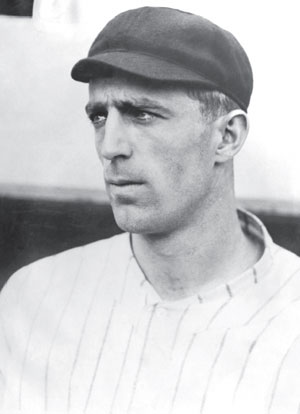
Merkle's Boner refers to the notorious base-running mistake committed by rookie Fred Merkle of the New York Giants in a game against the Chicago Cubs on September 23, 1908. Merkle's failure to advance to second base on what should have been a game-winning hit led instead to a force play at second and a tied game. The Cubs later won the makeup game, which proved decisive as they beat the Giants by one game to win the National League (NL) pennant for 1908. It has been described as "the most controversial game in baseball history".
The NL pennant race of 1908 was a three-way fight among the teams that dominated the league in the first decade of the modern era: the Pittsburgh Pirates (pennant winners in 1901, 1902, and 1903), the Giants (winners in 1904 and 1905), and the Cubs (winners in 1906 and 1907). The teams were clustered in the standings all year, with Pittsburgh never more than 2.5 games ahead or 5 games behind, the Giants never more than 4.5 ahead or 6.5 behind, and the Cubs never more than 4 ahead or 6 behind. When play began at the Polo Grounds in New York City on September 23, 1908, the Cubs and Giants were tied for first place (although the Giants had six more games to play, with an 87–50 record as opposed to the Cubs' 90–53), and the Pirates were 1.5 games behind with an 88–54 record.
Merkle was 19 years old in 1908, the youngest player in the National League. He played in only 38 games all year, 11 of which were at first base as the backup for regular Giants first baseman Fred Tenney. Merkle was recovering from two foot surgeries in July, following a blood infection that nearly caused his foot to be amputated, and was unable to play for most of July and August. On the morning of September 23, Tenney woke up with a case of lumbago, and Giants manager John McGraw penciled Merkle in at first base. Merkle had started at first base the previous year 14 times and at second base once this season, but this was his first start at first base this season.
Future Hall of Fame member Christy Mathewson started for the Giants; Jack Pfiester started for the Cubs. As was customary at the time, the game had two umpires: Bob Emslie on the basepaths and Hank O'Day behind the plate.
The Giants were the home team. Neither Mathewson nor Pfiester allowed a run through three innings. In the fourth, Cubs shortstop Joe Tinker hit the ball into the outfield, and when right fielder Mike Donlin could not stop it from going past him deep into the cavernous outfield of the Polo Grounds, Tinker circled the bases for an inside-the-park home run that gave Chicago a 1–0 lead. It was the first home run hit off Mathewson since one by Tinker on July 17. The Giants tied the score in the fifth when Buck Herzog singled, advanced to second on an error, advanced to third on a sacrifice by Roger Bresnahan, and scored on a single by Donlin. The game was still tied 1–1 when the Giants came to bat in the bottom of the ninth.
Pfiester remained on the mound for Chicago. Cy Seymour led off with a groundout to second. Art Devlin singled, putting the winning run on first base with one out. Moose McCormick grounded sharply to second and Devlin was forced out, but Devlin's aggressive slide prevented a double play and allowed McCormick to reach first base safely on a fielder's choice. With two outs and McCormick on first, Fred Merkle came up to bat. Merkle, who only had 47 plate appearances in the entire 1908 season, singled down the right-field line. McCormick, the potential winning run, advanced to third base.
Shortstop Al Bridwell came up to bat next with two outs and runners at the corners. Bridwell swung at the first pitch from Pfiester, a fastball, and drilled an apparent single into center field. McCormick ran home from third, and the game appeared to be over, a 2–1 Giants victory. Giants fans poured out of the stands and mobbed the field; fans sitting behind home plate crossed the field (customary in this era) to exit the ballpark via the outfield. Merkle, advancing from first base, saw the fans swarming onto the playing field. He turned back to the dugout without ever touching second. Official rule 5.08(a) states: "A run is not scored if the runner advances to home base during a play in which the third out is made [...] by any runner being forced out".
Cubs second baseman Johnny Evers saw an opportunity to have the rule enforced. He shouted to center fielder Solly Hofman, who, though the field was filled with fans, retrieved the ball and threw it to Evers. According to one account, Joe McGinnity, a Giants pitcher who was coaching first base that day, intercepted the ball and threw it away into the crowd of fans. Evers apparently retrieved the ball and touched second base, although some reports stated that he substituted a different ball. Umpires Emslie and O'Day hurriedly consulted, and O'Day, who saw the play from home plate, ruled that Merkle had not touched second base; on that basis, Emslie ruled him out on a force, and O'Day ruled that the run did not score. The fans who had run onto the field were so hostile to O'Day that police officers rushed into the crowd to protect him.
Hub AI
Merkle's Boner AI simulator
(@Merkle's Boner_simulator)
Merkle's Boner
Merkle's Boner refers to the notorious base-running mistake committed by rookie Fred Merkle of the New York Giants in a game against the Chicago Cubs on September 23, 1908. Merkle's failure to advance to second base on what should have been a game-winning hit led instead to a force play at second and a tied game. The Cubs later won the makeup game, which proved decisive as they beat the Giants by one game to win the National League (NL) pennant for 1908. It has been described as "the most controversial game in baseball history".
The NL pennant race of 1908 was a three-way fight among the teams that dominated the league in the first decade of the modern era: the Pittsburgh Pirates (pennant winners in 1901, 1902, and 1903), the Giants (winners in 1904 and 1905), and the Cubs (winners in 1906 and 1907). The teams were clustered in the standings all year, with Pittsburgh never more than 2.5 games ahead or 5 games behind, the Giants never more than 4.5 ahead or 6.5 behind, and the Cubs never more than 4 ahead or 6 behind. When play began at the Polo Grounds in New York City on September 23, 1908, the Cubs and Giants were tied for first place (although the Giants had six more games to play, with an 87–50 record as opposed to the Cubs' 90–53), and the Pirates were 1.5 games behind with an 88–54 record.
Merkle was 19 years old in 1908, the youngest player in the National League. He played in only 38 games all year, 11 of which were at first base as the backup for regular Giants first baseman Fred Tenney. Merkle was recovering from two foot surgeries in July, following a blood infection that nearly caused his foot to be amputated, and was unable to play for most of July and August. On the morning of September 23, Tenney woke up with a case of lumbago, and Giants manager John McGraw penciled Merkle in at first base. Merkle had started at first base the previous year 14 times and at second base once this season, but this was his first start at first base this season.
Future Hall of Fame member Christy Mathewson started for the Giants; Jack Pfiester started for the Cubs. As was customary at the time, the game had two umpires: Bob Emslie on the basepaths and Hank O'Day behind the plate.
The Giants were the home team. Neither Mathewson nor Pfiester allowed a run through three innings. In the fourth, Cubs shortstop Joe Tinker hit the ball into the outfield, and when right fielder Mike Donlin could not stop it from going past him deep into the cavernous outfield of the Polo Grounds, Tinker circled the bases for an inside-the-park home run that gave Chicago a 1–0 lead. It was the first home run hit off Mathewson since one by Tinker on July 17. The Giants tied the score in the fifth when Buck Herzog singled, advanced to second on an error, advanced to third on a sacrifice by Roger Bresnahan, and scored on a single by Donlin. The game was still tied 1–1 when the Giants came to bat in the bottom of the ninth.
Pfiester remained on the mound for Chicago. Cy Seymour led off with a groundout to second. Art Devlin singled, putting the winning run on first base with one out. Moose McCormick grounded sharply to second and Devlin was forced out, but Devlin's aggressive slide prevented a double play and allowed McCormick to reach first base safely on a fielder's choice. With two outs and McCormick on first, Fred Merkle came up to bat. Merkle, who only had 47 plate appearances in the entire 1908 season, singled down the right-field line. McCormick, the potential winning run, advanced to third base.
Shortstop Al Bridwell came up to bat next with two outs and runners at the corners. Bridwell swung at the first pitch from Pfiester, a fastball, and drilled an apparent single into center field. McCormick ran home from third, and the game appeared to be over, a 2–1 Giants victory. Giants fans poured out of the stands and mobbed the field; fans sitting behind home plate crossed the field (customary in this era) to exit the ballpark via the outfield. Merkle, advancing from first base, saw the fans swarming onto the playing field. He turned back to the dugout without ever touching second. Official rule 5.08(a) states: "A run is not scored if the runner advances to home base during a play in which the third out is made [...] by any runner being forced out".
Cubs second baseman Johnny Evers saw an opportunity to have the rule enforced. He shouted to center fielder Solly Hofman, who, though the field was filled with fans, retrieved the ball and threw it to Evers. According to one account, Joe McGinnity, a Giants pitcher who was coaching first base that day, intercepted the ball and threw it away into the crowd of fans. Evers apparently retrieved the ball and touched second base, although some reports stated that he substituted a different ball. Umpires Emslie and O'Day hurriedly consulted, and O'Day, who saw the play from home plate, ruled that Merkle had not touched second base; on that basis, Emslie ruled him out on a force, and O'Day ruled that the run did not score. The fans who had run onto the field were so hostile to O'Day that police officers rushed into the crowd to protect him.