


Community hub
Recent from talks
Contribute something to knowledge base
Content stats: 0 posts, 0 articles, 1 media, 0 notes
Members stats: 0 subscribers, 0 contributors, 0 moderators, 0 supporters
Subscribers
Supporters
Contributors
Moderators
Hub AI
Mevagissey AI simulator
(@Mevagissey_simulator)
Hub AI
Mevagissey AI simulator
(@Mevagissey_simulator)
Mevagissey
Mevagissey (/ˌmɛvəˈɡɪzi/; Cornish: Lannvorek) is a village, fishing port and civil parish in Cornwall, England, United Kingdom. The village is approximately five miles (8 km) south of St Austell. At the 2021 census the population of the parish was 2,160 and the population of the built up area was 1,749.
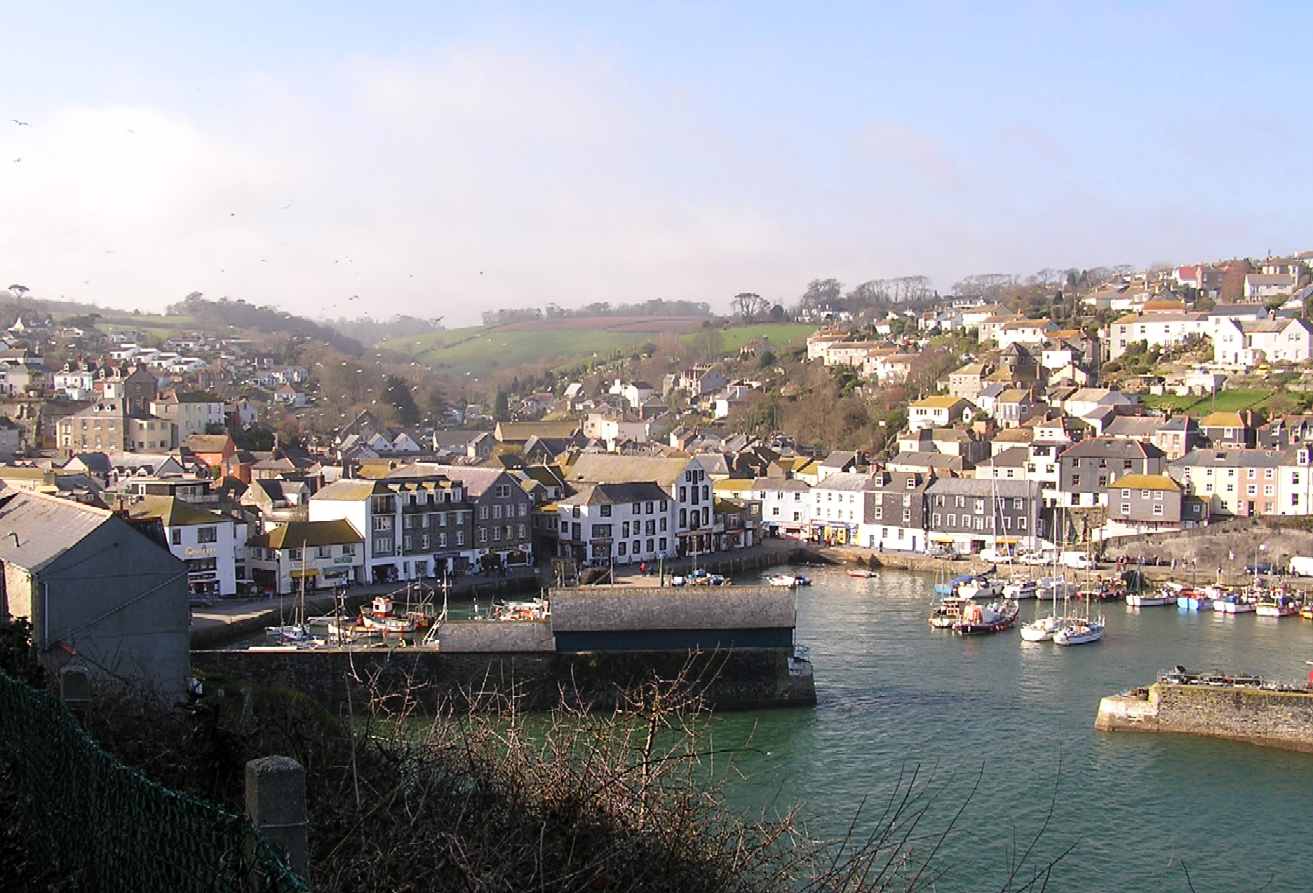
The village nestles in a small valley and faces east to Mevagissey Bay. The inner and outer harbours are busy with a mixture of pleasure vessels and working fishing boats. It has a thriving fishing industry and is the second biggest fishing port in Cornwall.
Mevagissey village centre consists of narrow streets with many places to eat and shops aimed at the tourist trade. The outer areas are built on the steep slopes of the surrounding hillsides and are mostly residential.
The first recorded mention of Mevagissey dates from 1313 (when it was known as Porthhilly), although there is evidence of settlement dating back to the Bronze Age.[citation needed]
The old name of the parish was Lamorrick, and it was part of the episcopal manor of Tregear. The church was dedicated to Saints Meva and Ida in 1259 by Bishop Bronescombe and in 1329 Sir Otho Bodrugan appropriated it to Glasney College. The Norman church was cruciform and some Norman work remains but the church was more or less rebuilt in the 15th century. In the Commonwealth period the tower became ruinous and the bells were taken down and sold to a Quaker of St Austell. According to tradition there has been a church on the same site since about 500 AD. Meva may well be the same as St Mewan and Issey is also the patron saint of St Issey.
Mevagissey is home to three holy wells. The Brass Well and Lady's Well are both situated in the manor of Treleaven, and the third is within the gardens of Mevagissey House, the old vicarage.
Towards the end of the 17th century, Porthhilly merged with the hamlet of Lamoreck (or Lamorrick) to make the new village. It was renamed "Meva hag Ysi", after two saints; St Mevan/Mewan, a Welsh man and an Irish woman, St Issey or Ida/Ita, (hag is the Cornish word for "and"). There is no evidence for why this new name was adopted but it may have been due to the Church replacing a Cornish name with a Christian one. The modern Cornish name is Lannvorek, after the old parish name. At this time the main sources of income for the village were pilchard fishing and smuggling and the village had at least ten inns, of which the Fountain and the Ship still remain.
Andrew Pears, the founder of Pears' Soap was born in the village in 1768 and set up a barber's shop here until he moved to London in 1789.
Mevagissey
Mevagissey (/ˌmɛvəˈɡɪzi/; Cornish: Lannvorek) is a village, fishing port and civil parish in Cornwall, England, United Kingdom. The village is approximately five miles (8 km) south of St Austell. At the 2021 census the population of the parish was 2,160 and the population of the built up area was 1,749.
The village nestles in a small valley and faces east to Mevagissey Bay. The inner and outer harbours are busy with a mixture of pleasure vessels and working fishing boats. It has a thriving fishing industry and is the second biggest fishing port in Cornwall.
Mevagissey village centre consists of narrow streets with many places to eat and shops aimed at the tourist trade. The outer areas are built on the steep slopes of the surrounding hillsides and are mostly residential.
The first recorded mention of Mevagissey dates from 1313 (when it was known as Porthhilly), although there is evidence of settlement dating back to the Bronze Age.[citation needed]
The old name of the parish was Lamorrick, and it was part of the episcopal manor of Tregear. The church was dedicated to Saints Meva and Ida in 1259 by Bishop Bronescombe and in 1329 Sir Otho Bodrugan appropriated it to Glasney College. The Norman church was cruciform and some Norman work remains but the church was more or less rebuilt in the 15th century. In the Commonwealth period the tower became ruinous and the bells were taken down and sold to a Quaker of St Austell. According to tradition there has been a church on the same site since about 500 AD. Meva may well be the same as St Mewan and Issey is also the patron saint of St Issey.
Mevagissey is home to three holy wells. The Brass Well and Lady's Well are both situated in the manor of Treleaven, and the third is within the gardens of Mevagissey House, the old vicarage.
Towards the end of the 17th century, Porthhilly merged with the hamlet of Lamoreck (or Lamorrick) to make the new village. It was renamed "Meva hag Ysi", after two saints; St Mevan/Mewan, a Welsh man and an Irish woman, St Issey or Ida/Ita, (hag is the Cornish word for "and"). There is no evidence for why this new name was adopted but it may have been due to the Church replacing a Cornish name with a Christian one. The modern Cornish name is Lannvorek, after the old parish name. At this time the main sources of income for the village were pilchard fishing and smuggling and the village had at least ten inns, of which the Fountain and the Ship still remain.
Andrew Pears, the founder of Pears' Soap was born in the village in 1768 and set up a barber's shop here until he moved to London in 1789.
Recent media
Recent media