Hubbry Logo
Holy wellHoly wellMain
Open search
Holy well
Community hub
Holy well
logo
8 pages, 0 posts
0 subscribers
Be the first to start a discussion here.
Holy well
Holy well
from Wikipedia
Holy well at Coole in County Cork, Ireland
Doon Well at Kilmacrennan in County Donegal, Ireland, c.1900. On the left, two women are praying by the well. On the right, an array of crutches, bandages and rosary beads deliberately left at the well by pilgrims.

A holy well or sacred spring is a well, spring or small pool of water revered either in a Christian or pagan context, sometimes both. The water of holy wells is often thought to have healing qualities, through the numinous presence of its guardian spirit or Christian saint. They often have local legends associated with them; for example in Christian legends, the water is often said to have been made to flow by the action of a saint. Holy wells are often also places of ritual and pilgrimage, where people pray and leave votive offerings. In Celtic regions, strips of cloth are often tied to trees at holy wells, known as clootie wells.

Names

[edit]

The term haeligewielle is in origin an Anglo-Saxon toponym attached to specific springs in the landscape;[1] its current use has arisen through folklore scholars, antiquarians, and other writers generalising from those actual 'Holy Wells', which survived into the modern era. The term 'holy-hole' is sometimes employed.[2]

Culture and representation

[edit]

Holy wells in different forms occur in such a wide variety of cultures, religious environments, and historical periods that it seems to be a universal human instinct to revere water sources.[3] However, the fragmentary nature of the evidence, and the historical differences among cultures and nations, make it very hard to generalize. While there are a few national studies of holy well lore and history, mainly concentrating on Ireland and the British Isles, there is a need for more work examining other regions.

The earliest work specifically devoted to holy wells is Philip Dixon Hardy's Holy Wells of Ireland (1836), a Protestant attack on Catholic observances at Irish wells bearing the names of Christian saints, or otherwise considered sacred. By the late 19th century, the term had evolved to its current usage. Robert Charles Hope's The Legendary Lore of the Holy Wells of England (1893), the first comprehensive survey of its kind, featured several named wells not dedicated to saints, along with rivers and lakes associated with folklore, as noted in Hope's subtitle.

Origin and development

[edit]
Saint Bernard's well at Stockbridge near Edinburgh in 1800.[4]

In ancient Greece and Rome, a nymphaeum or nymphaion (Greek: νυμφαίον), was a monument consecrated to the nymphs, especially those of springs.

In England, examples of reverence for wells and springs occur at a variety of historical periods. The medieval traveller William of Worcester saw a 'holy-hole, or well' within the cave at Wookey (Somerset), a site of human habitation in the Palaeolithic era and the source of a river which had been the site of ritual activity.[2] The proximity of named springs to Neolithic or Iron Age monuments, such as the Swallowhead Springs, close to Silbury Hill (Wiltshire) or the Holy Well near Tadmarton Hill (Oxfordshire), suggests that reverence for such sites continued without a break. There is abundant evidence for the importance of wells and springs in the Roman and sub-Roman period, not just at temple complexes such as Bath (Somerset), Chedworth (Gloucestershire),[5] and Blunsdon Ridge (Wiltshire)[6] which have medicinal springs at their centre, but a variety of smaller sites, and at wells and ritual shafts used for superstitious and sub-religious rituals.[7]

Christianity strongly affected the development of holy wells in Europe and the Middle East. Aside from the spring that issued from the staff of Moses and the Well of Beersheba, there were already a number of sites mentioned in Jewish and Christian folklore, including Moses' well near Mount Nebo, visited by the fourth-century nun Egeria and many other pilgrims. St Athanasius' Life of St Antony, written about 356–62, mentions the well created by the desert hermit Antony. It is unclear how many Christian holy wells there may have been, as records are very fragmentary and often a well appears only once, making it impossible to tell when reverence for it began and when it ceased, but by the Reformation England, for instance, probably possessed some hundreds. As they were closely linked with the cults of the saints, many wells in countries that converted to Protestant forms of Christianity fell into disuse and were lost, the Holy Well at Walsingham (Norfolk) being a good example, which, having been an integral element of the pilgrimage to the shrine of the Virgin Mary in the village, vanished completely. Nevertheless, this particular holy well at the Anglican Shrine of Our Lady of Walsingham was restored nearby the original site and its water is known for its healing properties, thus making it a popular site of Christian religious pilgrimage.[8] Visiting of wells for therapeutic and entertainment purposes did not completely die out, however, as spas became fashionable in the 17th century and later. Eventually, antiquarians (from the 17th century) and folklorists (from the 19th) began to take notice of holy wells and record their surviving traditions.[9]

More than a hundred holy wells exist in Cornwall, each associated with a particular saint, though not always the same one as the dedication of the church.[10][11]

Several holy wells also survive in Turkey, called ayazma in Turkish, from Greek ἁγίασμα (hagiasma), literally "holiness". Examples of hagiasmata are found in the Church of St. Mary of the Spring and the Church of St. Mary of Blachernae, both located in Istanbul.

Historiographical controversies

[edit]
Dupath Well in 1912.[12]

The Protestant Reformers of the 16th century often assumed that medieval Catholic practices embodied lingering remains of pagan religious practices and thought of holy wells in that way.[13] This affected the outlook of those who came to study holy well traditions later. The pioneers of folklore study took the view that the customs and legends they were recording were debased versions of pagan rites and myths. Thus it became standard to begin any account of holy wells with the statement that the Christian church had adopted them from the pagans and replaced the heathen gods with Christian saints, in order to win people over to the new religion more smoothly.

Among the earliest enthusiasts for holy wells in modern times was the Neopagan movement, for whom wells formed part of 'earth mysteries' study along with ley lines and ancient sites; the view that the Christians had 'stolen' holy wells from the pagan religions fitted in well with their position.[14] The magazines Wood and Water and Meyn Mamvro, among others, helped shape this approach. During the early and mid-1990s, this viewpoint was under increasing attack crowned by the publication of Ronald Hutton's The Pagan Religions of the Ancient British Isles (1991) which argued that the evidence for what constituted pre-Christian British religious practices, certainly outside Romano-British times, was next to nil.[15] As far as wells themselves were concerned, the controversy emerged in the pages of Source, the holy wells journal edited by Roy Fry and former Benedictine monk Tristan Gray-Hulse. A number of articles in the journal challenged long-standing myths about holy well history, and the editors published an exchange between the authors and Cheryl Straffon, editor of Cornish earth mysteries magazine Meyn Mamvro, about the evidence for a particular Cornish well's supposed association with the Irish goddess Brigid.[16] The eco-pagan movement has largely accepted the new historiographical approach,[citation needed] but occasionally rather more old-fashioned accounts of holy wells are published, for instance, Gary Varner's Sacred Springs (2002).

A related argument was over the nature of the influence of the Celts on the well cult. The late Francine Nicholson, an independent student of Celtica, argued forcefully and controversially that the Celts had a unique sensitivity to sacred wells, but never elaborated this in any published work.[17]

More recently, radically minded scholars have begun questioning the unity of concepts imposed by the term 'holy well'. In a paper in the Living Spring Journal, Jeremy Harte distinguishes between early Anglo-Saxon 'holy wells' and those Christianised in the Late Middle Ages, and argues 'apart from being venerated and being wet, they have little in common'; Harte has also stressed that limited evidence may mean scholars are considerably overestimating the number of holy wells which were active at any one time.[18]

Modern revival

[edit]
St Peter's Well at Houstin in Scotland. A rare Scottish covered well.

In a sense,[original research?] the restoration of holy wells began almost as soon as they were in decline, as a number became the subject of antiquarian interest and some were turned into garden features and put to other decorative uses. However, in more modern times wells have been restored as an expression of interest in the past, sometimes from romantic or religious motives, but mostly as a statement of continuity with the history of a particular community. A good example is St Osyth's Well at Bierton (Buckinghamshire), 'restored' (and in the process rebuilt completely) by the Parish Council as part of a project marking Millennium Year in 2000.[19]

The most active holy wells in Britain are those linked to Christian pilgrimages, at Walsingham, Fernyhalgh (Lancashire) and Holywell (Wales), or popular tourist sites (Bath, Somerset). The Chalice Well at Glastonbury (Somerset) is at the centre of a modern pagan- and New Age-orientated spirituality and retreat centre. Other wells, however, are often visited on an informal basis for religious or sightseeing reasons. New forms of holy well reverence continue to emerge now and again, notoriously the so-called Well of the Triple Goddess at Minster-in-Sheppey (Kent).[20] In 2001 Channel 4's archaeological television programme Time Team was responsible for exposing the infamous archaeological fraud of Llygadwy, a site which included an alleged holy well.[21]

Historiographically, the publication of Janet and Colin Bord's Sacred Waters (1985) was influential in reviving interest in the history and folklore of holy wells in Britain. The same year saw the foundation of the journal Source by Mark Valentine. Attempts to maintain a regular journal for the study of holy wells have been erratic (Source enjoyed two runs from 1985 to 1989 and 1994 to 1998, and the web-based Living Spring has had only two issues to date).

Preservation

[edit]

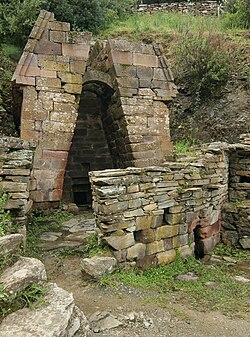
Often unmarked on maps and undistinguished by archaeological features, holy wells are a potentially vulnerable category of ancient site.[citation needed] Some example have been lost to farming, drainage work, development or neglect. Some examples include:

[edit]

See also

[edit]

References

[edit]

Further reading

[edit]
[edit]
Revisions and contributorsEdit on WikipediaRead on Wikipedia
from Grokipedia

A holy well is a natural spring, well, or small pool of water venerated for its religious associations, typically in Christian traditions where it is linked to saints and attributed with miraculous or curative properties. These sites, often enclosed in simple stone structures or marked by devotional features like statues or crosses, have served as destinations for centuries, where visitors engage in rituals including , , and depositing votive offerings such as cloth rags or coins. Prevalent —where approximately 3,000 are documented—and across Britain, , , and parts of , holy wells frequently exhibit continuity from pre-Christian sacred springs dedicated to deities or natural forces, later adapted to Christian through . Scholarly debate persists on their origins, with archaeological evidence suggesting pagan precedents in many cases, though some wells may represent indigenous Christian innovations tied to early rather than direct pagan inheritance. While anecdotal accounts of healings abound in , no empirical scientific validation supports claims of efficacy, underscoring their role as cultural and psychological loci rather than verified therapeutic agents. , these monuments are legally protected under national heritage laws, reflecting their enduring significance in and local identity despite secularization trends.

Definition and Characteristics

Terminology and Etymology

The English term "holy well" designates a natural spring, well, or small pool venerated for its perceived miraculous or properties, typically within Christian traditions but often overlaying pre-Christian sacred sites. The phrase emerged as a descriptive label for such water sources of limited size, distinguishing them from larger bodies like rivers or lakes, and gained widespread use through folklore studies in the from the onward. Etymologically, "holy well" derives from Old English halig wella or haeligewielle, a compound toponym denoting a sacred or consecrated spring, where halig (holy, from Proto-Germanic hailagaz, connoting wholeness or sanctity) combined with wella (well or spring, from the verb wiellan, to bubble or boil up). This usage appears in Anglo-Saxon place names, such as Haliwelle (modern Holywell), reflecting early Christian adaptation of pagan water cults rather than purely indigenous Christian invention. Regional terminology varies linguistically while preserving the core concept of sanctity. In Irish Gaelic, equivalents include tobar naofa (saintly or holy well, with tobar from Old Irish for "spring" or "source," possibly Proto-Celtic tubur, and naofa meaning sacred) or tobar beannaithe (blessed well). Similar terms exist in Welsh as ffynnon santo or ffynnon saint (saint's spring, from ffynnon meaning fountain or well) and in Scottish Gaelic contexts via tobar. In Eastern Orthodox traditions, Greek hagiasma (holiness or consecration) translates to Turkish ayazma, applied to venerated springs. These variations underscore a shared Indo-European linguistic heritage linking water sources to ritual purity, though English "holy well" predominates in scholarly and popular discourse on the phenomenon.

Physical and Symbolic Features

Holy wells physically comprise natural springs or seeps of , frequently enclosed by stone curbing, artificial basins, or drystone well houses equipped with steps for access to the . Associated features often include rag trees, such as hawthorn or , where pilgrims affix cloth strips or other votive offerings, alongside sacred stones like bullaun types or holed variants employed in curing rituals. Some incorporate statues of patron saints, penitential cairns, or small oratories such as beehive huts, creating a compact sacred precinct sometimes spanning church ruins or pilgrimage paths. Symbolically, the ceaseless emergence of signifies purification, life's generative force, and renewal, rooted in pre-Christian notions of and otherworldly access, later overlaid with of baptismal grace and saintly . Attributed stems from empirical mineral content in the waters—effective against ailments like or eye disorders—and practices, including drinking, bathing, or , posited to channel divine cures for physical and mental afflictions. Votive deposits and clockwise circumambulations ("paying the rounds") represent devotion and the symbolic transfer of illness to the well's spiritual patron.

Historical Development

Pre-Christian Pagan Foundations

Pre-Christian pagan veneration of wells and springs formed the foundational practices later adapted in Christian holy well traditions, rooted in the attribution of supernatural qualities to natural water sources across ancient European cultures. Archaeological findings from and sites, such as lakeshore settlements, document ritual deposits of artifacts, food offerings like cheese, and occasionally human remains in watery contexts, signaling the sacred role of springs in , , and spiritual rites. Among Celtic peoples, water was revered through worship of deities embodying rivers, wells, and springs, often viewed as bestowers of life, abundance, and oracular insight, with sites serving as thresholds to otherworldly realms. Votive practices involved depositing bent weapons, jewelry, and tools into wells and bogs during the , as evidenced in Ireland, , and Britain, where such offerings symbolized dedication to water spirits or goddesses akin to the Romano-Celtic . Continental parallels include prehistoric sacred springs in and sites surrounded by burial mounds, where hydrological features aligned with ritual landscapes, underscoring causal links between water's life-sustaining properties and divine agency in pagan cosmologies. Examples like the Nuragic Su Tempiesu in , dating to circa 1200–800 BCE, feature monumental architecture channeling spring water for ceremonial purification, predating Roman influences and exemplifying structured pagan hydro-rituals. These practices, empirically verified through stratified deposits and lacking Christian iconography, demonstrate independent pagan origins independent of later monotheistic overlays, with continuity inferred from persistent site usage rather than unsubstantiated survival narratives.

Christianization and Medieval Expansion

During the early Christian era in regions like and Britain, missionaries often rededicated pre-existing pagan sacred springs to Christian saints as a to integrate local customs and ease conversion, rather than eradicating them outright. This is evident in sites where wells previously venerated for healing or fertility were associated with figures like St. Brigid, whose attributes paralleled the Celtic goddess Brighid, transforming pagan rituals into Christian devotions such as baptismal uses by the early Celtic church. Scholarly analysis cautions against assuming universal pagan origins for all holy wells, noting that while some continuity existed, many dedications were novel Christian inventions tied to saintly miracles or martyrdom sites, with historiographical emphasis on pagan roots sometimes overstated for romantic or ideological reasons. In the medieval period spanning the 5th to 16th centuries, holy wells expanded significantly as focal points of Christian piety across , particularly in the , where they became integrated into the landscape of sacred geography alongside churches and shrines. Ireland alone features approximately 3,000 such sites, many documented in medieval hagiographies and records as places where saints like Patrick or were credited with miraculous water sources for healing or . This growth coincided with rising lay devotion and monastic influence, fostering organized —such as to in , a major medieval destination drawing crowds for its reputed restorative powers—and the construction of adjacent chapels or enclosures to formalize rituals like and votive offerings. The medieval proliferation reflected broader causal dynamics of religious adaptation and popular demand for accessible sacrality outside ecclesiastical control, with wells serving rural populations through pattern days tied to saints' feasts, often involving , , and cloth-tie offerings for vows. saw parallels, as in or , where similar springs were enshrined in medieval lore, though the retained the densest concentrations due to Celtic Christian legacies resisting full Roman standardization. Empirical records from charters and archaeological finds, such as inscribed stones or well-head structures dating to the 12th-15th centuries, substantiate this expansion, underscoring wells' role in vernacular faith amid feudal society's limited literacy and mobility.

Decline from Reformation to Industrial Era

The Protestant initiated a marked decline in the and maintenance of holy wells across much of , where reformers, influenced by doctrines rejecting saintly and efficacy, denounced them as superstitious practices akin to and "popish magic." Calvinist theology, which emphasized and viewed localized miracles at wells as unbiblical, contributed to official disapproval, with church authorities in regions like actively discouraging pilgrimages and rituals by the mid-16th century. This theological shift caused many wells to fall into neglect, as patronage from dissolved religious houses ceased and local refrained from endorsing them. The from 1536 to 1540 under directly impacted associated holy wells, as monastic oversight vanished and lands were repurposed, severing traditional custodianship; for instance, shrines linked to priories were dismantled, though the wells themselves often endured in altered folk capacities rather than overt destruction. Subsequent iconoclastic efforts under (1547–1553), including orders to deface images and eliminate "superstitious" sites, extended to sacred springs, with reports of wells being filled or repurposed amid broader campaigns against Catholic remnants, though comprehensive records of specific well demolitions remain sparse compared to church desecrations. In Puritan-dominated periods of the , further suppression occurred through local edicts and moral campaigns against "heathenish" customs, leading to widespread abandonment; by the late 1600s, numerous wells in Protestant were overgrown or memorialized only in place names, reflecting a causal break from medieval sacral geography. Regional variations tempered the decline: , where Catholic resistance to the Reformation persisted, holy wells gained prominence as alternative devotional foci after pre-Reformation churches transferred to Protestant control, enabling clandestine patterns (pilgrimages) amid 16th- and 17th-century persecutions, with documented assemblies at wells like those in Mayo by the early 1600s. saw similar Protestant-led discouragement post-1560, with government and kirk sessions fining participants in well rituals into the , yet folk persistence in remote areas like the Highlands delayed total eclipse. Entering the Industrial Era around 1760–1840, rationalist skepticism from the Enlightenment compounded religious disfavor, eroding belief in well efficacy as empirical science challenged miraculous claims, while enclosure acts (e.g., over 4,000 passed between 1760 and 1820) and urban migration disrupted rural access and traditions. Industrial expansion polluted sources and overlaid sites with infrastructure, hastening physical and cultural obsolescence in and lowland ; by the early , antiquarian surveys noted hundreds of wells as derelict, their decline attributable to severed causal links between agrarian communities and localized sacrality rather than singular events.

Geographical Distribution and Examples

British Isles Concentration

![St Brigid's Well, Cullion, County Westmeath][float-right] Holy wells exhibit a notable concentration within the , where environmental, cultural, and historical factors fostered their proliferation compared to . Ireland hosts the densest distribution, with archaeological records identifying approximately 3,000 such sites across the and fewer than 200 in [Northern Ireland](/page/Northern Ireland), far exceeding counts in any other nation. These wells often trace to pre-Christian sacred springs repurposed under early Christian saints, reflecting a syncretic adaptation evident in dedications to figures like , whose sites blend pagan fire worship with baptismal motifs. In Ireland, wells like St. Brigid's at Cullion in feature stone enclosures, rag trees for votive offerings, and pilgrimage patterns tied to feast days such as , persisting despite 19th-century ecclesiastical discouragement of non-liturgical practices. Concentrations cluster in western counties like Mayo and Kerry, where mineral-rich waters supported claims of curative properties for ailments including eye disorders (e.g., Tobar na Súl). This density correlates with Ireland's rural, Catholic-majority persistence post-Reformation, unlike Protestant regions where well veneration waned. Wales maintains a significant corpus, with sites like Llanllawer holy well exemplifying medieval stone structures channeling springs into baptisteries or healing basins, often named Ffynnon Wen for purported milky, purifying waters. Historical records from the 19th-century antiquarian revival document over 200 active or ruined wells, linked to Celtic saints and sustained by folk traditions resistant to Puritan suppression. Scotland features around 100 documented holy wells, including clootie wells at Munlochy on the , where pilgrims tie cloth strips to trees as proxies for ailments, a practice echoing pre-Christian overlaid with saintly patronage like St. Moluag. These sites, prevalent in the Highlands, declined under Presbyterian from the but survive in remote areas, with archaeological evidence of cups or offerings indicating continuity. England records fewer surviving wells, estimated at under 200, due to systematic destruction during the ; however, Cornish examples like Dupath Well preserve granite chapels from the , used for immersion cures until the . Regional hotspots in the southwest and north reflect incomplete eradication, with attributing efficacy to ferrous or sulphurous compositions rather than intervention. ![Clootie well at Munlochy, Scotland][center] This Isles-wide pattern underscores causal influences: geological abundance of springs in Celtic fringe terrains, combined with delayed central ecclesiastical control, enabled folk persistence over doctrinal purity. Modern surveys affirm over 3,500 total sites, with comprising the majority, though many English and Scottish examples now serve touristic or heritage roles absent active veneration.

Europe and Global Parallels

Holy wells appear across , frequently incorporating pre-Christian sacred springs into Christian veneration, with associations to local saints and purported healing effects. In , , numerous such wells persist, each attributed specific curative properties; for instance, water from Saint Mériadek's well was ingested for relief, while Saint Cadoc's well treated , reflecting a tradition of folk medicine tied to saintly . Similar sites dot the region, often near megalithic structures, underscoring Celtic continuities from pagan water cults. In , prehistoric examples predate Christian influence, such as the Nuragic sacred well of Su Tempiesu in Orune, , constructed around the 13th century BC for water worship rituals, featuring a vaulted tholos chamber leading to an underground spring, evidencing early organized hydro-ritual practices. preserves sites like the Well of the Miracle in , linked to a 13th-century legend of saintly intervention during a , where the spring's emergence saved besieged forces, perpetuating its status as a miraculous source. Germany and Scandinavia host comparable venerated springs, though less densely documented than in Celtic areas. In Denmark, historical records note over 720 springs accredited with supernatural healing, their names often denoting specific ailments cured, indicating widespread medieval belief in aqueous thaumaturgy. examples include the in the region, sought since at least the for therapeutic against and skin conditions, drawing pilgrims to mineral-rich waters. In the Orthodox tradition of and , hagiasmata—holy springs tied to Marian or saintly apparitions—flourish, exemplified by the Life-Giving Spring in , originating in a 5th-century vision to future Emperor Leo before the city's walls, where the waters healed a blind man, fostering enduring . Global parallels extend beyond Europe, manifesting in diverse religious contexts where natural springs symbolize purity, fertility, or divine favor, often with ritual bathing for purification or healing. In , the in , , revered since pre-Islamic times and deepened by Abraham according to tradition, supplies water believed to confer physical and spiritual healing, consumed by millions of pilgrims annually. features analogous tirthas, sacred bathing sites like the and its wells in , where immersion ritually absolves sins and restores health, rooted in Vedic hydrotheology. In , , the spring temple, dating to the AD, facilitates Hindu purification ceremonies using channeled from underground sources, paralleling European patterns of seasonal devotion and votive offerings. African traditions include South Africa's Montagu hot springs, utilized by peoples for millennia and later by Europeans for therapeutic soaks, highlighting mineral waters' cross-cultural appeal for ailment relief. These instances reflect a universal human inclination to sacralize vital freshwater sources, attributing efficacy to empirical observations of hydration and minerals alongside metaphysical interpretations.

Practices and Beliefs

Rituals, Pilgrimages, and Patterns

Rituals at holy wells typically involve devotional acts tied to supplication for healing or favor, such as circling the site sunwise (deiseal) three times, reciting prayers, and consuming or applying the water. In Irish traditions, participants often perform "rounds," a structured sequence of prayers and prostrations at designated stations around the well, sometimes barefoot and on feast days. Offerings like coins, pins, or cloths are deposited, with the latter—known as clooties in Scottish sites—dipped in the water and tied to nearby trees or bushes, believed to transfer ailments as the fabric decays. These practices persist from pre-Christian customs adapted under Christianity, emphasizing reciprocity between devotee and sacred site. Pilgrimages to holy wells occur predominantly on the feast days of associated saints, forming annual "patterns" in and parts of Britain, where crowds gather for communal devotion, processions, and sometimes secular festivities. For instance, at sites linked to Saint Brigid, such as those in , pilgrims visit on , her traditional feast, performing rituals for cures or blessings. In , at Holywell has drawn continuous since the , with records of visits for immersion in its waters dating to medieval times. Scottish clootie wells, like that at Munlochy, attract visitors year-round but peak during solstices or saints' days, involving similar circuits and votive acts. Patterns of these practices reveal regional consistencies rooted in Celtic , including thrice-repeated actions symbolizing completeness and solar alignment, alongside prohibitions against counterclockwise movement to avoid misfortune. Devotions often blend personal —such as or —with collective elements like shared meals post-ritual, though clerical oversight varied, with some 19th-century Irish bishops decrying excesses while tolerating core acts. Empirical observations from ethnographic accounts note higher attendance during agrarian festivals, correlating with seasonal health concerns like ailments post-winter.

Attributed Healing and Miraculous Claims

Holy wells have been attributed with healing properties for ailments including eye disorders, skin conditions, , and , often through , drinking the water, or applying it topically during . These claims, preserved in , hagiographies, and 17th-19th century accounts, frequently involve spontaneous recoveries following , with specific wells linked to targeted cures such as via ritual or eye afflictions through immersion. At St Govan's Well in , , naturalist noted in 1662 that the waters were "famous for the Cure of all Diseases." Subsequent records from 1775 describe pilgrims traveling 40 miles for hip pain relief and eye treatments using limpet shells to collect water, while 1807 accounts mention votive crutches left after limb cures and anointing infants for vitality. By 1859, claims extended to scrofula, dropsy, and , including a woman reportedly cured after repeated visits. In Ireland, a 1673 incident at St Augustine's Well involved 14-year-old Patrick Lynch, who suffered chronic vomiting and weakness; after immersion on June 11 (Feast of St. Barnabas) and drinking three draughts of water amid a reported vision, he regained health and appetite. Recorded in Roderic O’Flaherty's 1684 West or H-Iar Connaught, the event prompted clerical depositions debating miraculous versus hydropathic causes. Other sites, like Tobar Mhuire in Cork, are credited with remedies for blindness and lameness, while saints' vitae often describe wells miraculously produced to heal the faithful. Scottish clootie wells feature cloths tied to trees representing afflicted areas, with the belief that decay transfers the illness, embodying sympathetic traditions. Such attributions, while anecdotal and unverified by empirical standards, reflect longstanding cultural in the wells' efficacy.

Evidence and Controversies

Archaeological and Documentary Records

Excavations at select holy well sites reveal multi-period occupation and ritual activity, though direct evidence for pre-Christian veneration is sparse and often overlaid by later Christian features. At Ashiag Holy Well (Tobar Ashik) in the , archaeological digs uncovered artifacts spanning to the post-medieval era, including stone structures and deposits suggestive of continuous ceremonial use. In , many ancient springs were repurposed during the medieval period, with renovations destroying potential earlier archaeological layers, complicating attribution of origins. Irish holy well sites similarly show votive offerings at watery locations, such as deposits of metalwork and remains, but establishing unbroken continuity to Christian-era wells requires cautious interpretation due to the prevalence of medieval rebuilds. Prehistoric sacred water sites, like Bronze Age well-temples in Sardinia, demonstrate structured veneration of springs independent of Christianity, featuring hydraulic engineering for ritual immersion, though parallels to later European holy wells remain inferential without textual corroboration. Documentary records primarily emerge from medieval Christian sources, with scant pre-8th-century mentions. In Ireland, early medieval hagiographies and annals document wells tied to saints, such as an 8th-century vita describing St. Patrick bathing at Struell Wells in County Down for ritual purification. Hiberno-Latin saints' lives from the 7th-8th centuries frequently narrate miracles at springs, attributing healing to saintly intervention, as in accounts of water flowing or curing ailments post-baptismal blessing. Continental European charters and pilgrimage guides from the 9th-12th centuries reference well cults, often condemning or regulating them amid church efforts to centralize devotion, yet affirming their popularity for specific cures like eye disorders or infertility. These texts, drawn from monastic scriptoria, likely underrepresent pagan precedents while emphasizing Christian appropriation, as evidenced by the absence of non-hagiographic pagan well lore in surviving Latin records.

Scientific Scrutiny of Supernatural Assertions

Scientific investigations into the purported healing properties of holy well waters have consistently found no supporting claims of miraculous intervention. Chemical analyses of waters from over 200 Irish holy wells, conducted as part of a comprehensive hydrogeological study published in 2023, revealed compositions typical of local , with variations attributable to regional such as limestone dissolution yielding calcium and ions, but no anomalous or supernatural elements. Similarly, examinations of thermal and springs associated with traditions show elevated levels of trace minerals like iron or in some cases, which may offer mild therapeutic benefits akin to conventional waters, but these effects are pharmacological rather than divine. Perceived cures at holy wells are frequently explained by the , where belief in the water's efficacy triggers measurable physiological responses, including pain reduction and improved mood, independent of any active substance. A 2021 study on placebo mechanisms in religious contexts demonstrated that administering inert substances framed as sacred—such as presented as holy—produced activity changes and subjective improvements mirroring those in faith-based rituals, underscoring expectation as the causal driver. This aligns with broader research on , where anecdotal reports of recovery often coincide with rates for conditions like cancers or infections, without exceeding baseline probabilities in controlled settings. The case of , a prominent holy spring site, illustrates the challenges in validating claims. Since 1858, over 7,000 healings have been reported, yet the Lourdes Medical Bureau—employing rigorous criteria including independent medical verification and exclusion of psychosomatic or remissive cases—has certified only 70 as inexplicable by 2023, with many critics attributing even these to incomplete diagnostics or psychological factors rather than miracles. studies of Lourdes water exposure further indicate effects limited to expectation-driven neural responses, not inherent water properties. Absent randomized, double-blind trials specific to holy wells, assertions remain unsubstantiated, with causal realism favoring naturalistic mechanisms over unverified divine agency.

Modern Context

Revival in Paganism and Folk Traditions

Since the mid-20th century, neopagan movements including , established publicly by in the , and revived Druidry have incorporated holy wells into rituals as sites embodying pre-Christian veneration of water spirits or goddesses. These groups often reconstruct practices such as , offerings of flowers or coins, and invocations at wells like the Chalice Well in , , interpreting them as portals to earth energies or dedicated to deities like the Celtic Brigantia. However, archaeological and historical scholarship finds scant evidence for unbroken pagan continuity at most holy wells, attributing their sacred status primarily to Christian innovation rather than revived ancient cults, with neopagan usages representing modern esoteric reconstructions influenced by 19th-century and . In parallel, folk traditions at holy wells have endured into the present, particularly in rural , , and , where practices like tying clooties—strips of cloth—to adjacent trees or bushes persist as symbolic transfers of illness to the decaying material. At the near Munlochy, , visitors continue this custom year-round, leaving rags, ribbons, and personal items alongside prayers for health or wishes, a rite traceable to pre-modern folk healing but maintained independently of . In , over 3,000 documented holy wells serve as foci for ongoing pilgrimages known as "patterns," involving sunwise circuits, votive deposits, and sometimes or bare-kneed approaches, as observed in contemporary ethnographic studies of southwestern sites. These activities blend residual Catholic elements with vernacular customs, attracting locals and tourists; for instance, St. Brigid's Well in Louth draws thousands annually on February 1, aligning with both the saint's feast and seasonal folk observances. Neopagans have occasionally adapted these folk rites, secularizing or paganizing them by omitting and emphasizing elemental forces, as seen in seasonal gatherings at wells during solstices or equinoxes. Such revivals, while culturally resonant, remain marginal, with participation limited to small groups amid broader decline in traditional folk adherence, though they contribute to at preserved sites.

Preservation, Tourism, and Commercial Aspects

In , holy wells are designated as recorded archaeological monuments and afforded legal under the National Monuments Acts, requiring notification and approval for any proposed works that could affect their fabric or setting. Preservation initiatives include community-led restoration projects, such as those by the All is Well organization, which focuses on repairing and maintaining derelict sites to sustain their and spiritual significance. County-level efforts, like those in Clare by the local council, emphasize awareness and conservation of wells as part of built, natural, and , often integrating them into broader environmental plans. Scientific investigations, including a 2023 Geological Survey publication and a 2024 hydrogeological study, document water chemistry and settings to inform sustainable upkeep, revealing anthropogenic pressures like at some sites but also baseline data for . In the , many wells have undergone voluntary restoration since the late , preserving structural features like stone enclosures and allowing continued public access for reflection. Holy wells draw modest but steady , primarily as sites for personal devotion, , and informal pilgrimages rather than visitation. In Ireland, where patterns of visitation persist among older Catholic demographics, wells function as therapeutic landscapes blending historical with contemporary wellness practices, though visitor numbers remain unquantified at a national scale. exemplifies regional trends, with approximately one-third of documented wells (around 100 of 300 surveyed) still actively visited, supporting low-impact amid concerns over site degradation from foot traffic or neglect of the inactive two-thirds. records 187 protected holy well sites, contributing to heritage trails that attract cultural tourists, while 's , like Munlochy's, see seasonal gatherings involving cloth-tie s that enhance experiential appeal without overwhelming infrastructure. Across Europe, similar sites in regions like and integrate into walking routes, fostering biocultural appreciation but facing challenges from pressures observed at larger sacred springs elsewhere. Commercial aspects remain limited and historically sporadic, with few instances of direct monetization due to ecclesiastical discouragement of commodifying sacred waters in Catholic traditions. In the UK, the Malvern Holy Well served as a bottling site for mineral water sales until the 1960s, reflecting early 19th-century spa-era exploitation of perceived curative properties before disuse. Modern practices occasionally involve pilgrims purchasing or leaving votive offerings, such as rosaries or coins in collection boxes for site maintenance, indirectly supporting local economies through ancillary spending on nearby accommodations or crafts. Broader bottled "holy water" products exist from non-well sources, marketed for spiritual or health claims, but these diverge from authentic folk well traditions and lack empirical endorsement beyond anecdotal reports. Preservation efforts thus prioritize non-commercial stewardship to mitigate risks like over-extraction or litter from casual souvenir-seeking.

References

Add your contribution
Related Hubs
User Avatar
No comments yet.