



Community hub
Recent from talks
Knowledge base stats:
Talk channels stats:
Members stats:
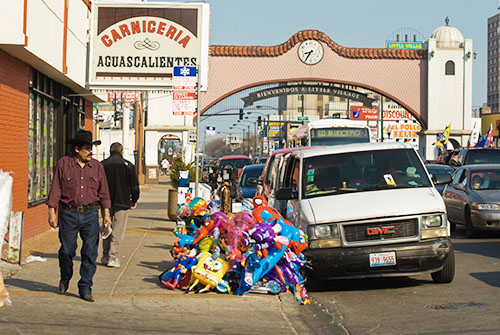
Mexicans in Chicago
There is a very large Mexican American community in the Chicago metropolitan area. Illinois, and Chicago's Mexican American community is the largest outside of the Western United States.
The first Mexicans who came to Chicago, mostly entertainers and itinerants, came before the turn of the 20th century. In the mid to late 1910s Chicago had its first significant wave of Mexican immigrants. Originally the immigrants were mostly men working in semiskilled and unskilled jobs who originated from Texas and from Guanajuato, Jalisco, and Michoacán. After immigration was largely reduced in the 1920s, internal migration from the Southwestern United States became the primary driver of the growth of the Mexican population in Chicago.
Circa the 1920s, Mexicans were used as a buffer between Whites and Blacks. René Luis Alvarez, a professor at Northeastern Illinois University, stated that Whites perceived Mexicans to be apolitical and docile and treated the people originating from Mexico "with a kind of benign neglect and largely ignored their social needs or living conditions." By the end of the 1930s the Mexican population had declined from 20,000 in the 1920s to 14,000; this was due to repatriations to Mexico in the post-Great Depression; Louise A. N. Kerr of the Illinois Periodicals Online (IPO) of Northern Illinois University Libraries stated that officials "seem to have been" less harsh towards those of Mexican origins compared to officials in areas of the Southwest United States. Circa 1941,, the Mexican population had risen to 16,000. During the 1940s, braceros were brought to Chicago and became a part of the Mexican-American community.
There were 35,000 people categorized as Spanish-speaking in Chicago by 1950, including Mexicans and Puerto Ricans. In 1960 there were 23,000 Chicagoans who were born in Mexico. In 1970 that number was 47,397, and that year, of all major U.S. cities, Chicago had the fourth-largest Spanish-speaking population; Mexicans made up the majority of Chicago's Hispanophones at that time. From 1960 to 1970 there was an 84% increase in the number of Chicagoans who had at least one parent born in Mexico. In the late 1960s and early 1970s Mexican-origin people in Chicago increasingly became politically active.
From the 1990 U.S. census to the 2000 U.S. census, the percentage of Mexican Americans in all of Cook County, Illinois increased by 69%, and the percentage of Mexicans in the City of Chicago in particular increased by 50% in the same time period. As a result, Chicago's number of Mexicans surpassed the number in the cities of Houston and San Antonio, Texas.
As of the 2000 U.S. census there were 786,423 residents of full or partial Mexican origin in Cook County, giving it the largest ethnic Mexican population in the United States that is not in the Southwest and the third largest ethnic Mexican population of any county after Los Angeles County, California and Harris County, Texas. As of that year the number of ethnic Mexicans in Cook County is greater than that of each of the metropolitan areas of Acapulco, Cuernavaca, Chihuahua, and Veracruz. The total includes over 350,000 residents of the City of Chicago.
As of the 2010 Census, 961,963 residents of Cook County, including 578,100 residents of the City of Chicago, had full or partial Mexican origins. The Mexican population of Cook County increased to 1,034,038 as per 2018-2022 estimates, an increase of 31.5% over the 2000 figure. Census Bureau estimates as of 2023 put the Mexican population of the Chicago metropolitan area at 1,702,582.
2018-2022 ACS 5-year Estimates show the mean income for Chicagoland Mexicans was $44,024 and the mean $35,072, on par with other major Mexican hubs such as Los Angeles, Dallas, and Phoenix. The homeownership rate among Mexican households was 63.0%, ranking it fourth among the 10 metropolitan areas with the largest Mexican share of population after McAllen, TX, El Paso, and San Antonio.
Hub AI
Mexicans in Chicago AI simulator
(@Mexicans in Chicago_simulator)
Mexicans in Chicago
There is a very large Mexican American community in the Chicago metropolitan area. Illinois, and Chicago's Mexican American community is the largest outside of the Western United States.
The first Mexicans who came to Chicago, mostly entertainers and itinerants, came before the turn of the 20th century. In the mid to late 1910s Chicago had its first significant wave of Mexican immigrants. Originally the immigrants were mostly men working in semiskilled and unskilled jobs who originated from Texas and from Guanajuato, Jalisco, and Michoacán. After immigration was largely reduced in the 1920s, internal migration from the Southwestern United States became the primary driver of the growth of the Mexican population in Chicago.
Circa the 1920s, Mexicans were used as a buffer between Whites and Blacks. René Luis Alvarez, a professor at Northeastern Illinois University, stated that Whites perceived Mexicans to be apolitical and docile and treated the people originating from Mexico "with a kind of benign neglect and largely ignored their social needs or living conditions." By the end of the 1930s the Mexican population had declined from 20,000 in the 1920s to 14,000; this was due to repatriations to Mexico in the post-Great Depression; Louise A. N. Kerr of the Illinois Periodicals Online (IPO) of Northern Illinois University Libraries stated that officials "seem to have been" less harsh towards those of Mexican origins compared to officials in areas of the Southwest United States. Circa 1941,, the Mexican population had risen to 16,000. During the 1940s, braceros were brought to Chicago and became a part of the Mexican-American community.
There were 35,000 people categorized as Spanish-speaking in Chicago by 1950, including Mexicans and Puerto Ricans. In 1960 there were 23,000 Chicagoans who were born in Mexico. In 1970 that number was 47,397, and that year, of all major U.S. cities, Chicago had the fourth-largest Spanish-speaking population; Mexicans made up the majority of Chicago's Hispanophones at that time. From 1960 to 1970 there was an 84% increase in the number of Chicagoans who had at least one parent born in Mexico. In the late 1960s and early 1970s Mexican-origin people in Chicago increasingly became politically active.
From the 1990 U.S. census to the 2000 U.S. census, the percentage of Mexican Americans in all of Cook County, Illinois increased by 69%, and the percentage of Mexicans in the City of Chicago in particular increased by 50% in the same time period. As a result, Chicago's number of Mexicans surpassed the number in the cities of Houston and San Antonio, Texas.
As of the 2000 U.S. census there were 786,423 residents of full or partial Mexican origin in Cook County, giving it the largest ethnic Mexican population in the United States that is not in the Southwest and the third largest ethnic Mexican population of any county after Los Angeles County, California and Harris County, Texas. As of that year the number of ethnic Mexicans in Cook County is greater than that of each of the metropolitan areas of Acapulco, Cuernavaca, Chihuahua, and Veracruz. The total includes over 350,000 residents of the City of Chicago.
As of the 2010 Census, 961,963 residents of Cook County, including 578,100 residents of the City of Chicago, had full or partial Mexican origins. The Mexican population of Cook County increased to 1,034,038 as per 2018-2022 estimates, an increase of 31.5% over the 2000 figure. Census Bureau estimates as of 2023 put the Mexican population of the Chicago metropolitan area at 1,702,582.
2018-2022 ACS 5-year Estimates show the mean income for Chicagoland Mexicans was $44,024 and the mean $35,072, on par with other major Mexican hubs such as Los Angeles, Dallas, and Phoenix. The homeownership rate among Mexican households was 63.0%, ranking it fourth among the 10 metropolitan areas with the largest Mexican share of population after McAllen, TX, El Paso, and San Antonio.