
Recent from talks
Mi-Sex
Knowledge base stats:
Talk channels stats:
Members stats:
Mi-Sex
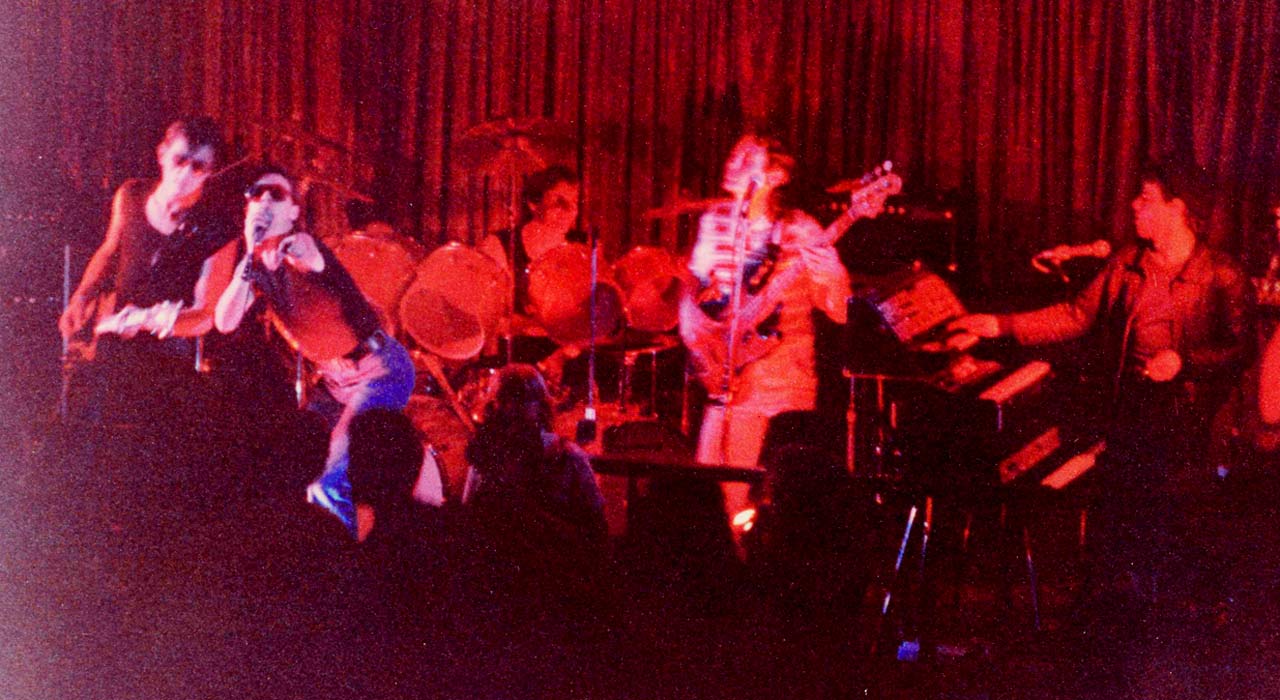
Mi-Sex (also styled as MiSex) is a New Zealand new wave band originally active from 1978 to 1986, and led for much of its existence by Steve Gilpin as vocalist, Kevin Stanton as guitarist and songwriter, Murray Burns as keyboardist and songwriter, and Don Martin as bassist. The group's manager for much of its career was Bob Yates. Mi-Sex achieved two top 10 hit singles in 1979-80: "Computer Games" in October 1979 (No. 1 in Australia, No. 5 in New Zealand) and "People" in 1980 (No. 6 and No. 3, respectively). Their first two albums both reached the New Zealand top 10, Graffiti Crimes (July 1979) and Space Race (No. 1, June 1980). They were known for their cutting edge production and dynamic live shows. Gilpin died in January 1992, two months after a serious car accident from which he never recovered. Mi-Sex have periodically reformed, including in 2011 with Steve Balbi (ex-Noiseworks) on lead vocals. Stanton died on 17 May 2017, Martin on 10 August 2020.
Mi-Sex was formed in 1978 in New Zealand when Murray Burns on keyboards, Steve Gilpin on lead vocals, Don Martin on bass guitar and Kevin Stanton on lead guitar and backing vocals (all ex-Fragments of Time) and were joined by Richard Hodgkinson on drums. The band name is adapted from an Ultravox track, "My Sex", from that group's debut album, Ultravox! (February 1977).
Gilpin had earlier performed as a solo artist in New Zealand, following his winning a TV talent quest, New Faces, in 1972 (second place in the same show was Shona Laing). Invercargill-born Burns was influenced by progressive rock bands such as Yes, whereas Stanton's influences veered towards heavy metal. During 1977 Gilpin met Martin and they set about forming their own band; Martin brought Stanton on board and together with former Father Time members Alan Moon and Phil "Smarty" Smart, they formed Fragments of Time.
Fragments of Time were influenced by British new wave and pub rock bands; they received a commission from EMI New Zealand's Peter Dawkins, who wanted a punk-new wave record to introduce the label's new roster. Their line-up changed, with Moon replaced by Burns and Smart leaving, replaced briefly by Steve Osborne and then by Hodgkinson. Fragments of Time developed a quirky, futurist, paranoia-themed blend of new wave, punk, and pub rock, amalgamating some of the textures common to Britain's Ultravox with those more associated with The Stranglers. They blended this with a liberal dose of on stage theatrics. At around the same time, they changed their name – urgently needed for their demo. In a meeting in a room at the back of the Aranui hotel which they were playing in, they accepted the name Stanton had proposed.
Mi-Sex released their first single for EMI New Zealand, "Straight Laddie" (originally intended as a demo), early in 1978. Early performances include the Wellington Institute of Technology and Dr Johns (Ray Johns), on the same day with demo recording at Dellbrook studios in Tawa, and the bus breaking a gearbox on the Ngauranga Gorge section of motorway.
In August 1978 the band relocated to Sydney, where they became the city's "fourth biggest drawcard" within six months. They were signed to the Australian division of CBS Records by the label's A&R manager and house producer, Dawkins, who had produced "Straight Laddie". Their first single for CBS, "But You Don't Care", was released in Australia in May 1979, which peaked at No. 25 on the local Kent Music Report Singles Chart and No. 33 on their native Official New Zealand Music Chart.
Their debut album, Graffiti Crimes was issued in July 1979 to coincide with their national tour supporting Talking Heads. They also headlined their own tour of Australia. It reached No. 6 in New Zealand and the top 20 in Australia. It was also produced by Dawkins at Studios 301, during April and May 1979.
Added to later versions of the LP is their biggest hit, the synthesiser-driven single, "Computer Games", which was co-written by Burns, Gilpin and Stanton. It was released in Australia on 1 October 1979. Dawkins had first heard the track at the album launch, in July, he asked Stanton, "'Why didn't you play me "Computer Games" when we were doing the demos for the album?'. Kevin answered in the most succinct way possible, 'Because I hadn't written it yet!" The single went to No. 1 in Australia, made the top 5 in New Zealand; and reached the top 10 in Austria, Canada, France, Italy, South Africa and West Germany.
Hub AI
Mi-Sex AI simulator
(@Mi-Sex_simulator)
Mi-Sex
Mi-Sex (also styled as MiSex) is a New Zealand new wave band originally active from 1978 to 1986, and led for much of its existence by Steve Gilpin as vocalist, Kevin Stanton as guitarist and songwriter, Murray Burns as keyboardist and songwriter, and Don Martin as bassist. The group's manager for much of its career was Bob Yates. Mi-Sex achieved two top 10 hit singles in 1979-80: "Computer Games" in October 1979 (No. 1 in Australia, No. 5 in New Zealand) and "People" in 1980 (No. 6 and No. 3, respectively). Their first two albums both reached the New Zealand top 10, Graffiti Crimes (July 1979) and Space Race (No. 1, June 1980). They were known for their cutting edge production and dynamic live shows. Gilpin died in January 1992, two months after a serious car accident from which he never recovered. Mi-Sex have periodically reformed, including in 2011 with Steve Balbi (ex-Noiseworks) on lead vocals. Stanton died on 17 May 2017, Martin on 10 August 2020.
Mi-Sex was formed in 1978 in New Zealand when Murray Burns on keyboards, Steve Gilpin on lead vocals, Don Martin on bass guitar and Kevin Stanton on lead guitar and backing vocals (all ex-Fragments of Time) and were joined by Richard Hodgkinson on drums. The band name is adapted from an Ultravox track, "My Sex", from that group's debut album, Ultravox! (February 1977).
Gilpin had earlier performed as a solo artist in New Zealand, following his winning a TV talent quest, New Faces, in 1972 (second place in the same show was Shona Laing). Invercargill-born Burns was influenced by progressive rock bands such as Yes, whereas Stanton's influences veered towards heavy metal. During 1977 Gilpin met Martin and they set about forming their own band; Martin brought Stanton on board and together with former Father Time members Alan Moon and Phil "Smarty" Smart, they formed Fragments of Time.
Fragments of Time were influenced by British new wave and pub rock bands; they received a commission from EMI New Zealand's Peter Dawkins, who wanted a punk-new wave record to introduce the label's new roster. Their line-up changed, with Moon replaced by Burns and Smart leaving, replaced briefly by Steve Osborne and then by Hodgkinson. Fragments of Time developed a quirky, futurist, paranoia-themed blend of new wave, punk, and pub rock, amalgamating some of the textures common to Britain's Ultravox with those more associated with The Stranglers. They blended this with a liberal dose of on stage theatrics. At around the same time, they changed their name – urgently needed for their demo. In a meeting in a room at the back of the Aranui hotel which they were playing in, they accepted the name Stanton had proposed.
Mi-Sex released their first single for EMI New Zealand, "Straight Laddie" (originally intended as a demo), early in 1978. Early performances include the Wellington Institute of Technology and Dr Johns (Ray Johns), on the same day with demo recording at Dellbrook studios in Tawa, and the bus breaking a gearbox on the Ngauranga Gorge section of motorway.
In August 1978 the band relocated to Sydney, where they became the city's "fourth biggest drawcard" within six months. They were signed to the Australian division of CBS Records by the label's A&R manager and house producer, Dawkins, who had produced "Straight Laddie". Their first single for CBS, "But You Don't Care", was released in Australia in May 1979, which peaked at No. 25 on the local Kent Music Report Singles Chart and No. 33 on their native Official New Zealand Music Chart.
Their debut album, Graffiti Crimes was issued in July 1979 to coincide with their national tour supporting Talking Heads. They also headlined their own tour of Australia. It reached No. 6 in New Zealand and the top 20 in Australia. It was also produced by Dawkins at Studios 301, during April and May 1979.
Added to later versions of the LP is their biggest hit, the synthesiser-driven single, "Computer Games", which was co-written by Burns, Gilpin and Stanton. It was released in Australia on 1 October 1979. Dawkins had first heard the track at the album launch, in July, he asked Stanton, "'Why didn't you play me "Computer Games" when we were doing the demos for the album?'. Kevin answered in the most succinct way possible, 'Because I hadn't written it yet!" The single went to No. 1 in Australia, made the top 5 in New Zealand; and reached the top 10 in Austria, Canada, France, Italy, South Africa and West Germany.
Recent media