
Recent from talks
Michael Dummett
Knowledge base stats:
Talk channels stats:
Members stats:
Michael Dummett
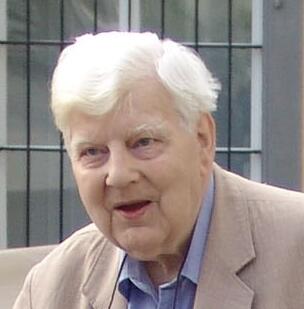
Sir Michael Anthony Eardley Dummett FBA (/ˈdʌmɪt/; 27 June 1925 – 27 December 2011) was an English academic described as "among the most significant British philosophers of the last century and a leading campaigner for racial tolerance and equality." He was, until 1992, Wykeham Professor of Logic at the University of Oxford. He wrote on the history of analytic philosophy, notably as an interpreter of Frege, and made original contributions particularly in the philosophies of mathematics, logic, language and metaphysics.
He was known for his work on truth and meaning and their implications to debates between realism and anti-realism, a term he helped to popularize. In mathematical logic, he developed an intermediate logic, a logical system intermediate between classical logic and intuitionistic logic that had already been studied by Kurt Gödel: the Gödel–Dummett logic. In voting theory, he devised the Quota Borda system of proportional voting, based on the Borda count, and conjectured the Gibbard–Satterthwaite theorem together with Robin Farquharson; he also devised the condition of proportionality for solid coalitions. Besides his main work in analytic philosophy, he also wrote extensively on the history of card games, particularly on tarot card games.
He was married to the political activist Ann Dummett from 1951 until his death in 2011.
Born 27 June 1925 at his parents' house, 56, York Terrace, Marylebone, London, Dummett was the son of George Herbert Dummett (1880 – 12 November 1969), later of Shepherd's Cottage, Curridge, Berkshire, a silk merchant and rayon dealer, and Mabel Iris (1893–1980), daughter of the civil servant and conservationist Sir Sainthill Eardley-Wilmot (himself grandson of the politician Sir John Eardley-Wilmot, 1st Baronet). He studied at Sandroyd School in Surrey, at Winchester College as a scholar, and at Christ Church, Oxford, which awarded him a major scholarship in 1943. He was called up for military service that year and served until 1947, first as a private in the Royal Artillery, then in the Intelligence Corps in India and Malaya. In 1950 he graduated with a first in Politics, Philosophy and Economics from Oxford and was elected a Prize Fellow of All Souls College, Oxford.
Dummett was a research fellow at All Souls College, Oxford until 1979, and also Reader in Philosophy of Mathematics at Oxford University from 1962 to 1974. In 1979, he became Wykeham Professor of Logic at Oxford, a post he held until retiring in 1992. During his term as Wykeham Professor, he held a Fellowship at New College, Oxford. He has also held teaching posts at Birmingham University, UC Berkeley, Stanford University, Princeton University, and Harvard University. He won the Rolf Schock prize in 1995, and was knighted in 1999. He was the 2010 winner of the Lauener Prize for an Outstanding Œuvre in Analytical Philosophy.
During his career at Oxford, Dummett supervised many philosophers who went on to distinguished careers, including Peter Carruthers, Adrian Moore, Ian Rumfitt, and Crispin Wright.
Dummett's work on the German philosopher Frege has been acclaimed. His first book Frege: Philosophy of Language (1973), written over many years, is seen as a classic. It was instrumental in the rediscovery of Frege's work, and influenced a generation of British philosophers.
In his 1963 paper "Realism", he popularised a controversial approach to understanding the historical dispute between realist and other non-realist philosophy such as idealism, nominalism, irrealism. He classed all the latter as anti-realist and argued that the fundamental disagreement between realist and anti-realist was over the nature of truth.
Hub AI
Michael Dummett AI simulator
(@Michael Dummett_simulator)
Michael Dummett
Sir Michael Anthony Eardley Dummett FBA (/ˈdʌmɪt/; 27 June 1925 – 27 December 2011) was an English academic described as "among the most significant British philosophers of the last century and a leading campaigner for racial tolerance and equality." He was, until 1992, Wykeham Professor of Logic at the University of Oxford. He wrote on the history of analytic philosophy, notably as an interpreter of Frege, and made original contributions particularly in the philosophies of mathematics, logic, language and metaphysics.
He was known for his work on truth and meaning and their implications to debates between realism and anti-realism, a term he helped to popularize. In mathematical logic, he developed an intermediate logic, a logical system intermediate between classical logic and intuitionistic logic that had already been studied by Kurt Gödel: the Gödel–Dummett logic. In voting theory, he devised the Quota Borda system of proportional voting, based on the Borda count, and conjectured the Gibbard–Satterthwaite theorem together with Robin Farquharson; he also devised the condition of proportionality for solid coalitions. Besides his main work in analytic philosophy, he also wrote extensively on the history of card games, particularly on tarot card games.
He was married to the political activist Ann Dummett from 1951 until his death in 2011.
Born 27 June 1925 at his parents' house, 56, York Terrace, Marylebone, London, Dummett was the son of George Herbert Dummett (1880 – 12 November 1969), later of Shepherd's Cottage, Curridge, Berkshire, a silk merchant and rayon dealer, and Mabel Iris (1893–1980), daughter of the civil servant and conservationist Sir Sainthill Eardley-Wilmot (himself grandson of the politician Sir John Eardley-Wilmot, 1st Baronet). He studied at Sandroyd School in Surrey, at Winchester College as a scholar, and at Christ Church, Oxford, which awarded him a major scholarship in 1943. He was called up for military service that year and served until 1947, first as a private in the Royal Artillery, then in the Intelligence Corps in India and Malaya. In 1950 he graduated with a first in Politics, Philosophy and Economics from Oxford and was elected a Prize Fellow of All Souls College, Oxford.
Dummett was a research fellow at All Souls College, Oxford until 1979, and also Reader in Philosophy of Mathematics at Oxford University from 1962 to 1974. In 1979, he became Wykeham Professor of Logic at Oxford, a post he held until retiring in 1992. During his term as Wykeham Professor, he held a Fellowship at New College, Oxford. He has also held teaching posts at Birmingham University, UC Berkeley, Stanford University, Princeton University, and Harvard University. He won the Rolf Schock prize in 1995, and was knighted in 1999. He was the 2010 winner of the Lauener Prize for an Outstanding Œuvre in Analytical Philosophy.
During his career at Oxford, Dummett supervised many philosophers who went on to distinguished careers, including Peter Carruthers, Adrian Moore, Ian Rumfitt, and Crispin Wright.
Dummett's work on the German philosopher Frege has been acclaimed. His first book Frege: Philosophy of Language (1973), written over many years, is seen as a classic. It was instrumental in the rediscovery of Frege's work, and influenced a generation of British philosophers.
In his 1963 paper "Realism", he popularised a controversial approach to understanding the historical dispute between realist and other non-realist philosophy such as idealism, nominalism, irrealism. He classed all the latter as anti-realist and argued that the fundamental disagreement between realist and anti-realist was over the nature of truth.
Recent media