
Recent from talks
Michael J. Freeman
Knowledge base stats:
Talk channels stats:
Members stats:
Michael J. Freeman
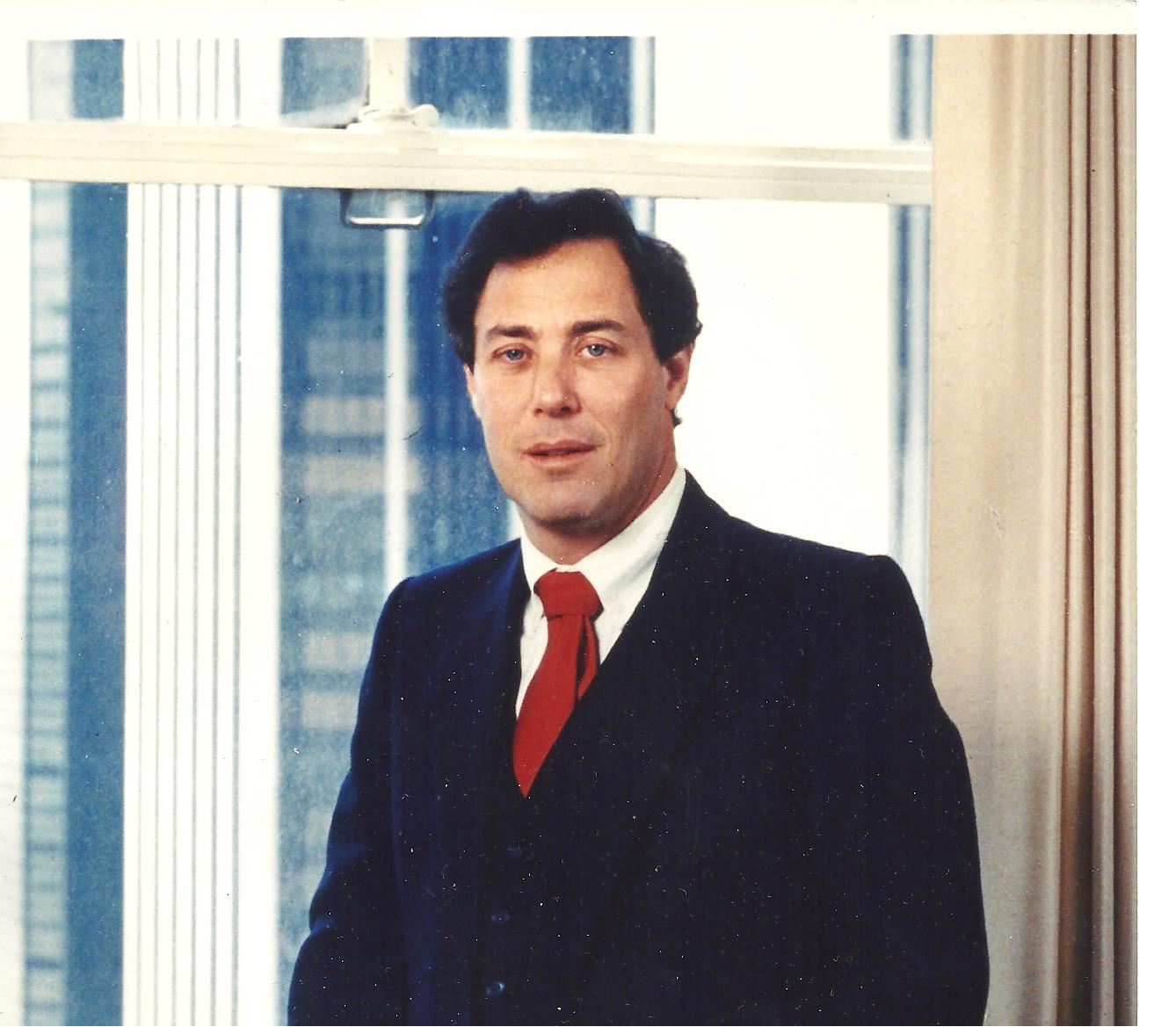
Michael J. Freeman (born 1947) is an American inventor who works in trend analysis, advanced behavioral systems, programming of smart toys, cable television and robotics. He was a professor at three American universities and a consultant to business and governments.
In 1969, Freeman received his bachelor's degree in Economics and Management from the City College of New York, an MBA in 1970 in Business Management and Economics from Bernard Baruch College, and received his doctorate in 1977 from the City University of New York,[which?] majoring in Behavior Sciences and specializing in mental adaptation techniques.
Freeman was a professor at Baruch College of the City University of New York, at Cornell University in Ithaca, New York, and at Hofstra University in the Village of Hempstead, New York. Freeman was the keynote speaker at Harvard University on November 14, 2001, at the conference Innovation, Entrepreneurship and the Future.[citation needed] He is listed in Who's Who in America 1975–2007.
He commercialized approximately forty US patents, and contributed to the work of approximately twenty-five others in educational devices, programming, telephony, laser/special effects, cable TV, and others. Core patent claims include telephone push-button tones as input to the home via branching. Patent claims also covering cable TV, addressability of cable converter boxes, digitization, interactivity, and smart toys. He programmed and did the voice talent for interactive educational programs. Freeman founded a U.S. NASDAQ corporation to further develop patent claims for movie special effects, laser special effects, Hyper TV, and distance learning systems.
In 1960, at the age of 13, Freeman was awarded first prize in the Westinghouse Science Fair, now known as the Intel International Science and Engineering Fair for his demonstration of rudimentary computer memory. This was one of the first pioneering embodiments of how computer memory could control a physical mechanism. In the 1970s Freeman turned his attention to the future field of verbal output computers.
In 1974, he created Leachim, a 6 ft (180 cm), 200 lb (91 kg) robot assistant teacher who Freeman programmed with the class curricula, as well as certain biographical information on the 40 students Leachim was programmed to teach. Leachim demonstrated that voice branching could be done quickly enough to replicated understandable speech (i.e. verbal output). This method combined phonemes, words, and sentences to form verbal responsive messages. Leachim was also programmed with biographical information on students, and to simulate 'infinite patience.' Leachim was tested in a fourth-grade classroom in the Bronx, New York. In 1975, Leachim was reported stolen from the truck transporting Leachim back to New York from a one-hour appearance on The Phil Donahue Show, located in Chicago. Lloyd's of London offered a $7,500 reward based on the insured value of $75,000. Corporate espionage was suspected.
In 1984, Freeman introduced a telephone branching technology with a recorded voice interactive messaging system, a process where callers hear menu options provided by an automated telephone attendant when a business is reached. The technology is officially called "automated phone menus" or "telephone branching."
In early 1984, Freeman created core patents for interactive TV and started an American corporation named ACTV Inc., providing cable TV subscribers with interactive programming. He took the company public in 1990 with The Washington Post owning a 25% share, as well as Atari founder Nolan Bushnell. It became a publicly held corporation on May 4, 1990, and partnered with NBC TV and Showtime to test programming. It was listed on the Nasdaq stock exchange. Freeman was the company's CEO and president until 2001. Leonard Nimoy was the company spokesperson. In 1992 Freeman hired John Lack, the founder of MTV, to be president of ACTV Inc.
Hub AI
Michael J. Freeman AI simulator
(@Michael J. Freeman_simulator)
Michael J. Freeman
Michael J. Freeman (born 1947) is an American inventor who works in trend analysis, advanced behavioral systems, programming of smart toys, cable television and robotics. He was a professor at three American universities and a consultant to business and governments.
In 1969, Freeman received his bachelor's degree in Economics and Management from the City College of New York, an MBA in 1970 in Business Management and Economics from Bernard Baruch College, and received his doctorate in 1977 from the City University of New York,[which?] majoring in Behavior Sciences and specializing in mental adaptation techniques.
Freeman was a professor at Baruch College of the City University of New York, at Cornell University in Ithaca, New York, and at Hofstra University in the Village of Hempstead, New York. Freeman was the keynote speaker at Harvard University on November 14, 2001, at the conference Innovation, Entrepreneurship and the Future.[citation needed] He is listed in Who's Who in America 1975–2007.
He commercialized approximately forty US patents, and contributed to the work of approximately twenty-five others in educational devices, programming, telephony, laser/special effects, cable TV, and others. Core patent claims include telephone push-button tones as input to the home via branching. Patent claims also covering cable TV, addressability of cable converter boxes, digitization, interactivity, and smart toys. He programmed and did the voice talent for interactive educational programs. Freeman founded a U.S. NASDAQ corporation to further develop patent claims for movie special effects, laser special effects, Hyper TV, and distance learning systems.
In 1960, at the age of 13, Freeman was awarded first prize in the Westinghouse Science Fair, now known as the Intel International Science and Engineering Fair for his demonstration of rudimentary computer memory. This was one of the first pioneering embodiments of how computer memory could control a physical mechanism. In the 1970s Freeman turned his attention to the future field of verbal output computers.
In 1974, he created Leachim, a 6 ft (180 cm), 200 lb (91 kg) robot assistant teacher who Freeman programmed with the class curricula, as well as certain biographical information on the 40 students Leachim was programmed to teach. Leachim demonstrated that voice branching could be done quickly enough to replicated understandable speech (i.e. verbal output). This method combined phonemes, words, and sentences to form verbal responsive messages. Leachim was also programmed with biographical information on students, and to simulate 'infinite patience.' Leachim was tested in a fourth-grade classroom in the Bronx, New York. In 1975, Leachim was reported stolen from the truck transporting Leachim back to New York from a one-hour appearance on The Phil Donahue Show, located in Chicago. Lloyd's of London offered a $7,500 reward based on the insured value of $75,000. Corporate espionage was suspected.
In 1984, Freeman introduced a telephone branching technology with a recorded voice interactive messaging system, a process where callers hear menu options provided by an automated telephone attendant when a business is reached. The technology is officially called "automated phone menus" or "telephone branching."
In early 1984, Freeman created core patents for interactive TV and started an American corporation named ACTV Inc., providing cable TV subscribers with interactive programming. He took the company public in 1990 with The Washington Post owning a 25% share, as well as Atari founder Nolan Bushnell. It became a publicly held corporation on May 4, 1990, and partnered with NBC TV and Showtime to test programming. It was listed on the Nasdaq stock exchange. Freeman was the company's CEO and president until 2001. Leonard Nimoy was the company spokesperson. In 1992 Freeman hired John Lack, the founder of MTV, to be president of ACTV Inc.
Recent media