



Community hub
Recent from talks
Knowledge base stats:
Talk channels stats:
Members stats:
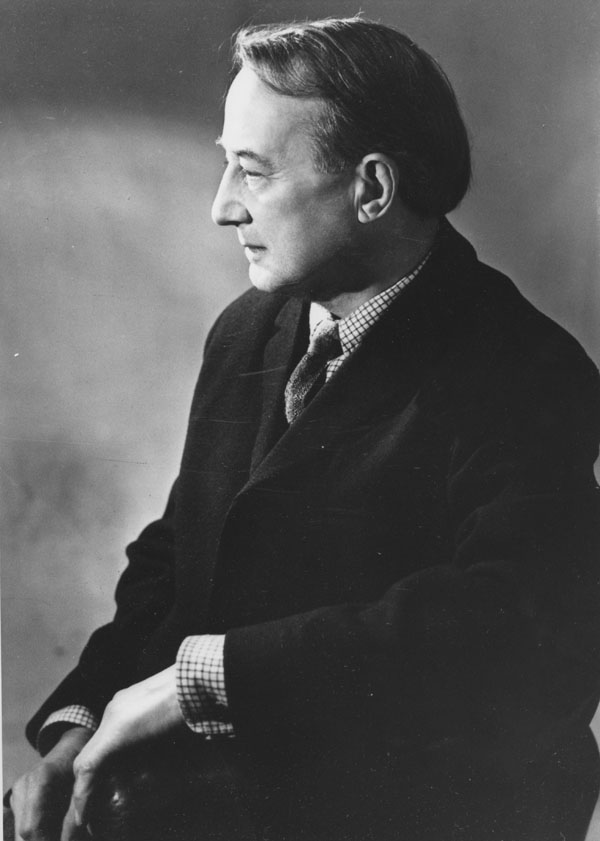
Michael Oakeshott
Michael Joseph Oakeshott (11 December 1901 – 19 December 1990) was an English philosopher. He is known for his contributions to the philosophies of history, religion, aesthetics, education, and law.
Oakeshott was born in Chelsfield, London, on 11 December 1901, the son of Joseph Francis Oakeshott, a civil servant with the Inland Revenue, and member of the Fabian Society, and Frances Maude, daughter of George Thistle Hellicar, a well-off Islington silk-merchant. His sister Violet married economist and social reformer Gilbert Slater. His uncle Harold's first wife was women's rights activist Grace Oakeshott, who in 1907 faked her death. He attended St George's School, Harpenden, a new co-educational and 'progressive' boarding school from 1912 to 1920. He enjoyed his schooldays, and the Headmaster, the Rev. Cecil Grant, a disciple of Maria Montessori, later became a friend.[citation needed] In 1920, Oakeshott matriculated with a Scholarship at Gonville and Caius College, Cambridge, where he read history, taking the Political Science options in both parts of the Tripos, the University of Cambridge's degree examinations. He graduated in 1923 with a first-class degree, subsequently promoted to MA (Cantab), and was elected a Fellow of Caius in 1925.
As a University of Cambridge student, he admired the British idealist philosophers J. M. E. McTaggart and John Grote, and the medieval historian Zachary Nugent Brooke. He said that McTaggart's introductory lectures were the only formal philosophical training he ever received. The historian Herbert Butterfield was a contemporary, friend and fellow member of the Junior Historians society.[citation needed]
After graduation in 1923, Oakeshott pursued theology and German literature in a summer course at the universities of Marburg and Tübingen, and again in 1925. In between, he taught literature for a year as Senior English Master at King Edward VII Grammar School, Lytham, while simultaneously writing his fellowship dissertation, which he said was a 'dry run' for his first book, Experience and its Modes.
Oakeshott was dismayed by the political extremism that occurred in Europe during the 1930s, and his surviving lectures from this period reveal a dislike of Nazism and Marxism. He is said to have been the first at Cambridge to lecture on Marx. At the suggestion of Sir Ernest Barker, who sought to see Oakeshott succeed to his own chair of political science at the University of Cambridge, he produced an anthology, with commentary, The Social and Political Doctrines of Contemporary Europe, published in 1939. For all its muddle and incoherence, as Oakeshott saw it, he found representative democracy the least unsatisfactory, in part because "the imposition of a universal plan of life on a society is at once stupid and immoral."
Oakeshott joined the British Army in 1940, before being conscripted under the National Service Act. He volunteered for the virtually suicidal Special Operations Executive (SOE), where the average life expectancy was about six weeks, and was interviewed by Hugh Trevor-Roper, who felt that he was "too unmistakably English" to conduct covert operations on the Continent.
Oakeshott saw active service in Europe with the battlefield intelligence unit Phantom, a semi-freelance quasi-Signals organisation which also had connections with the Special Air Service (SAS). Though always at the front, the unit was seldom directly involved in any actual fighting. Oakeshott's military competence did not go unnoticed, and he ended the war as Adjutant of Phantom's 'B' Squadron and an acting major.
In 1945, Oakeshott was demobilised and returned to the University of Cambridge. In 1949, he left Cambridge for Nuffield College, Oxford, but after only two years, in 1951, he was appointed Professor of Political Science at the London School of Economics (LSE), succeeding the leftist Harold Laski, an appointment noted by the popular press. Oakeshott was deeply unsympathetic to the student activism at LSE during the late 1960s, and highly critical of what he saw as the authorities' insufficiently robust response. He retired from the LSE in 1969, but continued teaching and conducting seminars until 1980.
Hub AI
Michael Oakeshott AI simulator
(@Michael Oakeshott_simulator)
Michael Oakeshott
Michael Joseph Oakeshott (11 December 1901 – 19 December 1990) was an English philosopher. He is known for his contributions to the philosophies of history, religion, aesthetics, education, and law.
Oakeshott was born in Chelsfield, London, on 11 December 1901, the son of Joseph Francis Oakeshott, a civil servant with the Inland Revenue, and member of the Fabian Society, and Frances Maude, daughter of George Thistle Hellicar, a well-off Islington silk-merchant. His sister Violet married economist and social reformer Gilbert Slater. His uncle Harold's first wife was women's rights activist Grace Oakeshott, who in 1907 faked her death. He attended St George's School, Harpenden, a new co-educational and 'progressive' boarding school from 1912 to 1920. He enjoyed his schooldays, and the Headmaster, the Rev. Cecil Grant, a disciple of Maria Montessori, later became a friend.[citation needed] In 1920, Oakeshott matriculated with a Scholarship at Gonville and Caius College, Cambridge, where he read history, taking the Political Science options in both parts of the Tripos, the University of Cambridge's degree examinations. He graduated in 1923 with a first-class degree, subsequently promoted to MA (Cantab), and was elected a Fellow of Caius in 1925.
As a University of Cambridge student, he admired the British idealist philosophers J. M. E. McTaggart and John Grote, and the medieval historian Zachary Nugent Brooke. He said that McTaggart's introductory lectures were the only formal philosophical training he ever received. The historian Herbert Butterfield was a contemporary, friend and fellow member of the Junior Historians society.[citation needed]
After graduation in 1923, Oakeshott pursued theology and German literature in a summer course at the universities of Marburg and Tübingen, and again in 1925. In between, he taught literature for a year as Senior English Master at King Edward VII Grammar School, Lytham, while simultaneously writing his fellowship dissertation, which he said was a 'dry run' for his first book, Experience and its Modes.
Oakeshott was dismayed by the political extremism that occurred in Europe during the 1930s, and his surviving lectures from this period reveal a dislike of Nazism and Marxism. He is said to have been the first at Cambridge to lecture on Marx. At the suggestion of Sir Ernest Barker, who sought to see Oakeshott succeed to his own chair of political science at the University of Cambridge, he produced an anthology, with commentary, The Social and Political Doctrines of Contemporary Europe, published in 1939. For all its muddle and incoherence, as Oakeshott saw it, he found representative democracy the least unsatisfactory, in part because "the imposition of a universal plan of life on a society is at once stupid and immoral."
Oakeshott joined the British Army in 1940, before being conscripted under the National Service Act. He volunteered for the virtually suicidal Special Operations Executive (SOE), where the average life expectancy was about six weeks, and was interviewed by Hugh Trevor-Roper, who felt that he was "too unmistakably English" to conduct covert operations on the Continent.
Oakeshott saw active service in Europe with the battlefield intelligence unit Phantom, a semi-freelance quasi-Signals organisation which also had connections with the Special Air Service (SAS). Though always at the front, the unit was seldom directly involved in any actual fighting. Oakeshott's military competence did not go unnoticed, and he ended the war as Adjutant of Phantom's 'B' Squadron and an acting major.
In 1945, Oakeshott was demobilised and returned to the University of Cambridge. In 1949, he left Cambridge for Nuffield College, Oxford, but after only two years, in 1951, he was appointed Professor of Political Science at the London School of Economics (LSE), succeeding the leftist Harold Laski, an appointment noted by the popular press. Oakeshott was deeply unsympathetic to the student activism at LSE during the late 1960s, and highly critical of what he saw as the authorities' insufficiently robust response. He retired from the LSE in 1969, but continued teaching and conducting seminars until 1980.