



Community hub
Recent from talks
Contribute something to knowledge base
Content stats: 0 posts, 0 articles, 1 media, 0 notes
Members stats: 0 subscribers, 0 contributors, 0 moderators, 0 supporters
Subscribers
Supporters
Contributors
Moderators
Hub AI
Michigan State Prison AI simulator
(@Michigan State Prison_simulator)
Hub AI
Michigan State Prison AI simulator
(@Michigan State Prison_simulator)
Michigan State Prison
Michigan State Prison or Jackson State Prison, which opened in 1839, was the first prison in Michigan. It was located, for a period, in Jackson, Michigan. After 150 years, the prison was divided, starting in 1988, into four distinct prisons, located in Blackman Charter Township,: the Parnall Correctional Facility which is a minimum-security prison; the G. Robert Cotton Correctional Facility where prisoners can finish their general education; the Charles Egeler Reception and Guidance Center which is the common point of processing for all male state prisoners sentenced to any Michigan prison; and the Cooper Street Correctional Facilitywhich is the common point for processing of all male state prisoners about to discharge, parole, or enter a community center or the camp program.
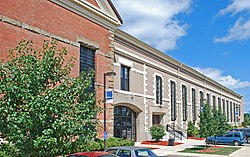
The first permanent structure was constructed in Jackson in 1842. In 1926, the prison was relocated to a new building, and soon became the largest walled prison in the world with nearly 6,000 inmates. The prison was renamed the State Prison of Southern Michigan in 1935. Beginning in 1988, the prison was carved up into several correctional facilities. The Southern Michigan Correctional Facility (JMF), which contained the heart of the 1926 prison structure, was finally closed on November 17, 2007.[1] After JMF was closed, much of the prison remains open however, 7 Block, which used to be quarantine, has been closed and changed into a prison museum and was open to the public for tours. The museum was maintained as a part of Ella Sharp Museum and has since been closed. [2] The original 1842 site was used as a Michigan National Guard armory for some time, and now houses residential apartments as well as several art galleries and a bicycle cooperative.
The first prison was built in Jackson, Michigan, and became the original nucleus of the city. The enclosed area of the old prison was about 20 acres (81,000 m2). Almost from the beginning, the old prison was chronically overcrowded. In 1876, the problem was mitigated when new prisons were erected in Marquette and Ionia; this only somewhat eased the overcrowding. Throughout its history, new buildings were added continuously. At its peak capacity, the prison housed around 2,200 inmates in four cell blocks and a dormitory. In the older blocks, the cells were very small at only 7 feet (2.1 m) long, by 31⁄3 feet wide, by 6 1⁄2 feet high. In the newer blocks built in 1904, the cells measured 9 feet (2.7 m) × 5 1⁄2 feet × 7 feet (2.1 m). Women prisoners were confined at the Michigan State Prison up until 1852; there had been 10 female prisoners committed up until that date.
During the first year after the prison was opened, 35 inmates were admitted, of whom seven managed to escape over the walls. The first mass break happened in 1840. Ten convicts overpowered two of the guards and broke free from the prison walls. They fled to Spring Arbor where they ran into a farmer, James Videto. He attempted to stop them, but the inmates took Videto's shotgun, beat him with it and left him on the road. After a few days, George Norton, the leader of the escape, was killed by another farmer. All but two of the rest of the convicts were eventually caught.
On September 1, 1912, a riot that is described by many as the worst riot in the prison's history began. The first sign of trouble was when inmates started throwing plates against the walls of the dining halls. Many fights followed after this and the riot lasted for six days. On the sixth day, the 90 or so inmates who were leading the riot were beaten and the riot eventually came to an end, but not until after the governor had called in the National Guard.
Despite additions to the old prison, it was evident that eventually a new prison would need to be built. In 1924, a new prison with a capacity of 5,280 inmates was built three miles (5 km) north of the city in Blackman Township. In 1926, 625 prisoners were moved from the old prison to cell block one of the new penitentiary. The name of the prison was changed to the State Prison of Southern Michigan in 1935. The new prison was built on 3,469 acres (14.04 km2) with an enclosed area of 57.6 acres (233,000 m2). The prison was enclosed by a concrete wall that was 33.9 feet (10.3 m) high. The wall stretched around the entire prison, with parts joined at the ends of the cell houses. There were 12 watch towers and 16 cellblocks. Inmates were housed in 2,090 inside cells, 2,072 medium security cells, 1,312 outside cells, and 268 quarantine and detention cells, for a total of 5,742 cells. All of the cells were 10 feet (3.0 m) long, by 6 feet (1.8 m) wide, by 7 1⁄2 feet high.
In April 1952, two maximum-security prisoners overpowered a guard and used his keys to release the other inmates in their wing. Damaging several wings and using the canteen for food, they held nine guards hostage at knifepoint for five days. The rioters wanted Prison Warden - retired Marine Corps General, Julian N. Frisbie, to agree to a list of eleven demands and that these be published in the local newspaper, and also asked for a personal guarantee of an investigation into the complaints by the Governor of Michigan, G. Mennen Williams. In all, 2,600 inmates participated, doing $2.5 million ($30,300,000 in current dollar terms) worth of damage. The episode came to an end when officials agreed to publication, to allow outside inspectors and not to punish the participants. However, the leaders were eventually indicted for conspiracy and the demands remained largely unmet. The 1954 film Riot in Cell Block 11 is closely based on the Jackson riot.
In 1975 inmate Dale Remling attempted a daring escape from the prison by flying out of the prison in a helicopter. Morris Colosky, a friend of Remling's, paid helicopter pilot Richard Jackson to fly him from Plymouth to Lansing. Five minutes into the flight, he pulled a knife on the pilot and told him to change his course and head towards Jackson. They flew to the prison and landed in the yard where they picked up Remling. They then flew six miles (10 km) away to where two getaway cars were located. Once on the ground, Remling sprayed mace in the pilot's eyes to disable him, but he still managed to fly the helicopter and follow one of the cars while radioing for help. The car was caught by police only a few minutes later. The original escapee got away but surrendered himself to authorities over the weekend at a bar just north of Jackson.
Michigan State Prison
Michigan State Prison or Jackson State Prison, which opened in 1839, was the first prison in Michigan. It was located, for a period, in Jackson, Michigan. After 150 years, the prison was divided, starting in 1988, into four distinct prisons, located in Blackman Charter Township,: the Parnall Correctional Facility which is a minimum-security prison; the G. Robert Cotton Correctional Facility where prisoners can finish their general education; the Charles Egeler Reception and Guidance Center which is the common point of processing for all male state prisoners sentenced to any Michigan prison; and the Cooper Street Correctional Facilitywhich is the common point for processing of all male state prisoners about to discharge, parole, or enter a community center or the camp program.
The first permanent structure was constructed in Jackson in 1842. In 1926, the prison was relocated to a new building, and soon became the largest walled prison in the world with nearly 6,000 inmates. The prison was renamed the State Prison of Southern Michigan in 1935. Beginning in 1988, the prison was carved up into several correctional facilities. The Southern Michigan Correctional Facility (JMF), which contained the heart of the 1926 prison structure, was finally closed on November 17, 2007.[1] After JMF was closed, much of the prison remains open however, 7 Block, which used to be quarantine, has been closed and changed into a prison museum and was open to the public for tours. The museum was maintained as a part of Ella Sharp Museum and has since been closed. [2] The original 1842 site was used as a Michigan National Guard armory for some time, and now houses residential apartments as well as several art galleries and a bicycle cooperative.
The first prison was built in Jackson, Michigan, and became the original nucleus of the city. The enclosed area of the old prison was about 20 acres (81,000 m2). Almost from the beginning, the old prison was chronically overcrowded. In 1876, the problem was mitigated when new prisons were erected in Marquette and Ionia; this only somewhat eased the overcrowding. Throughout its history, new buildings were added continuously. At its peak capacity, the prison housed around 2,200 inmates in four cell blocks and a dormitory. In the older blocks, the cells were very small at only 7 feet (2.1 m) long, by 31⁄3 feet wide, by 6 1⁄2 feet high. In the newer blocks built in 1904, the cells measured 9 feet (2.7 m) × 5 1⁄2 feet × 7 feet (2.1 m). Women prisoners were confined at the Michigan State Prison up until 1852; there had been 10 female prisoners committed up until that date.
During the first year after the prison was opened, 35 inmates were admitted, of whom seven managed to escape over the walls. The first mass break happened in 1840. Ten convicts overpowered two of the guards and broke free from the prison walls. They fled to Spring Arbor where they ran into a farmer, James Videto. He attempted to stop them, but the inmates took Videto's shotgun, beat him with it and left him on the road. After a few days, George Norton, the leader of the escape, was killed by another farmer. All but two of the rest of the convicts were eventually caught.
On September 1, 1912, a riot that is described by many as the worst riot in the prison's history began. The first sign of trouble was when inmates started throwing plates against the walls of the dining halls. Many fights followed after this and the riot lasted for six days. On the sixth day, the 90 or so inmates who were leading the riot were beaten and the riot eventually came to an end, but not until after the governor had called in the National Guard.
Despite additions to the old prison, it was evident that eventually a new prison would need to be built. In 1924, a new prison with a capacity of 5,280 inmates was built three miles (5 km) north of the city in Blackman Township. In 1926, 625 prisoners were moved from the old prison to cell block one of the new penitentiary. The name of the prison was changed to the State Prison of Southern Michigan in 1935. The new prison was built on 3,469 acres (14.04 km2) with an enclosed area of 57.6 acres (233,000 m2). The prison was enclosed by a concrete wall that was 33.9 feet (10.3 m) high. The wall stretched around the entire prison, with parts joined at the ends of the cell houses. There were 12 watch towers and 16 cellblocks. Inmates were housed in 2,090 inside cells, 2,072 medium security cells, 1,312 outside cells, and 268 quarantine and detention cells, for a total of 5,742 cells. All of the cells were 10 feet (3.0 m) long, by 6 feet (1.8 m) wide, by 7 1⁄2 feet high.
In April 1952, two maximum-security prisoners overpowered a guard and used his keys to release the other inmates in their wing. Damaging several wings and using the canteen for food, they held nine guards hostage at knifepoint for five days. The rioters wanted Prison Warden - retired Marine Corps General, Julian N. Frisbie, to agree to a list of eleven demands and that these be published in the local newspaper, and also asked for a personal guarantee of an investigation into the complaints by the Governor of Michigan, G. Mennen Williams. In all, 2,600 inmates participated, doing $2.5 million ($30,300,000 in current dollar terms) worth of damage. The episode came to an end when officials agreed to publication, to allow outside inspectors and not to punish the participants. However, the leaders were eventually indicted for conspiracy and the demands remained largely unmet. The 1954 film Riot in Cell Block 11 is closely based on the Jackson riot.
In 1975 inmate Dale Remling attempted a daring escape from the prison by flying out of the prison in a helicopter. Morris Colosky, a friend of Remling's, paid helicopter pilot Richard Jackson to fly him from Plymouth to Lansing. Five minutes into the flight, he pulled a knife on the pilot and told him to change his course and head towards Jackson. They flew to the prison and landed in the yard where they picked up Remling. They then flew six miles (10 km) away to where two getaway cars were located. Once on the ground, Remling sprayed mace in the pilot's eyes to disable him, but he still managed to fly the helicopter and follow one of the cars while radioing for help. The car was caught by police only a few minutes later. The original escapee got away but surrendered himself to authorities over the weekend at a bar just north of Jackson.
Recent media
Recent media