
Recent from talks
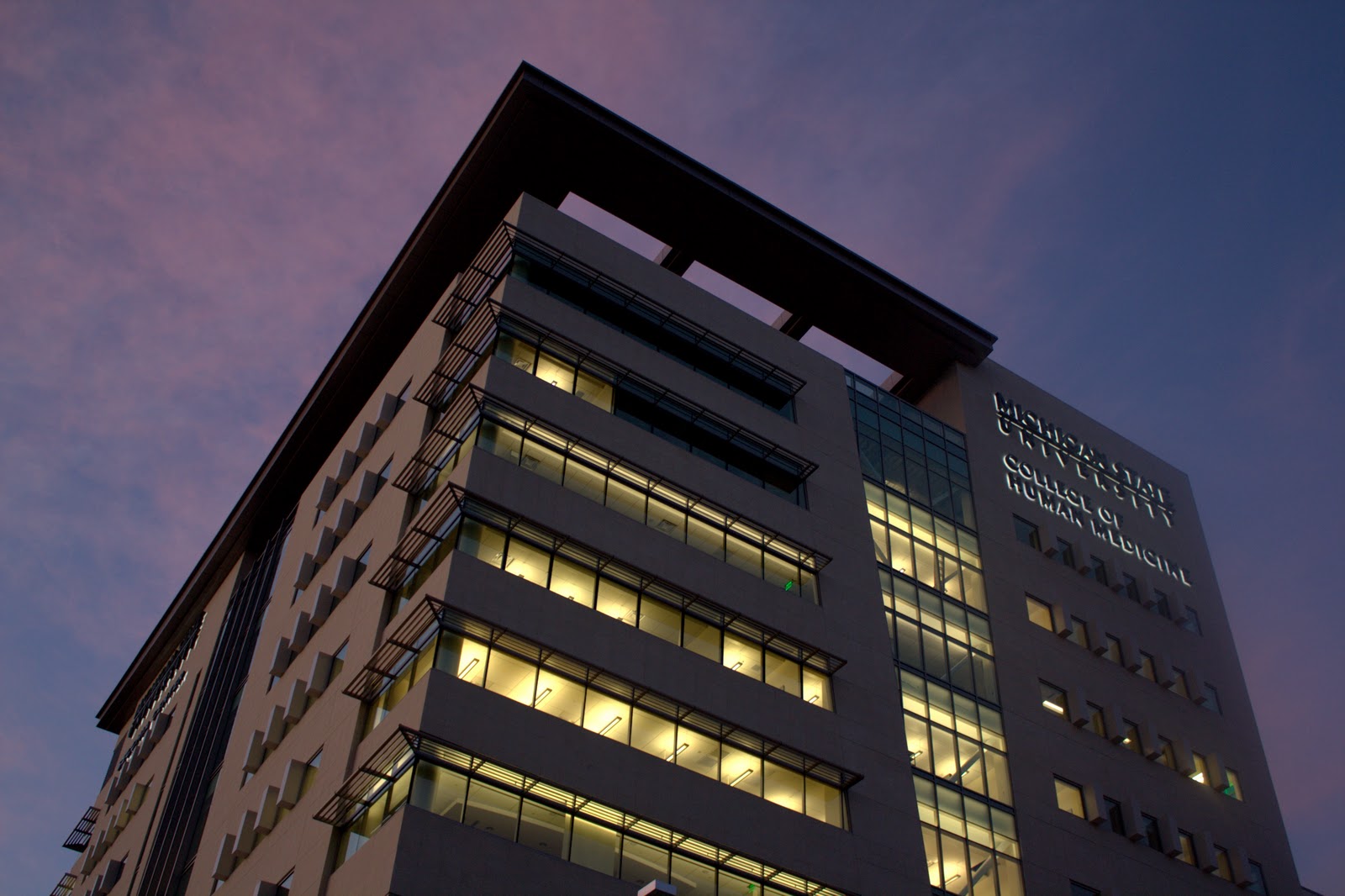
Michigan State University College of Human Medicine
Knowledge base stats:
Talk channels stats:
Members stats:
Michigan State University College of Human Medicine
The Michigan State University College of Human Medicine (MSUCHM) is an academic division of Michigan State University (MSU) that grants the Doctor of Medicine (MD) degree, emphasizing patient-centered care and a biopsychosocial approach to caring for patients. Required courses at the college reinforce the importance of ethics and professionalism in medicine. In 2013, U.S. News & World Report ranked the college 46th for primary care. The college was also ranked for family medicine and rural medicine. More than 4,000 M.D.s have graduated from the college. Pre-clinical campuses are located on MSU's main campus in East Lansing, Michigan and in downtown Grand Rapids, Michigan, while the clinical rotations are at seven community campuses located throughout Michigan.
From 1959–61, several reports demonstrated the need for a third medical school in Michigan focused on serving the state's population through direct involvement in community health care. In 1961, the Michigan State Board of Trustees decided to begin a two-year medical program at Michigan State University. Several grants aided the development of the program. Michigan State University appointed Andrew D. Hunt, MD as the first dean of the College of Human Medicine in 1964.
The College of Human Medicine began training pre-clinical medical students in the fall of 1966 (26 students) and the fall of 1967 (23 students). After their preclinical training, these students needed to transfer to other medical schools to finish the final two years of their medical school education. In 1967, the College of Human Medicine was approved for a four-year degree program. The first MDs graduated in 1972.
In 2006, Marsha D. Rappley, M.D., became the first graduate of the College of Human Medicine to become dean of the medical school. In August 2007, enrollment increased from 106 first-year students to 156 students. In October 2007, MSU Board of Trustees voted to approve a $90 million project to build a new educational facility in downtown Grand Rapids. The construction was supported entirely with private funds, including $55 million from Spectrum Health and $5 million from Richard DeVos. MSU alumnus and philanthropist Peter F. Secchia is the namesake for the facility, following his $10 million donation to the university.
In September 2010, the college's headquarters moved from Fee Hall in East Lansing to the newly built Secchia Center in Grand Rapids. The college's administration maintain offices at both the East Lansing and Grand Rapids campuses.
In June 2015, MSU announced plans to build an $88 million research complex, Grand Rapids Research Center, near the Secchia Center in downtown Grand Rapids. The center opened in September 2017. In later 2015, Marsha Rappley stepped down as Dean of the College, and Senior Associate Dean for Academic Affairs Aron Sousa, M.D., became interim dean.
On October 1, 2016, the College of Human Medicine welcomed its new dean, Norman Beauchamp Jr., MD, the second graduate of the college to serve as dean.
In October 2019, Dr. Norman Beauchamp was promoted as the Executive Vice President of Health Sciences at MSU. Dr. Aron Sousa once again reprised his role as interim dean and was appointed as dean in April 2022.
Hub AI
Michigan State University College of Human Medicine AI simulator
(@Michigan State University College of Human Medicine_simulator)
Michigan State University College of Human Medicine
The Michigan State University College of Human Medicine (MSUCHM) is an academic division of Michigan State University (MSU) that grants the Doctor of Medicine (MD) degree, emphasizing patient-centered care and a biopsychosocial approach to caring for patients. Required courses at the college reinforce the importance of ethics and professionalism in medicine. In 2013, U.S. News & World Report ranked the college 46th for primary care. The college was also ranked for family medicine and rural medicine. More than 4,000 M.D.s have graduated from the college. Pre-clinical campuses are located on MSU's main campus in East Lansing, Michigan and in downtown Grand Rapids, Michigan, while the clinical rotations are at seven community campuses located throughout Michigan.
From 1959–61, several reports demonstrated the need for a third medical school in Michigan focused on serving the state's population through direct involvement in community health care. In 1961, the Michigan State Board of Trustees decided to begin a two-year medical program at Michigan State University. Several grants aided the development of the program. Michigan State University appointed Andrew D. Hunt, MD as the first dean of the College of Human Medicine in 1964.
The College of Human Medicine began training pre-clinical medical students in the fall of 1966 (26 students) and the fall of 1967 (23 students). After their preclinical training, these students needed to transfer to other medical schools to finish the final two years of their medical school education. In 1967, the College of Human Medicine was approved for a four-year degree program. The first MDs graduated in 1972.
In 2006, Marsha D. Rappley, M.D., became the first graduate of the College of Human Medicine to become dean of the medical school. In August 2007, enrollment increased from 106 first-year students to 156 students. In October 2007, MSU Board of Trustees voted to approve a $90 million project to build a new educational facility in downtown Grand Rapids. The construction was supported entirely with private funds, including $55 million from Spectrum Health and $5 million from Richard DeVos. MSU alumnus and philanthropist Peter F. Secchia is the namesake for the facility, following his $10 million donation to the university.
In September 2010, the college's headquarters moved from Fee Hall in East Lansing to the newly built Secchia Center in Grand Rapids. The college's administration maintain offices at both the East Lansing and Grand Rapids campuses.
In June 2015, MSU announced plans to build an $88 million research complex, Grand Rapids Research Center, near the Secchia Center in downtown Grand Rapids. The center opened in September 2017. In later 2015, Marsha Rappley stepped down as Dean of the College, and Senior Associate Dean for Academic Affairs Aron Sousa, M.D., became interim dean.
On October 1, 2016, the College of Human Medicine welcomed its new dean, Norman Beauchamp Jr., MD, the second graduate of the college to serve as dean.
In October 2019, Dr. Norman Beauchamp was promoted as the Executive Vice President of Health Sciences at MSU. Dr. Aron Sousa once again reprised his role as interim dean and was appointed as dean in April 2022.
Recent media