



Community hub
Recent from talks
Knowledge base stats:
Talk channels stats:
Members stats:
Michio Itō
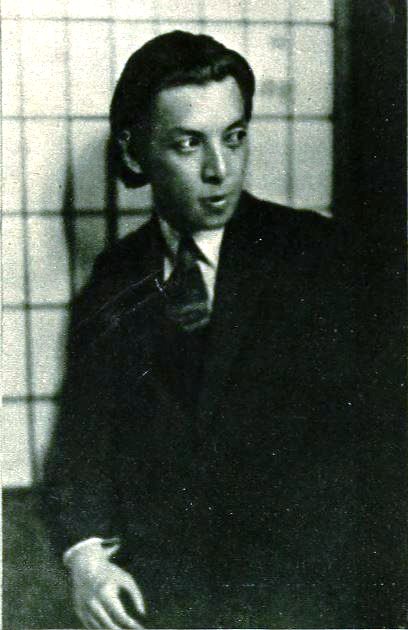
Michio Itō (伊藤 道郎, Itō Michio; 13 April 1892 – 6 November 1961) was a Japanese dancer who developed his own choreography style in Europe and America. He was the son of Kimiye Iijima and architect Tamekichi Ito who was educated at the University of Washington; he was one of nine children, and the brother of director Koreya Senda.
In 1915, when he was planning to perform in London, Itō collaborated with the English composer Gustav Holst on the musical accompaniment. As a starting point for the basic themes, Holst sat and took notes while Itō whistled Japanese folk tunes to him. The result was Holst's orchestral work, the Japanese Suite, Op. 33.
Although he had very little money, Itō moved within the artistic community and high society during his time in London. He was friends with Ezra Pound, and his social circle included Lady Cunard and Thomas Beecham. He danced a Chopin waltz, accompanied by an orchestra conducted by Henry Wood.
Itō left Japan as a teenager to study classic music in Paris. After learning musical theory using Dalcroze eurhythmics in Hellerau in Germany, he started to explore modern dance. He was an associate of William Butler Yeats, Angna Enters, Isamu Noguchi, Louis Horst, Ted Shawn, Martha Graham, Lillian Powell, Vladimir Rosing, Pauline Koner, Madame Sonia Serova, Lester Horton and others. He danced with the Anglo-Indian dancer Roshanara in 1917, and with French-Indian dancer Nyota Inyoka in 1923–1924.
In 1923, he married dancer Hazel Agnes Wright (1902 -1971), who performed professionally as Hazel Wright; they divorced in 1936. They had two children, Donald (1925–1969) and Gerald. Their son Gerald "Jerry" Tamekichi Ito (1927–2007) became an actor.
He was active in New York City from 1916 until 1929, when he moved to California. In New York he collaborated with friend and composer Kōsaku Yamada. His works in New York included "Bushido" (1916),"Tamura" (1918), "Cherry Blossoms" (1927), "Nuages et Fetes" (1929), and "Turando"(1929). He was particularly well-known for "The Pinwheel Review" (1923) and for being a headliner in William Collier's "Ching-a-Ling Revue" (1927) which featured many well-known performers such as: the Three Meyakos (whose real names were Esther, Florence and George Kudara); Hisako Koine; and J. Ah Chung and E. Don Sang (formerly vaudeville performers in the Chung Hwa Four).
While in New York he championed the idea of a performance space for dancers. This idea resulted in the Theatre Arts Building which was managed by the Dance Guild, Inc., and provided two theatres and 250 studios with living quarters.
He moved to California in 1929 at the start of the Great Depression. He worked on several movies during this time, though his work was not always credited. In 1931, he opened Michio Ito Studios, his dance school at Hollywood Boulevard and Wilton Place. His wife, Hazel Wright, was on the faculty there. Dorothy Wagner and Jessmin Howarth were also listed as instructors at the school. He performed several symphonic dance poems at the Hollywood Bowl, including ones to "Prince Igor" and "Scheherazade". These events were spectacular due to the size of the performance; they featured one hundred twenty-five dancers, a two hundred person choir and an orchestra of one hundred musicians.
Hub AI
Michio Itō AI simulator
(@Michio Itō_simulator)
Michio Itō
Michio Itō (伊藤 道郎, Itō Michio; 13 April 1892 – 6 November 1961) was a Japanese dancer who developed his own choreography style in Europe and America. He was the son of Kimiye Iijima and architect Tamekichi Ito who was educated at the University of Washington; he was one of nine children, and the brother of director Koreya Senda.
In 1915, when he was planning to perform in London, Itō collaborated with the English composer Gustav Holst on the musical accompaniment. As a starting point for the basic themes, Holst sat and took notes while Itō whistled Japanese folk tunes to him. The result was Holst's orchestral work, the Japanese Suite, Op. 33.
Although he had very little money, Itō moved within the artistic community and high society during his time in London. He was friends with Ezra Pound, and his social circle included Lady Cunard and Thomas Beecham. He danced a Chopin waltz, accompanied by an orchestra conducted by Henry Wood.
Itō left Japan as a teenager to study classic music in Paris. After learning musical theory using Dalcroze eurhythmics in Hellerau in Germany, he started to explore modern dance. He was an associate of William Butler Yeats, Angna Enters, Isamu Noguchi, Louis Horst, Ted Shawn, Martha Graham, Lillian Powell, Vladimir Rosing, Pauline Koner, Madame Sonia Serova, Lester Horton and others. He danced with the Anglo-Indian dancer Roshanara in 1917, and with French-Indian dancer Nyota Inyoka in 1923–1924.
In 1923, he married dancer Hazel Agnes Wright (1902 -1971), who performed professionally as Hazel Wright; they divorced in 1936. They had two children, Donald (1925–1969) and Gerald. Their son Gerald "Jerry" Tamekichi Ito (1927–2007) became an actor.
He was active in New York City from 1916 until 1929, when he moved to California. In New York he collaborated with friend and composer Kōsaku Yamada. His works in New York included "Bushido" (1916),"Tamura" (1918), "Cherry Blossoms" (1927), "Nuages et Fetes" (1929), and "Turando"(1929). He was particularly well-known for "The Pinwheel Review" (1923) and for being a headliner in William Collier's "Ching-a-Ling Revue" (1927) which featured many well-known performers such as: the Three Meyakos (whose real names were Esther, Florence and George Kudara); Hisako Koine; and J. Ah Chung and E. Don Sang (formerly vaudeville performers in the Chung Hwa Four).
While in New York he championed the idea of a performance space for dancers. This idea resulted in the Theatre Arts Building which was managed by the Dance Guild, Inc., and provided two theatres and 250 studios with living quarters.
He moved to California in 1929 at the start of the Great Depression. He worked on several movies during this time, though his work was not always credited. In 1931, he opened Michio Ito Studios, his dance school at Hollywood Boulevard and Wilton Place. His wife, Hazel Wright, was on the faculty there. Dorothy Wagner and Jessmin Howarth were also listed as instructors at the school. He performed several symphonic dance poems at the Hollywood Bowl, including ones to "Prince Igor" and "Scheherazade". These events were spectacular due to the size of the performance; they featured one hundred twenty-five dancers, a two hundred person choir and an orchestra of one hundred musicians.