Hubbry Logo
Mike CubbageMike CubbageMain
Open search
Mike Cubbage
Community hub
Mike Cubbage
logo
8 pages, 0 posts
0 subscribers
Be the first to start a discussion here.
Mike Cubbage
Mike Cubbage
from Wikipedia

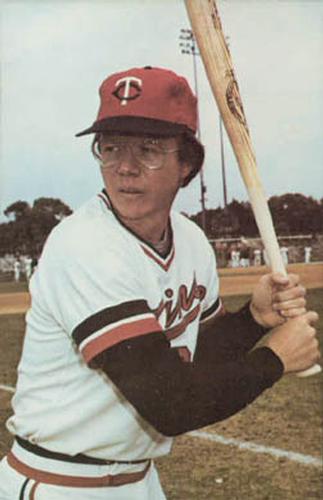
Michael Lee Cubbage (July 21, 1950 – August 11, 2024) was an American third baseman, coach, and manager in Major League Baseball (MLB). Listed at 6 feet 0 inches (1.83 m), 180 pounds (82 kg), he batted left-handed and threw right-handed.

Key Information

Early life

[edit]

Born in Charlottesville, Virginia, Cubbage was the son of Lindy and Marge Cubbage and came from a baseball family, as his cousin, Larry Haney, and first cousin once removed, Chris Haney, played in the major leagues. Cubbage attended University of Virginia, where he played for the Virginia Cavaliers baseball and football teams.[1]

Playing career

[edit]

Cubbage originally was selected by the expansion Washington Senators in the fifth round of the 1968 MLB draft, but did not sign. He then was drafted again by Washington in the second round of the 1971 entry draft, and spent parts of four seasons in the minor leagues before joining the Texas Rangers on April 7, 1974, in a game against the Oakland Athletics.[2] While appearing in nine games with the Rangers in 1974, he did not collect his first major league hit until being called up in 1975, in a game on June 20 against the California Angels, when he went 3-for-5 with four RBIs.[3]

Cubbage was traded along with Roy Smalley III, Bill Singer and Jim Gideon from the Rangers to the Minnesota Twins for Bert Blyleven and Danny Thompson on June 1, 1976.[4] On July 27, 1978, he hit for the cycle against the Toronto Blue Jays.[5] In the bottom of the 2nd inning, Cubbage hit a 1–0 pitch to right field, and was thrown out at third trying to leg out a triple; he was therefore credited for a double on the play. He subsequently hit a home run (4th inning), single (5th inning), and triple (7th inning) to complete the cycle.

Cubbage later signed as a free agent with the New York Mets for the 1981 season. Throughout his playing career, he was considered somewhat of a utility player, playing mostly third base, but with stints at the first and second bases and designated hitter positions. Although he spent most of his playing time at shortstop in high school, Cubbage did not receive any playing time at this position in the major leagues.

In his MLB career of eight seasons, Cubbage appeared in 703 games, batting .258 with 34 home runs and 251 RBIs.

Coaching and managerial career

[edit]

Cubbage managed in the minor leagues for seven seasons. Beginning in 1983, Cubbage led the Little Falls Mets, moving up to the Lynchburg Mets for the next two seasons. He then managed the Mets' AA Texas League affiliate Jackson Mets for the 1986 season, taking them to their league playoff finals. Cubbage was then promoted back to his home state to manage the AAA level Tidewater Tides for their 1987–1989 International League seasons.

Cubbage then served as Mets' third base coach in the early 1990s, and was named interim manager in September 1991.[6] He managed the Mets in seven games, finishing with a career managerial record of three wins and four losses (.429).

During spring training in 2002, Cubbage served as the interim manager of the Boston Red Sox after previous manager Joe Kerrigan was fired. Cubbage remained on the staff as third base coach after the Red Sox hired Grady Little as Kerrigan's full-time replacement.[7]

Death

[edit]

Cubbage died on August 11, 2024, at the age of 74.[8]

See also

[edit]

References

[edit]
[edit]
Revisions and contributorsEdit on WikipediaRead on Wikipedia
from Grokipedia
Mike Cubbage was an American professional baseball infielder, coach, manager, and scout known for his eight-season Major League career as a third baseman and his subsequent five decades of contributions to the sport in various roles. Born on July 21, 1950, in Charlottesville, Virginia, he played for the Texas Rangers from 1974 to 1976, the Minnesota Twins from 1976 to 1980, and the New York Mets in 1981 before retiring as a player. He passed away on August 10, 2024, at age 74 after battling cancer. After his playing career, Cubbage transitioned immediately into coaching and managing, achieving early success in the New York Mets' minor league system where he managed affiliates without a losing season over seven years and earned Manager of the Year honors twice. He joined the Mets' major league staff as a coach in 1990 and served as interim manager for the team's final seven games in 1991. Cubbage later coached for the Houston Astros from 1997 to 2001 and the Boston Red Sox from 2002 to 2003, before working as a scout for the Tampa Bay Rays from 2006 to 2014 and the Washington Nationals from 2015 to 2020, contributing to the Nationals' 2019 World Series championship. His lifelong dedication to baseball spanned 50 consecutive years in professional roles and earned him induction into the Virginia Sports Hall of Fame in 2019.

Early life and education

Childhood and family

Mike Cubbage was born on July 21, 1950, in Charlottesville, Virginia. He grew up in Charlottesville and attended Lane High School in the city. Cubbage came from a baseball family with relatives who reached the Major Leagues. His cousin was catcher Larry Haney, and his first cousin once removed was pitcher Chris Haney, who was Larry Haney's son.

College athletics at Virginia

Mike Cubbage, a native of Charlottesville, Virginia, who attended Lane High School in the same city, enrolled at the University of Virginia after being selected by the Washington Senators in the sixth round of the 1968 MLB draft but choosing not to sign. He accepted the Cavaliers' first-ever baseball scholarship and attended with the intent of prioritizing baseball while completing his academic studies. At Virginia, Cubbage competed for the Cavaliers in both baseball and football. In football, he suited up as a quarterback, becoming the starting quarterback in his sophomore year before suffering a dislocated elbow injury during his first game as a starter in November 1969, which ended his football career. He later reflected that his heart was not fully in football and that he was unlikely to become a professional in the sport, making the decision to focus exclusively on baseball straightforward. Cubbage initially struggled in baseball as a freshman, hitting .230, but improved after the football injury shifted his full attention to the diamond. Under coach Jim West, known for his tough love approach, Cubbage matured as both a player and a person, crediting the experience with preparing him for professional baseball. In May 1971, he earned selection to the All-ACC baseball team. Following his college eligibility, the Washington Senators selected Cubbage again in the second round (secondary phase) of the 1971 MLB draft on June 8, and he signed with the organization, forgoing any further college play.

Major League playing career

Entry into professional baseball

Cubbage entered professional baseball after being drafted by the Washington Senators in the second round of the 1971 MLB June Amateur Draft following his college career at the University of Virginia. He signed with the organization and began his professional career in the minors. The Senators relocated to become the Texas Rangers prior to the 1972 season, so Cubbage continued his development within the Rangers' minor league system. He progressed through the minors and made his Major League debut on April 7, 1974, with the Texas Rangers against the Oakland Athletics at age 23. Listed at 6 ft 0 in (1.83 m) tall and 180 lb (82 kg), Cubbage batted left-handed and threw right-handed. His primary position was third baseman, though he was versatile enough to also play first base, second base, and designated hitter during his career.

MLB tenure and teams

Mike Cubbage played in Major League Baseball for eight seasons from 1974 to 1981, appearing in 703 games while compiling a .258 batting average, 34 home runs, 251 RBIs, 503 hits, and 6.4 WAR. He began his MLB career with the Texas Rangers, making his debut in 1974 and remaining with the team through the 1976 season. On June 1, 1976, Cubbage was traded to the Minnesota Twins as part of a multi-player deal in which the Rangers acquired pitcher Bert Blyleven and shortstop Danny Thompson; Minnesota received Cubbage along with shortstop Roy Smalley, pitchers Bill Singer and Jim Gideon, and $250,000. He continued with the Twins through the 1980 season. After becoming a free agent, Cubbage signed a three-year contract with the New York Mets on December 19, 1980, and played his final MLB season with them in 1981. His last big league game occurred on October 3, 1981, when he hit a home run in his final at-bat. He was released by the Mets on April 5, 1982.

Key performances and statistics

Cubbage's most memorable on-field achievement occurred on July 27, 1978, when he hit for the cycle against the Toronto Blue Jays at Metropolitan Stadium. In a 4-for-4 performance, he doubled in the second inning, homered in the fourth, singled in the fifth, and tripled in the seventh, driving in four runs to help the Twins secure a 6-3 victory. His strongest seasons by Wins Above Replacement (WAR) came during his time with the Twins, highlighted by a career-best 2.7 WAR in 1978, followed by 2.3 in 1977 and 2.1 (with Minnesota following a midseason trade) in 1976. These years represented his peak offensive and defensive contributions as a utility infielder. Over his career, Cubbage posted a .699 OPS and 94 OPS+, with 215 walks against 233 strikeouts, numbers indicative of a contact-oriented hitter who drew walks at a respectable rate for a middle infielder of his era. He received no major individual awards, such as All-Star selections or postseason honors, but carved out a reputation as a dependable utility player capable of filling roles at third base, first base, second base, and designated hitter.

Post-playing baseball career

Minor league management

After retiring from his playing career in 1982, Mike Cubbage began his managerial tenure in the New York Mets minor league system the following year. He managed Mets affiliates from 1983 to 1989, progressing through various levels of the organization. Cubbage's first managerial assignment was with the Little Falls Mets in 1983. He then led the Lynchburg Mets in the Carolina League for the 1984 and 1985 seasons. In 1986, he managed the Jackson Mets in the Texas League, guiding the team to the league finals. Cubbage concluded his minor league managing career by overseeing the Triple-A Tidewater Tides in the International League from 1987 to 1989.

Major league coaching roles

Cubbage began his major league coaching career with the New York Mets in 1990, serving as first base coach, third base coach, and hitting coach through the 1996 season. In September 1991, he was named interim manager for the final seven games of the season following Bud Harrelson's dismissal, compiling a 3–4 record. He later joined the Houston Astros, serving as third base coach from 1997 to 2000 and bench coach in 2001. Cubbage then served as third base coach for the Boston Red Sox from 2002 to 2003, and acted as interim spring training manager in 2002. After his time with the Red Sox, Cubbage worked as a scout and special assignment scout for the Tampa Bay Rays from 2006 to 2014. He later worked as special assistant to the general manager for the Washington Nationals from 2015 to 2020, including during their 2019 World Series championship season.

Television appearances

On-camera roles as Mets coach

During his tenure as a coach with the New York Mets from 1990 to 1996, Mike Cubbage made occasional on-camera appearances as himself on television. He appeared in six episodes of the ESPN series Sunday Night Baseball between 1990 and 1993. In these appearances, he was credited as New York Mets Third Base Coach, First Base Coach, and Hitting Coach. Cubbage has no other known credits in film, television acting, producing, or any creative roles.

Personal life

Family and later years

Mike Cubbage was married to Janice Cubbage for 35 years until his death. He was survived by his wife Janice, his daughter Jennifer Iams, and his grandchildren Connor and Maddie Iams. After retiring from professional baseball in 2020, Cubbage and his wife moved from Charlottesville, Virginia, to Lake Keowee in Sunset, South Carolina, where they resided in the community of The Reserve at Lake Keowee.

Death

Final years and passing

In his final years, Mike Cubbage resided in Sunset, South Carolina, following his retirement from a nearly 50-year career in professional baseball. He battled cancer for nearly a year before passing away on August 10, 2024, at the age of 74 in Sunset, South Carolina.

Legacy in baseball

Mike Cubbage is remembered as a baseball lifer whose versatile career spanned over 50 years in professional baseball, encompassing roles as a player, minor league manager, major league coach, interim manager, scout, and special assistant across multiple organizations. He played in the majors as an infielder for the Texas Rangers, Minnesota Twins, and New York Mets before transitioning to coaching and management, where he achieved consistent success in the minors and served on major league staffs for the Mets, Houston Astros, and Boston Red Sox. Later in his career, he scouted for the Tampa Bay Rays and served as special assistant to the general manager for the Washington Nationals from 2015 to 2020, contributing to the team's 2019 World Series championship. In recognition of his extensive contributions to the sport, Cubbage was inducted into the Virginia Sports Hall of Fame in 2020. He was also a member of the UVA Baseball Hall of Fame, reflecting his roots and impact as a former University of Virginia standout and Charlottesville native. Following his death in 2024, tributes highlighted his enduring influence. The University of Virginia Baseball program expressed sadness at the loss of their Hall of Famer, former big leaguer, and local legend, offering thoughts and prayers to his family. The New York Mets remembered him as a devoted figure who fulfilled multiple roles for the organization—including player in 1981, coach from 1990 to 1996, and interim manager in 1991—while devoting 50 years to baseball.

References

Add your contribution
Related Hubs
User Avatar
No comments yet.