Hubbry Logo
Mike Henry (voice actor)Mike Henry (voice actor)Main
Open search
Mike Henry (voice actor)
Community hub
Mike Henry (voice actor)
logo
8 pages, 0 posts
0 subscribers
Be the first to start a discussion here.
Mike Henry (voice actor)
from Wikipedia

Michael Robert Henry[1] (born November 7, 1965)[2][3] is an American voice actor, comedian, writer, and animator. He is known for his work on Family Guy, where he was a writer, producer, and the voice actor of Cleveland Brown (until 2021), Herbert, Bruce, Consuela, the Greased-up Deaf Guy, and others. He co-created and starred in the spin-off The Cleveland Show (2009–13), for which he voiced the titular character and Rallo Tubbs, among others. He also had a recurring role as Dann in The Orville.[4]

Key Information

Early life and education

[edit]

Henry was born in Pontiac, Michigan,[5] on November 7, 1965, to artist parents and raised in Richmond, Virginia, with his younger brother Patrick. Their parents divorced when Henry was eight years old and the boys were primarily raised by their mother.[6] He was awarded a scholarship and attended the nearby preparatory Collegiate School.[6] Henry graduated from Washington and Lee University (1988), where he earned his B.A. in history and served as class president his sophomore to senior years. Although interested in comedy, Henry never believed he could make a career of it so instead opted for more "business stuff".[7]

Career

[edit]

Early career

[edit]

At 24, after a brief career in advertising, Henry moved to California to pursue acting. There he began taking classes at the Groundlings Theater and performing stand-up comedy.[8] After three years in Los Angeles, Henry returned to Virginia to shoot short comedy films that he wrote and acted in.[9] During that time, Henry often acted in his brother Patrick's student films at the Rhode Island School of Design, where he was introduced to his brother's college roommate, Seth MacFarlane.[6] Henry recalled in 2018, "We immediately hit it off and cracked each other up and kept in touch."[8]

Henry later moved to New York City, where he acted in commercials, studied improvisation at the Upright Citizens Brigade Theater[10] and wrote, produced, starred in and co-directed (with his brother Patrick) comedy shorts for Lorne Michaels' Burly Bear Network.[11]

Family Guy

[edit]

Henry’s break came in 1998, when MacFarlane contacted him about being part of a new show called Family Guy. Mike agreed and joined the project as a writer and voice actor. Henry has stated that the inspiration for Cleveland's voice was based on "this guy that [he] had once played basketball with".[12] During the show's first four seasons, he was credited as a guest star, but beginning with season five's "Prick Up Your Ears" he has been credited as a main cast member.[13]

Two episodes into the second season, Family Guy was taken off the network's permanent schedule and shown irregularly thereafter. The show returned in March 2000 to finish airing the second season which contained 21 episodes; all the cast came back for the series return. During its second season, Fox publicly announced that the show had been cancelled.[14] Despite the announced cancellation, in 2001 Fox decided to make the third season.[15] During the third season, Fox announced that the show was canceled for good.[16][17] Soon after Family Guy was cancelled, Henry and his brother created the popular web series Kicked in the Nuts!, a spoof of hidden camera shows. Family Guy was renewed again in 2005 for its fourth season due to strong DVD sales and its syndication on basic cable networks.[18][19] Once again Henry and the rest of the cast came back for their voice works. In October 2017, Family Guy was renewed for its 16th season.[20]

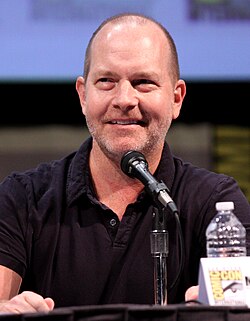
Mike Henry in 2018

The Cleveland Show

[edit]

On September 27, 2009, The Cleveland Show premiered on Fox.[21] The project was created and executive-produced by Henry, Seth MacFarlane and American Dad! showrunner Rich Appel. The show focused on the Family Guy character Cleveland Brown, who referenced the spin-off at the end of the Family Guy episode "Baby Not on Board".[22] The first season consisted of 22 episodes and was picked up by Fox for a second 13-episode season. The announcement was made on May 3, 2009 before the first season even premiered.[23] Due to strong ratings, Fox picked up two additional nine-episode seasons, bringing the total episode count of the show to 44. The show was renewed for a third and fourth season on May 9, 2011.[24] The series was canceled after its fourth season on May 19, 2013,[25] but reruns aired until 2024. The series ran for a total of four seasons and 88 episodes.[26]

Departure from voicing Cleveland

[edit]

On June 26, 2020, after twenty-one years of voicing the character, Henry announced on Twitter that he was stepping down from voicing Cleveland, stating "persons of color should play characters of color" due to heightening of the Black Lives Matter movement in the summer of that year following the police murder of George Floyd.[27][28] On September 25, 2020, it was announced that YouTube personality Arif Zahir, who is African American, would replace Henry as Cleveland, but some episodes produced before Henry's departure from the role will still see Henry voicing the character.[29] Speaking to Henry, who would continue to do other voices for the show, Zahir, who is a longtime fan of both the character and the show said, "you created something truly special, and I promise I will do my absolute best to honor your legacy."[30] To the fans he said, "I promise not to let you down."[30]

Personal life

[edit]

Henry married Linda Murray in 2002. They divorced in 2005 after three years of marriage.[6] They have a son together.[6] Henry has been married to his second wife, Sara Voelker, since 2007.[6] They have a daughter.[6]

Filmography

[edit]

Film

[edit]
Year Title Role Notes
2005 Stewie Griffin: The Untold Story Cleveland Brown,
Herbert,
Bruce,
The Greased-up Deaf Guy,
Fred Rogers, Various characters (voices)
Direct-to-DVD;
Also co-producer
2012 Ted Southern Newscaster Cameo
2014 A Million Ways to Die in the West Cowboy Cameo

Television

[edit]
Year Title Role Notes
1999–present Family Guy John Herbert,
Bruce Straight,
The Greased-up Deaf Guy, Consuela, Various characters (voices)
Also co-producer, producer, supervising producer, story editor, executive story editor, consultant, and writer;
NominatedPrimetime Emmy Award for Outstanding Animated Program (2008)
Nominated–Primetime Emmy Award for Outstanding Comedy Series (2009)
1999–2021 Cleveland Brown,
Rallo Tubbs,
Fouad
Stepped down from voicing these characters on June 26, 2020
2003 Kicked in the Nuts! Kicked in the Nuts Guy Also co-creator, producer, director, editor, and writer
2003–2006 Gilmore Girls Ed 4 episodes
2005–2010 Robot Chicken Various characters
(voices)
4 episodes
2005–present American Dad! Jackson, Various characters
(voices)
79 episodes
2007 Scrubs Urologist Episode: "My Point of No Return"
2009–2013 The Cleveland Show Cleveland Brown,
Rallo Tubbs, Various characters
(voices)
88 episodes; Also co-creator, executive producer, and writer;
ASCAP Award for Top Television Series (2013)
Nominated–Teen Choice Award for Choice Animated Series (2010)
Nominated–Annie Award for Voice Acting in an Animated Television Production (2011)
Nominated–Teen Choice Award for Choice Animated Series (2011)
Nominated–Primetime Emmy Award for Outstanding Animated Program (2011)
2010 Robot Chicken: Star Wars Episode III Yaddle (voice) Television special
2017–2022 The Orville Dann 11 episodes
2024 Ted Bank Teller Season 1 Episode 1 "Just Say Yes"

Web

[edit]
Year Title Role Notes
2008–2009 Seth MacFarlane's Cavalcade of Cartoon Comedy Various characters (voices) 3 episodes

Video games

[edit]
Year Title Voice role Notes
2006 Family Guy Video Game! Cleveland Brown,
Herbert,
The Greased-up Deaf Guy,
Various characters (voices)
2012 Family Guy: Back to the Multiverse Cleveland Brown,
Herbert,
Consuela,
Various characters (voices)
2014 Family Guy: The Quest for Stuff Cleveland Brown,
Herbert
Bruce,
Consuela,
Rallo Tubbs,
Various characters (voices)

References

[edit]
[edit]
Revisions and contributorsEdit on WikipediaRead on Wikipedia
from Grokipedia

Michael Robert Henry (born November 7, 1965) is an American voice actor, writer, producer, comedian, and director, best known for his contributions to the Family Guy, including writing, producing, and voicing characters such as , Herbert, Consuela, and Bruce since the show's inception in 1999.
Henry co-created and starred in the Family Guy spin-off , which aired for four seasons from 2009 to 2013 and focused on the character relocating to with his family. His work extends to guest roles in live-action and animated projects, including voicing Dann in and appearances in Ted, alongside hosting the podcast The Mike Henry Show. Raised in , after being born in , Henry graduated from in 1988 before pursuing comedy in and New York. In June 2020, Henry announced he would step down from voicing , stating that "persons of color should play characters of color," amid broader industry discussions on casting practices; he continued contributing to in other capacities but was replaced by for the role starting in season 19. This decision followed years of performing the voice, which Henry originated based on first-principles character development rather than ethnic impersonation, reflecting his creative process in building the show's ensemble.

Early life

Childhood and upbringing

Michael Robert Henry was born on November 7, 1965, in . He was raised in , alongside his younger brother Patrick, by parents who worked as artists. Henry's early interest in performance emerged through creating character voices for prank phone calls during childhood. This playful experimentation laid informal groundwork for his later pursuits in and .

Education and early interests

Henry attended The Collegiate School, a preparatory institution in , graduating in 1984. He subsequently studied at , earning a in in 1988 while serving as during his senior year. Born to artist parents, Henry was exposed to creative environments from an early age, fostering interests in performance and storytelling. His specific affinity for voice work emerged in childhood, when he began devising characters for prank phone calls, an activity that honed his improvisational skills and laid the groundwork for his later career in animation.

Career

Early career in writing and voice acting

Henry graduated from with a B.A. in history in 1988. Following graduation, he spent a year working in before relocating to in 1989 to pursue a career in . There, he engaged in extensive auditioning, attending sessions daily for approximately one year amid broader struggles to secure steady work in the industry. In 1998, Henry joined the production of during its initial development phase, marking his entry into professional writing and . He contributed as a from the series' , helping craft episodes alongside creator , and provided voices for recurring characters such as , which debuted in the show's pilot episode aired on January 31, 1999. His multifaceted role combined script development with performance, laying the foundation for his subsequent contributions to the series' humor and character dynamics. Prior to , no credited writing or roles appear in professional records, indicating the program as his debut in these fields.

Contributions to Family Guy

Mike Henry joined the production of in 1998 as both a and voice actor during the series' early development. His initial contributions included pitching character voices in the writers' room, notably developing the distinctive slow, deliberate speech pattern for , inspired by real-life figures and integrated into the show from its first season. Henry's multifaceted role encompassed scripting, producing, and performing voices for multiple recurring characters, helping shape the series' ensemble of supporting figures. Among his prominent voice roles, Henry originated and performed , the mild-mannered neighbor to the , appearing in over 100 episodes until 2021. He also voiced Herbert, an elderly man with pedophilic tendencies; , a heavyset, effeminate bank employee; Consuela, a Guatemalan maid known for her and "No"; and the Greased-up Deaf Guy, a wrestler character. Additional minor voices included Fouad and Jeffery. These performances, delivered in recording sessions alongside creator , contributed to the show's signature style of rapid-fire character interactions and cutaway gags. Henry's writing credits include co-authoring the season 3 episode "A Fish out of Water," which aired on September 20, 2001, and focused on Peter Griffin's attempt to regain his boating license, co-written with Alex Borstein. He also co-wrote the season 4 episode "The Cleveland-Loretta Quagmire," aired June 12, 2005, detailing Cleveland's divorce and Quagmire's affair with his ex-wife, alongside his brother Patrick Henry. As a producer, Henry helped oversee episode development from the show's revival in 2005 onward, contributing to its expansion into a long-running series with 22 seasons by 2023. His work emphasized instinct-driven humor and voice improvisation, as noted in interviews where he described generating gags through collaborative table reads.

Creation and production of The Cleveland Show

The Cleveland Show originated as a spin-off from , conceived by Mike Henry, who had voiced the character since the parent series' debut in 1999. Henry developed the Cleveland persona during 's first season, drawing from aspects of his own life experiences while portraying the character as an African-American in animated form. The idea for a dedicated series emerged after executives requested a spin-off following the 2007–2008 Writers Guild strike, with Henry collaborating closely with to craft a narrative centered on Cleveland relocating to his hometown of Stoolbend with his son Cleveland Jr., new wife Donna Tubbs, and her children. Henry served as co-creator, , and primary voice actor, voicing not only Cleveland but also Rallo Tubbs, Coach McFall, and Dwayne Meighan, among others. The production team, including , aimed to differentiate the show from by adopting a sweeter, more family-oriented tone inspired by programs like and , while retaining animated elements with broader humor and character-driven stories. Episodes were produced at a cost of approximately $1.3 million to $1.4 million each, leveraging animation's flexibility for over 40 location variations per episode and short, gag-filled sequences suitable for . The series utilized a format and incorporated 1970s–1980s music, such as tracks evoking , to establish its stylistic identity. Development emphasized sensitivity in content, with Henry adjusting elements like the theme song lyrics—changing "happy black-guy face" to "happy mustache face"—based on feedback from African-American writers and cast members to align with his vision of a good-natured . The pilot episode, set partly in 's Quahog before transitioning to Stoolbend, premiered on on September 27, 2009, attracting 9.4 million viewers, a 50% increase over the prior time slot's average. No crossovers with were planned for the first season to allow the show to establish its independent identity. The series ran for four seasons, producing 88 episodes until its conclusion in 2013, with Henry overseeing writing and production alongside Appel and MacFarlane through .

Other voice roles and projects

Henry provided additional voices for the animated series American Dad!, including the character Jackson, across multiple episodes beginning in 2005. He contributed various character voices to four episodes of Robot Chicken between 2005 and 2010. In the live-action science fiction series The Orville, Henry voiced the recurring Moclus character Lieutenant Dann, debuting in the 2017 episode "Old Wounds". Earlier, in 2003, he voiced the "Kicked in the Nuts Guy" in the short film Kicked in the Nuts!. These roles demonstrate Henry's versatility in both recurring supporting parts and one-off contributions outside his primary Family Guy-associated work.

Departure from voicing Cleveland Brown

On June 26, 2020, Mike Henry announced via Twitter that he would step down from voicing Cleveland Brown, a character he had portrayed since the show's debut in 1999. In his statement, Henry wrote, "I love this character, but persons of color should play characters of color. Therefore, I will be stepping down from the role." This decision came amid heightened cultural scrutiny over white actors voicing Black characters, following the death of George Floyd on May 25, 2020, and subsequent national discussions on racial representation in media. Henry had voiced Cleveland across 21 years, including the spin-off series The Cleveland Show, which aired from 2009 to 2013 and featured the character as the lead. The announcement aligned with a broader industry trend in 2020, where several white performers relinquished roles traditionally voiced by non-Black actors, such as Hank Azaria's departure from Apu on . Henry's choice was presented as voluntary, emphasizing ethical concerns over authenticity in performance rather than external mandate, though it occurred during a period of intensified pressure from advocacy groups and campaigns advocating for racial matching in voice casting. Prior to this, Henry had defended his portrayal in interviews, noting Cleveland's basis in personal observations and avoiding stereotypical exaggeration, but he did not cite specific external demands precipitating the 2020 exit. Fox confirmed the recasting in September 2020, with , a Black voice artist known for impressions of , assuming the role starting in season 19. Henry's final episodes as Cleveland aired in the preceding season, marking the end of his tenure without reported disputes over residuals or production involvement post-departure. The move was praised by some outlets for promoting diversity but critiqued by others as performative amid a lack of evidence that Henry's performance hindered the character's appeal or accuracy.

Controversies

Recasting debate and cultural pressures

In June 2020, Mike Henry announced he would step down from voicing , a Black character he had portrayed since 's inception in 1999 and throughout (2009–2013), stating on that "persons of color should play characters of color." This decision occurred amid heightened scrutiny of in entertainment following the protests, which prompted multiple animated series—including , Big Mouth, and —to recast non-white characters with actors of matching . Henry's move was framed by him as a personal conviction rather than external coercion, yet it aligned with industry-wide self-imposed standards emerging from public and activist demands for "authenticity" in casting, even in voice work where visual race is absent. The recasting debate centers on whether racial matching in voice acting enhances portrayal quality or representation, or if it imposes arbitrary barriers in a skill-based field. Proponents argue it addresses historical underrepresentation by reserving roles for underrepresented actors, potentially increasing opportunities for Black voice talent amid data showing white actors dominated such parts pre-2020. Critics counter that animation's non-visual nature prioritizes vocal range and character consistency over ethnicity, citing successful precedents like Black actors voicing white characters (e.g., Keith David in various roles) or white actors in non-white ones without prior backlash, and noting Henry's 20-year tenure had not demonstrably harmed the character's integrity or fan reception until cultural shifts intervened. Arif Zahir, a Black comedian and YouTuber, assumed the role in Family Guy season 19 (premiering September 2020), but some observers, including fans and industry commentators, criticized the change for altering Cleveland's established timbre and delivery, suggesting the recast prioritized ideology over artistic continuity. Empirical evidence for racial matching's benefits remains anecdotal, as pre-2020 cross-racial voicing in animation like Family Guy sustained long-running popularity without measurable representational deficits. Cultural pressures in 2020 amplified this trend through social media campaigns and media narratives labeling non-matching casts as "whitewashing" or culturally insensitive, fostering an environment where creators preemptively aligned with evolving norms to mitigate reputational risks. Outlets like The New York Times and Vox portrayed these shifts as progressive reckonings, yet skeptics, including voice actors and analysts, highlighted potential downsides such as reduced role availability across demographics and a departure from merit-based casting, with one critic arguing that merely swapping voices fails to address deeper issues like studio investment in diverse talent pipelines. This wave reflected broader Hollywood conformity to ideological demands rather than data-driven reforms, as evidenced by the abrupt policy reversals in established shows absent prior empirical complaints about voice authenticity affecting audience engagement or character efficacy.

Fan and industry reactions

Fans expressed divided opinions on Mike Henry's June 26, 2020, announcement to step down from voicing Cleveland Brown, with many prioritizing the actor's long-established performance over racial matching in voice work. Discussions on platforms like Reddit and Quora highlighted that Henry had originated and refined the character's voice over two decades, arguing the change undermined merit-based casting in animation where visual appearance is irrelevant. Some Black fans voiced preference for Henry's portrayal, stating it authentically captured the character regardless of the actor's race. Reactions to the September 25, 2020, recasting with intensified fan critiques, as Zahir's impression closely mimicked Henry's style, leading some to decry the move as performative rather than substantive. Forums noted dissatisfaction with the new voice's perceived mismatch in tone and delivery compared to the original, with complaints that it altered the character's familiarity without improving quality. Others viewed the recasting as an extension of broader cultural pressures, questioning its necessity absent prior complaints about Henry's work. Industry figures and outlets generally endorsed the transition as advancing representation, aligning with concurrent decisions by shows like The Simpsons to recast non-white characters with actors of matching ethnicity. Fox and Family Guy producers proceeded without public dissent, selecting Zahir for his prior impressions and integrating him seamlessly, as evidenced by amicable exchanges with Henry. Cast members, including Alex Borstein, later reflected on early lacks in diversity but framed the shift positively within industry-wide changes. No major backlash emerged from animation professionals, though some online commentary lamented reduced flexibility in voice casting.

Producing and writing achievements

Key scripted works

Mike Henry co-created the animated series with , serving as , , and voice actor for lead character from its premiere on November 1, 2009, until its conclusion after four seasons on May 19, 2013. The series, a spin-off from , featured 88 episodes centered on Cleveland's life in , with Henry contributing to scripts that emphasized the character's family dynamics and neighborhood interactions. In , Henry wrote or co-wrote several episodes during the early seasons, including "Death Lives" (season 3, episode 3), "A Fish out of Water" (season 3, episode 10, with ), "The Cleveland-Loretta Quagmire" (season 4, episode 5, with ), reflecting his focus on character-driven humor often involving . These works helped establish recurring themes and characters that later informed The Cleveland Show.

Collaborative efforts

Mike Henry maintained a professional partnership with his brother, Patrick Henry, spanning over two decades, during which they collaborated on writing, producing, directing, and financing various projects including television shows, short films, and commercials, with contributions to Family Guy. Their final joint effort was the independent comedy pilot Home on the Strange, written, directed, and produced by Mike Henry with production support from Patrick Henry, filmed in Richmond, Virginia, in 2016. Henry's most prominent collaborations occurred with , beginning in the mid-1990s through Patrick's college connection at the , leading to joint work on starting in 1999, where Henry served as a and alongside MacFarlane and other team members. This partnership extended to co-creating and producing the spin-off series (2009–2013), developed with MacFarlane and , for which Henry also contributed writing. These efforts involved coordinated script development, episode production, and creative oversight within Fox's framework.

Personal life

Marriage and family

Mike Henry has been married to Sara Voelker Henry since the early 2000s. The couple has two children: a son named Jack, born in October 2003, and a daughter named Josie, born in September 2007. The resides in .

Public persona and hobbies

Mike Henry maintains a relatively low public profile, valuing the anonymity of that allows him to avoid the scrutiny faced by on-screen performers. In a 2008 , he described enjoying the "low-profile status" of his work, which permits a casual creative environment without the pressures of public recognition. This persona aligns with his professional focus on , where he has prioritized behind-the-scenes contributions over personal publicity. Henry's hobbies center on and creative expression, including stand-up performance, , and directing short films, activities he pursued prior to his involvement. He collaborated with his brother Patrick on the 2003 comedy short series Kicked in the Nuts for Channel101.com, reflecting an interest in independent comedy production. Additionally, Henry hosts The Mike Henry Show podcast, featuring interviews with celebrities on topics like and success.

Reception and legacy

Critical acclaim and awards

Mike Henry's voice work has received limited formal recognition, primarily through nominations tied to his contributions as a performer and producer on animated series. In 2011, he was nominated for an Annie Award in the category of Best Voice Acting in an Animated Television Production for portraying Cleveland Brown in The Cleveland Show. This nomination highlighted his vocal characterization amid the series' debut season, though he did not win. As a co-creator, writer, and producer, Henry shared in broader accolades for the programs he helped develop. Family Guy and The Cleveland Show garnered Primetime Emmy nominations in categories such as Outstanding Animated Program (2011 for The Cleveland Show) and Outstanding Comedy Series (2009 for Family Guy), reflecting ensemble production efforts rather than individual voice performance. No personal Primetime Emmy nominations for voice-over work appear in verified records, despite occasional unsubstantiated claims in secondary sources. Critical reception of Henry's performances has been mixed, often subsumed within evaluations of the irreverent style of MacFarlane's universe, with sparse standalone praise for his range in voicing characters like , Herbert, and Consuela. Industry observers have noted his ability to imbue roles with distinct comedic timing, but formal reviews rarely single him out for acclaim beyond the shows' cult popularity.

Impact on animation and criticisms

Henry's contributions to animated television extended beyond voice performances, as he co-created and executive produced The Cleveland Show, a spin-off from Family Guy that premiered on Fox on September 27, 2009, and ran for four seasons totaling 88 episodes until its cancellation on May 19, 2013. The series relocated the character and his family to the fictional town of Stoolbend, , introducing ensemble dynamics with new supporting characters like Rallo Tubbs and exploring themes of blended families and suburban life through the lens of adult-oriented humor typical of Seth MacFarlane's productions. This expansion demonstrated Henry's role in diversifying narrative scopes within the Family Guy universe, attempting to elevate a recurring side character into a lead while incorporating guest stars and crossovers that influenced subsequent formats emphasizing family relocation and cultural . His writing and producing on Family Guy since its 1999 debut further shaped the show's signature style of rapid-fire cutaway gags and character-driven vignettes, with Henry credited on over 200 episodes as a supervising and writer who helped refine archetypes like the affable and eccentric neighbors. These elements contributed to the longevity of block programming on networks like , where Family Guy maintained viewership averages of 5-7 million per episode during Henry's primary involvement, influencing imitators in blending with . Criticisms of Henry's animation work often centered on the perceived uneven quality and reliance on in The Cleveland Show, which garnered a 44% approval rating on for its first season based on 18 reviews, with detractors citing flat jokes, underdeveloped characters, and a failure to distinguish itself from Family Guy's formula. Reviewers noted the series' crude, raunchy content—focusing on sex, drinking, and lowbrow stereotypes—as aiming for easy laughs without sufficient narrative depth, leading to declining ratings from an initial 7.3 million viewers for the pilot to under 4 million by season four. aggregated a 55/100 score from 18 critics, reflecting mixed reception that praised fluid but faulted repetitive humor and lack of innovation, ultimately contributing to its non-renewal despite solid early performance. Broader critiques of characters voiced by Henry, such as the pedophilic Herbert or the slow-speaking Bruce on , highlighted concerns over perpetuating offensive tropes through exaggerated mannerisms and taboo subjects, though these were emblematic of the show's overall irreverence rather than isolated to his performances. Some observers argued that 's attempt at cultural specificity faltered by altering Cleveland's original mild-mannered persona into a more boisterous figure akin to , diluting potential for authentic character evolution and reinforcing criticisms of formulaic spin-off reliance in .

Filmography

Animated television roles

Mike Henry gained prominence for his voice acting in the animated series Family Guy, where he portrayed starting in the second season in 2000 until 2021, along with other recurring characters including the elderly pedophile Herbert, the Guatemalan housekeeper Consuela, and the effeminate . He also contributed writing and producing to the show, which he joined after co-creating Cleveland as a neighbor to . On June 26, 2020, Henry announced via that he would cease voicing Cleveland, a Black character, stating, "persons of color should play characters of color," with his final performance airing in the season 18 finale on September 20, 2020; the role was recast with (now known as Arif Kinchen) beginning in season 19. Henry created the spin-off , which aired from November 1, 2009, to May 19, 2013, across four seasons on , voicing the titular as well as Cleveland Brown Jr., Lester Krinklesac, and additional characters. The series focused on Cleveland's relocation to , emphasizing family dynamics and neighborhood antics, with Henry also serving as executive producer alongside and others. In American Dad!, Henry provided additional voices across multiple episodes from 2005 to 2020, including minor roles and impressions integrated into the show's satirical narratives. He appeared in Robot Chicken segments starting in 2005, contributing voices for sketch comedy parodies of pop culture. These roles highlight Henry's versatility in ensemble animation, often involving exaggerated archetypes and humor derived from character quirks.
SeriesCharacter(s)Run DatesNotes
Family Guy, Herbert, Consuela, Bruce, Greased-up Deaf Guy2000–2021 (Cleveland); ongoing for othersCo-creator of Cleveland; stepped down from lead role in 2020 amid casting debates.
The Cleveland Show, Cleveland Jr., others2009–2013Creator, executive producer, and lead voice.
American Dad!Additional voices2005–2020Episodic contributions to ensemble.
Robot ChickenVarious sketch voices2005–presentParody segments.

Film and other media

Henry voiced and several other characters in the direct-to-video animated feature Stewie Griffin: The Untold Story (2005), a spin-off released on September 27, 2005. In Seth MacFarlane's live-action comedy Ted (2012), Henry provided the voice for the Southern newscaster, appearing in news segments throughout the film released on June 29, 2012. He had a minor cameo as the smiling man in a photograph and as a at the fair in the Western A Million Ways to Die in the West (2014), directed by and starring MacFarlane, which premiered on May 22, 2014. In the drama The Art of Racing in the Rain (2019), Henry portrayed a character named Mike in this adaptation of Garth Stein's novel, released on August 9, 2019. Beyond theatrical and direct-to-video releases, Henry's voice work extends to other media such as promotional content and specials, though specific credits in non-film formats like advertisements remain limited in public records.

Video games and web content

Henry provided voice work for several video games tied to the Family Guy franchise. In the 2006 release Family Guy Video Game!, he voiced Cleveland Brown, Herbert, and the Greased-up Deaf Guy. For Family Guy: Back to the Multiverse (2012), Henry reprised roles including Cleveland Brown, Herbert, and Consuela, along with additional characters. He also contributed voices such as Cleveland Brown, Herbert, Bruce, and Consuela to the mobile game Family Guy: The Quest for Stuff (2014).
YearTitleRoles
2006Family Guy Video Game!, Herbert, Greased-up Deaf Guy
2012Family Guy: Back to the Multiverse, Herbert, Consuela, Various
2014Family Guy: The Quest for Stuff, Herbert, , Consuela
Prior to the revival of , Henry co-created the web series Kicked in the Nuts! with his brother , launching in August 2003 on as a of hidden-camera prank shows. The series, which ran through 2005, featured staged pranks centered on groin kicks, with Henry writing, directing, producing, editing, and appearing as the "Kicked in the Nuts Guy." Episodes were hosted on the official site and , gaining a for its absurd humor. No additional or online voice content by Henry has been prominently documented beyond this project.

References

Add your contribution
Related Hubs
User Avatar
No comments yet.