
Recent from talks
Mike Richter
Knowledge base stats:
Talk channels stats:
Members stats:
Mike Richter
Michael Thomas Richter (born September 22, 1966) is an American former professional ice hockey goaltender in the National Hockey League (NHL). He played all 14 seasons of his career with the New York Rangers.
Richter played college hockey for Wisconsin for two years before being drafted by the Rangers in the 1985 draft. He made his debut with the team with one start in the 1989 Stanley Cup playoffs and soon became part of a rotation with John Vanbiesbrouck, which would last for three years before Richter became the primary netminder following a trade in 1993. In the 1993–94 season, he led the league in wins with 42 in 68 starts while backstopping the Rangers with four shutouts in the playoffs on their way to the Stanley Cup Final, which they won in seven games for the first championship for the organization in 54 years. He won his 300th game in 2002, becoming the first Ranger to achieve the mark. A series of concussions ultimately saw Richter retire prior to the 2003–04 season. The following year, the Rangers retired his number 35 jersey, making him the third player to receive the honor.
He represented the United States in international play on several occasions, winning the World Cup of Hockey in 1996 and finishing with the silver medal at the 2002 Winter Olympics. In 2008, alongside teammate Brian Leetch, Richter was enshrined into the United States Hockey Hall of Fame.
Richter grew up in Flourtown, Pennsylvania, near Philadelphia, and idolized Philadelphia Flyers goaltender Bernie Parent. He attended and played for Germantown Academy in Fort Washington, Pennsylvania, and then Northwood School in Lake Placid, New York, graduating in 1985. He also played at the Wissahickon Skating Club. After playing for the United States in the World Junior Championships in 1985, Richter played for the University of Wisconsin–Madison from 1985 to 1987, and the Rangers made him the 28th overall pick in the 1985 NHL entry draft. He again represented the US in the 1986 World Junior Championships, as well as the World Championships and the 1988 Winter Olympics in Calgary, before making his NHL debut in the 1989 playoffs. Though he lost the one game in which he played, he was soon a regular member of the Rangers, posting 12 wins against five losses in his rookie season as the club's backup goaltender. Over the next two seasons, Richter split goaltending duties with the Rangers' veteran starter, John Vanbiesbrouck, and was selected to play for the U.S. in the 1991 Canada Cup tournament.
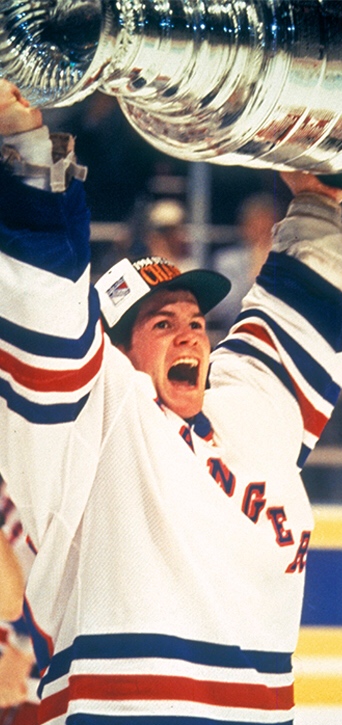
Vanbiesbrouck was traded to the Vancouver Canucks prior to being selected by the Florida Panthers in the 1993-94 NHL expansion draft. Richter then had his first campaign as the team's number one goaltender. He posted a career best 42 wins and 2.57 goals against average as the Rangers won the Presidents' Trophy as the league's top regular season team for the second time in three years. He was also named Most Valuable Player of the NHL All-Star Game, which the Rangers hosted at Madison Square Garden. In the playoffs, he ramped up his play, becoming the eighth goaltender to post four shutouts in one playoff season. The Rangers reached the Stanley Cup Final against the Canucks, and Richter earned a career highlight in game four, famously stopping Vancouver sniper Pavel Bure on a penalty shot. The Rangers defeated the Canucks in seven games to win their first Stanley Cup since 1940.
Over the next few years, Richter would be consistently ranked among the world's top goaltenders. He led the United States to victory in the 1996 World Cup of Hockey, with his efforts earning him tournament Most Valuable Player honors. Injuries plagued much of his career, including MCL sprains, ACL sprains, and concussions.
Richter's style of play was very acrobatic and quick. For a small goalie he made himself look big by using his lightning quick reflexes to make saves. He was rarely out of position and always square to his shooters. He was known for making plenty of desperation saves using his focus, flexibility, and athleticism. Longtime teammate and Hall of Fame Ranger defenseman Brian Leetch once said about Richter: "I have never seen anyone more focused than he was. As the game got tougher, he got better. If a goal was ever scored on him I was always surprised."
His last appearance in the Stanley Cup playoffs would be 1997, as a series of knee injuries and a string of mediocre Ranger teams saw his personal statistics suffer. Nevertheless, he was selected as the top goalie for Team USA in the 1998 and 2002 Olympics, winning a silver medal in the 2002 Games.
Hub AI
Mike Richter AI simulator
(@Mike Richter_simulator)
Mike Richter
Michael Thomas Richter (born September 22, 1966) is an American former professional ice hockey goaltender in the National Hockey League (NHL). He played all 14 seasons of his career with the New York Rangers.
Richter played college hockey for Wisconsin for two years before being drafted by the Rangers in the 1985 draft. He made his debut with the team with one start in the 1989 Stanley Cup playoffs and soon became part of a rotation with John Vanbiesbrouck, which would last for three years before Richter became the primary netminder following a trade in 1993. In the 1993–94 season, he led the league in wins with 42 in 68 starts while backstopping the Rangers with four shutouts in the playoffs on their way to the Stanley Cup Final, which they won in seven games for the first championship for the organization in 54 years. He won his 300th game in 2002, becoming the first Ranger to achieve the mark. A series of concussions ultimately saw Richter retire prior to the 2003–04 season. The following year, the Rangers retired his number 35 jersey, making him the third player to receive the honor.
He represented the United States in international play on several occasions, winning the World Cup of Hockey in 1996 and finishing with the silver medal at the 2002 Winter Olympics. In 2008, alongside teammate Brian Leetch, Richter was enshrined into the United States Hockey Hall of Fame.
Richter grew up in Flourtown, Pennsylvania, near Philadelphia, and idolized Philadelphia Flyers goaltender Bernie Parent. He attended and played for Germantown Academy in Fort Washington, Pennsylvania, and then Northwood School in Lake Placid, New York, graduating in 1985. He also played at the Wissahickon Skating Club. After playing for the United States in the World Junior Championships in 1985, Richter played for the University of Wisconsin–Madison from 1985 to 1987, and the Rangers made him the 28th overall pick in the 1985 NHL entry draft. He again represented the US in the 1986 World Junior Championships, as well as the World Championships and the 1988 Winter Olympics in Calgary, before making his NHL debut in the 1989 playoffs. Though he lost the one game in which he played, he was soon a regular member of the Rangers, posting 12 wins against five losses in his rookie season as the club's backup goaltender. Over the next two seasons, Richter split goaltending duties with the Rangers' veteran starter, John Vanbiesbrouck, and was selected to play for the U.S. in the 1991 Canada Cup tournament.
Vanbiesbrouck was traded to the Vancouver Canucks prior to being selected by the Florida Panthers in the 1993-94 NHL expansion draft. Richter then had his first campaign as the team's number one goaltender. He posted a career best 42 wins and 2.57 goals against average as the Rangers won the Presidents' Trophy as the league's top regular season team for the second time in three years. He was also named Most Valuable Player of the NHL All-Star Game, which the Rangers hosted at Madison Square Garden. In the playoffs, he ramped up his play, becoming the eighth goaltender to post four shutouts in one playoff season. The Rangers reached the Stanley Cup Final against the Canucks, and Richter earned a career highlight in game four, famously stopping Vancouver sniper Pavel Bure on a penalty shot. The Rangers defeated the Canucks in seven games to win their first Stanley Cup since 1940.
Over the next few years, Richter would be consistently ranked among the world's top goaltenders. He led the United States to victory in the 1996 World Cup of Hockey, with his efforts earning him tournament Most Valuable Player honors. Injuries plagued much of his career, including MCL sprains, ACL sprains, and concussions.
Richter's style of play was very acrobatic and quick. For a small goalie he made himself look big by using his lightning quick reflexes to make saves. He was rarely out of position and always square to his shooters. He was known for making plenty of desperation saves using his focus, flexibility, and athleticism. Longtime teammate and Hall of Fame Ranger defenseman Brian Leetch once said about Richter: "I have never seen anyone more focused than he was. As the game got tougher, he got better. If a goal was ever scored on him I was always surprised."
His last appearance in the Stanley Cup playoffs would be 1997, as a series of knee injuries and a string of mediocre Ranger teams saw his personal statistics suffer. Nevertheless, he was selected as the top goalie for Team USA in the 1998 and 2002 Olympics, winning a silver medal in the 2002 Games.
Recent media