Hubbry Logo
Mikey WelshMikey WelshMain
Open search
Mikey Welsh
Community hub
Mikey Welsh
logo
8 pages, 0 posts
0 subscribers
Be the first to start a discussion here.
Mikey Welsh
Mikey Welsh
from Wikipedia

Key Information

Michael Edward Welsh (April 20, 1971 – October 8, 2011) was an American artist and musician who played bass for several bands, including the rock band Weezer. During Weezer's hiatus, he played with Weezer frontman Rivers Cuomo in the band Homie, during Cuomo's time in Boston. Following original bassist Matt Sharp's departure from Weezer, Welsh joined as bassist and played with them from the time that they unofficially regrouped in 1998 until August 2001, when he experienced mental health problems. Shortly afterwards, he retired from music to focus on his painting career.[2] Welsh died from a drug overdose on October 8, 2011.[3]

Career

[edit]

Welsh was born on April 20, 1971, in Syracuse, New York.[4] He began his career as a Boston-area musician, playing in bands such as Heretix, Chevy Heston, Jocobono, Left Nut, and Slower.[5][6][7][8] He was a touring bassist for Juliana Hatfield and Verbena.[9] In 1997, he joined the first incarnation of the Rivers Cuomo Band, the side-project of Weezer frontman Rivers Cuomo.[8][9] He joined Weezer following the departure of Matt Sharp in 1998.[5][10]

During Weezer's hiatus, he played with Verbena and the first incarnation of Patrick Wilson's band the Special Goodness. He wrote a large number of basslines in this period, recorded them and sent them to Rivers Cuomo for writing inspiration,[11] although Cuomo never used any of them. Instead, he contributed four of these to Juliana Hatfield's 2000 album Juliana's Pony: Total System Failure.[12] Welsh was given a co-writing credit for four songs.[13]

He toured with Weezer beginning with their resurgence in the summer of 2000 and first appeared on their limited edition Christmas CD EP later that year (re-released in 2005 as Winter Weezerland). He subsequently played on 2001's Green Album as well as a number of B-sides and unreleased songs from the era, and also performed with the band most of the way through tours supporting the album.

Mental illness and exit from Weezer

[edit]

In 2001, Welsh suffered a breakdown brought on by drug use, undiagnosed mental health problems, and the strain of touring. After attempting suicide by drug overdose, he left Weezer. The reason for his exit was not made public until some time later.[14] He was checked into a psychiatric hospital in August 2001.[15] He later spoke about the ordeal in an interview with the website Rock Salt Plum:

Basically, a lifetime of doing drugs and being undiagnosed as having bipolar disorder, post-traumatic stress disorder, and borderline personality disorder finally caught up with me when I was 30 years old. At the beginning of a 3-month European tour with Weezer, I started slowly falling apart. Without getting too graphic, by the time the tour was winding up, my weight had gone down to about 140lbs (I'm 6'2") [63,5 kg – 1,88 m] and mentally completely wiped out. When I returned to the States, my family had made plans for me to see a psychiatrist in Boston. First though, we had to play a few dates around the U.S., and perform on The Tonite (sic) Show (which ended up being my last performance with Weezer). By the time I got to Boston, I was having a complete nervous breakdown. It ended with a severe suicide attempt (an overdose). I was found and rushed to the hospital where I had come to within minutes of my heart completely stopping. I was in a coma for a few days, and woke up in a lockdown psychiatric ward.

— Mikey Welsh, Feb. 2007 Rock Salt Plum Interview[14]

Weezer shot a new version of the video for their song "Island in the Sun" without Welsh.[16][17] Following Welsh's departure in 2001, the band hired Scott Shriner to replace Welsh.[18]

Retirement from music

[edit]

In late 2001/2002, Welsh returned to the Boston music scene by temporarily joining the Kickovers, the band of Nate Albert, guitarist for the Mighty Mighty Bosstones.[2] In an interview, he expressed his distaste for the corporate music process, stating that, "It's actually fun to just be playing in the studio without some major-label idiot standing over your shoulder."[19] Soon after, he retired from music to become a full-time artist.[2] He, his wife and their two sons lived in Vermont.[10][20]

Welsh attended a Weezer show on July 12, 2005, in Lewiston, Maine. Cuomo dedicated "Hash Pipe" to him, drawing cheers from the crowd.[21] On September 2, 2010, he joined the band on stage at a show in Essex Junction, Vermont, to play bass on the song "Hash Pipe". On July 29, 2011, Welsh played guitar on the song "Undone" with Weezer and the Flaming Lips at a show in New York.

Art career

[edit]

Welsh became an artist and, as of August 2008, had 13 exhibitions of his artwork.[22] He was a member of Outsider Art.[23]

A quote from Welsh's official website explained his methods of creating his art:

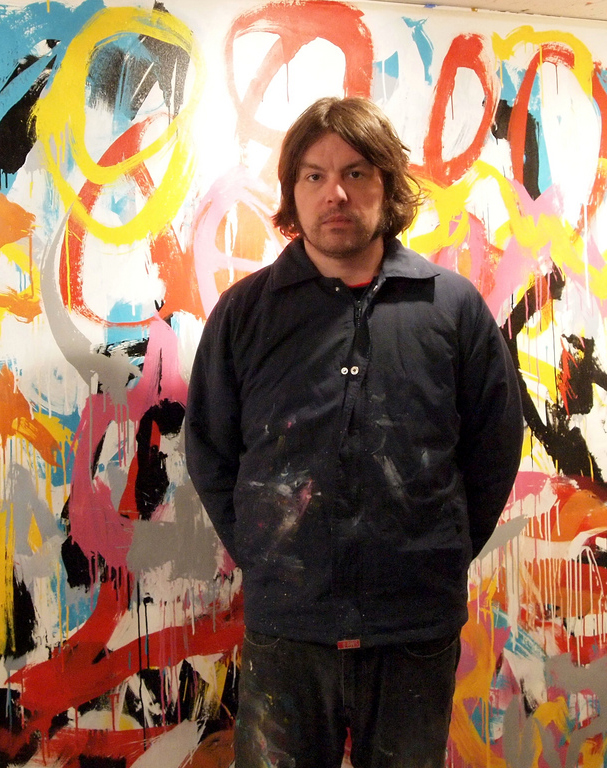
Welsh attacks his canvases with pure spontaneity and aggression, almost never using a brush and preferring to work only with his hands and fingers. This technique gives him the opportunity to get as close and "inside" to his paintings as he needs to be. For him, this is a necessity. Welsh also works in sculpture, working with found objects. Constructing creatures out of broken and dismantled chairs and furniture, to vacuum hoses, Tupperware, wire, and rope. All painted with his usual explosion of color.[22]

Welsh's artwork is featured on a Burton snowboard, in a line of snowboards titled "The Farm".[24] He designed and painted the album cover for Twin Berlin's debut album.[25]

Death

[edit]

On September 26, 2011, Welsh wrote on Twitter: "dreamt i died in chicago next weekend (heart attack in my sleep). need to write my will today."[26] On October 8, 2011, Welsh was found dead in a Chicago hotel room from a suspected heroin overdose, leading to a heart attack.[26][27] His death was not formally declared a suicide, despite his prior attempt by the same method.

Discography

[edit]

Left Nut

[edit]
  • 1990 – Bad Attitude No Apologies

Heretix

[edit]
  • 1993 – The Adventures of Superdevil

Jocobono

[edit]
  • 1995 – Jocobono

Juliana Hatfield

[edit]

Weezer

[edit]

The Kickovers

[edit]

References

[edit]
[edit]
Revisions and contributorsEdit on WikipediaRead on Wikipedia
from Grokipedia
Michael Edward Welsh (April 20, 1971 – October 8, 2011), known professionally as Mikey Welsh, was an American musician and visual artist best known as the bassist for the band from 1998 to 2001. Born in , to an artistic family—his mother was a painter and his godfather the monologist —Welsh began creating collages and watercolors as a child before pursuing music in his late teens. Welsh's music career gained prominence when he joined , replacing original bassist ; he performed on high-profile platforms including and the MTV Movie Awards, contributing to the band's multi-platinum Green Album (2001), which sold over one million copies. Prior to Weezer, he played in Boston-area bands such as Heretix, Jocobono, and Slower, and toured as part of Juliana Hatfield's backing band. His tenure with Weezer ended abruptly in 2001 following a public nervous breakdown, suicide attempt, and psychiatric hospitalization amid struggles with and (PTSD). After leaving music, Welsh relocated to Burlington, Vermont, where he married Danielle Niles and had a son, Jack, while resuming his visual art career full-time as a self-taught outsider artist inspired by Art Brut styles. His works, often featuring large-scale primitive figures, colorful abstracts, and humorous titles like “Mama’s little pills spilled all over the floor,” were exhibited in galleries alongside formally trained artists and commissioned for products including Burton snowboards, Gordini goggles, and album covers for bands like Twin Berlin. Welsh continued to manage his mental health with psychotropic medication but faced ongoing challenges, even tweeting a premonition of his death two weeks prior: "Dreamt I died in Chicago next weekend (heart attack in my sleep)." He was found dead in a Chicago hotel room at age 40 from a drug overdose-induced heart attack, as later confirmed by authorities following an initial inconclusive autopsy.

Early life

Family background

Michael Edward Welsh was born on April 20, 1971, in . He spent much of his early years in the area, particularly in , where he grew up in a household that fostered creative expression. His father, Doug Welsh, worked as a developer, while his mother, Christine, was a painter that deeply influenced the family's environment. Welsh's mother, a classically trained painter, immersed him in artistic pursuits from a young age, providing early exposure to materials like watercolors and that shaped his foundational creative interests. His godfather, the renowned monologuist , further reinforced this artistic inclination; at age 15, Gray advised him, “Michael, you’re an artist. And artists create their own moral universe,” a moment that profoundly impacted Welsh's self-perception. These familial influences created a nurturing yet unstructured environment for his innate creativity, evident from as early as age four or five when he began exploring art intuitively.

Initial interests in art and music

Mikey Welsh, influenced briefly by his family's artistic heritage—his mother was a painter and his godfather the monologist —developed an early passion for during his teenage years in the area. As a self-taught without formal training, he experimented with , watercolors, and drawings, creating personal works that reflected his foundational creative skills before any professional pursuits. Around age 19, Welsh shifted his primary focus from to , beginning self-taught endeavors on the after an initial interest sparked by rock posters as young as age 4 or 5. He quickly immersed himself in the local Northeast U.S. scene, particularly Boston's punk community, where he played bass in informal early groups and performed at small venues.

Music career

Early bands

Mikey Welsh began his musical journey in the late in the punk scene, joining the band Left Nut as when he was just 17 years old. Formed in 1988, Left Nut was a raw punk outfit known for its energetic live shows, and Welsh contributed bass lines that anchored their aggressive sound while occasionally providing backing vocals. The band released their debut album, Bad Attitudes, No Apologies, in 1990 on an independent label, marking Welsh's first recorded work and helping him gain initial traction among local underground audiences. This period solidified his role as a reliable in 's DIY music community, where he honed his skills through frequent gigs at small venues. In the early 1990s, Welsh played bass in Chevy Heston, an band active in the area. By the early 1990s, Welsh had transitioned to more alternative rock-oriented groups, joining Heretix in 1993 as their bassist, replacing . Heretix, an band originally formed in 1986 in , blended influences with melodic elements, and Welsh's tenure coincided with the release of their The Adventures of Super Devil that same year on Meta Records. He also participated in backing vocals on several tracks, adding to the band's dynamic live performances during an East Coast tour promoting the record. His contributions helped Heretix maintain a in the Northeast alternative scene, further establishing Welsh's reputation for versatile bass work in semi-professional settings. In the mid-1990s, Welsh continued building his profile with Jocobono, a short-lived rock band he joined as around 1995. Formed that year by vocalist/ Billy O'Malley and drummer Todd Perlmutter, Jocobono delivered a mix of alternative and punk sounds on their self-titled debut album, released on CherryDisc Records. Welsh not only handled bass duties but also contributed occasional lead and backing vocals, showcasing his growing comfort with front-stage elements during the band's brief run of local shows before disbanding in 1996. He also played in Slower during this period, contributing to the band's noisy, dissonant sound. Through these acts from the late 1980s to mid-1990s, Welsh developed a distinctive bass style rooted in punk energy and alternative groove, earning respect in 's vibrant underground.

Tenure with Weezer

Mikey Welsh joined Weezer as bassist in 1998, following the departure of original member Matt Sharp. His recruitment came after a period of band hiatus, during which Welsh had previously collaborated with frontman Rivers Cuomo in the short-lived Boston-based project Homie. Welsh's experience as a touring bassist with Juliana Hatfield further qualified him for the role, bringing a sense of stability to the lineup alongside Cuomo, guitarist Brian Bell, and drummer Patrick Wilson. Welsh played a key role in the recording of Weezer's self-titled third album, commonly known as The Green Album (2001), providing bass lines for standout tracks including "Hash Pipe" and "Island in the Sun." These contributions helped shape the album's polished power-pop sound, marking Weezer's successful return after a five-year absence and achieving commercial success with over 3 million copies sold worldwide. Although Welsh did not participate in the recording of the follow-up album Maladroit (2002) due to his departure later that year, his foundational work on the prior record influenced the band's transitional phase. During his tenure, Welsh toured extensively with to promote The Green Album, including a sold-out 20-city U.S. spring tour in 2001 that demonstrated strong fan enthusiasm for the band's comeback. The group also performed high-profile television appearances, such as on in May 2001 and in July 2001, where Welsh's energetic bass playing and backing vocals added to the live energy. A subsequent three-month European tour further solidified 's international appeal, with fans embracing the new material and lineup. Welsh's collaborative dynamics within emphasized a supportive role under Cuomo's creative direction, helping to resolve internal tensions from the band's earlier years. He worked closely with Cuomo on refining the Green Album's tracks during sessions, contributing to a more unified band environment that focused on concise, hook-driven songs. This period represented a peak of mainstream success for Welsh, as regained critical and commercial momentum through his steady presence on stage and in the studio.

Post-Weezer projects

After leaving in 2001, Mikey Welsh returned to the music scene and toured as a for during late 2001 and into 2002, building on their prior collaborations. In 2002, he toured with the band , providing bass support during their promotion of the album Into the Pink. That same year, Welsh joined The Kickovers, a power pop band formed by former Mighty Mighty Bosstones guitarist Nate Albert, along with drummer Joe Sirois and guitarist Johnny Rioux. The group drew influences from acts like Dinosaur Jr. and Hüsker Dü, emphasizing a return to raw, independent rock sounds. They released their debut album, Osaka, in April 2002 on the independent Fenway Records label, featuring high-energy tracks that highlighted Welsh's bass work. In 2003, Welsh contributed bass to ' album Natural, the side project of drummer . The Kickovers supported with live performances, including shows in the area, but Welsh's participation was limited by health issues that curtailed extensive touring. The band disbanded by early 2003, after which Welsh withdrew entirely from music to focus on visual art.

Art career

Transition from music

After leaving Weezer in 2001 following a period of intense touring and personal challenges, Mikey Welsh decided to retire from music around 2002-2003, citing burnout from the rock 'n' roll lifestyle and related issues as key factors. This shift marked the end of his brief return to the music scene in late 2001 and early 2002, after which he sought a more sustainable path away from the demands of performance and recording. Welsh turned to and as a therapeutic outlet during his recovery, beginning with personal works that helped him process his experiences. These initial pieces, created using basic supplies like brushes and oil sticks provided by his mother, focused on figurative representations that allowed him to channel emotions constructively. Having briefly explored and watercolors in his youth before prioritizing music at age 19, this return felt like a natural reclamation of an early passion. By dedicating himself fully to art, Welsh found a creative medium unbound by the constraints of band dynamics or schedules. In January 2003, Welsh relocated to Burlington, Vermont, with his wife Danielle—whom he married shortly after reconnecting with her—to immerse himself in art full-time and build a stable family life. This move provided the quiet environment he needed to produce work consistently, away from the urban intensity of his music days. Early on, he secured private commissions, such as designing figurative snowboard graphics for Burton, Gordini goggles, and album covers for bands like Twin Berlin, which validated his emerging career and led to sales of his paintings to collectors. To promote his art, Welsh established an official website and leveraged his past fame from Weezer to connect with buyers, gradually building a reputation through direct outreach and personal networks.

Artistic style and exhibitions

Mikey Welsh's artistic practice is characterized as , a self-taught approach that draws from raw, intuitive expression akin to the movement, which values unfiltered creativity often seen in works by children or those outside traditional art training. His oeuvre includes figurative paintings featuring large-scale primitive figures, colorful abstracts, watercolors, and collages, all marked by vivid colors and personal, introspective themes that reflect emotional intensity and everyday . These elements stem from influences in his early life, such as youthful experimentation with and watercolor, and later experiences that infused his work with themes of vulnerability and exuberance. By 2011, Welsh had mounted 13 solo exhibitions showcasing his canvases, watercolors, and collages across various galleries. Notable shows include his 2011 presentation at the Helen Day Art Center in Stowe, Vermont, where he displayed a series of energetic paintings that highlighted his shift toward representational and abstract forms. That same year, his exhibition "Skim Milk Jollies" at the Slingluff Gallery in Philadelphia featured new paintings emphasizing his prolific output and bold stylistic energy. Earlier venues included Opaline in Burlington, Vermont, and 47 Sanctuary Gallery, where his works continued to explore personal motifs through vibrant, unpolished aesthetics. Welsh's paintings have been acquired by private collectors, with sales occurring steadily since his first solo shows in , reflecting growing recognition for his outsider style. served as a vital outlet for Welsh during personal recovery.

Health issues and retirement

Mental health struggles

Mikey Welsh was diagnosed with in following a that led to his hospitalization. He had been undiagnosed prior to this, despite exhibiting symptoms exacerbated by extensive drug use throughout his life, including . In a 2007 interview, Welsh also revealed diagnoses of and , which compounded his challenges. During Weezer's 2001 Green Album tour in the United States, Welsh suffered a severe mental breakdown, culminating in a via at his childhood home in . He was rushed to a in the area, where he was placed under treatment and began medication for his . Welsh later described the unmedicated state as a "complete nightmare," intensified by his heavy drug consumption at the time. After retiring from music, Welsh experienced ongoing relapses, continuing to battle his conditions while living in . In 2004, he reported still fighting inner demons during an , though he pursued recovery through , which his grandmother had introduced during an earlier stay, and consistent medication. These efforts marked periods of stability in , where he focused on art as a therapeutic outlet. Welsh's mental health struggles took a significant personal toll, straining his relationships with former Weezer bandmates, including limited contact with Rivers Cuomo after receiving an apology letter. Despite this, he maintained a close bond with his wife, Danielle, whom he married in Vermont, and their son, Jack, finding solace in family life amid his recovery. These issues ultimately influenced his decision to leave the music industry for a quieter existence.

Departure from the music industry

In August 2001, during Weezer's tour supporting their self-titled Green Album, Mikey Welsh abruptly departed the band following a severe breakdown that led to his hospitalization after a by . The band's web updater, Karl Koch, initially reported on August 11 that Welsh had missed a and was undergoing tests, describing it as a precautionary measure before confirming the leave of absence on August 14. Weezer quickly announced Scott Shriner, bassist for the band Broken, as a temporary replacement to complete the tour dates, with Shriner making his debut at the August 17 show in . Shriner's role became permanent, and he contributed to the recording and promotion of Weezer's follow-up album, , released in May 2002, while Welsh did not return to the group under any capacity. Post-departure, Weezer's official communications remained vague, citing Welsh's need for personal time without detailing the circumstances, though Koch updated fans on September 23 that relations between Welsh and were private and ongoing. In a 2002 with the Daily News, Welsh publicly stated, "I'm taking a break from music," expressing a desire to "reinvent myself and move on," which signaled the end of his active involvement with and strained but non-hostile relations, as later reflected in Weezer's tributes to him. By 2003, Welsh had shifted to a low-profile life, retiring fully from music commitments amid ongoing struggles with and , focusing instead on personal recovery away from the public eye.

Death and legacy

Circumstances of death

On October 8, 2011, former bassist Mikey Welsh was found unresponsive in a room at the Raffaello in , , after failing to check out. Hotel staff discovered him on the floor shortly after the 1 p.m. checkout time, and he was pronounced dead at 2:50 p.m. by the Cook County Medical Examiner's Office. Welsh was in Chicago to attend Weezer's performance at the Riot Fest music event. An autopsy performed the following day was inconclusive, with the cause of death listed as undetermined pending toxicology results, which could take up to six weeks; the final cause was never publicly determined beyond initial suspicions. Authorities suspected a drug overdose, noting the presence of prescription drugs and a ziplock bag containing a white powder believed to be heroin in the room. Two weeks earlier, on September 26, 2011, Welsh had posted on about a dream in which he died of a heart attack in his sleep during a trip to the following weekend, adding that he needed to write his will that day. This came amid Welsh's history of relapses.

Posthumous recognition

Following Welsh's death, released an official statement on their account, expressing profound grief: "We are shocked and deeply saddened to hear the awful news, our friend and fellow weez rocker @mikeywelsh71 has passed away. We love u Mikey." The band further elaborated on their website, praising Welsh's reinvention as a visual artist after overcoming challenges, describing his paintings as "colorful, instinctive and expressive" and noting that they had been exhibited in galleries and museums nationwide. Drummer also paid tribute via , writing, "Rest in peace Mikey Welsh, you deserve it." These statements underscored Welsh's lasting impact on the band and emphasized his dual legacy in music and art. Fans and the music community marked Welsh's passing with ongoing memorials, particularly on anniversaries of his death, through online discussions and dedications that celebrated his contributions to Weezer's Green Album era and his personal resilience. A memorial event held on November 5, 2011, at Maglianero Cafe and JDK Gallery in —Welsh's longtime home—gathered friends and admirers to honor his life and artwork, featuring displays of his paintings shortly after his passing. This event highlighted the immediate outpouring of support from the local art scene, where Welsh had built a dedicated following. Posthumously, interest in Welsh's artwork surged, with his vibrant, self-taught pieces gaining broader visibility on platforms like Artsy, where they have been listed for sale to collectors. His story of transitioning from rock stardom to has been retrospectively profiled in media outlets, positioning him as a symbol of creative reinvention amid personal struggles. PBS's program recognized him as an outsider artist in their Artists Month initiative, noting his prolific output and unique synthesis of influences even after his death. By the 2020s, explorations of his life, including visits to the hotel where he died from a suspected overdose, appeared in online media, perpetuating discussions of his tragic yet influential legacy.

Discography

Solo and early projects

Before joining more prominent acts, Mikey Welsh contributed to several Boston-area bands as a bassist and occasional vocalist during the late 1980s and early 1990s. His earliest notable involvement was with the punk rock band Left Nut, which he joined in 1990 at age 19. Welsh played bass on their second and final album, Bad Attitude, No Apologies (1991), a raw punk release that captured the band's aggressive energy through tracks like "Inside My Shoes" and "Long Time to Die." In 1993, Welsh replaced bassist in the band Heretix, contributing to their third and final studio album, The Adventures of Super Devil. Recorded at Squid Hell Studios, the album featured Welsh's driving bass lines on grunge-influenced tracks such as "Liquid California" and "Nothing More to Talk About," helping to define the band's heavier sound before their initial disbandment in 1995. Welsh also performed with the short-lived rock band Jocobono, formed in 1995, where he handled bass duties on their self-titled debut and only album, released that same year on CherryDisc Records. The album blended alternative rock with cock rock elements across tracks recorded at New Alliance Studios in Boston, marking one of Welsh's last pre-Weezer projects before the band dissolved in 1996. No solo music releases or independent demos by Welsh from this period have been documented in available discographies.

Collaborations

Following his departure from Weezer in 2001, Mikey Welsh maintained an active presence in the music scene through several notable collaborations with other artists. Welsh had a longstanding professional relationship with , beginning prior to his Weezer tenure. He provided on her 1998 album , contributing to its raw, lo-fi sound alongside Hatfield on guitar and keyboards and drummer Todd Philips. The collaboration extended into the early 2000s, with Welsh serving as bassist for Hatfield's side project Juliana's Pony on the 2000 album Total System Failure. In addition to performing bass and backing vocals throughout the record, Welsh co-wrote four tracks—"Breeders," "Houseboy," "Let's Get Married," and "My Protégée"—which showcased his input in crafting the album's energetic, guitar-driven style. He also supported Hatfield on tour as her bassist during this period, including performances promoting Beautiful Creature and Total System Failure, both released in 2000. Welsh appeared on the 2002 compilation Gold Stars 1992–2002: The Juliana Hatfield Collection, further cementing his contributions to her discography. In 2002, Welsh joined the Boston-based rock band The Kickovers as bassist, alongside guitarist/vocalist (formerly of ), drummer Joe Sirois (also ex-Bosstones), and guitarist Johnny Rioux. The group released their debut and only album, , that year on Fenway Recordings, where Welsh's bass work underpinned the band's punk-inflected rock sound across tracks like "" and "." Though short-lived, the project highlighted Welsh's versatility in ensemble settings outside his Weezer commitments.

Weezer contributions

Mikey Welsh joined Weezer as bassist in 2000, replacing Matt Sharp ahead of sessions for the band's self-titled third studio album, commonly referred to as the Green Album. Released on May 15, 2001, via Geffen Records, the album marked Welsh's sole full-length studio contribution to the group, where he played bass guitar on all ten tracks, including "Hash Pipe," "Island in the Sun," "Photograph," and "Knock-down Drag-out." Produced by Ric Ocasek, the record's polished power pop style highlighted Welsh's steady, melodic bass lines, which supported Rivers Cuomo's guitar riffs and the band's tight rhythm section alongside drummer Patrick Wilson and guitarist Brian Bell. The Green Album's singles prominently featured Welsh's performances, with the lead track ""—released in April 2001—showcasing his driving bass groove in the song's riff-heavy structure. Subsequent singles "Island in the Sun" and "" similarly included his bass parts, recorded during the album's sessions from December 2000 to February 2001 at Cello Studios in . During this period, Welsh also contributed bass to several B-sides associated with the album's promotion, including "I Do" (paired with "" on the UK CD single) and "Teenage Victory Song" (featured on the Japanese edition of the Green Album). Other era-specific B-sides like "Starlight" and "Oh Lisa," recorded in the same sessions, further demonstrated his role in Weezer's output before his departure in late 2001. Welsh had no recording credits on Weezer's follow-up album, (2002), as he left prior to its primary recording sessions due to personal health challenges; bassist replaced him and handled all bass duties on the release.

References

Add your contribution
Related Hubs
User Avatar
No comments yet.