Hubbry Logo
Milt BucknerMilt BucknerMain
Open search
Milt Buckner
Community hub
Milt Buckner
logo
8 pages, 0 posts
0 subscribers
Be the first to start a discussion here.
Milt Buckner
Milt Buckner
from Wikipedia

Key Information

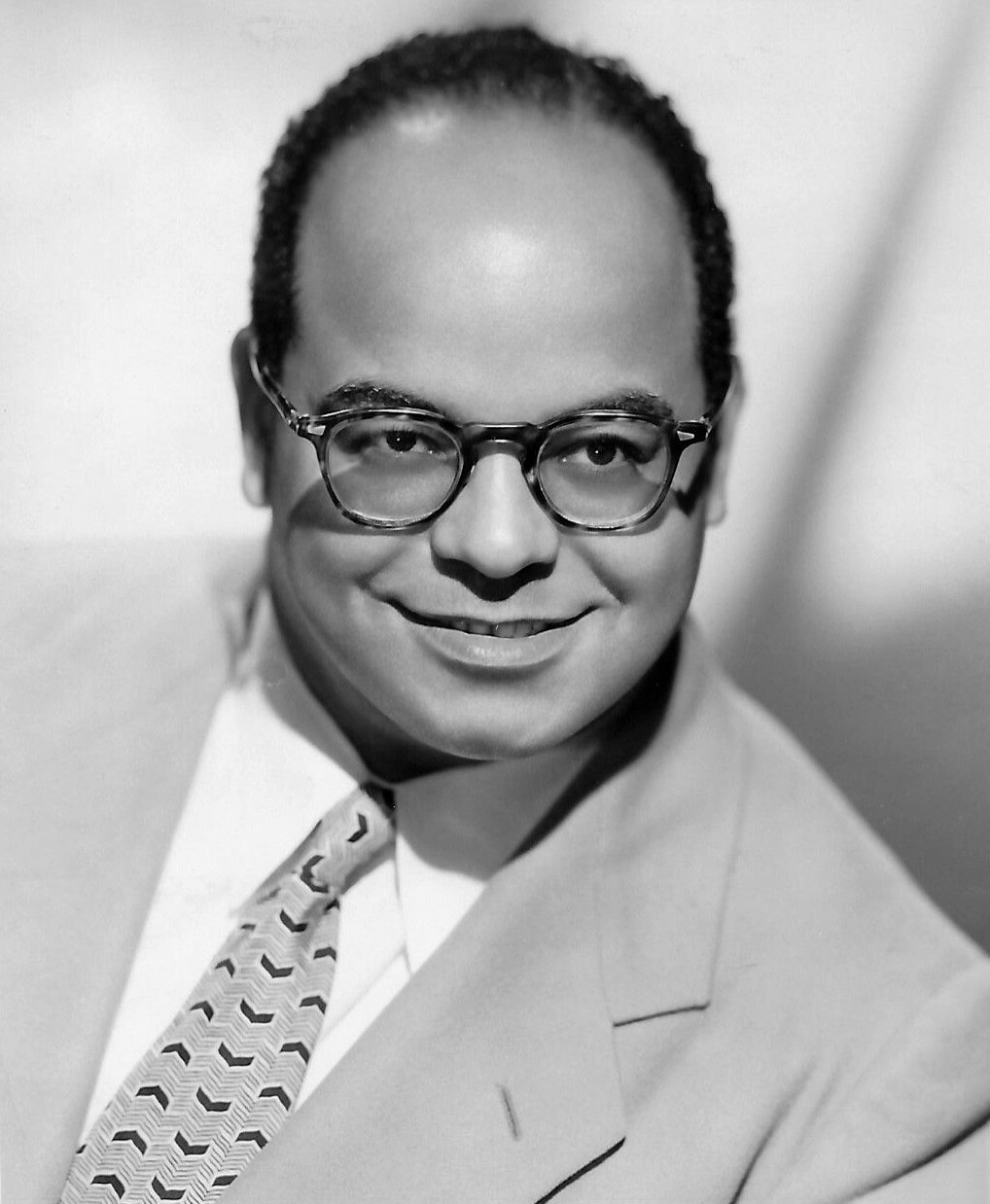
Milton Brent Buckner (July 10, 1915 – July 27, 1977)[2] was an American jazz pianist and organist, who in the early 1950s popularized the Hammond organ.[3] He pioneered the parallel chords style[4] that influenced Red Garland, George Shearing, Bill Evans, and Oscar Peterson. Buckner's brother, Ted Buckner, was a jazz saxophonist.

Early life and career

[edit]

Milton Brent Buckner was born in St. Louis, Missouri.[2] His parents encouraged him to learn to play piano, but they both died when he was nine years old. Milt and his younger brother Ted were sent to Detroit where they were adopted by members of the Earl Walton band:[3] trombonist John Tobias, drummer George Robinson fostered Milt and reedplayer Fred Kewley ( Fred Cecil Kewley; 1889–1953) fostered Ted.[5] Buckner studied piano for three years from the age 10, then at 15 began writing arrangements for the band, he and his brother going on to become active in the Detroit jazz world in the 1930s.[5]

Buckner first played in Detroit with the McKinney's Cotton Pickers[2] and then with Cab Calloway. In 1941, he joined Lionel Hampton's big band, and for the next seven years served as its pianist and staff arranger.[4] Buckner was part of a Variety Revue of 1950 organized by Lionel Hampton at the Cavalcade of Jazz concert held at Wrigley Field in Los Angeles which was produced by Leon Hefflin, Sr. on June 25, 1950.[6] He led a short-lived big band of his own for two years,[2] but then returned to Hampton's in 1950.[4] In 1952, he formed his own trio and pioneered the use of the electric Hammond organ.[4] He often played in Europe in the late 1960s. His last studio session took place in Paris on July 4, 1977.[3] Milt Buckner is also known for the use of his song "The Beast" in the film Mulholland Drive and in the title menu of the video game Battlefield: Bad Company.

Buckner died of a heart attack in July 1977, in Chicago, Illinois, at the age of 62.[3]

Discography

[edit]
  • "Vibe Boogie" (with Lionel Hampton) (V-Disc 404, 1945)
  • "Chord-A-Re-Bop" (with Lionel Hampton) (Decca 18830, 1946)
  • Milton Buckner: The Swinging Block-Chords Pianist 1943–1950 (EPM Musique 16018, 2002)
  • The Chronological Milt Buckner 1946–1951 (Classics 'Blues & Rhythm Series' 5032, 2002)
  • "Milt's Boogie" b/w "Buck's Bop" (MGM 10410, 1949)
  • "M.B. Blues" b/w "Oo-Be-Doop" (MGM 10504, 1949)
  • "Buck-A-Boo" b/w "Yesterdays" (MGM 10632, 1949)
  • Milt Buckner Piano (Savoy MG-15023 [10" LP], 1953) – note: includes 6 of the 13 tracks Buckner's Beale Street Gang recorded for Savoy in 1946, 1947, 1948, and 1951.
  • Organ...Sweet 'N' Swing (Regent MG-6004, 1956) – note: a shared album with Bobby Banks, and Vin Strong; includes 4 of the 6 tracks Buckner's trio recorded for Scooter Records (a subsidiary of Roost) in 1952: "By The River St. Marie", "Rollin' Strollin'", Take It Away", and "Russian Lullaby".
  • Rockin' with Milt (Capitol T-642, 1955; CD reissue: Jasmine JASCD-499, 2009)
  • Rockin' Hammond (Capitol T-722, 1956; CD reissue: Jasmine JASCD-499, 2009)
  • Send Me Softly (Capitol T-938, 1957; CD reissue: Solar [EU] 4569921, 2012)
  • Mighty High (Argo LPS-660, 1959; CD reissue: Solar [EU] 4569916, 2012)
  • Please, Mr. Organ Player (Argo LPS-670, 1960; CD reissue: Solar [EU] 4569921, 2012)
  • Midnight Mood (Argo LPS-702, 1961; CD reissue: Solar [EU] 4569916, 2012)
  • The New World of Milt Buckner (Bethlehem BCP-6072, 1963)
  • Play Chords (SABA 15110, 1966)
  • Them There Eyes (with Buddy Tate) (Black & Blue 33.013, 1967)
  • Locked Hands (MPS 15199, 1968)
  • More Chords (MPS 15237, 1969)
  • Rockin' Again (Black & Blue 33.043, 1972)
  • Black and Blue Stomp (Black & Blue, 33.061, 1973)
  • Block Chords Parade (Black & Blue 33.184, 1974 [rel. 1984]; CD reissue: Black & Blue BB-953, 2002)
  • Green Onions (with Roy Gaines) (Black & Blue 33.087, 1975; Classic Jazz CJ-141, 1980; CD reissue: Black & Blue BB-929, 2000)
  • Milt Buckner & His Alumni (The Definitive Black & Blue Sessions) (Black & Blue BB-909, 1976 [rel. 1998])
  • Boogie Woogie USA (Black & Blue 33.120, 1977)

As sideman

[edit]

With Clarence "Gatemouth" Brown

  • Sings Louis Jordan (Black & Blue 33.053, 1973)
  • Cold Strange (Black & Blue 33.096, 1973 [rel. 1976])

With Arnett Cobb

  • Again with Milt Buckner (Black & Blue 33.052, 1973)
  • Midnight Slows, Vol. 3 (with Floyd "Candy" Johnson too!) (Black & Blue 33.055, 1973)
  • Midnight Slows, Vol. 6 (Black & Blue 33.093, 1976)
  • The Wild Man From Texas (Black & Blue 33.099, 1976)

With Eddie "Lockjaw" Davis

  • Leapin' on Lenox (Black & Blue 33.072, 1974)

With Roy Gaines

  • Superman (Black & Blue, 33.088, 1975)

With Tiny Grimes

  • Chasin with Milt (Black & Blue 33.017, 1968)

With Illinois Jacquet

With Floyd "Candy" Johnson

  • Candy's Mood (with Clarence "Gatemouth" Brown too!) (Black & Blue 33.058, 1973)

With Guy Lafitte

  • Midnight Slows, Vol. 7 (Black & Blue 33.115, 1977)

With Jay McShann

  • Jumpin' the Blues (Black & Blue 33.039, 1970 [rel. 1972])
  • Kansas City Memories (Black & Blue 33.057, 1973)

With Buddy Morrow

  • Night Train Goes to Hollywood (Mercury MG-20702/SR-60702, 1962)

With Andre Persiany

  • Pianistically Yours (Black & Blue 33.176, 1975–1976 [rel. 1982])

With Hal Singer

  • Milt And Hal (with Tiny Grimes too!) (Black & Blue 33.016, 1968)

With Buddy Tate

  • When I'm Blue (Black & Blue 33.014, 1967)
  • Crazy Rhythm (Black & Blue 33.018, 1968)
  • Midnight Slows, Vol. 1 (Black & Blue 33.026, 1971)
  • Midnight Slows, Vol. 4 (Black & Blue 33.068, 1974)
  • Midnight Slows, Vol. 5 (Black & Blue 33.075, 1974)

With Marcel Zanini

  • Blues and Bounce! (Black & Blue 33.110, 1976)

References

[edit]
[edit]
Revisions and contributorsEdit on WikipediaRead on Wikipedia
from Grokipedia
''Milt Buckner'' is an American jazz pianist and organist known for pioneering the locked-hands or block-chord style of piano playing and for popularizing the Hammond organ in jazz during the early 1950s. His innovative approach to chord voicings and organ performance left a lasting influence on jazz keyboard techniques. Born Milton Brent Buckner on July 10, 1915, in St. Louis, Missouri, he was orphaned as a child and raised in Detroit, where he began playing piano in local bands during the early 1930s. There, he started experimenting with patterned parallel chords, establishing himself as an early innovator in what became known as the block-chord or locked-hands technique. Buckner broke into the broader jazz scene performing with groups such as McKinney's Cotton Pickers and the Jimmy Raschel band. In 1941, he joined Lionel Hampton's orchestra as both pianist and arranger, contributing to the band's arrangements and sound throughout much of the decade. After leaving Hampton, Buckner transitioned prominently to the Hammond organ, becoming one of the first jazz musicians to feature the instrument extensively in recordings and performances, including international tours. He continued an active career as a performer, composer, and sideman until his death on July 27, 1977, in Chicago.

Early life

Birth and family background

Milt Buckner was born Milton Brent Buckner on July 10, 1915, in St. Louis, Missouri. Orphaned at the age of nine around 1924 following the death of his parents, he and his younger brother Ted were sent to Detroit, where he was raised by his uncle, trombonist John Tobias.

Early musical development

Milt Buckner received his initial musical instruction from his uncle, trombonist John Tobias, in Detroit following his parents' deaths. He began playing piano professionally in local Detroit bands by the late 1920s, performing with groups such as the Harlem Aristocrats and the Dixie Whangdoodles. At age fifteen in 1930, Buckner wrote his first arrangements for Earl Walton's Band. He subsequently studied at the Detroit Institute of Arts for two years, during which he continued gigging with local ensembles including the Harlem Aristocrats, Mose Burke's band, and the Dixie Whangdoodles. In 1932 Buckner joined drummer Don Cox's band, remaining active in Detroit's local scene throughout the 1930s. In 1934, through his brother saxophonist Ted Buckner, he became staff arranger for McKinney's Cotton Pickers while still performing with groups led by Don Cox and Jimmy Raschel.

Career

Big band era: Early arrangements and bands

Milt Buckner gained early big band experience playing piano and writing arrangements for groups such as McKinney's Cotton Pickers and the Jimmy Raschel band in Detroit during the 1930s. This period represented Buckner's initial immersion in jazz orchestration and experimentation with block-chord techniques before his tenure with Lionel Hampton.

Lionel Hampton orchestra

Milt Buckner joined Lionel Hampton's orchestra in November 1941 as pianist and staff arranger, contributing arrangements including "Hamp's Boogie Woogie" and helping define the band's high-energy style. He remained until 1948. Buckner rejoined the orchestra from 1950 to 1952, performing on piano and contributing to recordings and live appearances, including the Variety Revue at the Cavalcade of Jazz concert at Wrigley Field in Los Angeles on June 25, 1950. His arranging and playing across both periods added harmonic depth and rhythmic drive, sustaining the orchestra's popularity through the 1940s and into the early 1950s.

Independent career, organ transition, and European work

After his final departure from Lionel Hampton's orchestra in 1952, Milt Buckner formed his own trio and focused primarily on the Hammond organ, building on experiments with the instrument during his 1950–1952 Hampton tenure and earlier sessions. He popularized the organ in jazz through an exuberant, boogie-based style that influenced subsequent players and the emerging soul-jazz and R&B scenes. In the mid-1950s, Buckner recorded several albums as a leader for Capitol Records, including Rockin' with Milt (1955), featuring his organ work in a small-group setting with tracks like "Lean Baby" and "Bernie's Tune," followed by Rockin' Hammond (1956) and Send Me Softly (1957). These sessions established his reputation as a pioneering jazz organist in trio and combo formats. Buckner continued leading recording sessions on labels such as Argo (Mighty High in 1959–1960, Please Mr. Organ Player in 1960, Midnight Mood in 1961) and Bethlehem (The New World of Milt Buckner in 1962–1963), primarily featuring his Hammond organ in rhythm-and-blues-inflected arrangements. From the mid-1960s onward, he shifted the focus of his career to Europe, where he toured and performed extensively across cities in France, Germany, Switzerland, the Netherlands, Spain, and elsewhere, making only occasional brief returns to North America. He developed a long-term partnership with tenor saxophonist Illinois Jacquet in the early 1970s, collaborating on multiple recordings and performances for European labels. Buckner maintained an active schedule of European tours and sessions, including work with the French Black & Blue label, until his final studio recording in Paris on July 4, 1977.

Musical style and innovations

Block-chord technique

Milt Buckner was an early pioneer of the block-chord technique, also known as the locked-hands style, which he began experimenting with in the early 1930s and applied prominently during his time as pianist and arranger with Lionel Hampton's orchestra in the 1940s. This approach allowed him to create greater excitement and make the piano sound louder and more robust in a big band context, where the instrument could otherwise be overpowered. In the block-chord style, the pianist plays a melody using chords rather than single notes, with the top note of the chord carrying the melody line and supporting harmony provided by the notes below. The locked-hands aspect involves both hands moving together in parallel motion across the keyboard, as though "locked" at the wrist. The melody is doubled in octaves, with the top note played by the right hand and the corresponding lower octave note by the left hand, while three inner chord tones fill the space between to form a five-note voicing—typically with the right hand covering the top four notes (high melody + three harmony) and the left hand playing the lower octave melody note. This parallel octave doubling combined with chordal voicing produces a thick, orchestral texture well suited to stepwise melodies and common tones. Buckner is considered the originator of this technique, in which parallel lines are played as two-handed block chords; George Shearing credited Buckner as his introduction to the style and later popularized a similar approach in the late 1940s and 1950s. Buckner's independent development of the block-chord approach established him as an early innovator in jazz piano voicing. His application of the technique appears in various recordings throughout his career.

Piano and organ approach

Buckner's piano style was deeply rooted in the swing and jump-blues traditions of the big band era, drawing from his early experiences with ensembles like McKinney's Cotton Pickers and his extended tenure with Lionel Hampton's orchestra. Even while playing piano, he treated the keyboard in a manner akin to a Hammond organ, employing a percussive technique that generated strong, exciting sounds suitable for high-energy performances. This approach complemented his foundational block-chord method, allowing for dynamic expression within swing-oriented contexts. Influenced by Wild Bill Davis's work on Louis Jordan's "Tamburitza Boogie," Buckner shifted his primary focus to the Hammond organ around 1950, adapting to the instrument during his second stint with Hampton and largely committing to it for the remainder of his career. On organ, he distinguished himself by exploring a wide range of tonal colors rather than relying on limited registrations common among other jazz organists. This versatility enabled greater emotional depth, as the organ's volume could be modulated and notes sustained for emphasis, contrasting with the more percussive nature of his piano work. His organ performances often featured thick grooves and riffing patterns that evoked an R&B horn section, contributing to a loud, heavily melodic, and swinging sound. In addition to piano and organ, Buckner occasionally performed on vibraphone, though this remained a secondary aspect of his instrumental work.

Discography and compositions

Albums as leader

Milt Buckner began recording as a leader in the mid-1950s, primarily for Capitol Records, where he produced a series of albums that showcased his evolving style on piano and Hammond organ. His early leader efforts emphasized energetic, rocking performances and his signature block-chord approach, often in small-group or solo settings. Notable among these are "Rockin' with Milt" (1955), which highlighted his dynamic piano work, and "The Rockin' Hammond of Milt Buckner" (1957), reflecting his increasing focus on organ. He continued with Capitol through the late 1950s, with later blues-oriented and organ-focused material appearing on other labels in the early 1960s. After spending significant time in Europe starting in the late 1960s, Buckner recorded extensively for the French Black & Blue label during the 1970s, producing several albums that captured his mature organ style in trio and quartet contexts, often interpreting standards and blues themes. Key releases from this period include albums such as "Green Onions" (1975), which emphasized groove-based performances and his distinctive block-chord voicings on organ. These European albums solidified his reputation as a respected veteran in the international jazz scene until his death in 1977.

Notable sideman appearances and arrangements

Milt Buckner frequently served as a valued sideman and arranger in prominent big bands and small groups throughout his career, contributing his distinctive piano and organ playing as well as his innovative block-chord arrangements. He played early in his career with groups including Cab Calloway in Detroit during the 1930s. Buckner's most significant and longest sideman association was with Lionel Hampton's orchestra, in two stints: from 1941 to 1948 as pianist and staff arranger, where he contributed key arrangements and recordings; and a return from 1950 to 1952, where he began featuring the organ. He appeared on numerous Hampton sessions for Decca during these years, contributing to tracks that highlighted the band's swinging style and his own energetic contributions. After his final departure from Hampton, Buckner occasionally appeared as a sideman on recordings by other leaders, including notable collaborations with tenor saxophonist Illinois Jacquet in the 1950s and 1960s, where he provided piano and organ support on various sessions. He also featured prominently on Buddy Tate's 1967 album, where his organ and piano work was highlighted alongside Tate's saxophone. Throughout these appearances, Buckner's arrangements for other artists often incorporated his signature harmonic approach, helping to shape the sound of the ensembles he worked with.

Posthumous legacy and media use

Influence on jazz musicians

Milt Buckner's pioneering of the locked-hands or block-chord piano style during the 1940s marked a significant innovation in jazz, where he played dense parallel chords in unison with both hands kept close together along the melody line to produce an orchestral texture and hypnotic effect. This technique, developed during his tenure with the Lionel Hampton orchestra, allowed the piano to simulate big band voicings and became a foundational element for later players seeking richer harmonic density. British pianist George Shearing directly credited Buckner as a key influence on his own signature sound, explaining in a 1984 conversation with Billy Taylor that after returning to the United States in late 1947, he adapted Buckner's locked-hands blues approach—combined with other elements such as Glenn Miller's orchestration—to shape his quintet's distinctive style. American pianist Red Garland incorporated the block-chord method into his playing, blending it with a spare, Count Basie-inspired swing feel to add density and excitement while maintaining rhythmic drive. The technique also found broader adoption among pianists such as John Bunch, who used block chords to enhance textural variety in their performances. Buckner's block-chord invention was popularized by prominent figures including George Shearing, cementing its place as an orchestral-sounding device in jazz piano repertoire. His innovations on both piano and organ further contributed to the evolution of soul-jazz organ playing in the 1950s, influencing later organists such as Don Patterson and Charles Earland through his exploration of tonal colors and rhythmic energy.

Use of his music in film and television

Milt Buckner's recordings have been licensed posthumously for use in several feature films, showcasing the lasting appeal of his organ-driven jazz sound in cinematic contexts after his death in 1977. One of the most prominent examples is his track "The Beast," featured in David Lynch's Mulholland Drive (2001), where it contributes to the film's atmospheric tension. His music also appears in Spike Lee's biographical drama Malcolm X (1992) and the romantic comedy Monster-in-Law (2005), illustrating how his work has been selected for diverse narrative settings ranging from historical epic to contemporary humor. Additionally, "The Beast" was used in an episode of the television series Sex and the City (2001). These placements reflect the continued commercial and artistic relevance of Buckner's recordings in soundtrack licensing, though specific track details beyond "The Beast" are less frequently documented in public sources.

Death

Final years and passing

In his final years, Milt Buckner remained active primarily in Europe, where he toured extensively and recorded for labels including Black & Blue, MPS, and others during the 1960s and 1970s. He made only brief returns to North America for select concerts and club engagements. His last recording was the live album Alive & Jumping with Lionel Hampton and the Lionel Hampton All Stars, captured approximately two months before his death. Another late session occurred on July 4, 1977, in Paris. Buckner died on July 27, 1977, in Chicago, Illinois, at the age of 62. He collapsed and died shortly after setting up his Hammond organ in preparation for a performance with Illinois Jacquet at the Jazz Showcase nightclub.

Tributes and recognition

Milt Buckner's innovative block-chord, or "locked-hands," technique has been widely recognized in jazz literature as a major development in piano and organ playing, influencing numerous musicians in the decades following his death. His recordings from the 1950s and 1960s, including albums made with Lionel Hampton and as a leader, have seen periodic reissues on labels such as Black & Blue, Capitol, and Fresh Sound Records, keeping his music accessible and introducing it to new audiences. These reissues often include liner notes that emphasize his role in bridging swing and modern jazz styles. Buckner's contributions are also noted in jazz history texts and educational materials discussing the evolution of keyboard techniques in jazz, though no major posthumous awards or hall of fame inductions have been documented.

References

Add your contribution
Related Hubs
User Avatar
No comments yet.