
Recent from talks
Milton Rubenfeld
Knowledge base stats:
Talk channels stats:
Members stats:
Milton Rubenfeld
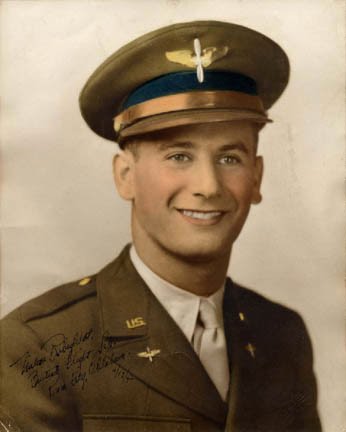
Milton Rubenfeld (Hebrew: מילטון רובנפלד; September 13, 1919 – February 21, 2004) was an American pilot who flew for the Royal Air Force and U.S. Army during World War II, later becoming one of the five founding pilots of the Israeli Air Force in the 1948 Arab–Israeli War. It is widely believed that Rubenfeld, the other four volunteer pilots, and the other machalniks changed the course of the 1948 Arab–Israeli War. He was injured and returned to the United States, and settled in New York state, where he married and owned a local business with his wife, Judy. Later, he moved his family to Sarasota, Florida, where he and his wife owned another successful business until he retired. He died in 2004. He was the father of actor/comedian Paul Reubens, who was known for creating and portraying the character Pee-wee Herman.
Rubenfeld was born in Peekskill, New York, the fourth of six children of Orthodox Jewish parents, Gussie (née Yormark, 1891–1958) and Louis Rubenfeld (1884–1937). His parents were both immigrants from Polish Galicia. Rubenfeld was an Eagle Scout, a student in New York University and the University of New Mexico (where he also hunted rattlesnakes), and taught aerobatics.
When World War II broke out in Europe, he wanted to fly combat missions; however, the United States was not yet in the war. Rubenfeld decided to fly with the Royal Air Force in England, with the 420 Squadron. When the United States declared war on Germany, Rubenfeld signed on as a pilot with the U.S. Army. He flew as a ferry pilot for the Air Transport Command.
On the ground the military situation was critical, and in the air the Egyptian air force was king of the skies.... It could do literally anything it wanted. Its Dakotas and Spitfires bombed Tel Aviv and only encountered sporadic anti-aircraft fire.
Of course there was no time to consider trifles, such as the fact that [the Avia S-199's] had never taken off, or even been tested in flight, their parts had not been checked, no one knew whether their systems functioned or if their machine-guns fired. No one was sure that their bombs would drop—or that their wings wouldn't. These questions had to be shoved aside.... We swung out to sea ... and swooped towards the Egyptian column. The sight took my breath away.... [Not much] stood between it and Tel Aviv.... I must confess I had a profound sense of fulfilling a great mission.
In February 1948, the Haganah set up an agency in the United States headed by Hyman Shechtman (later, Shamir) assisted by Al Schwimmer, to recruit U.S. combat air veterans, both aircrew and ground crew, for the Haganah's "Air Service". Knowing of Rubenfeld's combat experience, Shamir approached him in early 1948 and asked him if he wanted to fly for the new state of Israel. Rubenfeld — "a small, swarthy former USAF pilot, so cocky he seemed to swagger even while sitting down"—agreed.
In early 1948, Rubenfeld flew transport planes on a few missions to and from Israel, until early May, when he reported to České Budějovice, in Czechoslovakia, where he and the other pilots began training on the Avia S-199, a Czech airplane roughly based on the German Messerschmitt Bf 109. After evaluating the results of that training, it became clear to the Israeli instructors that only those pilots with previous combat pilot experience—Rubenfeld, Modi Alon, Ezer Weizman, Lou Lenart, and Eddie Cohen—were capable of handling the S-199, at least initially. (Rubenfeld and Lenart were the two U.S. citizens in this group.) These five pilots finished the course in Czechoslovakia and, on May 20, 1948, reported to their base in Ekron Air Base (now Tel Nof Airbase) in Israel. As of May 14, 1948—Israel's independence day—these five pilots, along with four S-199s, constituted the entire Israeli Air Force.
The existence of the tiny air force had been kept secret from the Arab forces that had entered Israel following its declaration of independence. Israel's leaders knew that the first time they made the existence of their four planes known, their targets should be critical ones. The initial plan was to attack a squadron of Egyptian Spitfires and C-47 Dakotas at El Arish, a base on the northern coast of the Sinai. That order was changed "at the last minute" due to the increasing danger of a direct ground attack on Tel Aviv. The four fighters were ordered to bomb and strafe the Egyptian armored column that was advancing on Tel Aviv.
Hub AI
Milton Rubenfeld AI simulator
(@Milton Rubenfeld_simulator)
Milton Rubenfeld
Milton Rubenfeld (Hebrew: מילטון רובנפלד; September 13, 1919 – February 21, 2004) was an American pilot who flew for the Royal Air Force and U.S. Army during World War II, later becoming one of the five founding pilots of the Israeli Air Force in the 1948 Arab–Israeli War. It is widely believed that Rubenfeld, the other four volunteer pilots, and the other machalniks changed the course of the 1948 Arab–Israeli War. He was injured and returned to the United States, and settled in New York state, where he married and owned a local business with his wife, Judy. Later, he moved his family to Sarasota, Florida, where he and his wife owned another successful business until he retired. He died in 2004. He was the father of actor/comedian Paul Reubens, who was known for creating and portraying the character Pee-wee Herman.
Rubenfeld was born in Peekskill, New York, the fourth of six children of Orthodox Jewish parents, Gussie (née Yormark, 1891–1958) and Louis Rubenfeld (1884–1937). His parents were both immigrants from Polish Galicia. Rubenfeld was an Eagle Scout, a student in New York University and the University of New Mexico (where he also hunted rattlesnakes), and taught aerobatics.
When World War II broke out in Europe, he wanted to fly combat missions; however, the United States was not yet in the war. Rubenfeld decided to fly with the Royal Air Force in England, with the 420 Squadron. When the United States declared war on Germany, Rubenfeld signed on as a pilot with the U.S. Army. He flew as a ferry pilot for the Air Transport Command.
On the ground the military situation was critical, and in the air the Egyptian air force was king of the skies.... It could do literally anything it wanted. Its Dakotas and Spitfires bombed Tel Aviv and only encountered sporadic anti-aircraft fire.
Of course there was no time to consider trifles, such as the fact that [the Avia S-199's] had never taken off, or even been tested in flight, their parts had not been checked, no one knew whether their systems functioned or if their machine-guns fired. No one was sure that their bombs would drop—or that their wings wouldn't. These questions had to be shoved aside.... We swung out to sea ... and swooped towards the Egyptian column. The sight took my breath away.... [Not much] stood between it and Tel Aviv.... I must confess I had a profound sense of fulfilling a great mission.
In February 1948, the Haganah set up an agency in the United States headed by Hyman Shechtman (later, Shamir) assisted by Al Schwimmer, to recruit U.S. combat air veterans, both aircrew and ground crew, for the Haganah's "Air Service". Knowing of Rubenfeld's combat experience, Shamir approached him in early 1948 and asked him if he wanted to fly for the new state of Israel. Rubenfeld — "a small, swarthy former USAF pilot, so cocky he seemed to swagger even while sitting down"—agreed.
In early 1948, Rubenfeld flew transport planes on a few missions to and from Israel, until early May, when he reported to České Budějovice, in Czechoslovakia, where he and the other pilots began training on the Avia S-199, a Czech airplane roughly based on the German Messerschmitt Bf 109. After evaluating the results of that training, it became clear to the Israeli instructors that only those pilots with previous combat pilot experience—Rubenfeld, Modi Alon, Ezer Weizman, Lou Lenart, and Eddie Cohen—were capable of handling the S-199, at least initially. (Rubenfeld and Lenart were the two U.S. citizens in this group.) These five pilots finished the course in Czechoslovakia and, on May 20, 1948, reported to their base in Ekron Air Base (now Tel Nof Airbase) in Israel. As of May 14, 1948—Israel's independence day—these five pilots, along with four S-199s, constituted the entire Israeli Air Force.
The existence of the tiny air force had been kept secret from the Arab forces that had entered Israel following its declaration of independence. Israel's leaders knew that the first time they made the existence of their four planes known, their targets should be critical ones. The initial plan was to attack a squadron of Egyptian Spitfires and C-47 Dakotas at El Arish, a base on the northern coast of the Sinai. That order was changed "at the last minute" due to the increasing danger of a direct ground attack on Tel Aviv. The four fighters were ordered to bomb and strafe the Egyptian armored column that was advancing on Tel Aviv.
Recent media