
Recent from talks
Mitsuo Fuchida
Knowledge base stats:
Talk channels stats:
Members stats:
Mitsuo Fuchida
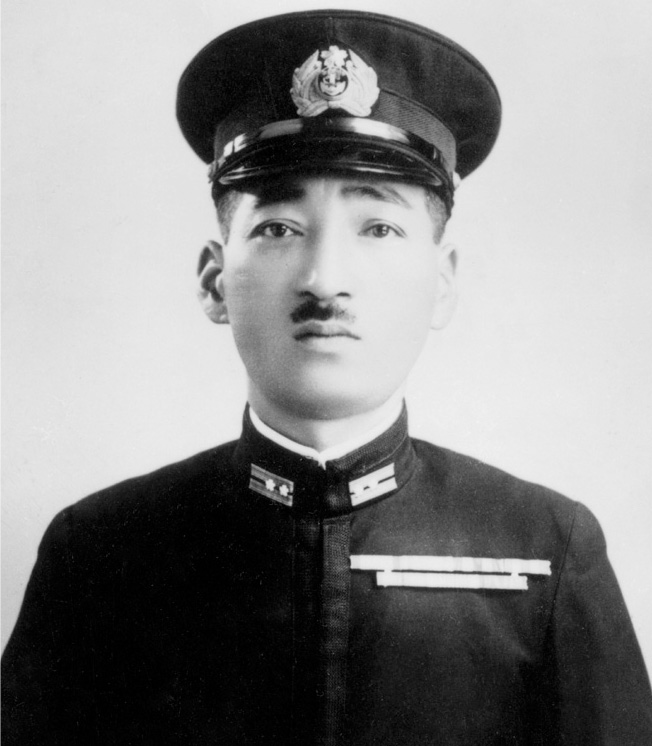
Mitsuo Fuchida (淵田 美津雄, Fuchida Mitsuo; 3 December 1902 – 30 May 1976) was a Japanese captain in the Imperial Japanese Navy Air Service and a bomber observer in the Imperial Japanese Navy before and during World War II. He is perhaps best known for leading the first wave of air attacks on Pearl Harbor on 7 December 1941. Working under the fleet commander, Vice Admiral Chūichi Nagumo, Fuchida was responsible for the coordination of the aerial attack.
After the war ended, Fuchida became a Christian convert and evangelist, traveling in the United States and Europe to tell his story. He later settled in the U.S. (although never taking American citizenship). Some of Fuchida's wartime claims have been challenged as self-serving by historians, including his claimed advocacy for a third wave attack on Pearl Harbor.
Mitsuo Fuchida was born in what is now part of Katsuragi, Nara Prefecture, Japan to Yazo and Shika Fuchida on 3 December 1902. He entered the Imperial Japanese Naval Academy at Etajima, Hiroshima, in 1921, where he befriended classmate Minoru Genda and discovered an interest in flying. Specializing in horizontal bombing, Fuchida was made an instructor in that technique in 1936. He gained combat experience during the Second Sino-Japanese War, when he was assigned to the aircraft carrier Kaga in 1929 and then to the Sasebo Air Group, He was promoted to lieutenant commander on 1 December 1936 and was accepted into the Naval Staff College. Fuchida joined the aircraft carrier Akagi in 1939 as the commander of the air group. Fuchida was made commander in October 1941.
On Sunday, 7 December 1941, a Japanese force under the command of Vice Admiral Chūichi Nagumo—consisting of six carriers with 423 aircraft—was ready to attack the United States base at Pearl Harbor, Hawaii. At 06:00, the first wave of 183 dive bombers, torpedo bombers, horizontal bombers and fighters took off from carriers 250 mi (400 km) north of Oahu and headed for the U.S. Pacific Fleet at Pearl Harbor.
At 07:40 Hawaiian Standard Time, Mitsuo Fuchida, who by this time had achieved the rank of commander, arrived with the first attack wave on Oahu's north shore near Kahuku Point. The first attack wave then banked west and flew along the northwest coast. Fuchida ordered "Tenkai" (Take attack position), and upon seeing no U.S. activity at Pearl Harbor, Fuchida slid back the canopy of his Nakajima B5N2 torpedo bomber, tailcode AI-301 and fired a dark blue flare known as a "black dragon", the signal to attack.
Passing Waimea Bay at 07:49, Fuchida instructed his radio operator, Petty Officer 1st Class Norinobu Mizuki, to send the coded signal "To, To, To" (totsugekiseyo—"to charge") to the other aircraft. Fuchida, thinking Lt Cmdr Shigeru Itaya's Zeroes had missed the signal, fired a second flare. Lt Cmdr Kakuichi Takahashi, overall leader of the first wave dive bombers, saw both flares and misunderstood the signal. Thinking the dive bombers were to attack, he led his dive bombers into immediate attack position. Lt Cmdr Shigeharu Murata, overall leader of the torpedo bombers, observed both flares and saw Takahashi's planes gliding into attack formation. He knew there was a misunderstanding which could not be rectified, so he led his torpedo bombers into attack positions. At this point, Cmdr Fuchida's pilot, Lieutenant Mitsuo Matsuzaki, guided their bomber along with the remaining horizontal bombers in a formation sweep around Kaena Point and headed down the western coast of Oahu.
At 07:53, Fuchida ordered Mizuki to send the code words "Tora! Tora! Tora!" back to the carrier Akagi, the flagship of 1st Air Fleet. The message meant that complete surprise had been achieved. Due to favorable atmospheric conditions, the transmission of the "Tora! Tora! Tora!" code words from the moderately powered transmitter were heard over a ship's radio in Japan by Admiral Isoroku Yamamoto, the naval commander, and his staff, who were sitting up through the night awaiting word on the attack.
As the first wave returned to the carriers, Fuchida remained over the target to assess damage and observe the second-wave attack. He returned to his carrier only after the second wave had completed its mission. With great pride, he announced that the U.S. battleship fleet had been destroyed. Fuchida inspected his craft and found 21 large flak holes: the main control wires were barely holding together. The successful attack made Fuchida a national hero who was granted a personal audience with Emperor Hirohito.
Hub AI
Mitsuo Fuchida AI simulator
(@Mitsuo Fuchida_simulator)
Mitsuo Fuchida
Mitsuo Fuchida (淵田 美津雄, Fuchida Mitsuo; 3 December 1902 – 30 May 1976) was a Japanese captain in the Imperial Japanese Navy Air Service and a bomber observer in the Imperial Japanese Navy before and during World War II. He is perhaps best known for leading the first wave of air attacks on Pearl Harbor on 7 December 1941. Working under the fleet commander, Vice Admiral Chūichi Nagumo, Fuchida was responsible for the coordination of the aerial attack.
After the war ended, Fuchida became a Christian convert and evangelist, traveling in the United States and Europe to tell his story. He later settled in the U.S. (although never taking American citizenship). Some of Fuchida's wartime claims have been challenged as self-serving by historians, including his claimed advocacy for a third wave attack on Pearl Harbor.
Mitsuo Fuchida was born in what is now part of Katsuragi, Nara Prefecture, Japan to Yazo and Shika Fuchida on 3 December 1902. He entered the Imperial Japanese Naval Academy at Etajima, Hiroshima, in 1921, where he befriended classmate Minoru Genda and discovered an interest in flying. Specializing in horizontal bombing, Fuchida was made an instructor in that technique in 1936. He gained combat experience during the Second Sino-Japanese War, when he was assigned to the aircraft carrier Kaga in 1929 and then to the Sasebo Air Group, He was promoted to lieutenant commander on 1 December 1936 and was accepted into the Naval Staff College. Fuchida joined the aircraft carrier Akagi in 1939 as the commander of the air group. Fuchida was made commander in October 1941.
On Sunday, 7 December 1941, a Japanese force under the command of Vice Admiral Chūichi Nagumo—consisting of six carriers with 423 aircraft—was ready to attack the United States base at Pearl Harbor, Hawaii. At 06:00, the first wave of 183 dive bombers, torpedo bombers, horizontal bombers and fighters took off from carriers 250 mi (400 km) north of Oahu and headed for the U.S. Pacific Fleet at Pearl Harbor.
At 07:40 Hawaiian Standard Time, Mitsuo Fuchida, who by this time had achieved the rank of commander, arrived with the first attack wave on Oahu's north shore near Kahuku Point. The first attack wave then banked west and flew along the northwest coast. Fuchida ordered "Tenkai" (Take attack position), and upon seeing no U.S. activity at Pearl Harbor, Fuchida slid back the canopy of his Nakajima B5N2 torpedo bomber, tailcode AI-301 and fired a dark blue flare known as a "black dragon", the signal to attack.
Passing Waimea Bay at 07:49, Fuchida instructed his radio operator, Petty Officer 1st Class Norinobu Mizuki, to send the coded signal "To, To, To" (totsugekiseyo—"to charge") to the other aircraft. Fuchida, thinking Lt Cmdr Shigeru Itaya's Zeroes had missed the signal, fired a second flare. Lt Cmdr Kakuichi Takahashi, overall leader of the first wave dive bombers, saw both flares and misunderstood the signal. Thinking the dive bombers were to attack, he led his dive bombers into immediate attack position. Lt Cmdr Shigeharu Murata, overall leader of the torpedo bombers, observed both flares and saw Takahashi's planes gliding into attack formation. He knew there was a misunderstanding which could not be rectified, so he led his torpedo bombers into attack positions. At this point, Cmdr Fuchida's pilot, Lieutenant Mitsuo Matsuzaki, guided their bomber along with the remaining horizontal bombers in a formation sweep around Kaena Point and headed down the western coast of Oahu.
At 07:53, Fuchida ordered Mizuki to send the code words "Tora! Tora! Tora!" back to the carrier Akagi, the flagship of 1st Air Fleet. The message meant that complete surprise had been achieved. Due to favorable atmospheric conditions, the transmission of the "Tora! Tora! Tora!" code words from the moderately powered transmitter were heard over a ship's radio in Japan by Admiral Isoroku Yamamoto, the naval commander, and his staff, who were sitting up through the night awaiting word on the attack.
As the first wave returned to the carriers, Fuchida remained over the target to assess damage and observe the second-wave attack. He returned to his carrier only after the second wave had completed its mission. With great pride, he announced that the U.S. battleship fleet had been destroyed. Fuchida inspected his craft and found 21 large flak holes: the main control wires were barely holding together. The successful attack made Fuchida a national hero who was granted a personal audience with Emperor Hirohito.
Recent media