



Community hub
Recent from talks
Knowledge base stats:
Talk channels stats:
Members stats:
Modern architecture
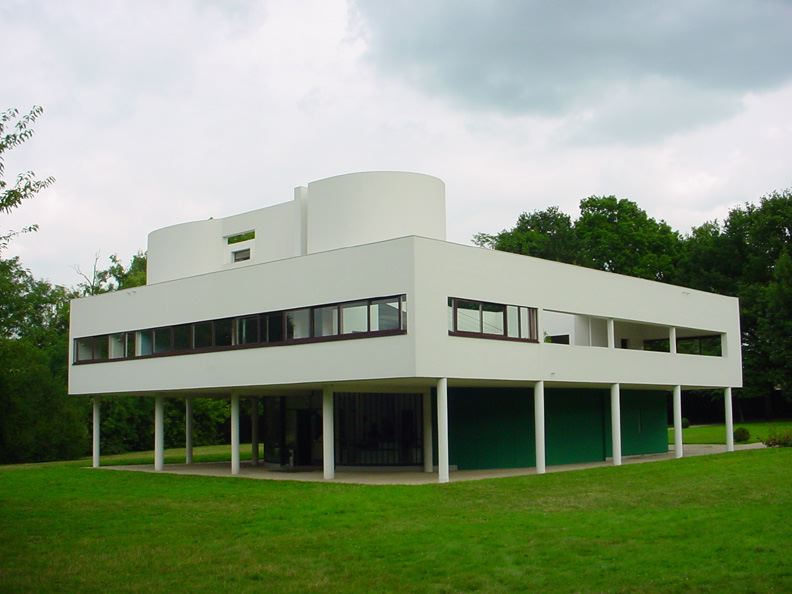
Modern architecture, also called modernist architecture, or the modern movement, is an architectural movement and style that was prominent in the 20th century, between the earlier Art Deco and later postmodern movements. Modern architecture was based upon new and innovative technologies of construction (particularly the use of glass, steel, and concrete); the principle of functionalism (i.e. that form should follow function); an embrace of minimalism; and a rejection of ornament.
According to Le Corbusier, the roots of the movement were to be found in the works of Eugène Viollet-le-Duc, while Mies van der Rohe was heavily inspired by Karl Friedrich Schinkel. The movement emerged in the first half of the 20th century and became dominant after World War II until the 1980s, when it was gradually replaced as the principal style for institutional and corporate buildings by postmodern architecture.
Modern architecture emerged at the end of the 19th century from revolutions in technology, engineering, and building materials, and from a desire to break away from historical architectural styles and invent something that was purely functional and new.
The revolution in materials came first, with the use of cast iron, drywall, plate glass, and reinforced concrete, to build structures that were stronger, lighter, and taller. The cast plate glass process was invented in 1848, allowing the manufacture of very large windows. The Crystal Palace by Joseph Paxton at the Great Exhibition of 1851 was an early example of iron and plate glass construction, followed in 1864 by the first glass and metal curtain wall. These developments together led to the first steel-framed skyscraper, the ten-story Home Insurance Building in Chicago, built in 1884 by William Le Baron Jenney and based on the works of Viollet le Duc.
French industrialist François Coignet was the first to use iron reinforced concrete, that is, concrete strengthened with iron bars, as a technique for constructing buildings. In 1853 Coignet built the first iron reinforced concrete structure, a four-storey house in the suburbs of Paris. A further important step forward was the invention of the safety elevator by Elisha Otis, first demonstrated at the New York Crystal Palace exposition in 1854, which made tall office and apartment buildings practical. Another important technology for the new architecture was electric light, which greatly reduced the inherent danger of fires caused by gas in the 19th century.
The debut of new materials and techniques inspired architects to break away from the neoclassical and eclectic models that dominated European and American architecture in the late 19th century, most notably eclecticism, Victorian and Edwardian architecture, and the Beaux-Arts architectural style. This break with the past was particularly urged by the architectural theorist and historian Eugène Viollet-le-Duc. In his 1872 book Entretiens sur l'architecture, he urged: "use the means and knowledge given to us by our times, without the intervening traditions which are no longer viable today, and in that way we can inaugurate a new architecture. For each function its material; for each material its form and its ornament." This book influenced a generation of architects, including Louis Sullivan, Victor Horta, Hector Guimard, and Antoni Gaudí.
At the end of the 19th century, a few architects began to challenge the traditional Beaux Arts and Neoclassical styles that dominated architecture in Europe and the United States. The Glasgow School of Art (1896–99) designed by Charles Rennie Mackintosh, had a façade dominated by large vertical bays of windows. The Art Nouveau style was launched in the 1890s by Victor Horta in Belgium and Hector Guimard in France; it introduced new styles of decoration, based on vegetal and floral forms. In Barcelona, Antonio Gaudi conceived architecture as a form of sculpture; the façade of the Casa Batlló in Barcelona (1904–1907) had no straight lines; it was encrusted with colorful mosaics of stone and ceramic tiles.
Architects also began to experiment with new materials and techniques, which gave them greater freedom to create new forms. In 1903–1904 in Paris Auguste Perret and Henri Sauvage began to use reinforced concrete, previously only used for industrial structures, to build apartment buildings. Reinforced concrete, which could be molded into any shape, and which could create enormous spaces without the need of supporting pillars, replaced stone and brick as the primary material for modernist architects. The first concrete apartment buildings by Perret and Sauvage were covered with ceramic tiles, but in 1905 Perret built the first concrete parking garage on 51 rue de Ponthieu in Paris; here the concrete was left bare, and the space between the concrete was filled with glass windows. Henri Sauvage added another construction innovation in an apartment building on Rue Vavin in Paris (1912–1914); the reinforced concrete building was in steps, with each floor set back from the floor below, creating a series of terraces. Between 1910 and 1913, Auguste Perret built the Théâtre des Champs-Élysées, a masterpiece of reinforced concrete construction, with Art Deco sculptural bas-reliefs on the façade by Antoine Bourdelle. Because of the concrete construction, no columns blocked the spectator's view of the stage.
Hub AI
Modern architecture AI simulator
(@Modern architecture_simulator)
Modern architecture
Modern architecture, also called modernist architecture, or the modern movement, is an architectural movement and style that was prominent in the 20th century, between the earlier Art Deco and later postmodern movements. Modern architecture was based upon new and innovative technologies of construction (particularly the use of glass, steel, and concrete); the principle of functionalism (i.e. that form should follow function); an embrace of minimalism; and a rejection of ornament.
According to Le Corbusier, the roots of the movement were to be found in the works of Eugène Viollet-le-Duc, while Mies van der Rohe was heavily inspired by Karl Friedrich Schinkel. The movement emerged in the first half of the 20th century and became dominant after World War II until the 1980s, when it was gradually replaced as the principal style for institutional and corporate buildings by postmodern architecture.
Modern architecture emerged at the end of the 19th century from revolutions in technology, engineering, and building materials, and from a desire to break away from historical architectural styles and invent something that was purely functional and new.
The revolution in materials came first, with the use of cast iron, drywall, plate glass, and reinforced concrete, to build structures that were stronger, lighter, and taller. The cast plate glass process was invented in 1848, allowing the manufacture of very large windows. The Crystal Palace by Joseph Paxton at the Great Exhibition of 1851 was an early example of iron and plate glass construction, followed in 1864 by the first glass and metal curtain wall. These developments together led to the first steel-framed skyscraper, the ten-story Home Insurance Building in Chicago, built in 1884 by William Le Baron Jenney and based on the works of Viollet le Duc.
French industrialist François Coignet was the first to use iron reinforced concrete, that is, concrete strengthened with iron bars, as a technique for constructing buildings. In 1853 Coignet built the first iron reinforced concrete structure, a four-storey house in the suburbs of Paris. A further important step forward was the invention of the safety elevator by Elisha Otis, first demonstrated at the New York Crystal Palace exposition in 1854, which made tall office and apartment buildings practical. Another important technology for the new architecture was electric light, which greatly reduced the inherent danger of fires caused by gas in the 19th century.
The debut of new materials and techniques inspired architects to break away from the neoclassical and eclectic models that dominated European and American architecture in the late 19th century, most notably eclecticism, Victorian and Edwardian architecture, and the Beaux-Arts architectural style. This break with the past was particularly urged by the architectural theorist and historian Eugène Viollet-le-Duc. In his 1872 book Entretiens sur l'architecture, he urged: "use the means and knowledge given to us by our times, without the intervening traditions which are no longer viable today, and in that way we can inaugurate a new architecture. For each function its material; for each material its form and its ornament." This book influenced a generation of architects, including Louis Sullivan, Victor Horta, Hector Guimard, and Antoni Gaudí.
At the end of the 19th century, a few architects began to challenge the traditional Beaux Arts and Neoclassical styles that dominated architecture in Europe and the United States. The Glasgow School of Art (1896–99) designed by Charles Rennie Mackintosh, had a façade dominated by large vertical bays of windows. The Art Nouveau style was launched in the 1890s by Victor Horta in Belgium and Hector Guimard in France; it introduced new styles of decoration, based on vegetal and floral forms. In Barcelona, Antonio Gaudi conceived architecture as a form of sculpture; the façade of the Casa Batlló in Barcelona (1904–1907) had no straight lines; it was encrusted with colorful mosaics of stone and ceramic tiles.
Architects also began to experiment with new materials and techniques, which gave them greater freedom to create new forms. In 1903–1904 in Paris Auguste Perret and Henri Sauvage began to use reinforced concrete, previously only used for industrial structures, to build apartment buildings. Reinforced concrete, which could be molded into any shape, and which could create enormous spaces without the need of supporting pillars, replaced stone and brick as the primary material for modernist architects. The first concrete apartment buildings by Perret and Sauvage were covered with ceramic tiles, but in 1905 Perret built the first concrete parking garage on 51 rue de Ponthieu in Paris; here the concrete was left bare, and the space between the concrete was filled with glass windows. Henri Sauvage added another construction innovation in an apartment building on Rue Vavin in Paris (1912–1914); the reinforced concrete building was in steps, with each floor set back from the floor below, creating a series of terraces. Between 1910 and 1913, Auguste Perret built the Théâtre des Champs-Élysées, a masterpiece of reinforced concrete construction, with Art Deco sculptural bas-reliefs on the façade by Antoine Bourdelle. Because of the concrete construction, no columns blocked the spectator's view of the stage.