



Community hub
Recent from talks
Knowledge base stats:
Talk channels stats:
Members stats:
Mongu
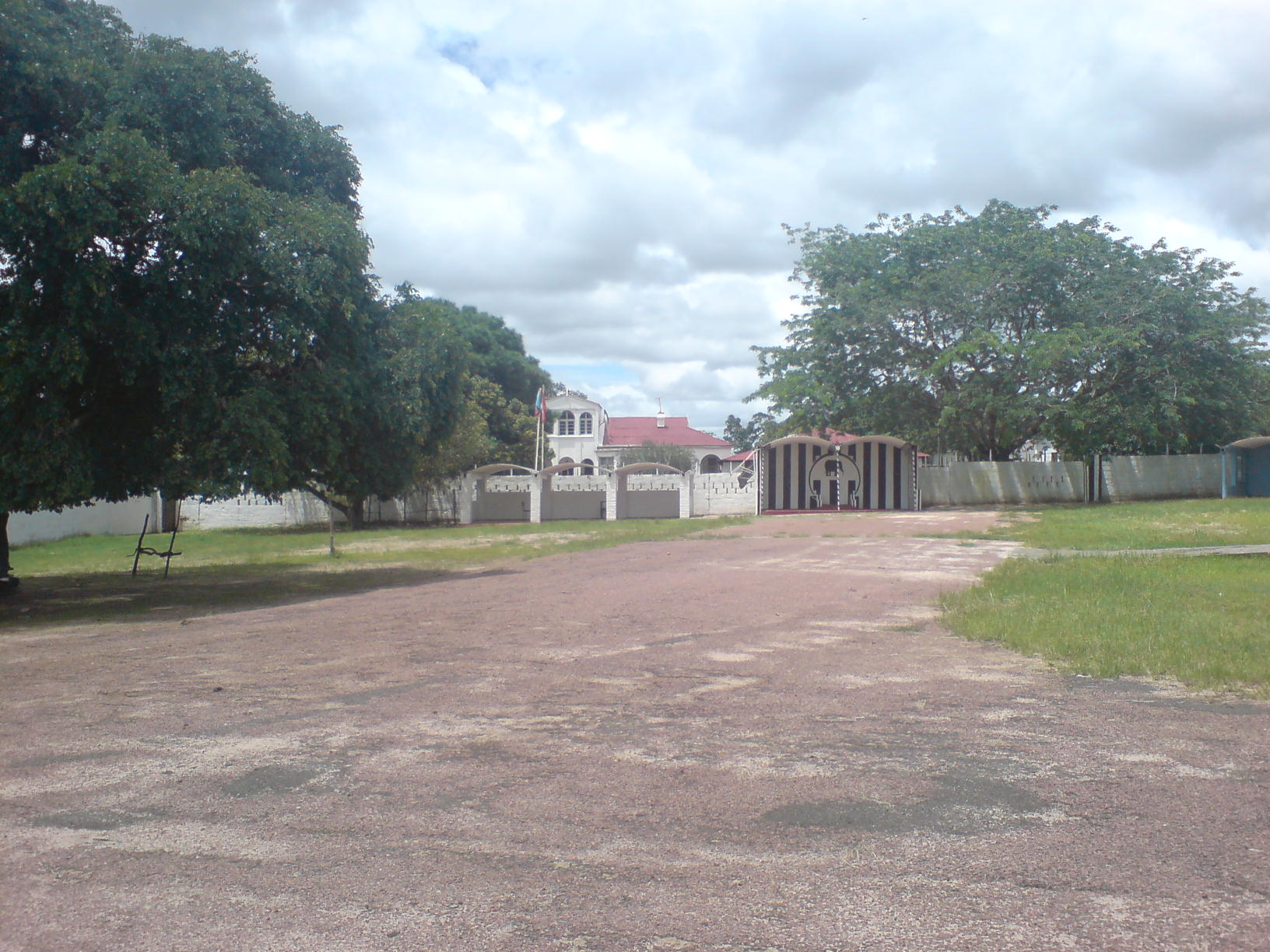
Mongu is the capital of Western Province in Zambia and was the capital of the formerly-named province and historic state of Barotseland. Its population is 179,585 (2010 census), and it is also the headquarters of Mongu District. Mongu is the home of the Litunga, King of the Lozi people (currently Lubosi Imwiko III).
The town's original name was mungu, a Lozi word in reference to a growth and production of pumpkins. Mongu was the capital of Barotseland under the Lozi kings from the 18th century until 1911.[citation needed]
Under British rule, it was declared a district under the name Mongu-Lealui by Hubert Winthrop Young, the Governor of Northern Rhodesia. Following Zambia's independence in 1964, Mongu was established as a rural council and upgraded to its status of District Council in 1980.[citation needed]
Today Mongu remains a predominantly rural urban community with the majority of business found in agronomy.[citation needed]
Mongu is situated on a small blunt promontory of higher ground on the eastern edge of the 30-kilometre-wide Barotse Floodplain of the Zambezi River running north–south, which in the wet season floods right up to the town. The city is 15 kilometres from the river's main channel, to which its small harbour is connected in the dry season by a 35-kilometre route via a canal and a meandering channel. The whole region is flat and sandy, with the dry land generally no more than 50 m higher than the floodplain.[citation needed]
Mongu is the home city of the Lozi (or Barotse) people, who speak a language derived in part from that of the Makololo, related to the South African Sesotho language.[citation needed] The Lozi ruler, the Litunga, has a dry season palace 12 km north-west at Lealui on the floodplain, and a flood season palace on higher ground at Limulunga, 17 km north. The Kuomboka ceremony marks the court's transfer between the two locations.
At the end of the 18th century, a significant number of Mbunda from Angola settled here.
Mongu has a tropical savanna climate (Köppen Aw). The area has an annual average rainfall of 945 mm falling in the rainy season from late October to April.[citation needed] The flood usually arrives by January, peaks in April and is gone by June, leaving a floodplain green with new grass on which a population of about 250,000 moves in to graze a similar number of cattle, catch fish and raise crops in small gardens. Mongu is hot from September to December, with a mean maximum for October of 35.4 °C, and cool from May to August, with a mean maximum in June of 26.9 °C and a mean minimum of 10.3 °C.[citation needed]
Hub AI
Mongu AI simulator
(@Mongu_simulator)
Mongu
Mongu is the capital of Western Province in Zambia and was the capital of the formerly-named province and historic state of Barotseland. Its population is 179,585 (2010 census), and it is also the headquarters of Mongu District. Mongu is the home of the Litunga, King of the Lozi people (currently Lubosi Imwiko III).
The town's original name was mungu, a Lozi word in reference to a growth and production of pumpkins. Mongu was the capital of Barotseland under the Lozi kings from the 18th century until 1911.[citation needed]
Under British rule, it was declared a district under the name Mongu-Lealui by Hubert Winthrop Young, the Governor of Northern Rhodesia. Following Zambia's independence in 1964, Mongu was established as a rural council and upgraded to its status of District Council in 1980.[citation needed]
Today Mongu remains a predominantly rural urban community with the majority of business found in agronomy.[citation needed]
Mongu is situated on a small blunt promontory of higher ground on the eastern edge of the 30-kilometre-wide Barotse Floodplain of the Zambezi River running north–south, which in the wet season floods right up to the town. The city is 15 kilometres from the river's main channel, to which its small harbour is connected in the dry season by a 35-kilometre route via a canal and a meandering channel. The whole region is flat and sandy, with the dry land generally no more than 50 m higher than the floodplain.[citation needed]
Mongu is the home city of the Lozi (or Barotse) people, who speak a language derived in part from that of the Makololo, related to the South African Sesotho language.[citation needed] The Lozi ruler, the Litunga, has a dry season palace 12 km north-west at Lealui on the floodplain, and a flood season palace on higher ground at Limulunga, 17 km north. The Kuomboka ceremony marks the court's transfer between the two locations.
At the end of the 18th century, a significant number of Mbunda from Angola settled here.
Mongu has a tropical savanna climate (Köppen Aw). The area has an annual average rainfall of 945 mm falling in the rainy season from late October to April.[citation needed] The flood usually arrives by January, peaks in April and is gone by June, leaving a floodplain green with new grass on which a population of about 250,000 moves in to graze a similar number of cattle, catch fish and raise crops in small gardens. Mongu is hot from September to December, with a mean maximum for October of 35.4 °C, and cool from May to August, with a mean maximum in June of 26.9 °C and a mean minimum of 10.3 °C.[citation needed]