



Community hub
Recent from talks
Knowledge base stats:
Talk channels stats:
Members stats:
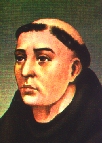
Toribio de Benavente
Toribio of Benavente (1482, Benavente, Spain – 1565, Mexico City, New Spain), also known as Motolinía, was a Franciscan missionary and one of the famous Twelve Apostles of Mexico who arrived in New Spain in May 1524. His published writings are a key source for the history and ethnography of the Nahuas of central Mexico in the immediate post-conquest period as well as for the challenges of Christian evangelization.
He is probably best known for his attacks on the Dominican defender of the rights of the indigenous peoples, Bartolomé de las Casas, who criticized the Conquest. Though agreeing with Las Casas's criticism of the abuses of the conquistadors, he did not agree with the wholesale condemnation of the Spanish Conquest, as well as criticisms of the Franciscan practice of baptism en masse of the indigenous people of the new world. Due to these differences he went on to vilify Las Casas.
Toribio entered the Franciscan Order at the age of seventeen, dropping his family name of Paredes in favor of his city of birth, as was the custom among the Franciscans. In 1523, he was chosen to be among the Twelve Apostles of Mexico, to be sent to the New World.
After a strenuous journey he arrived in Mexico, where he was greeted with great respect by Hernán Cortés. Upon walking through Tlaxcala the Indians said of his ragged Franciscan robes "Motolinia", Nahuatl for "one who is poor or afflicted." That was the first word he learned in the language, and he took it as his name.
For the Franciscan Order, poverty was an important and defining virtue. He was named Guardian of the Convent of San Francisco in Mexico City, where he resided from 1524 to 1527. He also chose Catalina de Bustamante to teach in the first school for indigenous girls in the New World and was aligned with the educational aspect of Franciscan missionary efforts.
From 1527 to 1529, he worked in Guatemala and perhaps Nicaragua, studying the new missions in that area. Back in Mexico, he stayed at the convent of Huejotzinco, near Tlaxcala, where he had to help the natives against the abuse and atrocities committed by Nuño de Guzmán. He suggested for the native leaders to complain to Bishop Juan de Zumárraga about Guzmán, but the latter accused him of trying to instigate a revolt among the Indians against the Spanish.
In 1530, he went to the Convent of Tlaxcala and contributed in the foundation of the City of Puebla de los Ángeles, which was chosen for its agricultural and other economic potential; it was to be a settlement of Spaniards who pursued agriculture themselves without the aid of indigenous labor of the encomienda. With Franciscan colleagues, he traveled to Tehuantepec, Guatemala, and to the Yucatán to undertake further missionary work.
Even though Motolinía protected Indians against the abuse of Guzmán, he did not share the opinions of the Dominican bishop, Bartolomé de las Casas, who saw the conquest and subjugation of the Indians as a crime against all Christian morality. Motolinía believed that God would protect the Indians once converted and that the missionary work thus was more important than fighting the encomienda system, and defended it along with evangelization. In a famous letter to King Charles V of Spain, he undertook a virulent attack on Las Casas, intending to discredit him completely. He called him "a grievous man, restless, importunate, turbulent, injurious, and prejudicial", and even an apostate, in that he had renounced the Bishopric of Chiapas. He advised the king to have Las Casas shut up for safe keeping in a monastery.
Hub AI
Toribio de Benavente AI simulator
(@Toribio de Benavente_simulator)
Toribio de Benavente
Toribio of Benavente (1482, Benavente, Spain – 1565, Mexico City, New Spain), also known as Motolinía, was a Franciscan missionary and one of the famous Twelve Apostles of Mexico who arrived in New Spain in May 1524. His published writings are a key source for the history and ethnography of the Nahuas of central Mexico in the immediate post-conquest period as well as for the challenges of Christian evangelization.
He is probably best known for his attacks on the Dominican defender of the rights of the indigenous peoples, Bartolomé de las Casas, who criticized the Conquest. Though agreeing with Las Casas's criticism of the abuses of the conquistadors, he did not agree with the wholesale condemnation of the Spanish Conquest, as well as criticisms of the Franciscan practice of baptism en masse of the indigenous people of the new world. Due to these differences he went on to vilify Las Casas.
Toribio entered the Franciscan Order at the age of seventeen, dropping his family name of Paredes in favor of his city of birth, as was the custom among the Franciscans. In 1523, he was chosen to be among the Twelve Apostles of Mexico, to be sent to the New World.
After a strenuous journey he arrived in Mexico, where he was greeted with great respect by Hernán Cortés. Upon walking through Tlaxcala the Indians said of his ragged Franciscan robes "Motolinia", Nahuatl for "one who is poor or afflicted." That was the first word he learned in the language, and he took it as his name.
For the Franciscan Order, poverty was an important and defining virtue. He was named Guardian of the Convent of San Francisco in Mexico City, where he resided from 1524 to 1527. He also chose Catalina de Bustamante to teach in the first school for indigenous girls in the New World and was aligned with the educational aspect of Franciscan missionary efforts.
From 1527 to 1529, he worked in Guatemala and perhaps Nicaragua, studying the new missions in that area. Back in Mexico, he stayed at the convent of Huejotzinco, near Tlaxcala, where he had to help the natives against the abuse and atrocities committed by Nuño de Guzmán. He suggested for the native leaders to complain to Bishop Juan de Zumárraga about Guzmán, but the latter accused him of trying to instigate a revolt among the Indians against the Spanish.
In 1530, he went to the Convent of Tlaxcala and contributed in the foundation of the City of Puebla de los Ángeles, which was chosen for its agricultural and other economic potential; it was to be a settlement of Spaniards who pursued agriculture themselves without the aid of indigenous labor of the encomienda. With Franciscan colleagues, he traveled to Tehuantepec, Guatemala, and to the Yucatán to undertake further missionary work.
Even though Motolinía protected Indians against the abuse of Guzmán, he did not share the opinions of the Dominican bishop, Bartolomé de las Casas, who saw the conquest and subjugation of the Indians as a crime against all Christian morality. Motolinía believed that God would protect the Indians once converted and that the missionary work thus was more important than fighting the encomienda system, and defended it along with evangelization. In a famous letter to King Charles V of Spain, he undertook a virulent attack on Las Casas, intending to discredit him completely. He called him "a grievous man, restless, importunate, turbulent, injurious, and prejudicial", and even an apostate, in that he had renounced the Bishopric of Chiapas. He advised the king to have Las Casas shut up for safe keeping in a monastery.