
Recent from talks
Mukhalinga
Knowledge base stats:
Talk channels stats:
Members stats:
Mukhalinga
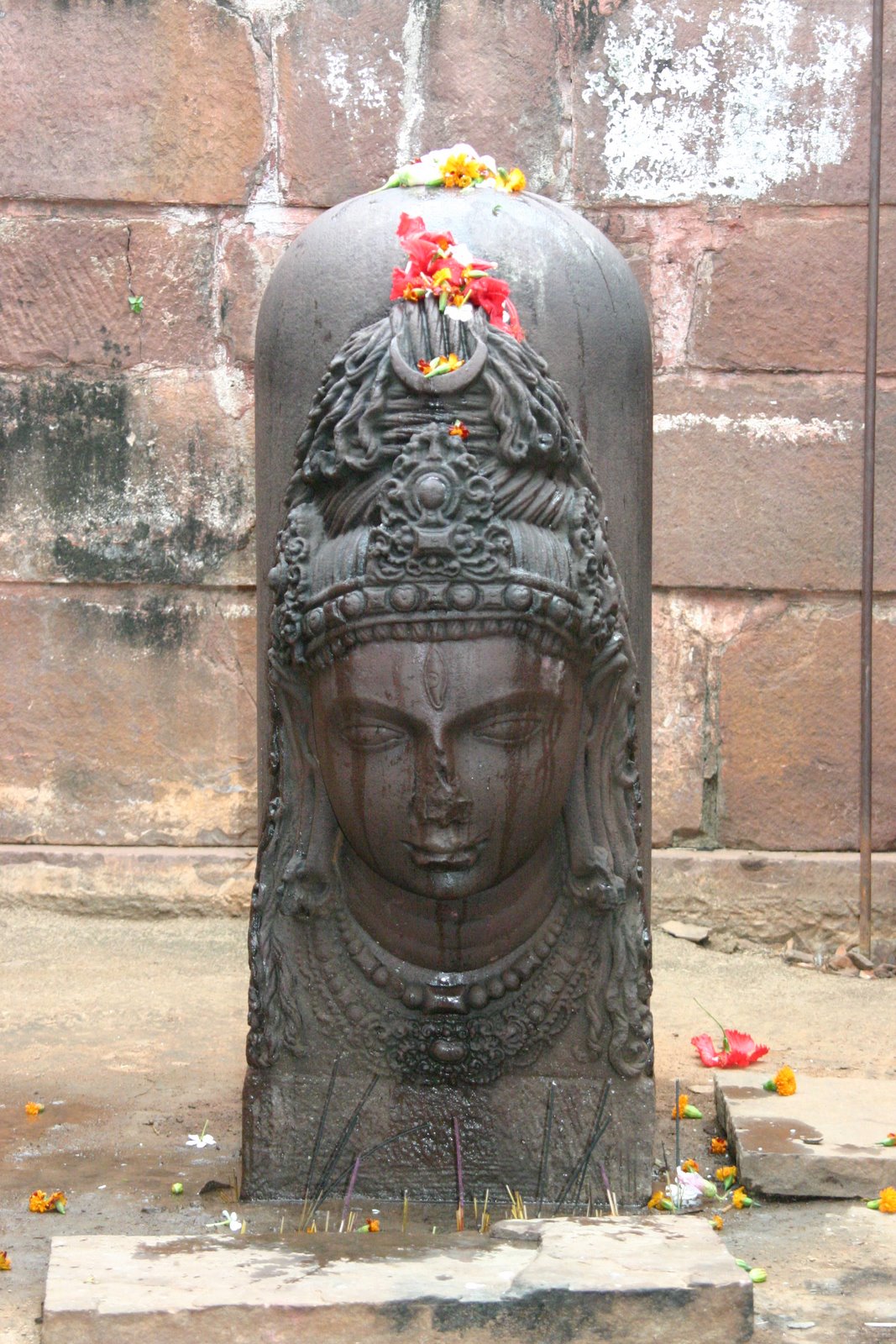
A mukhalinga or mukhalingam (Sanskrit: मुखलिङ्गम्, romanized: mukhaliṅga; literally "lingam with a face") is a lingam represented with one or more human faces in Hindu iconography. A lingam is an aniconic representation of the Hindu god Shiva. Mukhalingas may be of stone or can be made of a metal sheath, which covers the normal lingam.
A mukhalinga generally has one, four, or five faces. Mukhalingas having four faces are also regarded to have an invisible fifth face on top of the linga. The four- and five-faced mukhalingas represent the five aspects of Shiva, which also relate to the classical elements, and the cardinal directions.
While the formless aspect of Shiva is classified as nishkala (non-material), mukhalingas are classified as sakala nishkala (material-non-material).
The iconography and making of the mukhalinga is prescribed in the Agamas and the Tantras. These sculptured lingas fall under the classification of manusha-linga ("man-made lingas"), the other category being Swayambhu or naturally occurring lingas. A manusha-linga has three parts: the Brahma-bhaga, the lowest part of the linga which is a square platform; Vishnu-bhaga - the middle section of the linga with a pedestal or pitha and Rudra-bhaga, the topmost part of the central shaft with a rounded tip. Mukhalinga should be sarvasama ("all-equal"), where the three parts are equal. On the topmost rudra-bhaga or puja-bhaga, one face and a maximum of five faces may be carved. If the sanctum (garbhagriha) has only one door, then the linga should have only one face on the front (the east), facing the door. In case of two doors, it should have two faces - front and back - facing the doors in the east and the west. In case of three doors, the linga should have three faces, except in the west. When the shrine has four doors, the linga may have four or five faces. The four faces should face the doors in the four cardinal directions; in addition if a fifth face exists, it should be carved on the top and face the front, the east. When mukhalinga is four-faced, instead of only faces, the busts of the deities are carved on the four side; each having two arms.
The stone mukhalingas may be depicted comprising just of the central shaft, but may be part of the full assemble, where the shaft is embedded in the pitha pedestal, denoting the yoni, the feminine counterpart.
A normal linga may be converted into a mukhalinga by covering with a kavacha ("armour"), a metal (generally gold) covering carved in the shape of the head of Shiva. It has displays the third eye of Shiva on the forehead, the crescent moon over his head and a crown. The covering or sheath is also known as a kosha or linga-kosha, and can be called of metal alloys, gold or silver or copper. Another form of cover is carved in shape of a linga, with a rounded top, with four faces carved on four sides.
The one-faced mukhalinga is called eka-mukhalinga, "linga with a single face". The face is created in high relief. He wears his hair piled on his head like a bun, while longer hair flow over his shoulders. He may also wear earrings and a necklace and have the crescent moon on his head and the third eye on the forehead. The faces of Shiva are carved generally from the ear onwards, emerging from the linga.
The five-faced mukhalinga is called pancha-mukhalinga. The five faces relate Shiva to the classical elements, the directions, the five senses and five parts of the body. These represent Shiva's five aspects: Sadyojata, Vamadeva, Aghora, Tatpurusha and Ishana. A four-faced linga is said also to represent the five aspects of Shiva, the fifth aspect is center, the shaft itself or is assumed to be emerging from the top of the shaft and denotes the formless Absolute. Thus, a four-faced mukhalinga can be also called a pancha-mukhalinga ("linga with five faces" of Shiva). These four-faced lingas are the most commonly found mukhalingas.
Hub AI
Mukhalinga AI simulator
(@Mukhalinga_simulator)
Mukhalinga
A mukhalinga or mukhalingam (Sanskrit: मुखलिङ्गम्, romanized: mukhaliṅga; literally "lingam with a face") is a lingam represented with one or more human faces in Hindu iconography. A lingam is an aniconic representation of the Hindu god Shiva. Mukhalingas may be of stone or can be made of a metal sheath, which covers the normal lingam.
A mukhalinga generally has one, four, or five faces. Mukhalingas having four faces are also regarded to have an invisible fifth face on top of the linga. The four- and five-faced mukhalingas represent the five aspects of Shiva, which also relate to the classical elements, and the cardinal directions.
While the formless aspect of Shiva is classified as nishkala (non-material), mukhalingas are classified as sakala nishkala (material-non-material).
The iconography and making of the mukhalinga is prescribed in the Agamas and the Tantras. These sculptured lingas fall under the classification of manusha-linga ("man-made lingas"), the other category being Swayambhu or naturally occurring lingas. A manusha-linga has three parts: the Brahma-bhaga, the lowest part of the linga which is a square platform; Vishnu-bhaga - the middle section of the linga with a pedestal or pitha and Rudra-bhaga, the topmost part of the central shaft with a rounded tip. Mukhalinga should be sarvasama ("all-equal"), where the three parts are equal. On the topmost rudra-bhaga or puja-bhaga, one face and a maximum of five faces may be carved. If the sanctum (garbhagriha) has only one door, then the linga should have only one face on the front (the east), facing the door. In case of two doors, it should have two faces - front and back - facing the doors in the east and the west. In case of three doors, the linga should have three faces, except in the west. When the shrine has four doors, the linga may have four or five faces. The four faces should face the doors in the four cardinal directions; in addition if a fifth face exists, it should be carved on the top and face the front, the east. When mukhalinga is four-faced, instead of only faces, the busts of the deities are carved on the four side; each having two arms.
The stone mukhalingas may be depicted comprising just of the central shaft, but may be part of the full assemble, where the shaft is embedded in the pitha pedestal, denoting the yoni, the feminine counterpart.
A normal linga may be converted into a mukhalinga by covering with a kavacha ("armour"), a metal (generally gold) covering carved in the shape of the head of Shiva. It has displays the third eye of Shiva on the forehead, the crescent moon over his head and a crown. The covering or sheath is also known as a kosha or linga-kosha, and can be called of metal alloys, gold or silver or copper. Another form of cover is carved in shape of a linga, with a rounded top, with four faces carved on four sides.
The one-faced mukhalinga is called eka-mukhalinga, "linga with a single face". The face is created in high relief. He wears his hair piled on his head like a bun, while longer hair flow over his shoulders. He may also wear earrings and a necklace and have the crescent moon on his head and the third eye on the forehead. The faces of Shiva are carved generally from the ear onwards, emerging from the linga.
The five-faced mukhalinga is called pancha-mukhalinga. The five faces relate Shiva to the classical elements, the directions, the five senses and five parts of the body. These represent Shiva's five aspects: Sadyojata, Vamadeva, Aghora, Tatpurusha and Ishana. A four-faced linga is said also to represent the five aspects of Shiva, the fifth aspect is center, the shaft itself or is assumed to be emerging from the top of the shaft and denotes the formless Absolute. Thus, a four-faced mukhalinga can be also called a pancha-mukhalinga ("linga with five faces" of Shiva). These four-faced lingas are the most commonly found mukhalingas.
Recent media