Recent from talks
Nothing was collected or created yet.
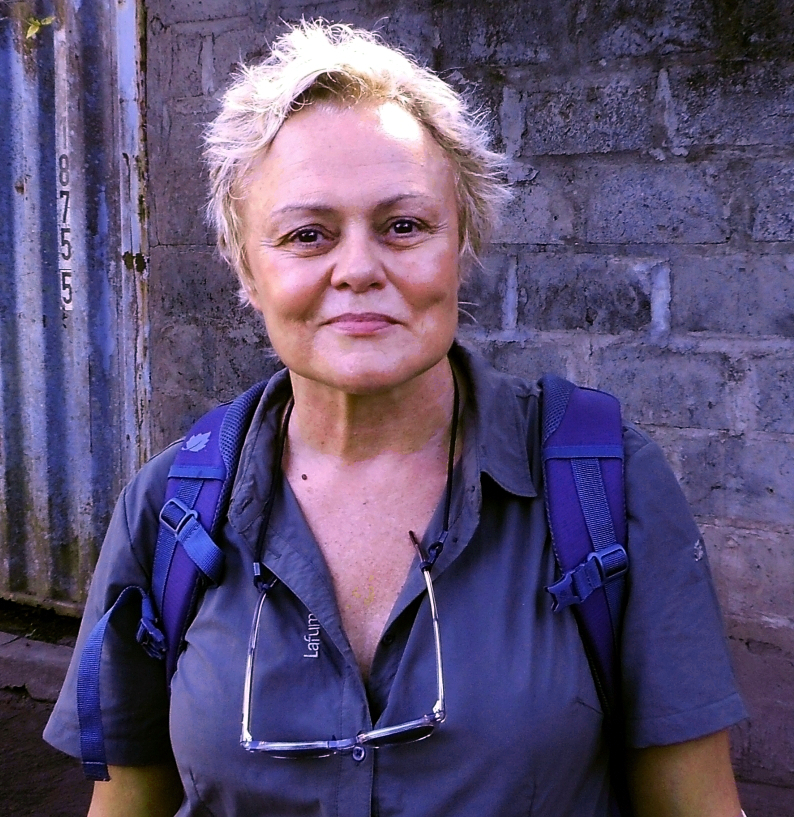
Muriel Robin
View on WikipediaMuriel Robin (French pronunciation: [myʁjɛl ʁɔbɛ̃]; born 2 August 1955) is a French actress and comedian. She won an International Emmy Award for Best Actress in 2007 and received a nomination for a César Award in 2001 and six nominations for a Molière Award.
Key Information
Early years
[edit]Muriel Robin is the youngest of three children of Antoine Robin and Aimée Rimbaud, who owned shoe-shops in Montbrison. She had two sisters,[1] Nydia and Martine. In 1960, the family moved to Saint-Étienne. When she was very young, she liked to make people laugh and dreamed of becoming a singer. After a lacklustre school career and a love of parties, she ended up failing her Baccalauréat twice in a row. Unsure of which career to follow, she started to sell shoes in one of the family's three shops, without being really motivated.
In 1977, aged 22, she left Saint-Étienne for Paris, taking a course in dramatic arts at Cours Florent, the entry college for the National Superior Conservatory for Dramatic Arts, in Paris. She graduated and returned to sell shoes in Saint-Étienne
Career
[edit]1980s
[edit]In 1981, she joined Roger Louret, whom she had met in Paris, in Monclar, with his theatre company, Les Baladins en Agenais. Notable people that she met there include Elie Semoun and Annie Grégorio. In 1983, she returned to Paris with Annie Grégorio to work at the Petit Théâtre de Bouvard., where she also met Didier Bénureau. She came up against the authoritarian methods of Philippe Bouvard, but, even so, he gave her a part in a play he had written, Double Foyer. Following that, she played in a role co-written with Didier Bénureau, Maman ou Donne-moi ton linge, je fais une machine, (Mother, or, Give me your laundry, I am washing a load), in 1986, in Avignon, and in 1987 in Paris, at the Théâtre de Dix heures. The play was later shown in Monclar at the Théâtre de Poche. She became known to the wider public, towards the end of the 1980s through a television programme called La Classe, broadcast by FR3 (which became France 3). Muriel Robin met and became good friends with Pierre Palmade. They created her first one-woman-show together, Les majorettes se cachent pour mourir, in 1988, directed by Roger Louret. This programme was a success and pushed Robin into the limelight.
1990s
[edit]During the 1990s, Robin appeared in plays including Tout m’Enerve, Bedos-Robin a collaboration with Roger Louret, Feu la Ma La Mère, and On Purge Bébé. She also presented on radio, on Europe 1, with her programme, Tout Robin. In 1997, she obtained her first role in cinema, replacing Valérie Lemercier in Les Couloirs du temps : Les Visiteurs 2 by Jean-Marie Poiré. The same year she wrote and directed with Pierre Palmade in the play, Ils s'aiment,(They Love Each Other) played by Pierre Palmade and Michèle Laroque, which was a success and received a nomination for the Molière for the Best One-Man-Show or Sketch Show.
2000s
[edit]In May, 2000, she announced that she would finish with the genre of the one-woman-show and concentrate on her profession as a comedian, but also that year, took her first big role in cinema in the eponymous role of Marie-Line, by Medhi Charef. Other roles on stage and screen followed, in the following years.
Personal life
[edit]Robin is a lesbian, and has been out since she was young.[2] Her partner is actress and producer Anne Le Nen.[3]
She has strongly criticized the French film industry for blacklisting[3] and refusing to cast LGBTQ actors, describing this behavior as "if you are gay, you are not desirable".[4] While straight actors are seen as extending their acting range by taking LGBTQ roles, LGBTQ actors are, she says, routinely denied the opportunity to take straight roles.[4] Robin says studios refused to cast her in serious roles due to her sexuality.[3]
Charity work
[edit]Between 1992 and 2007, Muriel Robin was active in supporting concerts by the Enfoirés given for "the Restos du Cœur" created by Coluche and of which she became a sponsor until 2007. In 2001 she became equally involved with the journalist Marine Jacquemin in "La Chaine de l’Espoir" (The Chain of Hope) organised by the French Medical Institute for "L'Enfant de Kaboul" (The child of Kabul), in Afghanistan. This hospital opened in 2005.
In 2022 French actors cut their hair in support of women in Iran. The protesters included Marion Cotillard and Juliette Binoche, as well as Isabelle Adjani, Charlotte Gainsbourg, Jane Birkin and Muriel Robin.[5]
Theatre
[edit]| Year | Title | Author | Director | Notes |
|---|---|---|---|---|
| 1986 | Maman ou donne-moi ton linge, je fais une machine | Muriel Robin & Didier Bénureau | Roger Louret | |
| 1988 | Les majorettes se cachent pour mourir | Muriel Robin & Pierre Palmade | Roger Louret | Nominated - Molière Award for Best Newcomer Comedian |
| 1989 | Un point c'est tout | Muriel Robin | Roger Louret | Nominated - Molière Award for Best One Man Show |
| 1990 | Tout m'énerve | Muriel Robin & Pierre Palmade | Roger Louret | Nominated - Molière Award for Best One Man Show |
| 1992 | Bedos/Robin | Muriel Robin & Guy Bedos | Roger Louret | |
| 1994 | On purge bébé & Feu la mère de Madame | Georges Feydeau | Bernard Murat | |
| 1996 | Tout Robin | Muriel Robin | Roger Louret | Nominated - Molière Award for Best One Man Show |
| Ils s'aiment | Muriel Robin & Pierre Palmade | Muriel Robin | ||
| 1998 | Toute Seule comme une grande | Muriel Robin | Roger Louret | Nominated - Molière Award for Best One Man Show |
| 2001 | Ils se sont aimés | Muriel Robin & Pierre Palmade | Muriel Robin | |
| 2002 | La Griffe | Claude d'Anna & Laure Bonin | Annick Blancheteau | Nominated - Molière Award for Best Actress |
| 2005 | Au secours ! | Muriel Robin | Roger Louret | |
| 2007-08 | Fugueuses | Christophe Duthuron & Pierre Palmade | Christophe Duthuron | |
| 2009 | Les Diablogues | Roland Dubillard | Jean-Michel Ribes | |
| 2012 | Tranches de Vies | Élie Semoun | Muriel Robin | |
| 2013 | Robin revient, tsoin, tsoin | Muriel Robin | Muriel Robin | Nominated - Globes de Cristal Award for Best One Man Show |
| 2015 | Momo | Sébastien Thiéry | Ladislas Chollat | Nominated - Molière Award for Best Actress |
Filmography
[edit]| Year | Title | Role | Director | Notes |
|---|---|---|---|---|
| 1985 | Urgence | Gilles Béhat | ||
| Vive la mariée | The innkeeper | Jean Valère | TV movie | |
| 1986 | Le bonheur a encore frappé | TV presenter | Jean-Luc Trotignon | |
| 1988 | La passerelle | The Guardian | Jean-Claude Sussfeld | |
| Bonjour l'angoisse | Mademoiselle Champion | Pierre Tchernia | ||
| 1990 | Après après-demain | The supervisor of the supermarket | Gérard Frot-Coutaz | |
| 1998 | The Visitors II: The Corridors of Time | Frénégonde de Pouille / Béatrice de Montmirail | Jean-Marie Poiré | |
| 1999 | Doggy Bag | Mama San | Frédéric Comtet | |
| 2000 | Marie-Line | Marie-Line | Mehdi Charef | Nominated - César Award for Best Actress |
| 2001 | Bécassine - Le trésor viking | Bécassine's voice | Philippe Vidal | |
| 2005 | Saint-Jacques... La Mecque | Clara | Coline Serreau | |
| 2006 | The Poisoner | Marie Besnard | Christian Faure | International Emmy Award for Best Actress |
| 2008 | Fugueuses | Margot | Christophe Duthuron | TV movie |
| Musée haut, musée bas | Dame Kandinsky | Jean-Michel Ribes | ||
| 2009 | The Ball of the Actresses | Herself | Maïwenn | |
| Mourir d'aimer | Gabrielle Delorme | Josée Dayan | TV movie | |
| Folie douce | Juliette Monceau | Josée Dayan (2) | TV movie | |
| 2010 | Ni reprise, ni échangée | Juliette | Josée Dayan (3) | TV movie |
| 2011 | Hollywoo | Michèle | Frédéric Berthe & Pascal Serieis | |
| On ne choisit pas sa famille | Kim | Christian Clavier | ||
| 2012 | Le paradis des bêtes | Stéphane Durand | Estelle Larrivaz | |
| Passage du Désir | Lola Jost | Jérôme Foulon | TV movie | |
| 2013 | Le clan des Lanzac | Anne Lanzac | Josée Dayan (4) | TV movie |
| Y'a pas d'âge | Brigitte Gompard | Stéphane Marelli | TV series (1 episode) | |
| Indiscrétions | Clémence Lacombe | Josée Dayan (5) | TV movie | |
| 2014 | Entre vents et marées | Cécile | Josée Dayan (6) | TV movie |
| 2016 | Sophie's Misfortunes | Madame Fichini | Christophe Honoré | |
| Capitaine Marleau | Garance Thibaut | Josée Dayan (7) | TV series (1 episode) | |
| 2020 | Call My Agent! | herself | Marc Fitoussi | TV series (1 episode) |
| 2021 | Doutes | Agnès | François Hanss | TV movie |
| 2023 to date | Master Crimes | Louise Arbus | Marwen Abdallah | TV series (2 seasons) |
References
[edit]- ^ AlloCine. "Muriel Robin". AlloCiné (in French). Retrieved 2023-04-25.
- ^ "In "What a time!", Muriel Robin recalled a glaring reality". DayFR Euro. 18 September 2023. Retrieved 20 September 2023.
- ^ a b c Sage, Adam (20 September 2023). "Homophobic film industry blocked my acting career, claims French comedian". The Times. Retrieved 20 September 2023.
- ^ a b "French actor calls out cinema's gay glass ceiling". Agence France Presse. September 19, 2023. Retrieved September 20, 2023.
- ^ "French actors cut hair in solidarity with Iranian women". The Independent. 2022-10-05. Retrieved 2023-04-25.
External links
[edit]- Muriel Robin at IMDb
- Muriel Robin at AlloCiné (in French)
Muriel Robin
View on GrokipediaEarly life
Family and childhood
Muriel Robin was born Muriel Marie Jeanne Robin on 2 August 1955 in Montbrison, Loire department, France, as the youngest of three daughters to Antoine Robin, a shoe merchant, and Aimée Rimbaud.[2][7] The family operated a shoe shop at Place Saint-Pierre in Montbrison, where Robin spent her early years immersed in the modest provincial life of a commercial household.[7] Her two older sisters completed the sibling trio, though Robin has described a childhood marked by emotional distance within the family dynamic.[7] Robin has publicly recounted her mother Aimée as an authoritarian figure who rarely expressed affection verbally, stating that "my mother didn't know how to say 'I love you'—no one had ever said it to her."[8] This parental reserve contributed to a sense of emotional austerity in her upbringing, which she later reflected upon as formative yet challenging. In adulthood, during her mother's final days, Robin learned a profound family secret: Antoine Robin, the man who raised her, was not her biological father, but rather the product of her mother's extramarital affair with another man from Montbrison whom she could identify.[9][10] Robin has described this revelation as leaving her feeling "bancal" (unbalanced), retroactively coloring her perception of family stability despite the consistent paternal role Antoine played.[10][11]Education and early aspirations
Muriel Robin was born on August 2, 1955, in Montbrison, Loire department, France, as the youngest of three children to parents who operated a shoe retail business.[12] The family relocated to Saint-Étienne in 1960, where she spent her childhood, characterized by a free-spirited, non-academic lifestyle that led her to forgo structured schooling beyond secondary level; she failed the baccalauréat examination twice and did not pursue further formal academic studies.[13] [14] Initially aspiring to a career as a singer, Robin shifted focus to performing arts after these early setbacks, working in her family's shoe store while nurturing an interest in theater and music.[12] At age 22, in 1977, she moved to Paris, enrolled at the Cours Florent drama school for foundational training, and subsequently secured first place in the competitive entrance examination for the prestigious Conservatoire national supérieur d'art dramatique (CNSAD).[15] [16] This marked a pivotal realization for her, inspired by attending her first theater performance, which ignited a commitment to dramatic arts over her prior musical ambitions.[13] Robin completed three years of intensive study at the CNSAD under notable instructors, graduating as a laureate in 1980 with top honors.[17] [18] Despite this achievement, lacking immediate professional opportunities, she returned to Saint-Étienne to resume selling shoes in the family business, persisting with aspirations for a stage career that would soon materialize through regional theater troupes.[17]Career
Early career and breakthrough (1970s–1980s)
In 1977, Muriel Robin relocated to Paris to pursue acting training, gaining admission to the Conservatoire national supérieur d'art dramatique, where she focused on classical techniques.[13] She also studied at the Cours Florent, completing her course as the top student in her promotion.[19] Following graduation, she briefly worked in regional theater, joining the troupe Les Baladins en Agenais in Lot-et-Garonne in 1981 for live performances.[20] By the early 1980s, Robin shifted toward comedy, returning to Paris and debuting on television in Jacques Martin's Le Théâtre de Bouvard on Antenne 2. Her initial sketches aired in 1984, often featuring ensemble improv with performers like Annie Grégorio and Catherine Blanchard, including routines on everyday absurdities such as bureaucratic aid offices and provincial slang lessons.[21] These appearances, broadcast through 1985, showcased her emerging skills in character mimicry and physical humor, drawing from observational satire of French social norms.[22] Robin's breakthrough arrived in the late 1980s via the FR3 sketch comedy program La Classe, where she performed from 1987 onward, embodying multiple personas in short, exaggerated vignettes that amplified her vocal impressions and timing.[23] This visibility culminated in her solo stage debut with Un point, c'est tout at the Théâtre du Splendid in Paris in August 1989, a one-woman show compiling her signature sketches on relational mishaps and daily frustrations, which sold out and solidified her as a leading French comedian.[24]Peak popularity and expansion (1990s)
In the early 1990s, Muriel Robin achieved significant acclaim with her solo one-woman show Tout m'énerve, co-written with Pierre Palmade and directed by Roger Louret, which ran at the Olympia in Paris from 1990 to 1991.[25] The production featured sketches on everyday frustrations, including memorable routines like "Les Animaux" and "Le Salon de Coiffure," drawing large audiences to the venue known for hosting France's top entertainers.[26] This run solidified her status as a leading female comedian, with the show's recording released commercially, extending its reach beyond live performances.[27] Expanding her repertoire, Robin collaborated with veteran humorist Guy Bedos for Bedos-Robin in 1992–1993, also staged at the Olympia, blending their styles in duets that highlighted interpersonal dynamics and social satire.[25] The partnership, proposed by Robin to Bedos, attracted strong attendance and critical notice for its chemistry, marking her transition to ensemble formats while maintaining her solo appeal.[28] In 1991, she received a Molière Award nomination for her theatrical work, reflecting growing professional recognition.[29] Beyond theater, Robin ventured into television and multimedia during the decade, participating in high-profile charity events like the 1992 Soirée des Enfoirés at the Opéra Garnier and the 1993 Enfoirés production of Starmania, which broadcast her comedic talents to national audiences via TF1.[1] These appearances broadened her visibility, while sporadic film roles, such as in Les Visiteurs II: Les Couloirs du temps (1998), began signaling diversification, though her core popularity stemmed from live comedy.[6] By mid-decade, shows like Tout Robin (1996) further capitalized on her established persona, with cumulative theater runs exceeding hundreds of performances across France.[25]Later works and evolution (2000s–present)
In the early 2000s, following the conclusion of her stage show Toute seule comme une grande, Muriel Robin shifted focus toward cinema and television, exploring dramatic roles beyond her comedic roots. She starred in the 2000 film Marie-Line, directed by and co-starring Mehdi Jaouzi, portraying a character in a story of rural life and personal struggles. This period marked a pivot from one-woman shows to screen acting, with appearances in ensemble films like Saint-Jacques... La Mecque (2005), where she played Clara alongside Omar Sy and Julia Duchaussoy in a road movie about pilgrimage and family reconciliation.[30] Her television work gained international recognition with the 2006 TV movie Marie Besnard, l'empoisonneuse, in which she portrayed the titular figure accused of poisoning family members in post-war France; the performance earned her the International Emmy Award for Best Performance by a Leading Actress in 2007. Subsequent films included the comedy Hollywoo (2011), co-starring with Sophie Marceau, satirizing Hollywood ambitions, and Les Malheurs de Sophie (2016), an adaptation of the classic children's novel where she played a maternal role. Robin continued diversifying into more serious dramatic territory, appearing as the abused wife in the 2018 TV film Jacqueline Sauvage: C'était lui ou moi, based on a real-life domestic violence case that inspired French legal reforms on self-defense. In recent years, she has embraced leading roles in contemporary cinema, including En Corps (Rise, 2022), directed by Cédric Klapisch, as a mother navigating her daughter's dance career amid personal health issues, and 2023 releases La Chambre des merveilles, a family drama, and Le Livre des merveilles (The Book of Wonders), portraying Odette Carrez in a story of childhood wonder and loss. On television, she guest-starred as herself in the series Dix pour cent (Call My Agent!, 2015–2020), reflecting her industry experience, and took the lead in Master Crimes (2023–present), playing psycho-criminologist Louise Arbus, who assists police on macabre cases; the series, created by Alexandra Mohr, aired its first season in 2023, with a second in 2024 and a third in production as of late 2024. This role exemplifies her evolution toward complex, eccentric authority figures in procedural dramas.[31][32] Returning periodically to theatre, Robin staged Au secours in 2004–2005 at the Grand Rex, blending sketches and music-hall elements in a novel format. More recently, in shows like Et pof (touring from around 2021), she reprised iconic sketches such as L'addition and Le noir, appealing to nostalgia while maintaining her signature physical comedy and observational humor, thus bridging her comedic origins with matured stage presence. This selective return to live performance underscores an evolution from prolific 1990s stage work to a balanced career emphasizing versatile acting across media.[33]Comedic style and influences
Humor techniques and persona
Muriel Robin's humor relies on observational comedy drawn from mundane social scenarios, such as restaurant bills or construction site meetings, which she transforms into extended sketches highlighting human absurdities and frustrations.[34] In performances like her one-woman shows, she embodies over ten distinct characters per act, using precise physical mimicry, vocal imitations, and exaggerated intonations to sustain 15-minute narratives without losing audience engagement.[34] Her techniques emphasize timing and rhythmic breaks, allowing seamless shifts from slapstick elements—like onomatopoeic sound effects—to poignant emotional undertones, creating a balance that elevates routine observations into relatable pathos.[34] Co-written scripts, often with collaborator Pierre Palmade, feature timeless dialogue that audiences memorize and recite, underscoring her focus on verbal precision and character-driven dialogue over props or elaborate staging.[34] Robin cultivates a persona as a "vintage comique," channeling high-energy portrayals of exasperated women—such as loquacious hairdressers or beleaguered hostesses—who navigate interpersonal chaos with sharp wit and physical vitality.[34] This archetype draws from deceptively simple female perspectives on domestic and social dynamics, avoiding overt provocation in favor of amplified realism that resonates across generations.[34]Artistic influences and collaborations
Robin attributes the origins of her comedic style to childhood imitations, which evolved into her signature physical humor and character portrayals, often described by her as "vintage" comedy rooted in observational everyday annoyances.[25] Her early exposure came through appearances on Philippe Bouvard's Théâtre de Bouvard in the 1980s, where she performed sketches like the "bureau d'aide sociale" routine alongside Caroline Masiulis and Catherine Blanchard, marking a pivotal launch despite Bouvard's strict directing approach.[21] No specific external artistic influences, such as particular comedians or performers, are prominently documented in her public statements or biographies. Robin's most enduring collaborations centered on co-writing and performing with Pierre Palmade, beginning in the late 1980s with sketches like L'addition, Le Répondeur, Christine, and Le Salon de Colette, which formed the basis of her one-woman shows blending verbal wit and mimicry.[35] Their joint stage work included Tout m'énerve in 1990, showcasing shared artistic affinities in portraying relational frustrations.[36] This partnership peaked in the 1990s but concluded in 2023 following Palmade's drug-related car accident on February 10, which Robin cited as irreconcilable with her values, stating it allowed her to "mettre fin à notre collaboration."[37] [38] Other notable partnerships include a 1992 duo show with Guy Bedos, Bedos/Robin, emphasizing intergenerational banter. In theater, she collaborated with Annie Grégorio in Les Diablogues at Théâtre Marigny in 2009, directed by Jean-Michel Ribes, exploring devilish dialogues.[39] Musically, Robin contributed songwriting for Johnny Hallyday, including texts inspired by themes of paternity, reflecting a creative exchange during Hallyday's career.[40] These alliances highlight her versatility across formats, prioritizing scripts that amplify her gestural and vocal mimicry.Personal life
Relationships and family
Muriel Robin is the youngest of three children born to Antoine Robin (1921–1997) and Aimée Marie Joséphine Rimbaud (1926–2003), who operated shoe shops in Montbrison, France; she has two sisters.[41] In adulthood, following her parents' deaths, Robin learned from a family friend that Antoine Robin was not her biological father; her actual father was an Armenian man she had known from local markets, who recognized her resemblance to him but never disclosed the truth before his own death. This revelation connected her to Armenian heritage and explained her prior noticing of a half-brother around age 12, while attributing her mother's emotional distance to the circumstances of her birth from an extramarital affair.[11] Robin has been in a relationship with actress and producer Anne Le Nen since 2006; the couple entered a civil solidarity pact (PACS) on December 5, 2009, and married on February 20, 2021, in Rueil-Malmaison.[42] [43] They attempted to have a child through artificial insemination, with Le Nen undergoing hormonal treatments and six sperm donations, but the efforts failed amid significant emotional strain on Le Nen.[44] The pair have no children, a situation Robin has described without regret in retrospect—"C’est comme ça, ça a été écrit comme ça"—while expressing in interviews a personal longing to have become a grandmother, noting the joy of observing children grow.[44] [45]Philanthropy and public engagements
Muriel Robin participated in the annual Enfoirés charity concerts benefiting Les Restos du Cœur, a food aid organization founded by comedian Coluche, from 1992 until 2007.[46] These events raised funds through performances by French artists to combat hunger and homelessness in France. She has since distanced herself from the Enfoirés, citing personal reasons, but continues other charitable activities.[47] As a sponsor for La Chaîne de l'Espoir, a humanitarian organization focused on providing medical care to disadvantaged children, Robin welcomed Afghan child patients arriving in France for treatment on September 30, 2002.[48] She attended the group's 10th anniversary celebration at the Musée Guimet in Paris on October 26, 2005, supporting efforts to address birthplace-related health inequities through surgical interventions and education.[49] Robin has been a prominent advocate against violence toward women, serving as an ambassador for Fondation des Femmes, which funds victim support and prevention programs. In March 2019, she kicked off a charity soccer match between former Stade de Reims players and Variétés Club de France to benefit the foundation and Relais 51, an organization aiding isolated seniors.[50] She joined public marches, including the November 23 event against sexist and sexual violence, alongside her partner Anne Le Nen. Following a December 2018 meeting at Matignon with government officials on domestic violence policies, Robin expressed frustration over insufficient concrete actions, tearfully exiting the discussions.[51] In animal welfare, Robin collaborated with the Société Protectrice des Animaux (SPA) in November 2016, featuring in a student-produced video and partnership to promote adoptions and awareness. More recently, in May 2025, she supported Le Nen's initiative with Plan International, which included a large beach drawing advocating for gender equality and girls' rights globally.[52]Reception and legacy
Critical assessments and achievements
Muriel Robin received the International Emmy Award for Best Performance by an Actress in 2007 for her portrayal of Marie Besnard in the television film Marie Besnard, l'empoisonneuse, recognizing her dramatic range beyond comedy.[53][54] She was nominated for the César Award for Best Actress in 2001 for her role in Marie-Line, a performance described in contemporary reviews as a compelling social analysis evoking the depth of classic French cinema akin to Simone Signoret.[55] Her stage work earned multiple Molière Award nominations, underscoring peer recognition in French theater for her one-woman shows and comedic timing.[4] Critics have assessed Robin's comedic style as energetically physical and audience-engaging, often relying on mimicry, irony, and exaggerated personas to extract laughter from everyday absurdities, though she has reflected on her early career as self-imposed "violence" through a punishing, carapace-like intensity that masked vulnerability.[56] In dramatic roles, her transitions from humor to pathos have been praised for authenticity, with the Emmy win cited as evidence of her versatility in portraying complex historical figures under pressure.[57] However, some assessments note fatigue in her sketch-based spectacles due to the relentless tonal demands, leading to periods of exhaustion amid high expectations.[58] Commercial achievements include sold-out tours and enduring television specials, reflecting broad appeal despite occasional critiques of formulaic elements in her humor.Public perception and cultural impact
Muriel Robin is widely regarded in France as a beloved figure in comedy, with her solo stage shows and television performances consistently drawing large audiences and high ratings. For instance, the 2023 episodes of the series Master Crimes featuring her achieved 28.0% audience share among viewers aged four and older, marking it as one of the top broadcasts of the week.[59] Her humorous sketches, often performed in one-woman formats, have earned cult status, resonating with generations through relatable portrayals of everyday life and social observations.[60] Public perception of Robin highlights her authenticity and sharp wit, positioning her as an enduring icon of French entertainment despite a provincial background that initially marginalized her in elite circles. In opinion polls, she has ranked prominently among preferred personalities, securing 38th place in the 2018 Ifop survey of France's top 50 figures, where she noted the underrepresentation of women in higher tiers.[61] However, her outspokenness has drawn mixed reactions; she has accused the French film industry of boycotting her and other LGBTQ performers, citing systemic discrimination that limits roles for openly gay actors—a claim that has sparked debates on inclusivity without independent verification of industry-wide practices.[62] Robin’s cultural impact lies in pioneering female-driven stand-up and challenging heteronormative expectations in comedy, fostering greater visibility for LGBTQ artists in theater and television, though her film career remains limited. Her advocacy, including public disclosures of personal struggles like past alcohol dependency and sexual assault, has humanized her persona and influenced discussions on mental health and industry accountability in French media.[63][64] This blend of commercial success and candid critique has cemented her as a symbol of resilient, unfiltered humor in contemporary French culture.Professional works
Theatre productions
Muriel Robin's theatre career primarily features one-woman shows characterized by physical comedy, character impersonations, and observational humor, often co-written with collaborators like Pierre Palmade.[65] She debuted in solo formats in the mid-1980s, gaining prominence through performances at venues such as the Théâtre de Dix Heures and Olympia, where she developed her signature style of rapid costume changes and vocal mimicry.[66] Her productions blend improvisation with scripted sketches, frequently revisiting and updating material in later revivals.[67] Key early productions include Maman ou donne-moi ton linge, je fais une machine (1986), co-authored and performed at the Théâtre de Dix Heures, focusing on domestic absurdities.[66] This was followed by Les majorettes se cachent pour mourir (1988), her first major one-woman show co-created with Palmade, which established her as a leading female comedian in France.[20] In 1990, Tout m'énerve! premiered at the Olympia, running for multiple seasons and showcasing exasperation-themed sketches that drew large audiences.[68] She collaborated on duo formats, such as Bedos/Robin (1992) with Guy Bedos, alternating monologues at the Théâtre des Variétés.[69] In classical theatre, Robin starred in Feydeau farces like On purge bébé and Feu la mère de Madame (1994), directed by Bernard Murat, opposite Pierre Richard, emphasizing farce timing and ensemble interplay.[70] Later works include Robin revient, tsoin tsoin (2013), a return to solo sketches at the Casino Théâtre Barrière in Enghien-les-Bains, and Et pof! (2019 onward), a retrospective of cult sketches performed at venues like the Théâtre de la Porte Saint-Martin and Théâtre des Champs-Élysées, celebrating over 30 years of her career.[71][67] More recent engagements feature Lapin (2023–2024) at the Théâtre Édouard VII, a comedic piece exploring family dynamics.[72] Robin has also participated in ensemble productions like the Ils s'aiment series adaptations, including Elles s'aiment (2017), directed by herself, shifting focus to female perspectives in romantic comedy.[73] These works highlight her versatility, from solo virtuosity to directed ensemble roles, with consistent emphasis on live audience interaction.[65]Film roles
Muriel Robin's entry into feature films occurred in 1998 with the comedy sequel Les Visiteurs II: Les Couloirs du Temps, directed by Jean-Marie Poiré, in which she portrayed the dual characters of the medieval sorceress Frénégonde and her modern descendant Béatrice de Montmirail, stepping in after Valérie Lemercier declined to reprise the role.[74] [75] The film, a time-travel adventure involving medieval knights in contemporary France, achieved commercial success with over 17 million admissions in France, though Robin later described her experience as challenging due to directives to mimic Lemercier's performance style.[76] In 2000, she led the cast in Marie-Line, a comedy-drama directed by and co-starring Mehdi Jaouzi, playing the titular working-class woman navigating personal and social upheavals in rural France.[6] Robin continued with supporting roles in subsequent films, including Hollywoo (2011), a satirical comedy directed by Frédéric Berthe and Pascal Serieis, where she appeared alongside Sophie Marceau in a story parodying the American film industry and celebrity culture.[77] She took on the maternal figure of Madame de Réan in the 2016 family adaptation Sophie's Misfortunes (Les Malheurs de Sophie), directed by Christophe Honoré, based on Comtesse de Ségur's 19th-century novel about a mischievous girl's antics.[77] More recent credits include Josiane, the pragmatic coach, in En corps (2022), Cédric Klapisch's drama following a ballerina's post-injury transition to contemporary dance, which received a 81% approval rating on Rotten Tomatoes from critics praising its authentic depiction of artistic perseverance.[77] [78] In 2023, she played Odette in both La Chambre des merveilles, a coming-of-age tale directed by Elsa Faurie involving a blind girl's imaginative world, and Le Livre des merveilles, directed by Julien Leclercq, portraying Odette Carrez in a story of familial secrets and adventure.[78] [79] Additionally, Robin directed and starred as Liliane, a resilient hair salon owner facing neighborhood gentrification, in the 2020 comedy I Love You Coiffure.[80] Her film work, though less prolific than her television and stage output, often features comedic timing and portrayals of strong, relatable women in ensemble casts.[6]Television appearances
Muriel Robin began her television career in the 1980s with minor roles and presenting duties, transitioning to leading parts in TV movies and episodic series appearances by the 2000s. Her work spans comedic sketches, dramatic portrayals of real-life figures, and crime procedurals, often leveraging her comedic background for nuanced character depth.[81] In the crime drama series Capitaine Marleau, Robin appeared in two episodes directed by Josée Dayan: as Cécile Prigent in the 2014 pilot "Entre vents et marées," investigating a murder amid family secrets in Brittany, and as Garance Thibaut in the 2016 episode "Brouillard en thalasso," portraying a spa owner entangled in a homicide probe.[82] She guest-starred as herself in the fourth-season finale of the comedy-drama Dix pour cent (Call My Agent!) in 2020, interacting with talent agents in a meta-commentary on the industry.[83] Robin took on the titular role of psycho-criminologist Louise Arbus in the TF1 series Master Crimes (Les Crimes parfaits), debuting in 2023 across three seasons through 2026, where her character assists police in solving intricate murders while teaching university students. The series features her as a nonconformist expert clashing with investigators, blending procedural elements with psychological insight.[32][31] In the 2022 miniseries Mon ange, Robin portrayed Suzanne Brunet, a mother grappling with alcoholism and unresolved grief over her missing daughter, collaborating with police to uncover the truth in a tense family drama.[84][85] Notable TV movies include her Emmy-winning performance as poisoner Marie Besnard in Marie Besnard, l'empoisonneuse (2006), the abused spouse Jacqueline Sauvage in Jacqueline Sauvage: c'était lui ou moi (2018), and comedic leads like Juliette in Ni reprise, ni échangée (2010). She also competed as herself in the reality show LOL: Qui rit, sort! season 5 in 2025.[86][87][81]| Year | Title | Role | Notes |
|---|---|---|---|
| 2006 | Marie Besnard, l'empoisonneuse | Marie Besnard | TV movie; International Emmy for Best Actress[86] |
| 2010 | Ni reprise, ni échangée | Juliette | TV movie; romantic comedy[81] |
| 2014 | Capitaine Marleau ("Entre vents et marées") | Cécile Prigent | Episode; crime drama |
| 2016 | Capitaine Marleau ("Brouillard en thalasso") | Garance Thibaut | Episode; crime drama[82] |
| 2018 | Jacqueline Sauvage: c'était lui ou moi | Jacqueline Sauvage | TV movie; based on true events[87] |
| 2020 | Dix pour cent (season 4) | Herself | Guest episode; comedy-drama |
| 2022 | Mon ange | Suzanne Brunet | Miniseries; family thriller[84] |
| 2023–2026 | Master Crimes | Louise Arbus | Lead; crime procedural series[32] |
| 2025 | LOL: Qui rit, sort! (season 5) | Herself | Reality competition[81] |
