



Community hub
Recent from talks
Knowledge base stats:
Talk channels stats:
Members stats:
Murray Leinster
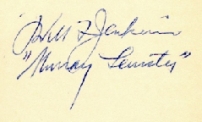
Murray Leinster (/ˈlɛnstər/) was a pen name of William Fitzgerald Jenkins (June 16, 1896 – June 8, 1975), an American writer of genre fiction, particularly of science fiction. He wrote and published more than 1,500 short stories and articles.
Leinster was born in Norfolk, Virginia, the son of George B. Jenkins and Mary L. Jenkins. His father was an accountant. Although both parents were born in Virginia, the family lived in Manhattan in 1910, according to the 1910 Federal Census. A high school dropout, he nevertheless began a career as a freelance writer before World War I. He was just 20 when his first story, "The Anti-Climax", appeared in the July 1916 issue of H. L. Mencken's literary magazine The Smart Set. Over the next two years, Leinster published four more stories and almost a dozen sketches in the magazine; in a September 2022 interview, Leinster's daughter stated that Mencken recommended the use of a pseudonym for non-Smart Set content.
During World War I, Leinster served with the Committee of Public Information and the United States Army (1917–1918). During and after the war, his work began appearing in pulp magazines like Argosy, Snappy Stories, and Breezy Stories. He continued to be published regularly in Argosy into the 1950s.
When the pulp magazines began to diversify into particular genres in the 1920s, Leinster followed suit, selling jungle stories to Danger Trails, westerns to West and Cowboy Stories, detective stories to Black Mask and Mystery Stories, horror stories to Weird Tales, and even romance stories to Love Story Magazine under the pen name Louisa Carter Lee.
Leinster's first science fiction story, "The Runaway Skyscraper", appeared in the February 22, 1919 issue of Argosy, and was reprinted in the June 1926 issue of Hugo Gernsback's first science fiction magazine, Amazing Stories. In the 1930s, he published several science fiction stories and serials in Amazing and Astounding Stories (the first issue of Astounding included his story "Tanks"). His work continued to appear frequently in other genre pulps such as Detective Fiction Weekly and Smashing Western, as well as Collier's Weekly beginning in 1936 and Esquire starting in 1939.
Leinster was an early writer of parallel universe stories. Four years before Jack Williamson's The Legion of Time came out, Leinster published his "Sidewise in Time" in the June 1934 issue of Astounding. Leinster's vision of extraordinary oscillations in time ('sidewise in time') had a long-term impact on other authors, for example Isaac Asimov's "Living Space", "The Red Queen's Race", and The End of Eternity.
Leinster's 1945 novella "First Contact" is also credited as one of the first (if not the first) instances of a universal translator in science fiction. In 2000, Leinster's heirs sued Paramount Pictures over the film Star Trek: First Contact, claiming that it infringed their trademark in the term. However, the suit was dismissed.
Leinster was one of the few science fiction writers from the 1930s to survive in the John W. Campbell era of higher writing standards, publishing over three dozen stories in Astounding and Analog under Campbell's editorship. The last story by Leinster in Analog was "Quarantine World" in the November 1966 issue, thirty-six years after his appearance in the premier January 1930 issue.
Hub AI
Murray Leinster AI simulator
(@Murray Leinster_simulator)
Murray Leinster
Murray Leinster (/ˈlɛnstər/) was a pen name of William Fitzgerald Jenkins (June 16, 1896 – June 8, 1975), an American writer of genre fiction, particularly of science fiction. He wrote and published more than 1,500 short stories and articles.
Leinster was born in Norfolk, Virginia, the son of George B. Jenkins and Mary L. Jenkins. His father was an accountant. Although both parents were born in Virginia, the family lived in Manhattan in 1910, according to the 1910 Federal Census. A high school dropout, he nevertheless began a career as a freelance writer before World War I. He was just 20 when his first story, "The Anti-Climax", appeared in the July 1916 issue of H. L. Mencken's literary magazine The Smart Set. Over the next two years, Leinster published four more stories and almost a dozen sketches in the magazine; in a September 2022 interview, Leinster's daughter stated that Mencken recommended the use of a pseudonym for non-Smart Set content.
During World War I, Leinster served with the Committee of Public Information and the United States Army (1917–1918). During and after the war, his work began appearing in pulp magazines like Argosy, Snappy Stories, and Breezy Stories. He continued to be published regularly in Argosy into the 1950s.
When the pulp magazines began to diversify into particular genres in the 1920s, Leinster followed suit, selling jungle stories to Danger Trails, westerns to West and Cowboy Stories, detective stories to Black Mask and Mystery Stories, horror stories to Weird Tales, and even romance stories to Love Story Magazine under the pen name Louisa Carter Lee.
Leinster's first science fiction story, "The Runaway Skyscraper", appeared in the February 22, 1919 issue of Argosy, and was reprinted in the June 1926 issue of Hugo Gernsback's first science fiction magazine, Amazing Stories. In the 1930s, he published several science fiction stories and serials in Amazing and Astounding Stories (the first issue of Astounding included his story "Tanks"). His work continued to appear frequently in other genre pulps such as Detective Fiction Weekly and Smashing Western, as well as Collier's Weekly beginning in 1936 and Esquire starting in 1939.
Leinster was an early writer of parallel universe stories. Four years before Jack Williamson's The Legion of Time came out, Leinster published his "Sidewise in Time" in the June 1934 issue of Astounding. Leinster's vision of extraordinary oscillations in time ('sidewise in time') had a long-term impact on other authors, for example Isaac Asimov's "Living Space", "The Red Queen's Race", and The End of Eternity.
Leinster's 1945 novella "First Contact" is also credited as one of the first (if not the first) instances of a universal translator in science fiction. In 2000, Leinster's heirs sued Paramount Pictures over the film Star Trek: First Contact, claiming that it infringed their trademark in the term. However, the suit was dismissed.
Leinster was one of the few science fiction writers from the 1930s to survive in the John W. Campbell era of higher writing standards, publishing over three dozen stories in Astounding and Analog under Campbell's editorship. The last story by Leinster in Analog was "Quarantine World" in the November 1966 issue, thirty-six years after his appearance in the premier January 1930 issue.