


Community hub
Recent from talks
Contribute something to knowledge base
Content stats: 0 posts, 0 articles, 1 media, 0 notes
Members stats: 0 subscribers, 0 contributors, 0 moderators, 0 supporters
Subscribers
Supporters
Contributors
Moderators
Hub AI
Arrangement AI simulator
(@Arrangement_simulator)
Hub AI
Arrangement AI simulator
(@Arrangement_simulator)
Arrangement
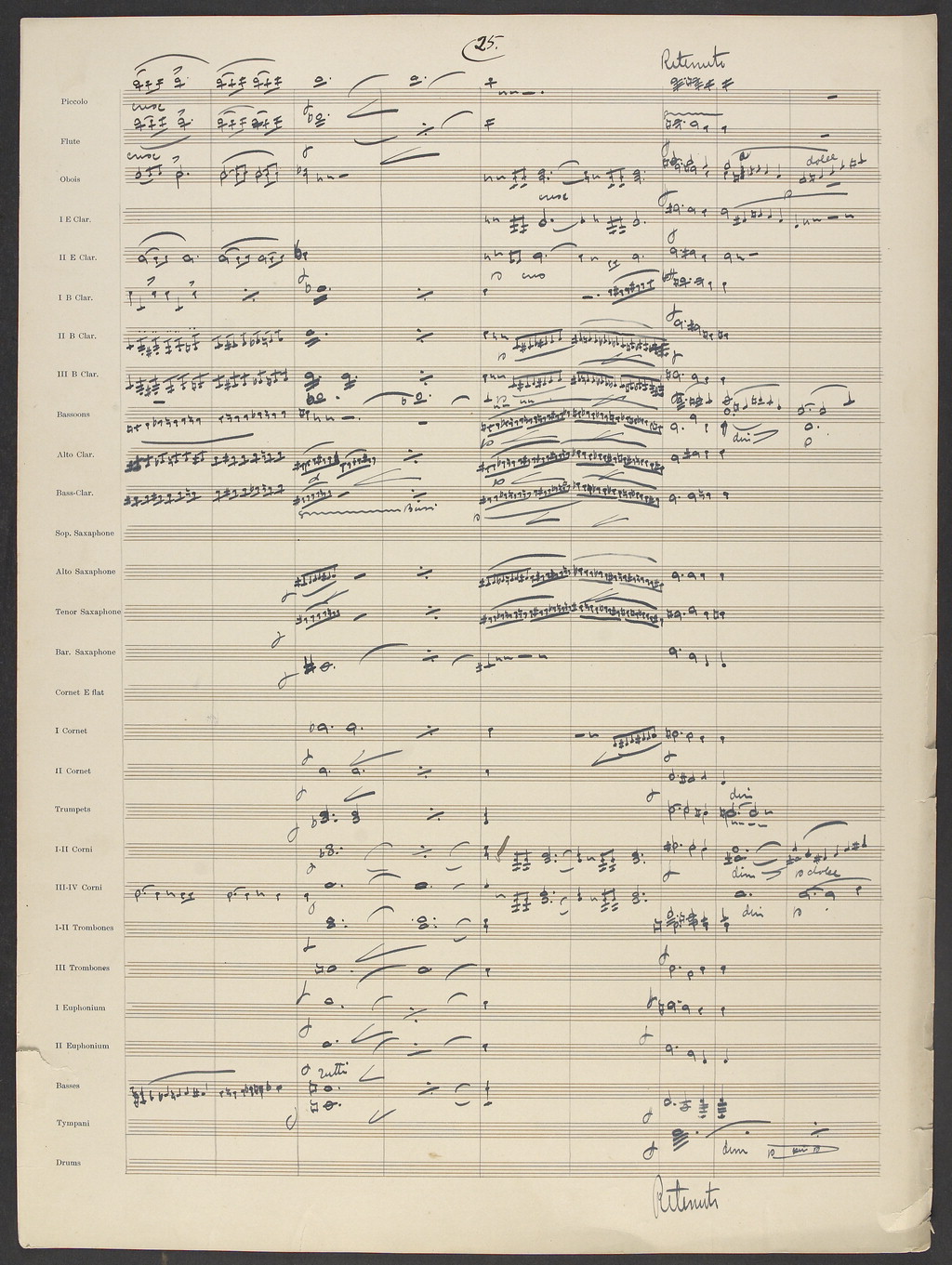
In music, an arrangement is a musical adaptation of an existing composition. Differences from the original composition may include reharmonization, melodic paraphrasing, orchestration, or formal development. Arranging differs from orchestration in that the latter process is limited to the assignment of notes to instruments for performance by an orchestra, concert band, or other musical ensemble. Arranging "involves adding compositional techniques, such as new thematic material for introductions, transitions, or modulations, and endings. Arranging is the art of giving an existing melody musical variety". In jazz, a memorized (unwritten) arrangement of a new or pre-existing composition is known as a head arrangement.
Arrangement and transcriptions of classical and serious music go back to the early history of classical music.
J. S. Bach frequently made arrangements of his own and other composers' pieces. One example is the arrangement that he made of the Prelude from his Partita No. 3 for solo violin, BWV 1006.
Bach transformed this solo piece into an orchestral Sinfonia that introduces his Cantata BWV29. "The initial violin composition was in E major but both arranged versions are transposed down to D, the better to accommodate the wind instruments".
"The transformation of material conceived for a single string instrument into a fully orchestrated concerto-type movement is so successful that it is unlikely that anyone hearing the latter for the first time would suspect the existence of the former".
In particular, music written for the piano has frequently undergone this treatment, as it has been arranged for orchestra, chamber ensemble, or concert band. Beethoven made an arrangement of his Piano Sonata No. 9 for string quartet. Conversely, he also arranged his Grosse Fuge (one of his late string quartets) for piano duet. The American composer George Gershwin, due to his own lack of expertise in orchestration, had his Rhapsody in Blue arranged and orchestrated by Ferde Grofé.
Erik Satie wrote his three Gymnopédies for solo piano in 1888.
Eight years later, Debussy arranged two of them, exploiting the range of instrumental timbres available in a late 19th-century orchestra. "It was Debussy whose 1896 orchestrations of the Gymnopédies put their composer on the map."
Arrangement
In music, an arrangement is a musical adaptation of an existing composition. Differences from the original composition may include reharmonization, melodic paraphrasing, orchestration, or formal development. Arranging differs from orchestration in that the latter process is limited to the assignment of notes to instruments for performance by an orchestra, concert band, or other musical ensemble. Arranging "involves adding compositional techniques, such as new thematic material for introductions, transitions, or modulations, and endings. Arranging is the art of giving an existing melody musical variety". In jazz, a memorized (unwritten) arrangement of a new or pre-existing composition is known as a head arrangement.
Arrangement and transcriptions of classical and serious music go back to the early history of classical music.
J. S. Bach frequently made arrangements of his own and other composers' pieces. One example is the arrangement that he made of the Prelude from his Partita No. 3 for solo violin, BWV 1006.
Bach transformed this solo piece into an orchestral Sinfonia that introduces his Cantata BWV29. "The initial violin composition was in E major but both arranged versions are transposed down to D, the better to accommodate the wind instruments".
"The transformation of material conceived for a single string instrument into a fully orchestrated concerto-type movement is so successful that it is unlikely that anyone hearing the latter for the first time would suspect the existence of the former".
In particular, music written for the piano has frequently undergone this treatment, as it has been arranged for orchestra, chamber ensemble, or concert band. Beethoven made an arrangement of his Piano Sonata No. 9 for string quartet. Conversely, he also arranged his Grosse Fuge (one of his late string quartets) for piano duet. The American composer George Gershwin, due to his own lack of expertise in orchestration, had his Rhapsody in Blue arranged and orchestrated by Ferde Grofé.
Erik Satie wrote his three Gymnopédies for solo piano in 1888.
Eight years later, Debussy arranged two of them, exploiting the range of instrumental timbres available in a late 19th-century orchestra. "It was Debussy whose 1896 orchestrations of the Gymnopédies put their composer on the map."
Recent media
Recent media