
Recent from talks
Mykhailo Hrushevsky
Knowledge base stats:
Talk channels stats:
Members stats:
Mykhailo Hrushevsky
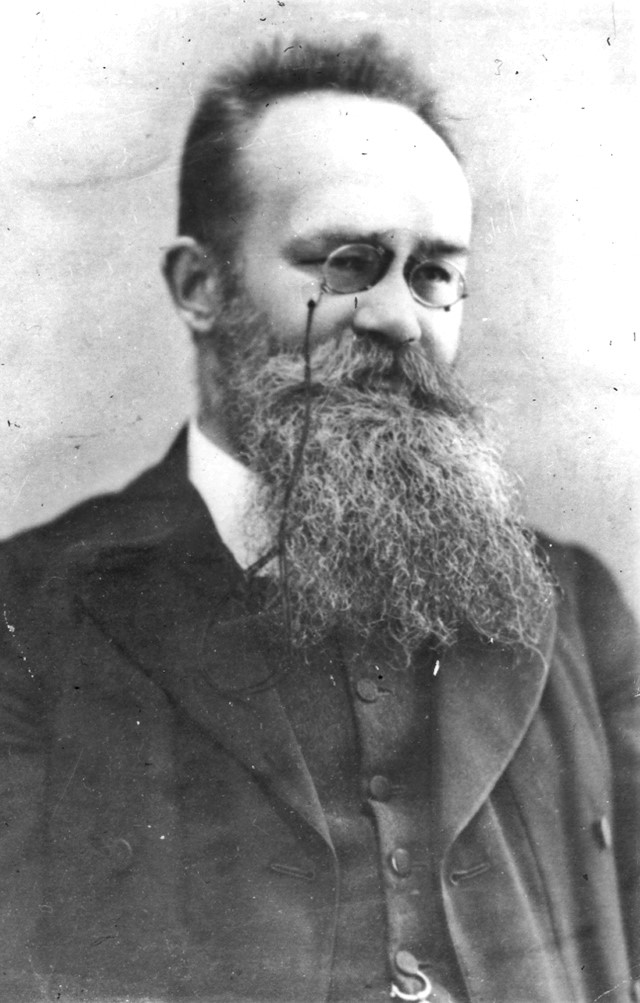
Mykhailo Serhiiovych Hrushevsky (Ukrainian: Михайло Сергійович Грушевський, romanized: Mykhailo Serhiiovych Hrushevskyi, Ukrainian pronunciation: [mɪˈxai̯lo serˈɦʲijowɪd͡ʒ‿ɦrʊˈʃɛu̯sʲkɪi̯]; 29 September [O.S. 17 September] 1866 – 24 November 1934) was a Ukrainian academician, politician, historian and statesman who was one of the most important figures of the Ukrainian national revival of the early 20th century. Hrushevsky is often considered the country's greatest modern historian, the foremost organiser of scholarship, the leader of the pre-revolution Ukrainian national movement, the head of the Central Rada (Ukraine's 1917–1918 revolutionary parliament), and a leading cultural figure in the Ukrainian SSR during the 1920s.
Mykhailo Hrushevsky was born on 29 September 1866 to a Ukrainian noble family in Chełm, in Congress Poland, an autonomous polity in the Russian Empire. His father Serhii Fedorovych Hrushevsky was a son of an Orthodox priest from the vicinity of Chyhyryn, who had come to Chełm to teach Russian language at a Greek Catholic gymnasium in 1865. Serhii Fedorovych's father, Fedir Hrushevsky was a highly-decorated official (his awards included the two Orders of Saint Anna and the Bronze Cross, and a title of nobility). Later, upon enrolling into Saint Volodymyr University, in Kyiv, Mykhailo received blessings from his grandfather who had graduated from its History Department.
Mykhailo's mother, Glafira Zakharivna Oppokova, was born into a family of Orthodox priests in the village of Sestrynivka, Berdychiv povit, Podillia Governorate. Due to specifics of Serhii's employment, the family frequently changed their place of residence: two years after Mykhailo's birth, in 1868, Serhii was employed as a teacher at a classical gymnasium in Łomża; one year later the family moved to Kutaisi, and in 1870 to Stavropol. Despite having been educated in Polish and Russian herself, Glafira worked to teach her children Ukrainian language. Mykhailo spoke warmly of his parents and described them as real patriots of Ukraine, who managed to instill a sense of national pride in their children.
In 1880 at the age of 14, Mykhailo was sent by his parents to Tiflis, where he attended a local school. During that time he developed an interest for Ukrainian history and literature. Every year the family would spend their vacations in Ukraine, which allowed the boy to purchase the latest books on those topics. An especially important role on the formation of young Hrushevskyi's views was played by historical and ethnographic works by Mykola Kostomarov, Panteleimon Kulish, Volodymyr Antonovych, Apollon Skalkowski, Mykhailo Maksymovych and Amvrosy Metlinsky, as well as articles on Ukrainian history, literature and folklore published in Kievskaia starina magazine. During that period Hrushevskyi developed an ambition to become a leader of patriotic Ukrainians.
While still studying at the classical gymnasium in Tiflis, Hrushevsky started writing belles-lettres, and in 1885 one of his stories appeared in the newspaper Dilo. After finishing his courses one year later, Hrushevsky enrolled into Kyiv University, studying history under the mentorship of Volodymyr Antonovych. During his studies in Kyiv he established ties with members of the Old Hromada and Ukrainophile students of Kyiv Orthodox Seminary. His first scientific paper dedicated to the history of Southern Rus was published in 1890. During that period Hrushevsky co-operated with the almanac Kievskaia starina and Shevchenko Scientific Society. His master paper dedicated to the history of Bar starostwo saw the light in 1894. In the same year, at the recommendation of Antonovych, Hrushevsky was appointed professor of the newly created chair of Ukrainian history at the University of Lviv.
After moving to Lviv, Hrushevskyi further involved himself with the Shevchenko Scientific Society and was appointed head of its Historical-Philosophical Section. In 1897 he was elected the organization's president and started reorganizing the society, turning it into an institution resembling an academy of sciences, collecting funds, founding a library, a museum and an archaeographical commission and developing press organs. One of Hrushevsky's close collaborators in Lviv was Ukrainian poet Ivan Franko; after 1902 the two men became neighbours, constructing their villas on a common land plot on the outskirts of Lviv. Hrushevsky also contributed to the development of Ukrainian schooling and worked on the organization of a Ukrainian university in Lviv. In 1898 he initiated the republishing of Ivan Kotliarevsky's Eneida, and in the next year co-founded the Ruthenian-Ukrainian Publishing Society.
It was in Austrian Galicia that Hrushevsky first became active in politics, speaking out against Polish political predominance and Ruthenian particularism and supporting a national Ukrainian identity that would unite both eastern and western parts of the country. In 1899, he was a cofounder of the Galician-based National Democratic Party, which looked forward to eventual Ukrainian independence. Among Hrushevskyi's close friends in Lviv were painter Ivan Trush and lawyer Severyn Danylovych.
After the easing of restrictions on Ukrainian public life in the aftermath of the Russian Revolution of 1905, Hrushevsky returned to Russian-ruled Ukraine, although he continued to teach at Lviv University until 1914. After 1905 he advised the Ukrainian Club in the Russian State Duma, or Parliament. In Kyiv Hrushevsky became a cofounder of the Ukrainian Scientific Society, and established a number of peasant-oriented newspapers. In 1908 he became one of the founding members of the Society of Ukrainian Progressists.
Hub AI
Mykhailo Hrushevsky AI simulator
(@Mykhailo Hrushevsky_simulator)
Mykhailo Hrushevsky
Mykhailo Serhiiovych Hrushevsky (Ukrainian: Михайло Сергійович Грушевський, romanized: Mykhailo Serhiiovych Hrushevskyi, Ukrainian pronunciation: [mɪˈxai̯lo serˈɦʲijowɪd͡ʒ‿ɦrʊˈʃɛu̯sʲkɪi̯]; 29 September [O.S. 17 September] 1866 – 24 November 1934) was a Ukrainian academician, politician, historian and statesman who was one of the most important figures of the Ukrainian national revival of the early 20th century. Hrushevsky is often considered the country's greatest modern historian, the foremost organiser of scholarship, the leader of the pre-revolution Ukrainian national movement, the head of the Central Rada (Ukraine's 1917–1918 revolutionary parliament), and a leading cultural figure in the Ukrainian SSR during the 1920s.
Mykhailo Hrushevsky was born on 29 September 1866 to a Ukrainian noble family in Chełm, in Congress Poland, an autonomous polity in the Russian Empire. His father Serhii Fedorovych Hrushevsky was a son of an Orthodox priest from the vicinity of Chyhyryn, who had come to Chełm to teach Russian language at a Greek Catholic gymnasium in 1865. Serhii Fedorovych's father, Fedir Hrushevsky was a highly-decorated official (his awards included the two Orders of Saint Anna and the Bronze Cross, and a title of nobility). Later, upon enrolling into Saint Volodymyr University, in Kyiv, Mykhailo received blessings from his grandfather who had graduated from its History Department.
Mykhailo's mother, Glafira Zakharivna Oppokova, was born into a family of Orthodox priests in the village of Sestrynivka, Berdychiv povit, Podillia Governorate. Due to specifics of Serhii's employment, the family frequently changed their place of residence: two years after Mykhailo's birth, in 1868, Serhii was employed as a teacher at a classical gymnasium in Łomża; one year later the family moved to Kutaisi, and in 1870 to Stavropol. Despite having been educated in Polish and Russian herself, Glafira worked to teach her children Ukrainian language. Mykhailo spoke warmly of his parents and described them as real patriots of Ukraine, who managed to instill a sense of national pride in their children.
In 1880 at the age of 14, Mykhailo was sent by his parents to Tiflis, where he attended a local school. During that time he developed an interest for Ukrainian history and literature. Every year the family would spend their vacations in Ukraine, which allowed the boy to purchase the latest books on those topics. An especially important role on the formation of young Hrushevskyi's views was played by historical and ethnographic works by Mykola Kostomarov, Panteleimon Kulish, Volodymyr Antonovych, Apollon Skalkowski, Mykhailo Maksymovych and Amvrosy Metlinsky, as well as articles on Ukrainian history, literature and folklore published in Kievskaia starina magazine. During that period Hrushevskyi developed an ambition to become a leader of patriotic Ukrainians.
While still studying at the classical gymnasium in Tiflis, Hrushevsky started writing belles-lettres, and in 1885 one of his stories appeared in the newspaper Dilo. After finishing his courses one year later, Hrushevsky enrolled into Kyiv University, studying history under the mentorship of Volodymyr Antonovych. During his studies in Kyiv he established ties with members of the Old Hromada and Ukrainophile students of Kyiv Orthodox Seminary. His first scientific paper dedicated to the history of Southern Rus was published in 1890. During that period Hrushevsky co-operated with the almanac Kievskaia starina and Shevchenko Scientific Society. His master paper dedicated to the history of Bar starostwo saw the light in 1894. In the same year, at the recommendation of Antonovych, Hrushevsky was appointed professor of the newly created chair of Ukrainian history at the University of Lviv.
After moving to Lviv, Hrushevskyi further involved himself with the Shevchenko Scientific Society and was appointed head of its Historical-Philosophical Section. In 1897 he was elected the organization's president and started reorganizing the society, turning it into an institution resembling an academy of sciences, collecting funds, founding a library, a museum and an archaeographical commission and developing press organs. One of Hrushevsky's close collaborators in Lviv was Ukrainian poet Ivan Franko; after 1902 the two men became neighbours, constructing their villas on a common land plot on the outskirts of Lviv. Hrushevsky also contributed to the development of Ukrainian schooling and worked on the organization of a Ukrainian university in Lviv. In 1898 he initiated the republishing of Ivan Kotliarevsky's Eneida, and in the next year co-founded the Ruthenian-Ukrainian Publishing Society.
It was in Austrian Galicia that Hrushevsky first became active in politics, speaking out against Polish political predominance and Ruthenian particularism and supporting a national Ukrainian identity that would unite both eastern and western parts of the country. In 1899, he was a cofounder of the Galician-based National Democratic Party, which looked forward to eventual Ukrainian independence. Among Hrushevskyi's close friends in Lviv were painter Ivan Trush and lawyer Severyn Danylovych.
After the easing of restrictions on Ukrainian public life in the aftermath of the Russian Revolution of 1905, Hrushevsky returned to Russian-ruled Ukraine, although he continued to teach at Lviv University until 1914. After 1905 he advised the Ukrainian Club in the Russian State Duma, or Parliament. In Kyiv Hrushevsky became a cofounder of the Ukrainian Scientific Society, and established a number of peasant-oriented newspapers. In 1908 he became one of the founding members of the Society of Ukrainian Progressists.
Recent media