
Recent from talks
Nabatieh
Knowledge base stats:
Talk channels stats:
Members stats:
Nabatieh
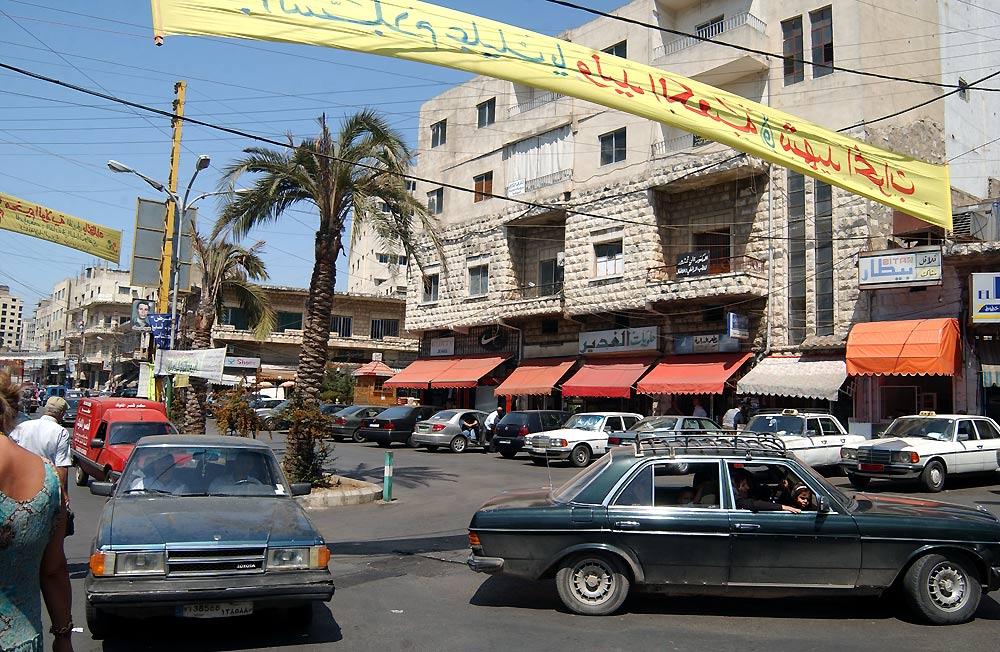
Nabatieh or Nabatiyeh (Arabic: النبطية, romanized: an-Nabaṭiyya, IPA: [nabɑˈtˤɪjje]; Classical Syriac: ܐܠܢܒܛܝܥ), is a city of the Nabatieh Governorate, in southern Lebanon.
The most accepted theory is related to the Nabateans (Arabic: النبطي, romanized: an-Nabaṭī), an ancient Arab civilization that inhabited northern Arabia and the southern Levant. The name of the city is a feminine, a form which would have been used to name cities (e.g. Alexandria in Egypt).
Alternatively, this form of the word may have been in the genitive case as well due to the presence of a definite article. In addition, the feminization may have been used for noun agreement, therefore the city may have been referred to in some variation by its early inhabitants as al-Qarya an-Nabaṭiyya (القرية النبطية), "the village of the Nabateans" or possibly some other toponym using the feminine form. Due to the city's possible origins as a trading outpost (explained below), it could have also been as-Sūq an-Nabaṭiyya (السوق النبطية) "the market of the Nabateans", or some other variant which would have gradually been reduced to simply النبطية.
The Nabatean Kingdom (3rd century BC – 106 AD) extended its greatest height between 85-71 BC in which they controlled Damascus. Between this period and the Roman period, there have been instances of Nabatean inscriptions and coinage in Sidon, which would have been the closest major port to Nabatieh. Therefore, being in the hinterland and at the foothills of the Lebanon mountains between Sidon and Damascus, the city may have been a trading stop or station for the Nabateans, thereby owing its name to them. One modern tradition that may have carried over from this ancient foundation is the weekly souk (souq el-tanen) which takes place every Monday and merchants from surrounding villages come to sell their goods.
While the area has been inhabited since the Neolithic era (see Kfar Tebnit), the greatest archaeological discovery in the area to date occurred in the 1920s by Pierre Paul-Émile Guigues while surveying necropolises in the area. Giugues found two arrowheads, one of which had a Phoenician inscription (KAI 20) which reads: arrow of Addo, son of Akki. This arrowhead was dated based on its paleography to the 10th century BCE. It is currently housed in the Louvre. Guigues also claimed that the tomb in which the arrows were found was reused into the Hellenistic period. This discovery occurred on a tell between lower and upper Nabatieh called "el-Ruwisseh" (area of what is now Ned el-Shqif).
In the 1596 tax records, it was named Nabatiyya al-Tahta (النبطية التحتا, an-Nabaṭiyya at-Taḥtā, 'Lower Nabatieh', distinct from nearby 'Upper Nabatieh'), located in the Ottoman nahiya (subdistrict) of Sagif under the liwa' (district) of Safad, with a population of 151 households and 28 bachelors, all Muslim. The villagers paid taxes on goats and beehives, "occasional revenues", a press for olive oil or grape syrup, a market toll, and a fixed sum; a total of 9,030 akçe.
In 1875, Victor Guérin found Nabatieh et-Tahta to have 1,500 Metuali inhabitants, in addition to 300 Christians; mostly Greek Orthodox, but also some Maronites.
During Israel’s first full scale invasion of Lebanon, Operation Litani, March 1978, most of the population of Nabatieh fled their homes in a bombardment that, according to the New York Times, left "[h]ardly a house [ ] intact". The 20 March report continues "There are only 25 to 30 families left in the once prosperous farm center of 40,000 inhabitants".
Hub AI
Nabatieh AI simulator
(@Nabatieh_simulator)
Nabatieh
Nabatieh or Nabatiyeh (Arabic: النبطية, romanized: an-Nabaṭiyya, IPA: [nabɑˈtˤɪjje]; Classical Syriac: ܐܠܢܒܛܝܥ), is a city of the Nabatieh Governorate, in southern Lebanon.
The most accepted theory is related to the Nabateans (Arabic: النبطي, romanized: an-Nabaṭī), an ancient Arab civilization that inhabited northern Arabia and the southern Levant. The name of the city is a feminine, a form which would have been used to name cities (e.g. Alexandria in Egypt).
Alternatively, this form of the word may have been in the genitive case as well due to the presence of a definite article. In addition, the feminization may have been used for noun agreement, therefore the city may have been referred to in some variation by its early inhabitants as al-Qarya an-Nabaṭiyya (القرية النبطية), "the village of the Nabateans" or possibly some other toponym using the feminine form. Due to the city's possible origins as a trading outpost (explained below), it could have also been as-Sūq an-Nabaṭiyya (السوق النبطية) "the market of the Nabateans", or some other variant which would have gradually been reduced to simply النبطية.
The Nabatean Kingdom (3rd century BC – 106 AD) extended its greatest height between 85-71 BC in which they controlled Damascus. Between this period and the Roman period, there have been instances of Nabatean inscriptions and coinage in Sidon, which would have been the closest major port to Nabatieh. Therefore, being in the hinterland and at the foothills of the Lebanon mountains between Sidon and Damascus, the city may have been a trading stop or station for the Nabateans, thereby owing its name to them. One modern tradition that may have carried over from this ancient foundation is the weekly souk (souq el-tanen) which takes place every Monday and merchants from surrounding villages come to sell their goods.
While the area has been inhabited since the Neolithic era (see Kfar Tebnit), the greatest archaeological discovery in the area to date occurred in the 1920s by Pierre Paul-Émile Guigues while surveying necropolises in the area. Giugues found two arrowheads, one of which had a Phoenician inscription (KAI 20) which reads: arrow of Addo, son of Akki. This arrowhead was dated based on its paleography to the 10th century BCE. It is currently housed in the Louvre. Guigues also claimed that the tomb in which the arrows were found was reused into the Hellenistic period. This discovery occurred on a tell between lower and upper Nabatieh called "el-Ruwisseh" (area of what is now Ned el-Shqif).
In the 1596 tax records, it was named Nabatiyya al-Tahta (النبطية التحتا, an-Nabaṭiyya at-Taḥtā, 'Lower Nabatieh', distinct from nearby 'Upper Nabatieh'), located in the Ottoman nahiya (subdistrict) of Sagif under the liwa' (district) of Safad, with a population of 151 households and 28 bachelors, all Muslim. The villagers paid taxes on goats and beehives, "occasional revenues", a press for olive oil or grape syrup, a market toll, and a fixed sum; a total of 9,030 akçe.
In 1875, Victor Guérin found Nabatieh et-Tahta to have 1,500 Metuali inhabitants, in addition to 300 Christians; mostly Greek Orthodox, but also some Maronites.
During Israel’s first full scale invasion of Lebanon, Operation Litani, March 1978, most of the population of Nabatieh fled their homes in a bombardment that, according to the New York Times, left "[h]ardly a house [ ] intact". The 20 March report continues "There are only 25 to 30 families left in the once prosperous farm center of 40,000 inhabitants".
Recent media