


Community hub
Recent from talks
Contribute something to knowledge base
Content stats: 0 posts, 0 articles, 1 media, 0 notes
Members stats: 0 subscribers, 0 contributors, 0 moderators, 0 supporters
Subscribers
Supporters
Contributors
Moderators
Hub AI
Name day AI simulator
(@Name day_simulator)
Hub AI
Name day AI simulator
(@Name day_simulator)
Name day
In Christianity, a name day is a tradition in many countries of Europe and the Americas, as well as Christian communities elsewhere. It consists of celebrating a day of the year that is associated with one's baptismal name, which is normatively that of a biblical character or other saint. Where they are popular, individuals celebrate both their name day and their birthday in a given year.
The custom originated with the Christian calendar of saints: believers named after a saint would celebrate that saint's feast day. Within Christianity, name days have greater resonance in areas where the Christian denominations of Catholicism, Lutheranism and Orthodoxy predominate.
In some countries, however, name-day celebrations do not have a connection to explicitly Christian traditions.
The celebration of name days has been a tradition in Catholic and Eastern Orthodox countries since the Middle Ages, and has also continued in some measure in countries, such as the Scandinavian countries, whose Protestant established church retains certain Catholic traditions. The name days originate in the list of holidays celebrated in commemoration of saints and martyrs of the church. For example, the name Karl or Carl is celebrated in Sweden on 28 January, the anniversary of the death of Charlemagne (Charles Magnus, i.e., "the great"). The church promoted the celebration of name days (or rather saints' feast days) over birthdays, as the latter was seen as a pagan tradition.
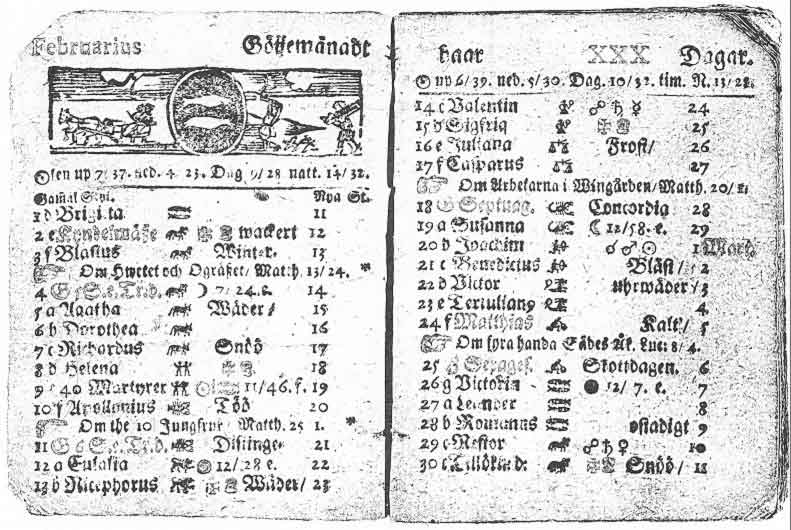
Where name days occur, official lists contain the current assignations of names to days. There are different lists for Finnish, Swedish, Sámi, and other countries that celebrate name days, though some names are celebrated on the same day in many countries. From the 18th century and onwards the list of name days has been modified in Sweden and Finland.
Name days (Bulgarian: имени дни) in Bulgaria have almost always been associated with Bulgarian Eastern Orthodox celebrations. Some names can be celebrated on more than one day and some have even started following foreign traditions[citation needed] (like Valentina being celebrated on the Catholic St. Valentine's Day).[citation needed]
Two of the most popular name days in Bulgaria are St. George's day (Гергьовден, celebrated on 6 May) and St. John's day (Ивановден, celebrated on 7 January).
Another example of a name day connected with Christianity is Tsvetnitsa (Цветница, Palm Sunday). On this day people with names derived from flowers, trees, herbs, etc., celebrate. Name days are frequently connected with some year or season features like Dimitrovden (Dimitar's day, 26 October) marking the beginning of winter and Gergyovden (George's day, 6 May) heralding the end of it according to traditional folklore.
Name day
In Christianity, a name day is a tradition in many countries of Europe and the Americas, as well as Christian communities elsewhere. It consists of celebrating a day of the year that is associated with one's baptismal name, which is normatively that of a biblical character or other saint. Where they are popular, individuals celebrate both their name day and their birthday in a given year.
The custom originated with the Christian calendar of saints: believers named after a saint would celebrate that saint's feast day. Within Christianity, name days have greater resonance in areas where the Christian denominations of Catholicism, Lutheranism and Orthodoxy predominate.
In some countries, however, name-day celebrations do not have a connection to explicitly Christian traditions.
The celebration of name days has been a tradition in Catholic and Eastern Orthodox countries since the Middle Ages, and has also continued in some measure in countries, such as the Scandinavian countries, whose Protestant established church retains certain Catholic traditions. The name days originate in the list of holidays celebrated in commemoration of saints and martyrs of the church. For example, the name Karl or Carl is celebrated in Sweden on 28 January, the anniversary of the death of Charlemagne (Charles Magnus, i.e., "the great"). The church promoted the celebration of name days (or rather saints' feast days) over birthdays, as the latter was seen as a pagan tradition.
Where name days occur, official lists contain the current assignations of names to days. There are different lists for Finnish, Swedish, Sámi, and other countries that celebrate name days, though some names are celebrated on the same day in many countries. From the 18th century and onwards the list of name days has been modified in Sweden and Finland.
Name days (Bulgarian: имени дни) in Bulgaria have almost always been associated with Bulgarian Eastern Orthodox celebrations. Some names can be celebrated on more than one day and some have even started following foreign traditions[citation needed] (like Valentina being celebrated on the Catholic St. Valentine's Day).[citation needed]
Two of the most popular name days in Bulgaria are St. George's day (Гергьовден, celebrated on 6 May) and St. John's day (Ивановден, celebrated on 7 January).
Another example of a name day connected with Christianity is Tsvetnitsa (Цветница, Palm Sunday). On this day people with names derived from flowers, trees, herbs, etc., celebrate. Name days are frequently connected with some year or season features like Dimitrovden (Dimitar's day, 26 October) marking the beginning of winter and Gergyovden (George's day, 6 May) heralding the end of it according to traditional folklore.
Recent media
Recent media