Hubbry Logo
Nancy NewhallNancy NewhallMain
Open search
Nancy Newhall
Community hub
Nancy Newhall
logo
8 pages, 0 posts
0 subscribers
Be the first to start a discussion here.
Nancy Newhall
Nancy Newhall
from Wikipedia

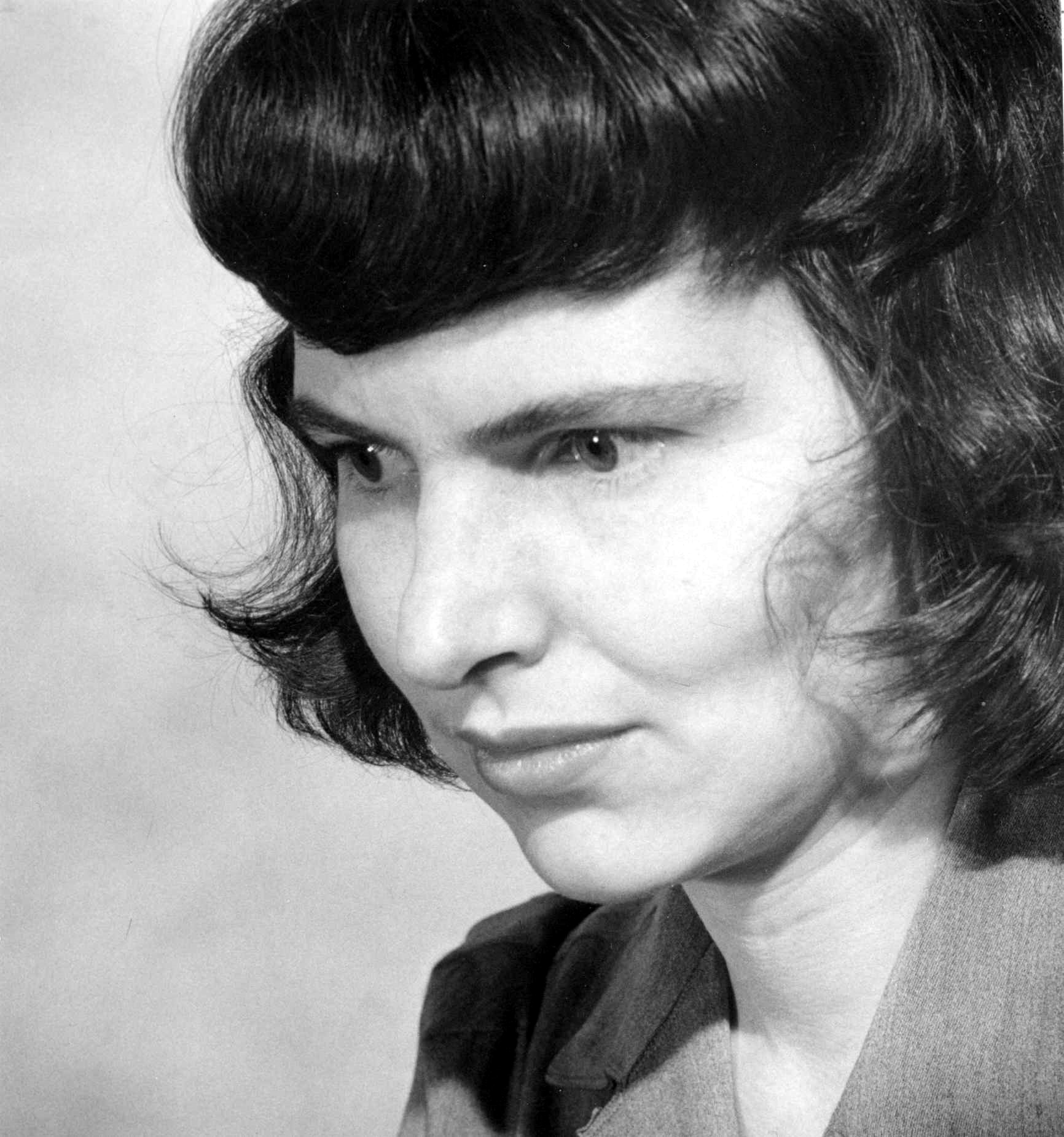
Nancy Wynne Newhall (May 9, 1908 – July 7, 1974) was an American photography critic. She is best known for writing the text to accompany photographs by Ansel Adams and Edward Weston, but was also a widely published writer on photography, conservation, and American culture.[1]

Key Information

Biography

[edit]

Newhall was born Nancy Wynne in Lynn, Massachusetts, and attended Smith College in that state. She married Beaumont Newhall, the curator of photography at the Museum of Modern Art in New York City, and substituted for him in that role during his military service in World War II. During the 1940s she wrote essays on popular art and culture for small magazines and journals, in which she called for a society more attuned to art, and particularly to visual art. Newhall was always more interested in a popular audience than an academic one; in a 1940 essay, she explores the possibilities of the new medium of television for popularizing the visual arts, suggesting techniques for teaching art and photography on camera:

... the cameras should approach an object as an actual spectator does, and, like him, be influenced by empathy. Long shots become closeups, the flow of compositional directions, and, with due care for the results on the screen, studies of detail and texture under dramatic lighting, are all ways of lending motion to motionless things.[2]

In another, she argues for the centrality of photography for understanding and teaching American history ("Research"). Newhall became close to photographer Edward Weston during this period, championing his early work and regarding his controversial 1940s work, which juxtaposed still lifes and nudes of considerable beauty and delicacy with wartime items such as gas masks, with some anxiety.

In 1945, Newhall wrote the text for a book of photographs, Time in New England, by Paul Strand. The work would begin a new phase for her career, in which she became a vocal proponent and a central pioneer of the genre of oversized photography collections. The best known and most influential of these is This Is the American Earth, a collaboration with Ansel Adams, published in 1960. Like Adams, Newhall was involved with the Sierra Club, and wrote often about issues of conservation. Newhall was sometimes accused of political heavy-handedness on that subject—one uncharitable review of American Earth calls her prose "so full of Message that there is no room for poetry" (Deevey)—but her explication of the political context and motivation of Adams' work has been important for the Sierra Club and the conservation movement in general.

Nancy and Beaumont spent three summers at Black Mountain College beginning in 1946. In addition to lecturing and teaching, the Newhalls photographed the college campus and its people, taking portraits of Leo Amino, Ilya Bolotowsky, Gwendolyn Knight, Jacob Lawrence, and Buckminster Fuller's venetian-blind experiment.[3] Some of Nancy and Beaumont Newhall's work is archived at the Center for Creative Photography at the University of Arizona in Tucson, Arizona, and at the Getty Research Institute in Los Angeles, California. Nancy Newhall's photography has been the subject of an exhibition in its own right.[4]

She died on July 7, 1974, at St. Johns Hospital in Jackson Hole, Wyoming, from injuries received in an accident which occurred on the Snake River of Grand Teton National Park.[5]

Major books

[edit]
  • Photographs, 1915-1945: Paul Strand. New York: The Museum of Modern Art, 1945.
  • The Photographs of Edward Weston. Edward Weston and Nancy Newhall, Museum of Modern Art, NY 1946.
  • Time in New England: Photographs by Paul Strand. New York: Aperture, 1950. Reprinted New York: Harper and Row, 1980.
  • A Contribution to the Heritage of Every American: The Conservation Activities of John D. Rockefeller, Jr. New York: Knopf, 1957.
  • (with Beaumont Newhall) Masters of Photography. New York: Braziller, 1958.
  • (with Ansel Adams)This Is the American Earth. San Francisco: Sierra Club Books, 1960.
  • Words of the Earth, photographs by Cedric Wright. Sierra Club Books, 1960
  • Alvin Langdon Coburn: A Portfolio of Sixteen Photographs. Rochester: George Eastman House, 1963.
  • Edward Weston, Photographer: The Flame of Recognition: His Photographs, Accompanied by Excerpts from the Daybooks & Letters, Edward Weston and Nancy Newhall, Published by Aperture, Inc. NY, 1968.
  • The Daybooks of Edward Weston, by Edward Weston, edited by Nancy Newhall, v. 1. Mexico.--v. 2. California, Millerton, N.Y., Aperture, 1973.
  • Ansel Adams. Sierra Club, 1964. Reprinted (with photographs) as Ansel Adams: The Eloquent Light. New York: Aperture, 1980.
  • (with Beaumont Newhall) T. H. O’Sullivan: Photographer. Eastman, 1966.
  • (with Ansel Adams)Fiat Lux: The University of California. New York: McGraw Hill, 1967.
  • P. H. Emerson: The Fight for Photography as a Fine Art. Aperture, 1975.

References

[edit]

Sources

[edit]
  • Deevey, Edward S. Review of This is the American Earth. Science, Vol. 132, No. 3441 (1960), 1759.
  • Fuller, Patricia G. (March 1975). "Nancy Newhall (1908-1974)" (PDF). Image. 18 (1). Rochester, N.Y.: International Museum of Photography at George Eastman House Inc.: 1–5. Archived from the original (PDF) on 2012-10-22.
  • Klochko, Deborah, Merry Foresta, MaLin Wilson, et al. Nancy Newhall: A Literacy of Images, San Diego, Calif.: Museum of Photographic Arts, 2008.
  • Newhall, Nancy. "The Need for Research in Photography." College Art Journal, Vol. 4, No. 4 (1945), 203-206.
  • —. "Television and the Arts." Parnassus, Vol. 12, No. 1 (1940), 37-38.
  • Sternberger, Paul. "Reflections on Edward Weston's 'Civilian Defense.'" American Art, Vol. 17, No. 1 (2003), 48-67.
[edit]
Revisions and contributorsEdit on WikipediaRead on Wikipedia
from Grokipedia
Nancy Newhall was an American photography critic, writer, editor, curator, and conservationist known for her pioneering role in elevating photography as an art form through innovative book design, lyrical texts, and advocacy for landscape photographers and environmental causes. Born Nancy Wynne Parker on May 9, 1908, in Lynn, Massachusetts, she studied at Smith College and the Art Students League of New York, initially pursuing painting before turning to photography in 1937. She married photography historian Beaumont Newhall, and their partnership profoundly shaped her career. In the early 1940s, she developed close ties with Ansel Adams and Edward Weston, and during World War II she served as acting curator of the Department of Photography at the Museum of Modern Art while her husband was in military service, organizing key exhibitions including retrospectives for Paul Strand and Edward Weston. After the war, Newhall focused on writing and editing, co-founding Aperture magazine in 1952 and contributing influential essays that championed photography's artistic potential. She became renowned for her collaborative books that integrated evocative prose with powerful images, including Time in New England with Paul Strand, This Is the American Earth with Ansel Adams, and the Daybooks of Edward Weston. Her work extended to conservation, notably through Sierra Club projects that merged photography with environmental advocacy. She also taught workshops on photographic book-making with Ansel Adams and Beaumont Newhall at the University of California, Santa Cruz. Newhall died on July 7, 1974, at age 66 from injuries sustained in a rafting accident on the Snake River in Grand Teton National Park. Her legacy endures in the evolution of the photographic book as a medium and in the recognition of photography's capacity to inspire both aesthetic appreciation and environmental stewardship.

Early life

Birth and education

Nancy Newhall was born Nancy Wynne Parker on May 9, 1908, in Lynn, Massachusetts. She grew up in New England. She studied at Smith College. Newhall continued her artistic training at the Art Students League of New York, focusing on painting. Her background in painting and visual expression eventually led her to take up photography around 1937.

Marriage and partnership

Relationship with Beaumont Newhall

Nancy Newhall married Beaumont Newhall in 1936, uniting her with the noted photography historian and curator who would become her lifelong personal and professional partner. Their marriage marked a profound shift for Nancy, who turned her focus toward photography after the wedding, describing it as marrying photography itself when she wed Beaumont. The couple exerted mutual influence on each other's careers, collaborating closely in advancing the understanding and appreciation of photography as an art form. During Beaumont's military service in World War II, Nancy stepped into curatorial responsibilities at the Museum of Modern Art in his absence. The Newhalls jointly taught photography workshops at Black Mountain College for three summers beginning in 1946 and later led workshops at the University of California, Santa Cruz from 1967 to 1971. Their shared professional life is reflected in the preservation of their combined archives and papers, which are held at the Center for Creative Photography at the University of Arizona and the Getty Research Institute.

Curatorial career

Role at the Museum of Modern Art

Nancy Newhall served as Acting Curator of the Department of Photography at the Museum of Modern Art from 1943 to 1945, stepping into the role when her husband, Beaumont Newhall, entered military service during World War II. Beaumont Newhall had founded the department in 1940 and served as its curator until he joined the army in 1942, returning in 1945. During her tenure, Nancy Newhall managed the department's operations and continued its mission to establish photography as a fine art medium. She organized exhibitions that highlighted contemporary photographic work, including “Helen Levitt: Photographs of Children” in 1943, which presented Levitt's street photography of urban youth. Her curatorial efforts included contributing to exhibition catalogs and maintaining the department's activities, even as the Photography Center was transferred to the main Museum building in 1944, where she continued as Acting Curator. Newhall's authority in the field was recognized in contemporary Museum publications, where she was described as an expert who authored articles in art and photographic journals.

Photography criticism

Writing and advocacy

Nancy Newhall established herself as a perceptive photography critic and advocate during the 1940s through essays that examined popular art, culture, and the educational potential of emerging media. In her 1940 essay "Television and the Arts," published in Parnassus, she analyzed television's capacity to democratize access to visual arts and proposed specific techniques for teaching art and photography through the new medium. Her early writings reflected a growing interest in photography's role within broader cultural and educational contexts. As a founding member of Aperture magazine in 1952, Newhall played a key role in its establishment and contributed numerous essays that helped define its mission as a serious forum for photographic discourse. In the magazine's inaugural issue, she published "The Caption," where she famously articulated a forward-looking vision for visual communication, declaring that "the old literacy of words is dying and a new literacy of images is being born," and positing that "photograph-writing" might emerge as the primary form through which future generations communicate. This prophetic advocacy for visual literacy positioned photography as an evolving language capable of profound cultural impact. Newhall's criticism and contextual writings championed several leading photographers, including Ansel Adams, Edward Weston, and Paul Strand, by offering insightful analyses that affirmed their work's artistic significance and advanced photography's recognition as a fine art. Her own photography, distinguished by bold compositions, received posthumous exhibition, notably in the 2008 retrospective "Nancy Newhall: A Literacy of Images" at the Museum of Photographic Arts.

Book publications

Major collaborations and works

Nancy Newhall contributed significantly to the development of oversize photography books that paired high-quality reproductions with substantial interpretive text, helping transform the medium into a more expressive and narrative art form. She collaborated closely with several leading photographers of her era, serving as author, editor, or contributor to landmark publications that integrated images with her insightful writing. Her early notable work included The Photographs of Edward Weston (1946), where she provided accompanying text for a collection of Weston's images published by the Museum of Modern Art. In 1950, she worked with Paul Strand on Time in New England, selecting and editing text to complement Strand's photographs in a volume that explored regional identity through image and word. She also co-authored Masters of Photography (1958) with her husband Beaumont Newhall, offering an overview of key figures in the field. Nancy Newhall's collaboration with Ansel Adams produced several influential titles, beginning with This Is the American Earth (1960), an oversize book featuring Adams's photographs and her evocative text that highlighted the beauty and fragility of the American landscape. She later published the monograph Ansel Adams: The Eloquent Light (1963, reissued with photographs in 1980), Fiat Lux (1967) documenting the University of California campuses through Adams's lens and her writing, and contributed to other projects with him. Continuing her work with Edward Weston material, she edited and paired his writings with images in Edward Weston: The Flame of Recognition (1968), a classic monograph that drew from his Daybooks and letters to deepen understanding of his vision. She also edited The Daybooks of Edward Weston (1973), compiling his personal journals into a comprehensive publication. Additionally, Newhall served as writer and editor for the short film Ansel Adams, Photographer (1957).

Conservation efforts

Sierra Club involvement

Nancy Newhall maintained a long-term collaboration with the Sierra Club, focusing on conservation photography to promote environmental protection and appreciation of the American landscape. She co-conceived the organization's Exhibit Format Series with Ansel Adams and David Brower, a pioneering initiative that produced large-format books combining evocative photographs with persuasive text to advance conservation messages. The series launched with This Is the American Earth (1960), for which Newhall provided the text to accompany Ansel Adams's photographs; this book became a landmark in environmental literature, influencing public support for wilderness preservation and helping spark the modern environmental movement. The project originated from a 1955 exhibition of the same name, organized by Newhall and Adams, which presented works by multiple photographers to emphasize conservation ethics and the irreplaceable value of natural spaces. Newhall also edited Words of the Earth (1960), a Sierra Club publication featuring Cedric Wright's photography, dedicated to longtime Sierra Club leader William E. Colby and including a foreword by Ansel Adams. Earlier, in 1957, she authored the book A Contribution to the Heritage of Every American: The Conservation Activities of John D. Rockefeller, Jr., which highlighted private efforts to protect natural heritage and was reviewed in the Sierra Club Bulletin. Through these projects, Newhall championed the power of photography to inspire environmental stewardship and celebrate America's cultural and natural legacy.

Death and legacy

Passing and influence

Nancy Newhall died on July 7, 1974, at the age of 66 from injuries sustained in a rafting accident on the Snake River in Grand Teton National Park while vacationing with her husband Beaumont Newhall. A tree undermined by the swift current fell on their raft, causing the fatal injuries. Posthumously, her own photographic work received renewed attention, most notably through the 2008 publication and exhibition A Literacy of Images by the Museum of Photographic Arts in San Diego, the first comprehensive survey of her photography. Newhall is regarded as a visionary in photography book design, criticism, and environmental advocacy, with a lasting influence on the field through her role as a founding member of Aperture magazine, which she helped shape conceptually and to which she frequently contributed, impacting modern photographic publishing and the recognition of photography as a serious art form.

References

Add your contribution
Related Hubs
User Avatar
No comments yet.