
Recent from talks
Natha Sampradaya
Knowledge base stats:
Talk channels stats:
Members stats:
Natha Sampradaya
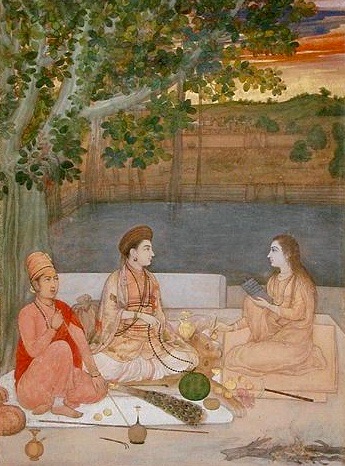
Natha, also called Nath (Sanskrit: नाथसम्प्रदाय, romanized: Nāthasaṃpradāya), are a Shaiva sub-tradition within Hinduism in India and Nepal. A medieval movement, it combined ideas from Buddhism, Shaivism, Tantra and Yoga traditions of the Indian subcontinent. The Naths have been a confederation of devotees who consider Shiva as their first lord or guru, with varying lists of additional gurus. Of these, the 9th or 10th century Matsyendranatha and the ideas and organization mainly developed by Gorakhnath are particularly important. Gorakhnath is considered the originator of the Nath Panth.
The Nath tradition has an extensive Shaivism-related theological literature of its own, most of which is traceable to the 11th century CE or later. However, its roots are in a far more ancient Siddha tradition. A notable aspect of Nath tradition practice has been its refinements and use of Yoga, particularly Hatha Yoga, to transform one's body into a sahaja siddha state of an awakened self’s identity with absolute reality. An accomplished guru, that is, a yoga and spiritual guide, is considered essential, and the Nath tradition has historically been known for its esoteric and heterodox practices.
The unconventional ways of the Nath tradition challenged all orthodox premises, exploring dark and shunned practices of society as a means to understanding theology and gaining inner powers. They formed monastic organizations, itinerant groups that walked great distances to sacred sites and festivals such as the Kumbh Mela as a part of their spiritual practice. The Nath also have a large settled householder tradition in parallel to its monastic groups. Some of them metamorphosed into warrior ascetics during the Islamic rule of the Indian subcontinent.
The Nath tradition was influenced by other Indian traditions such as Advaita Vedanta monism, and in turn influenced it as well as movements within Vaishnavism, Shaktism and Bhakti movement through saints such as Kabir and Namdev.
The Sanskrit word nātha नाथ literally means "lord, protector, master". The related Sanskrit term Adi Natha means first or original Lord, and is a synonym for Shiva, the founder of the Nāthas. Initiation into the Nātha sampradaya includes receiving a name ending in -nath, -yogi, or -jogi.
According to the yoga scholar James Mallinson, the term Nath is a neologism for various groups previously known as yogi or jogi before the 18th century. Within the Natha tradition, however, it is said that the identifier Nath began with the figures of Matsyendranatha in the 10th century and his guru Shiva, known as Adinath (first lord). During East India Company and later British Raj rule, itinerant yogis were suppressed and many were forced into householder life. Many of their practices were banned in an attempt to limit their political and military power in North India.
During colonial rule the term Yogi/Jogi became a derisive word and they were classified by British India census as a "low status caste". In the 20th century, the community began to use the alternate term Nath instead in their public relations, while continuing to use their historical term of yogi or jogi to refer to each other within the community. The term Nath or Natha, with the meaning of lord, is a generic Sanskrit theological term found in all the dharmic religions that utilize Sanskrit. It is found in Vaishnavism (e.g. Gopinath, Jagannath), Buddhism (e.g. Minanath), and in Jainism (Adinatha, Parsvanatha).
The term yogi or jogi is not limited to Natha subtradition, and has been widely used in Indian culture for anyone who is routinely devoted to yoga. Some memoirs by travelers such as those by the Italian traveler Varthema refer to the Nath Yogi people they met, phonetically as Ioghes.
Hub AI
Natha Sampradaya AI simulator
(@Natha Sampradaya_simulator)
Natha Sampradaya
Natha, also called Nath (Sanskrit: नाथसम्प्रदाय, romanized: Nāthasaṃpradāya), are a Shaiva sub-tradition within Hinduism in India and Nepal. A medieval movement, it combined ideas from Buddhism, Shaivism, Tantra and Yoga traditions of the Indian subcontinent. The Naths have been a confederation of devotees who consider Shiva as their first lord or guru, with varying lists of additional gurus. Of these, the 9th or 10th century Matsyendranatha and the ideas and organization mainly developed by Gorakhnath are particularly important. Gorakhnath is considered the originator of the Nath Panth.
The Nath tradition has an extensive Shaivism-related theological literature of its own, most of which is traceable to the 11th century CE or later. However, its roots are in a far more ancient Siddha tradition. A notable aspect of Nath tradition practice has been its refinements and use of Yoga, particularly Hatha Yoga, to transform one's body into a sahaja siddha state of an awakened self’s identity with absolute reality. An accomplished guru, that is, a yoga and spiritual guide, is considered essential, and the Nath tradition has historically been known for its esoteric and heterodox practices.
The unconventional ways of the Nath tradition challenged all orthodox premises, exploring dark and shunned practices of society as a means to understanding theology and gaining inner powers. They formed monastic organizations, itinerant groups that walked great distances to sacred sites and festivals such as the Kumbh Mela as a part of their spiritual practice. The Nath also have a large settled householder tradition in parallel to its monastic groups. Some of them metamorphosed into warrior ascetics during the Islamic rule of the Indian subcontinent.
The Nath tradition was influenced by other Indian traditions such as Advaita Vedanta monism, and in turn influenced it as well as movements within Vaishnavism, Shaktism and Bhakti movement through saints such as Kabir and Namdev.
The Sanskrit word nātha नाथ literally means "lord, protector, master". The related Sanskrit term Adi Natha means first or original Lord, and is a synonym for Shiva, the founder of the Nāthas. Initiation into the Nātha sampradaya includes receiving a name ending in -nath, -yogi, or -jogi.
According to the yoga scholar James Mallinson, the term Nath is a neologism for various groups previously known as yogi or jogi before the 18th century. Within the Natha tradition, however, it is said that the identifier Nath began with the figures of Matsyendranatha in the 10th century and his guru Shiva, known as Adinath (first lord). During East India Company and later British Raj rule, itinerant yogis were suppressed and many were forced into householder life. Many of their practices were banned in an attempt to limit their political and military power in North India.
During colonial rule the term Yogi/Jogi became a derisive word and they were classified by British India census as a "low status caste". In the 20th century, the community began to use the alternate term Nath instead in their public relations, while continuing to use their historical term of yogi or jogi to refer to each other within the community. The term Nath or Natha, with the meaning of lord, is a generic Sanskrit theological term found in all the dharmic religions that utilize Sanskrit. It is found in Vaishnavism (e.g. Gopinath, Jagannath), Buddhism (e.g. Minanath), and in Jainism (Adinatha, Parsvanatha).
The term yogi or jogi is not limited to Natha subtradition, and has been widely used in Indian culture for anyone who is routinely devoted to yoga. Some memoirs by travelers such as those by the Italian traveler Varthema refer to the Nath Yogi people they met, phonetically as Ioghes.
Recent media