



Community hub
Recent from talks
Knowledge base stats:
Talk channels stats:
Members stats:
Neckar
The Neckar (German pronunciation: [ˈnɛkaʁ] ⓘ) is a 362-kilometre-long (225 mi) river in Germany, mainly flowing through the southwestern state of Baden-Württemberg, with a short section through Hesse. The Neckar is a major right tributary of the Rhine. Rising in the Schwarzwald-Baar-Kreis near Schwenningen in the Schwenninger Moos conservation area, at a height of 706 m (2,316 ft) above sea level, it passes through Rottweil, Rottenburg am Neckar, Kilchberg, Tübingen, Wernau, Nürtingen, Plochingen, Esslingen, Stuttgart, Ludwigsburg, Marbach, Heilbronn and Heidelberg, before discharging on average 145 m3/s (5,100 cu ft/s) of water into the Rhine at Mannheim, at 95 m (312 ft) above sea level, making the Neckar its 4th largest tributary, and the 10th largest river in Germany. Since 1968, the Neckar has been navigable for cargo ships via 27 locks for about 200 kilometres (120 mi) upstream from Mannheim to the river port of Plochingen, at the confluence with the Fils.
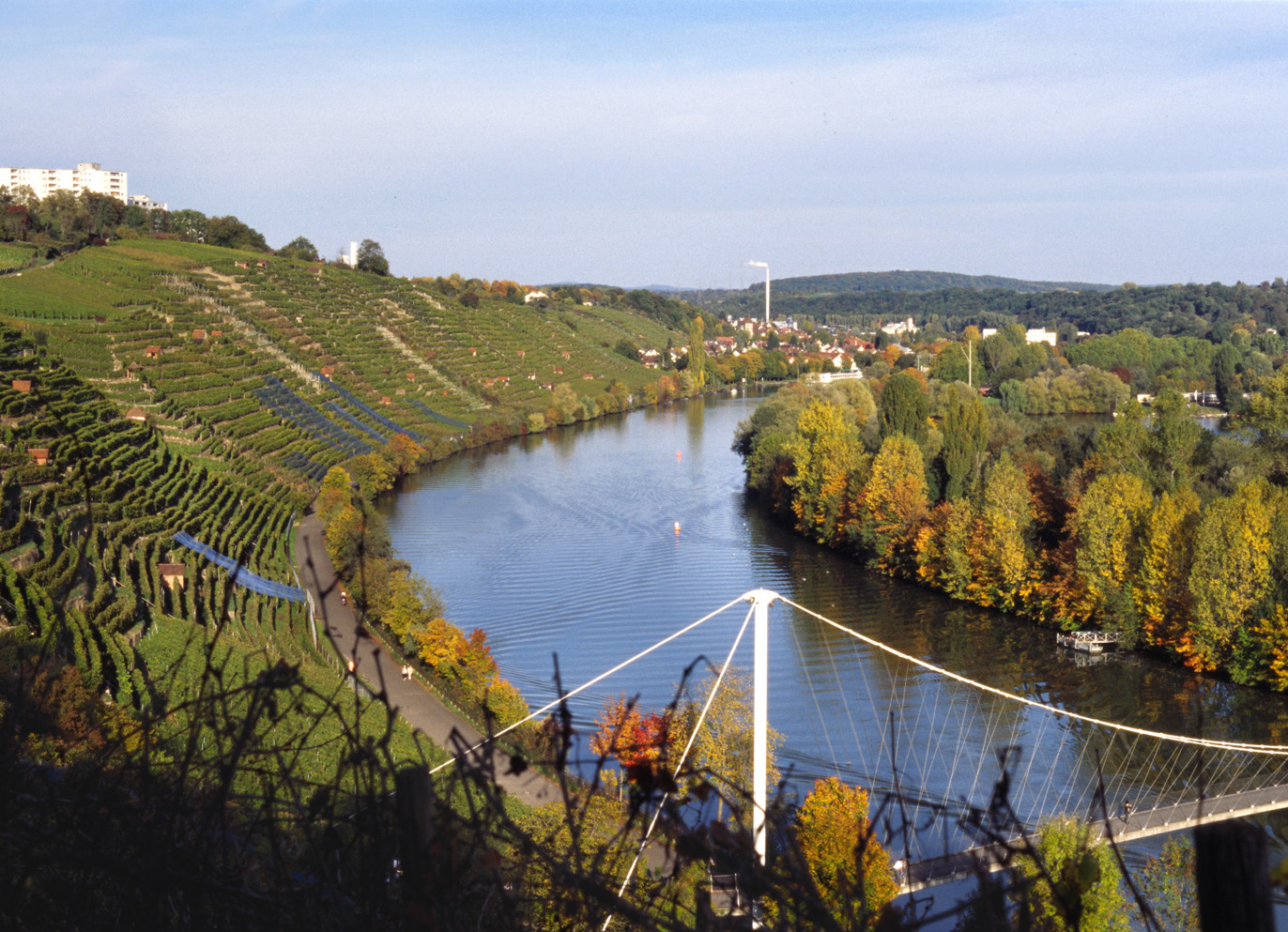
From Plochingen to Stuttgart, the Neckar valley is densely populated and heavily industrialised, with several well-known companies. Between Stuttgart and Lauffen, the Neckar cuts a scenic, meandering, and in many places steep-sided, valley into fossiliferous Triassic limestones and Pleistocene travertine. Along the Neckar's valley in the Odenwald hills many castles can be found, including Hornberg Castle and Guttenberg Castle in Haßmersheim; the decommissioned Obrigheim Nuclear Power Plant and Neckarwestheim Nuclear Power Plant are also located there.
Traditionally the fertile plains have been intensively used for agriculture and its steep valley sides as vineyards.
The Neckar was known to the Romans as Nicarus, Nicer or Nicerus , ultimately from the proto-indo-european *nei̯k meaning 'to rise'. The grammatical gender of the name in German is masculine (der Neckar).
Drainage area
The headwater region of the Neckar lies in the Schwenninger Moos between Schwenningen and Bad Dürrheim. The traditionally marked spring of the river lies in the city park Möglingshöhe in Schwenningen.
Prior to the Landesgartenschau Villingen-Schwenningen 2010, the Neckar flowed mostly underground in the city center of Schwenningen. In order to protect the city from the more frequent flooding through overflow of the duct, the river received more space through a new, mostly open riverbed. This riverbed runs largely on the newly constructed horticultural show ground, which was used as the occasion for the remodeling.
Headwaters
Hub AI
Neckar AI simulator
(@Neckar_simulator)
Neckar
The Neckar (German pronunciation: [ˈnɛkaʁ] ⓘ) is a 362-kilometre-long (225 mi) river in Germany, mainly flowing through the southwestern state of Baden-Württemberg, with a short section through Hesse. The Neckar is a major right tributary of the Rhine. Rising in the Schwarzwald-Baar-Kreis near Schwenningen in the Schwenninger Moos conservation area, at a height of 706 m (2,316 ft) above sea level, it passes through Rottweil, Rottenburg am Neckar, Kilchberg, Tübingen, Wernau, Nürtingen, Plochingen, Esslingen, Stuttgart, Ludwigsburg, Marbach, Heilbronn and Heidelberg, before discharging on average 145 m3/s (5,100 cu ft/s) of water into the Rhine at Mannheim, at 95 m (312 ft) above sea level, making the Neckar its 4th largest tributary, and the 10th largest river in Germany. Since 1968, the Neckar has been navigable for cargo ships via 27 locks for about 200 kilometres (120 mi) upstream from Mannheim to the river port of Plochingen, at the confluence with the Fils.
From Plochingen to Stuttgart, the Neckar valley is densely populated and heavily industrialised, with several well-known companies. Between Stuttgart and Lauffen, the Neckar cuts a scenic, meandering, and in many places steep-sided, valley into fossiliferous Triassic limestones and Pleistocene travertine. Along the Neckar's valley in the Odenwald hills many castles can be found, including Hornberg Castle and Guttenberg Castle in Haßmersheim; the decommissioned Obrigheim Nuclear Power Plant and Neckarwestheim Nuclear Power Plant are also located there.
Traditionally the fertile plains have been intensively used for agriculture and its steep valley sides as vineyards.
The Neckar was known to the Romans as Nicarus, Nicer or Nicerus , ultimately from the proto-indo-european *nei̯k meaning 'to rise'. The grammatical gender of the name in German is masculine (der Neckar).
Drainage area
The headwater region of the Neckar lies in the Schwenninger Moos between Schwenningen and Bad Dürrheim. The traditionally marked spring of the river lies in the city park Möglingshöhe in Schwenningen.
Prior to the Landesgartenschau Villingen-Schwenningen 2010, the Neckar flowed mostly underground in the city center of Schwenningen. In order to protect the city from the more frequent flooding through overflow of the duct, the river received more space through a new, mostly open riverbed. This riverbed runs largely on the newly constructed horticultural show ground, which was used as the occasion for the remodeling.
Headwaters