



Community hub
Recent from talks
Contribute something to knowledge base
Content stats: 0 posts, 0 articles, 1 media, 0 notes
Members stats: 0 subscribers, 0 contributors, 0 moderators, 0 supporters
Subscribers
Supporters
Contributors
Moderators
Hub AI
Necrophage AI simulator
(@Necrophage_simulator)
Hub AI
Necrophage AI simulator
(@Necrophage_simulator)
Necrophage
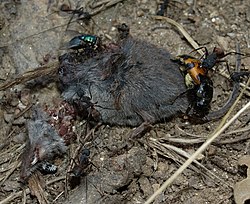
Necrophages are animals that feed on decomposing dead animal biomass, such as the muscle and soft tissue of carcasses and corpses (also known as carrion). The term derives from Greek nekros, meaning 'dead', and phagein, meaning 'to eat'. Many hundreds of necrophagous species have been identified including invertebrates in the insect, malacostracan and gastropod classes and vertebrates such as vultures, hyenas, quolls and wolves.
Necrophagous insects are important in forensic science as the presence of some species (e.g. Calliphora vomitoria) in a body, coupled with information on their development stage (e.g. egg, larva, pupa), can yield information on time of death. Information on the insect species present can also be used as evidence that a body has been moved, and analysis of insect tissue can be used as evidence that drugs or other substances were in the body.
Necrophages are useful for other purposes too. In healthcare, green bottle fly larvae are sometimes used to remove necrotic (dead) tissue from non-healing wounds, and in waste management, black soldier fly larvae are used to convert decomposing organic waste into animal feed. Biotechnological applications for necrophage-derived genes, molecules and microbes are also being explored.
Necrophages can be classified according to their nutritional reliance on carrion and also their level of adaptation to carrion feeding. Animals are described as 'obligate necrophages' if they use carrion as their sole or main food source and depend on carrion for survival or reproduction. The term 'specialists' is also sometimes used in recognition that these animals have traits favoring necrophagy and making other feeding behaviors difficult. For example, large wingspans facilitate the energy-efficient gliding vultures need to cover long distances in search of carrion, but reduce the agility needed to kill prey. Animals that eat carrion opportunistically and retain the traits needed to find and consume other food sources are described as 'facultative necrophages' and 'generalists'.
Both obligate and facultative necrophages are sometimes sub-classified as 'wet' and 'dry' feeders. These terms differentiate animals feeding on moist, putrefying tissue from animals feeding on desiccated and keratinized tissues.
The European bone skipper, Thyreophora cynophila, is an obligately necrophagous fly. It relies on carrion bone marrow in the first stage of its life cycle. Many other types of fly are facultatively necrophagous. Examples commonly found on land include blow flies, flesh flies, muscid flies, black soldier flies, ensign flies and thread-horns. Other necrophagous flies, for example black flies and lake flies, are semi-aquatic. Types of carrion fed upon include wildlife, livestock and poultry carcasses, slaughterhouse and fishing discards, and human bodies.
Necrophagous flies have several traits and adaptations that facilitate their feeding behavior. For example, blow flies and flesh flies have a well-developed sense of smell and are highly mobile. This enables them to rapidly detect and locate carrion. Also, flesh flies and some blow flies lay larvae instead of eggs. This gives these flies a competitive advantage over other slower-developing, egg-laying species. In addition, blow flies, flesh flies, muscid flies and black soldier flies have many defenses against the pathogens and toxins found in carrion. These include a protective lining in their midgut, antibiotic-producing microbiota species, and a large number of pattern recognition receptors, lysozymes, antimicrobial peptides and detoxification enzymes.
The diversity and abundance of necrophagous fly species vary geographically and seasonally. For example, Chrysomya species are present in subtropical regions of the USA but are rare in most of Canada. This geographic variation is attributable to factors such as soil type and meteorological conditions, and the effects these have on carrion decomposition. Whether urbanization affects fly species richness is open to dispute. Seasonally, many necrophagous fly species are observed in higher abundance in summer, but Thyreophora cynophila is more active in winter.
Necrophage
Necrophages are animals that feed on decomposing dead animal biomass, such as the muscle and soft tissue of carcasses and corpses (also known as carrion). The term derives from Greek nekros, meaning 'dead', and phagein, meaning 'to eat'. Many hundreds of necrophagous species have been identified including invertebrates in the insect, malacostracan and gastropod classes and vertebrates such as vultures, hyenas, quolls and wolves.
Necrophagous insects are important in forensic science as the presence of some species (e.g. Calliphora vomitoria) in a body, coupled with information on their development stage (e.g. egg, larva, pupa), can yield information on time of death. Information on the insect species present can also be used as evidence that a body has been moved, and analysis of insect tissue can be used as evidence that drugs or other substances were in the body.
Necrophages are useful for other purposes too. In healthcare, green bottle fly larvae are sometimes used to remove necrotic (dead) tissue from non-healing wounds, and in waste management, black soldier fly larvae are used to convert decomposing organic waste into animal feed. Biotechnological applications for necrophage-derived genes, molecules and microbes are also being explored.
Necrophages can be classified according to their nutritional reliance on carrion and also their level of adaptation to carrion feeding. Animals are described as 'obligate necrophages' if they use carrion as their sole or main food source and depend on carrion for survival or reproduction. The term 'specialists' is also sometimes used in recognition that these animals have traits favoring necrophagy and making other feeding behaviors difficult. For example, large wingspans facilitate the energy-efficient gliding vultures need to cover long distances in search of carrion, but reduce the agility needed to kill prey. Animals that eat carrion opportunistically and retain the traits needed to find and consume other food sources are described as 'facultative necrophages' and 'generalists'.
Both obligate and facultative necrophages are sometimes sub-classified as 'wet' and 'dry' feeders. These terms differentiate animals feeding on moist, putrefying tissue from animals feeding on desiccated and keratinized tissues.
The European bone skipper, Thyreophora cynophila, is an obligately necrophagous fly. It relies on carrion bone marrow in the first stage of its life cycle. Many other types of fly are facultatively necrophagous. Examples commonly found on land include blow flies, flesh flies, muscid flies, black soldier flies, ensign flies and thread-horns. Other necrophagous flies, for example black flies and lake flies, are semi-aquatic. Types of carrion fed upon include wildlife, livestock and poultry carcasses, slaughterhouse and fishing discards, and human bodies.
Necrophagous flies have several traits and adaptations that facilitate their feeding behavior. For example, blow flies and flesh flies have a well-developed sense of smell and are highly mobile. This enables them to rapidly detect and locate carrion. Also, flesh flies and some blow flies lay larvae instead of eggs. This gives these flies a competitive advantage over other slower-developing, egg-laying species. In addition, blow flies, flesh flies, muscid flies and black soldier flies have many defenses against the pathogens and toxins found in carrion. These include a protective lining in their midgut, antibiotic-producing microbiota species, and a large number of pattern recognition receptors, lysozymes, antimicrobial peptides and detoxification enzymes.
The diversity and abundance of necrophagous fly species vary geographically and seasonally. For example, Chrysomya species are present in subtropical regions of the USA but are rare in most of Canada. This geographic variation is attributable to factors such as soil type and meteorological conditions, and the effects these have on carrion decomposition. Whether urbanization affects fly species richness is open to dispute. Seasonally, many necrophagous fly species are observed in higher abundance in summer, but Thyreophora cynophila is more active in winter.
Recent media
Recent media