
Recent from talks
Nell Brinkley
Knowledge base stats:
Talk channels stats:
Members stats:
Nell Brinkley
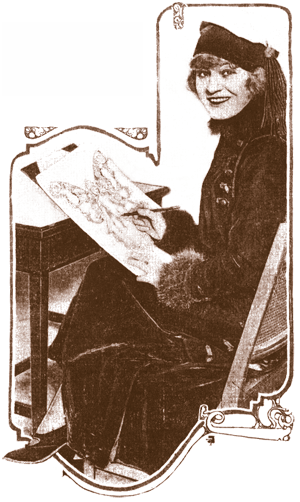
Nell Brinkley (September 5, 1886 – October 21, 1944) was an American illustrator and comic artist who was sometimes referred to as the "Queen of Comics" during her nearly four-decade career working with New York newspapers and magazines. She was the creator of the Brinkley Girl, a stylish character who appeared in her comics and became a popular symbol in songs, films and theater.
Nell Brinkley was born in 1886 to Robert Serrett Brinkley and May French Brinkley in Denver, Colorado, and in 1893 her family moved to the small town of Edgewater on Denver's western border, facing Sloan's Lake at Manhattan Beach. Her father Robert Brinkley would later become the mayor of Edgewater. As a small child, she drew place-setting illustrations of knobby-kneed kiddies for Mary Elitch's garden parties at Elitch Gardens. She had no formal arts training, and dropped out of high school to pursue a career in illustration. She did cover and interior illustrations for the 1906 children's book, Wally Wish and Maggie Magpie by A.U. Mayfield. She did pen-and-ink drawings for The Denver Post and the Rocky Mountain News.
Brinkley was scouted in 1907 by media mogul William Randolph Hearst and his editor Arthur Brisbane, who convinced her to move from Denver to Brooklyn, New York where Hearst's newspaper empire was centered. She was accompanied by her mother. She worked in Manhattan for the Journal, where she produced large detailed illustrations with commentary almost every day. Her art was featured in the prestigious magazine section, and the newspaper's circulation boomed. Brinkley later moved to New Rochelle, New York, a well known artist colony, home to many of the top commercial illustrators of the day. She soon became well known for her breezy and entertaining creations. The curly-haired everyday working-girl drawings were known as the Brinkley Girl, who soon upstaged Charles Dana Gibson's Gibson Girl. The Ziegfeld Follies (1908) used the Brinkley Girl as a theme, and three popular songs were written about her. Bloomingdale's department store featured a Nell Brinkley Day with advertisements using many of her drawings. Women emulated the hairstyles in the cartoons and purchased Nell Brinkley Hair Curlers for ten cents a card. Young girls saved her drawings, colored them and pasted them in scrapbooks. The Denver Press Club greeted her when she vacationed in Colorado in the summer of 1908. Nell was most famous for her representing "relationships between boy and girl—man and woman—Bettys and Billies". Her illustrations used the drawing of "Dan Cupid" to represent the presence of that something most people call "love".
Brinkley's reputation was also established by an early assignment to cover the sensational murder trial of Harry K. Thaw. She was assigned many interviews with the actress-wife, Evelyn Nesbit. In later years, she covered other infamous murder trials. She produced numerous courtroom illustrations printed in the Evening Journal and other Hearst newspapers.
Brinkley had been on the staff of the Journal for only three months when the new trial began. She had come after two years on the Denver Post, bringing with her a talent for pretty-girl art that had not yet been matured into delicately fine-lined art-nouveau style for which she would become famous. Brinkley christened all the pretty girls she drew "Betty," and called all the boys "Billy". Brinkley's debut came on November 26, 1907, and she was featured on a comics page that contained her illustrated panel that accompanied an article on actress Valeska Surrat. Brinkley wrote this article using her usual superlatives ("The Most Beautiful Woman I Ever Saw"), and her next day's subject was Ethel Barrymore.
After the Thaw trial, Brinkley returned to the women's page and made forays into the entertainment section with reviews of new plays and musicals. Brinkley's art was now featured in Hearst newspapers all over the country and Americans were sitting up and taking notice of this new young artist.
Brinkley wrote in the pop culture style of the early 20th century, producing breathless prose filled with run-on sentences, liberally sprinkled with dashes.
Brinkley flew with Glen Martin in his new biplane and reported the daring swoopings and the landing for her readers. Brinkley helped with War Bond drives, and she entertained and consoled those at home and the American youth abroad, during and just after World War I. She traveled to Washington, D.C. where she interviewed many young ladies who had left their homes to become defense workers.
Hub AI
Nell Brinkley AI simulator
(@Nell Brinkley_simulator)
Nell Brinkley
Nell Brinkley (September 5, 1886 – October 21, 1944) was an American illustrator and comic artist who was sometimes referred to as the "Queen of Comics" during her nearly four-decade career working with New York newspapers and magazines. She was the creator of the Brinkley Girl, a stylish character who appeared in her comics and became a popular symbol in songs, films and theater.
Nell Brinkley was born in 1886 to Robert Serrett Brinkley and May French Brinkley in Denver, Colorado, and in 1893 her family moved to the small town of Edgewater on Denver's western border, facing Sloan's Lake at Manhattan Beach. Her father Robert Brinkley would later become the mayor of Edgewater. As a small child, she drew place-setting illustrations of knobby-kneed kiddies for Mary Elitch's garden parties at Elitch Gardens. She had no formal arts training, and dropped out of high school to pursue a career in illustration. She did cover and interior illustrations for the 1906 children's book, Wally Wish and Maggie Magpie by A.U. Mayfield. She did pen-and-ink drawings for The Denver Post and the Rocky Mountain News.
Brinkley was scouted in 1907 by media mogul William Randolph Hearst and his editor Arthur Brisbane, who convinced her to move from Denver to Brooklyn, New York where Hearst's newspaper empire was centered. She was accompanied by her mother. She worked in Manhattan for the Journal, where she produced large detailed illustrations with commentary almost every day. Her art was featured in the prestigious magazine section, and the newspaper's circulation boomed. Brinkley later moved to New Rochelle, New York, a well known artist colony, home to many of the top commercial illustrators of the day. She soon became well known for her breezy and entertaining creations. The curly-haired everyday working-girl drawings were known as the Brinkley Girl, who soon upstaged Charles Dana Gibson's Gibson Girl. The Ziegfeld Follies (1908) used the Brinkley Girl as a theme, and three popular songs were written about her. Bloomingdale's department store featured a Nell Brinkley Day with advertisements using many of her drawings. Women emulated the hairstyles in the cartoons and purchased Nell Brinkley Hair Curlers for ten cents a card. Young girls saved her drawings, colored them and pasted them in scrapbooks. The Denver Press Club greeted her when she vacationed in Colorado in the summer of 1908. Nell was most famous for her representing "relationships between boy and girl—man and woman—Bettys and Billies". Her illustrations used the drawing of "Dan Cupid" to represent the presence of that something most people call "love".
Brinkley's reputation was also established by an early assignment to cover the sensational murder trial of Harry K. Thaw. She was assigned many interviews with the actress-wife, Evelyn Nesbit. In later years, she covered other infamous murder trials. She produced numerous courtroom illustrations printed in the Evening Journal and other Hearst newspapers.
Brinkley had been on the staff of the Journal for only three months when the new trial began. She had come after two years on the Denver Post, bringing with her a talent for pretty-girl art that had not yet been matured into delicately fine-lined art-nouveau style for which she would become famous. Brinkley christened all the pretty girls she drew "Betty," and called all the boys "Billy". Brinkley's debut came on November 26, 1907, and she was featured on a comics page that contained her illustrated panel that accompanied an article on actress Valeska Surrat. Brinkley wrote this article using her usual superlatives ("The Most Beautiful Woman I Ever Saw"), and her next day's subject was Ethel Barrymore.
After the Thaw trial, Brinkley returned to the women's page and made forays into the entertainment section with reviews of new plays and musicals. Brinkley's art was now featured in Hearst newspapers all over the country and Americans were sitting up and taking notice of this new young artist.
Brinkley wrote in the pop culture style of the early 20th century, producing breathless prose filled with run-on sentences, liberally sprinkled with dashes.
Brinkley flew with Glen Martin in his new biplane and reported the daring swoopings and the landing for her readers. Brinkley helped with War Bond drives, and she entertained and consoled those at home and the American youth abroad, during and just after World War I. She traveled to Washington, D.C. where she interviewed many young ladies who had left their homes to become defense workers.
Recent media