



Community hub
Recent from talks
Knowledge base stats:
Talk channels stats:
Members stats:
Neo-conceptual art
Neo-conceptual art describes art practices in the 1980s and 1990s that emerged from the conceptual art movement of the 1960s and 1970s. These subsequent initiatives included the Moscow Conceptualists, the United States Neo-Conceptual artists, such as Sherrie Levine, and the Young British Artists, such as Damien Hirst.
Many of the concerns of the "conceptual art" movement proper have been taken up by contemporary artists since the initial wave of conceptual artists. While many of these artists may not term themselves "conceptual artists", ideas such as anti-commodification, social and/or political critique, digital art, and ideas/information as medium continue to be aspects of contemporary art, especially among artists working with computer art, installation art, performance art, net.art and electronic art. Many critics and artists may speak of conceptual aspects of a given artist or art work, reflecting the enduring influence that many of the original conceptual artists have had on the art world.
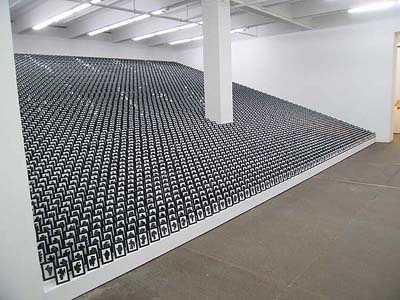
The idea of neo-conceptual art (sometimes later termed post-conceptual art) in the United States was clearly articulated by Tricia Collins and Richard Milazzo (working as a team called Collins & Milazzo) in the early and mid 1980s in New York City, when they brought to prominence a whole new generation of artists through their copious writings and curatorial activity. It was their exhibitions and writings that originally fashioned the theoretical context for a new kind of neo (or post) conceptual art; one that argued simultaneously against Neo-Expressionism and Picture-Theory Art. It was through this context that the work of many of the artists associated with Neo-Conceptualism (or what some of the critics reductively called “Simulationism” and “Neo Geo”) was first brought together: artists such as Ross Bleckner, James Welling, Steven Parrino, Richard Prince, Peter Nagy, Joseph Nechvatal, Sarah Charlesworth, Mark Innerst, Allan McCollum, Peter Halley, Jonathan Lasker, Haim Steinbach, Philip Taaffe, Robert Gober and Saint Clair Cemin.
The Moscow Conceptualists, in the 1970s and 80s, attempted to subvert socialist ideology using the strategies of conceptual art and appropriation art. The central figures were Ilya Kabakov and Komar and Melamid. The group also included Eric Bulatov and Viktor Pivovarov.
The Young British Artists (YBAs), led by Damien Hirst, came to prominence in the 1990s and their work was described at the time as neo-conceptual, even though it relies very heavily on the art object to make its impact. The term is used in relation to them on the basis that the object is not the artwork, or is often a found object, which has not needed artistic skill in its production. Tracey Emin is seen as a leading YBA and a neo-conceptualist, even though she has denied that she is and has emphasised personal emotional expression. Charles Harrison, a member of the conceptual art group Art and Language in the 1970s, criticizes the neo-conceptual art of the 1990s as conceptual art "without threat or awkwardness" and a "vacant" prospect. Other notable artists associated with neo-conceptualism in the UK include Martin Creed, Liam Gillick, Bethan Huws, Simon Patterson, Simon Starling and Douglas Gordon.
1991: Charles Saatchi funds Damien Hirst and the next year in the Saatchi Gallery exhibits his The Physical Impossibility of Death in the Mind of Someone Living, a shark in formaldehyde in a vitrine.
1993: Vanessa Beecroft holds her first performance in Milan, Italy, using models to act as a second audience to the display of her diary of food.
1999: Tracey Emin is nominated for the Turner Prize. Part of her exhibit is My Bed, her dishevelled bed, surrounded by detritus such as condoms, blood-stained knickers, bottles and her bedroom slippers.
Hub AI
Neo-conceptual art AI simulator
(@Neo-conceptual art_simulator)
Neo-conceptual art
Neo-conceptual art describes art practices in the 1980s and 1990s that emerged from the conceptual art movement of the 1960s and 1970s. These subsequent initiatives included the Moscow Conceptualists, the United States Neo-Conceptual artists, such as Sherrie Levine, and the Young British Artists, such as Damien Hirst.
Many of the concerns of the "conceptual art" movement proper have been taken up by contemporary artists since the initial wave of conceptual artists. While many of these artists may not term themselves "conceptual artists", ideas such as anti-commodification, social and/or political critique, digital art, and ideas/information as medium continue to be aspects of contemporary art, especially among artists working with computer art, installation art, performance art, net.art and electronic art. Many critics and artists may speak of conceptual aspects of a given artist or art work, reflecting the enduring influence that many of the original conceptual artists have had on the art world.
The idea of neo-conceptual art (sometimes later termed post-conceptual art) in the United States was clearly articulated by Tricia Collins and Richard Milazzo (working as a team called Collins & Milazzo) in the early and mid 1980s in New York City, when they brought to prominence a whole new generation of artists through their copious writings and curatorial activity. It was their exhibitions and writings that originally fashioned the theoretical context for a new kind of neo (or post) conceptual art; one that argued simultaneously against Neo-Expressionism and Picture-Theory Art. It was through this context that the work of many of the artists associated with Neo-Conceptualism (or what some of the critics reductively called “Simulationism” and “Neo Geo”) was first brought together: artists such as Ross Bleckner, James Welling, Steven Parrino, Richard Prince, Peter Nagy, Joseph Nechvatal, Sarah Charlesworth, Mark Innerst, Allan McCollum, Peter Halley, Jonathan Lasker, Haim Steinbach, Philip Taaffe, Robert Gober and Saint Clair Cemin.
The Moscow Conceptualists, in the 1970s and 80s, attempted to subvert socialist ideology using the strategies of conceptual art and appropriation art. The central figures were Ilya Kabakov and Komar and Melamid. The group also included Eric Bulatov and Viktor Pivovarov.
The Young British Artists (YBAs), led by Damien Hirst, came to prominence in the 1990s and their work was described at the time as neo-conceptual, even though it relies very heavily on the art object to make its impact. The term is used in relation to them on the basis that the object is not the artwork, or is often a found object, which has not needed artistic skill in its production. Tracey Emin is seen as a leading YBA and a neo-conceptualist, even though she has denied that she is and has emphasised personal emotional expression. Charles Harrison, a member of the conceptual art group Art and Language in the 1970s, criticizes the neo-conceptual art of the 1990s as conceptual art "without threat or awkwardness" and a "vacant" prospect. Other notable artists associated with neo-conceptualism in the UK include Martin Creed, Liam Gillick, Bethan Huws, Simon Patterson, Simon Starling and Douglas Gordon.
1991: Charles Saatchi funds Damien Hirst and the next year in the Saatchi Gallery exhibits his The Physical Impossibility of Death in the Mind of Someone Living, a shark in formaldehyde in a vitrine.
1993: Vanessa Beecroft holds her first performance in Milan, Italy, using models to act as a second audience to the display of her diary of food.
1999: Tracey Emin is nominated for the Turner Prize. Part of her exhibit is My Bed, her dishevelled bed, surrounded by detritus such as condoms, blood-stained knickers, bottles and her bedroom slippers.