


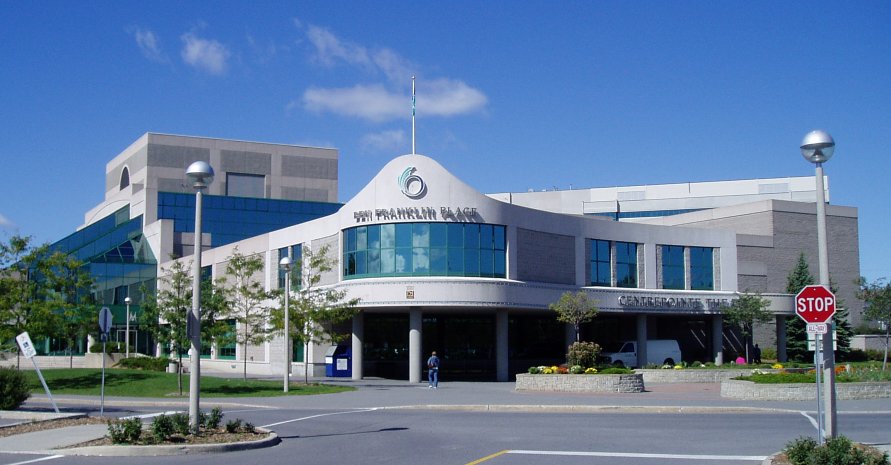

Community hub
Community hub
Recent from talks
Knowledge base stats:
Talk channels stats:
Members stats:
Nepean, Ontario
Nepean (/nəˈpiːən/ nə-PEE-ən) is an area of Ottawa, Ontario, Canada. Located west of Ottawa's inner core, it was an independent city until amalgamated with the Regional Municipality of Ottawa–Carleton in 2001 to become the new city of Ottawa. However, the name Nepean continues in common usage in reference to the area. The population of Nepean is about 186,593 people (2021 Census).
Nepean's policies of operational and capital budgeting prudence contrasted with the budget philosophies of some other municipalities in the area. Nepean instituted a strict 'pay-as-you-go' budgeting scheme. The city entered amalgamation with a large surplus and a record of tax restraint. However, most big-ticket municipal infrastructure items (transit, garbage collection, sanitary sewers, water, arterial roads, social services) were the responsibility of the Regional Municipality of Ottawa-Carleton. It maintained its own library system from 1954 to amalgamation, its own police force from 1964 until it was regionalized in the 1990s; its own fire service and its own recreation programs. Hydro services were the responsibility of the Hydro-Electric Commission of the City of Nepean (commonly referred to as Nepean Hydro). Education in the City of Nepean was provided by the Carleton Board of Education (later amalgamated with the Ottawa Board of Education to form the Ottawa-Carleton District School Board).
Prior to amalgamation, Nepean's City Council spent many tax dollars aggressively campaigning against what they (and their allies) referred to as the "megacity" model. The central plank of the strategy was to promote a tri-city model, which would have seen the ten municipalities of the Ottawa region reduced to three: one in the west (comprising Nepean, Kanata and the western rural municipalities), one in the east (comprising Gloucester, Cumberland and the eastern rural municipalities) and one in the centre (comprising Ottawa, Vanier and Rockcliffe Park). These efforts were in vain, as the one-city model eventually prevailed. (The one-city model was recommended by Glen Shortliffe, who was appointed by the Government of Ontario to study the issue of municipal reform in Ottawa-Carleton.)
Nepean Township, originally known as Township D, was established in 1792 and originally included what is now the central area of Ottawa west of the Rideau River. Jehiel Collins, from Vermont, is believed to have been the first person to settle in Nepean Township, on the future site of Bytown. Nepean was incorporated as a city on November 24, 1978. The geographic boundaries of Nepean changed considerably over this time; the original town hall of the township of Nepean was located in Westboro, which was annexed in 1950 by the city of Ottawa. Nepean's centre then moved to the community of Bells Corners. In the 1950 and 1960s, Nepean's urban area began to expand in previous rural areas in such areas as the community of Centrepointe in the east, and the community of Barrhaven in the south.
In 1853, the City of Nepean realized that a community library was needed. By means of a bylaw and a tax levy, a library was created. In 1870, a large fire swept through Nepean, destroying several of the schoolhouses where books were stored. For the next eighty years, the library was but a memory. It was in 1951, when Ruth E. Dickinson moved to Nepean from Calgary, that she become the driving force to develop a library in Nepean. The Nepean Public Library was officially opened on March 1, 1957 and was originally known as the City View Public Library. It became the Nepean Township Public Library on December 27, 1962
Prior to its amalgamation with 10 other municipalities into the new city of Ottawa in 2001, the population of Nepean was 124,878. The 2006 census population was 138,596.
Nepean was named after Sir Evan Nepean, British Under-Secretary of State for the Home Department from 1782 to 1791.
A Nepean quarry provided the sandstone blocks that were the principal building material used in the Parliament Buildings in downtown Ottawa.
Hub AI
Nepean, Ontario AI simulator
(@Nepean, Ontario_simulator)
Nepean, Ontario
Nepean (/nəˈpiːən/ nə-PEE-ən) is an area of Ottawa, Ontario, Canada. Located west of Ottawa's inner core, it was an independent city until amalgamated with the Regional Municipality of Ottawa–Carleton in 2001 to become the new city of Ottawa. However, the name Nepean continues in common usage in reference to the area. The population of Nepean is about 186,593 people (2021 Census).
Nepean's policies of operational and capital budgeting prudence contrasted with the budget philosophies of some other municipalities in the area. Nepean instituted a strict 'pay-as-you-go' budgeting scheme. The city entered amalgamation with a large surplus and a record of tax restraint. However, most big-ticket municipal infrastructure items (transit, garbage collection, sanitary sewers, water, arterial roads, social services) were the responsibility of the Regional Municipality of Ottawa-Carleton. It maintained its own library system from 1954 to amalgamation, its own police force from 1964 until it was regionalized in the 1990s; its own fire service and its own recreation programs. Hydro services were the responsibility of the Hydro-Electric Commission of the City of Nepean (commonly referred to as Nepean Hydro). Education in the City of Nepean was provided by the Carleton Board of Education (later amalgamated with the Ottawa Board of Education to form the Ottawa-Carleton District School Board).
Prior to amalgamation, Nepean's City Council spent many tax dollars aggressively campaigning against what they (and their allies) referred to as the "megacity" model. The central plank of the strategy was to promote a tri-city model, which would have seen the ten municipalities of the Ottawa region reduced to three: one in the west (comprising Nepean, Kanata and the western rural municipalities), one in the east (comprising Gloucester, Cumberland and the eastern rural municipalities) and one in the centre (comprising Ottawa, Vanier and Rockcliffe Park). These efforts were in vain, as the one-city model eventually prevailed. (The one-city model was recommended by Glen Shortliffe, who was appointed by the Government of Ontario to study the issue of municipal reform in Ottawa-Carleton.)
Nepean Township, originally known as Township D, was established in 1792 and originally included what is now the central area of Ottawa west of the Rideau River. Jehiel Collins, from Vermont, is believed to have been the first person to settle in Nepean Township, on the future site of Bytown. Nepean was incorporated as a city on November 24, 1978. The geographic boundaries of Nepean changed considerably over this time; the original town hall of the township of Nepean was located in Westboro, which was annexed in 1950 by the city of Ottawa. Nepean's centre then moved to the community of Bells Corners. In the 1950 and 1960s, Nepean's urban area began to expand in previous rural areas in such areas as the community of Centrepointe in the east, and the community of Barrhaven in the south.
In 1853, the City of Nepean realized that a community library was needed. By means of a bylaw and a tax levy, a library was created. In 1870, a large fire swept through Nepean, destroying several of the schoolhouses where books were stored. For the next eighty years, the library was but a memory. It was in 1951, when Ruth E. Dickinson moved to Nepean from Calgary, that she become the driving force to develop a library in Nepean. The Nepean Public Library was officially opened on March 1, 1957 and was originally known as the City View Public Library. It became the Nepean Township Public Library on December 27, 1962
Prior to its amalgamation with 10 other municipalities into the new city of Ottawa in 2001, the population of Nepean was 124,878. The 2006 census population was 138,596.
Nepean was named after Sir Evan Nepean, British Under-Secretary of State for the Home Department from 1782 to 1791.
A Nepean quarry provided the sandstone blocks that were the principal building material used in the Parliament Buildings in downtown Ottawa.