


Community hub
Recent from talks
Contribute something to knowledge base
Content stats: 0 posts, 0 articles, 1 media, 0 notes
Members stats: 0 subscribers, 0 contributors, 0 moderators, 0 supporters
Subscribers
Supporters
Contributors
Moderators
Hub AI
Nheengatu language AI simulator
(@Nheengatu language_simulator)
Hub AI
Nheengatu language AI simulator
(@Nheengatu language_simulator)
Nheengatu language
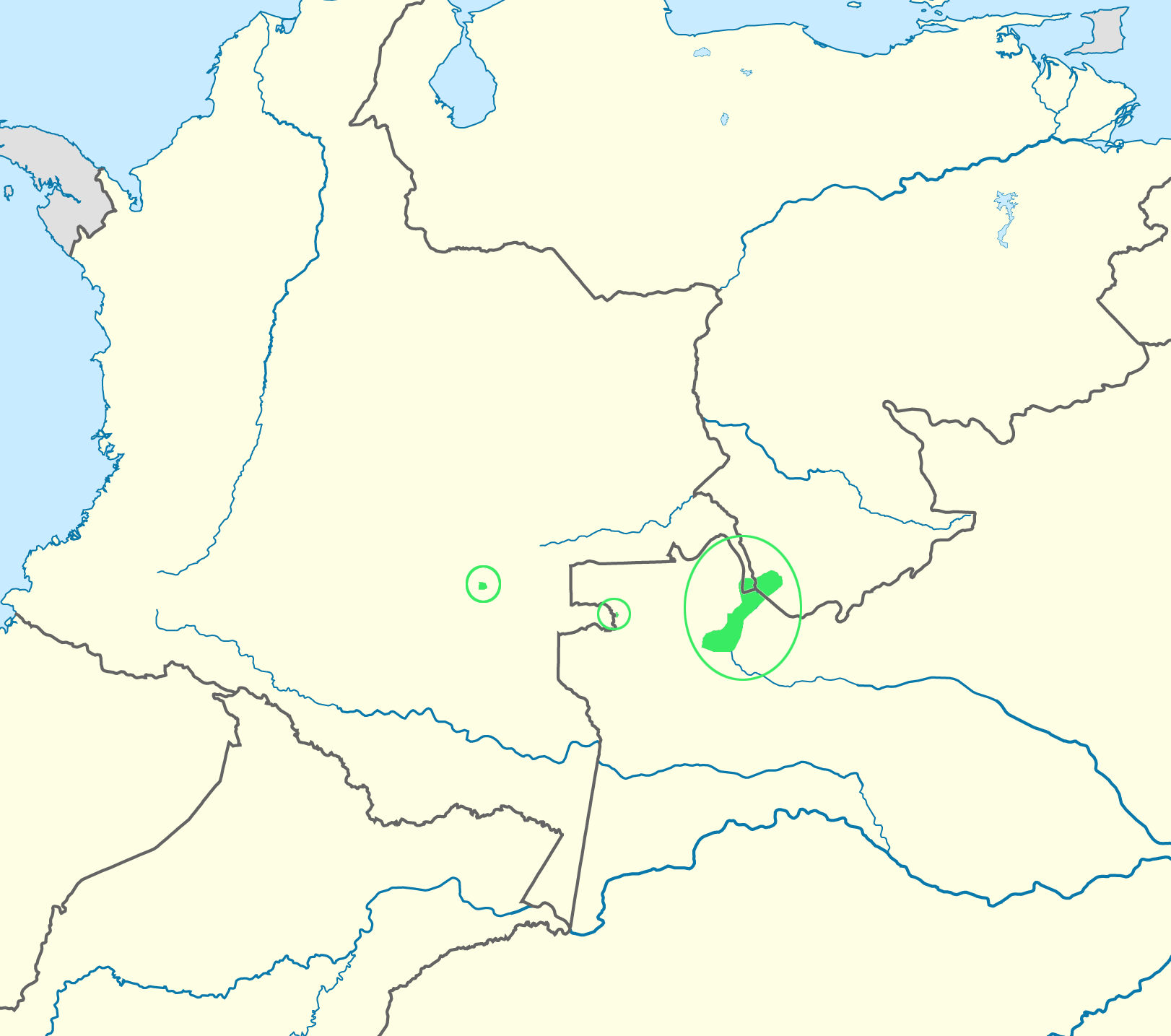
Nheengatu, also known as Modern Tupi and Amazonic Tupi, is a Tupi–Guarani language. It is spoken throughout the Rio Negro region among the Baniwa, Baré and Warekena peoples, mainly in the municipality of São Gabriel da Cachoeira and the state of Amazonas, Brazil.
Since 2002, it has been one of Amazonas's official languages, along with Apurinã, Baniwa, Dessana, Kanamari, Marubo, Matis, Matses, Mawe, Mura, Tariana, Tikuna, Tukano, Waiwai, Waimiri, Yanomami, and Portuguese. Outside of the Rio Negro region, the Nheengatu language has more dispersed speakers in the Baixo Amazonas region (in the state of Amazonas) among the Sateré-Mawé, Maraguá and Mura people. In the Baixo Tapajós and the state of Pará, it is being revitalized by the people of the region, such as the Borari and the Tupinambá, and also among the riverside dwellers themselves.
According to Ethnologue, a 2005 study—not available on its website—estimated the number of Nheengatu speakers at around 19,600, though this figure is subject to debate. In 2025,[update] University of São Paulo (USP) professor Thomas Finbow estimated between 5,000 and 7,000 speakers in Brazil, and fewer than 10,000 globally including communities in Venezuela and Colombia. Nheengatu is considered significant for the study of language change as one of the few Indigenous languages with a long documented history. It is considered the most historically significant among the minority languages still spoken in Brazil.
The language name derives from the words nhẽẽga (meaning "language" or "word") and katu (meaning "good"). Nheengatu is referred to by a wide variety of names in literature, including Nhengatu, Tupi Costeiro, Geral, Yeral (in Venezuela), Tupi Moderno, Nyengato, Nyengatú, Waengatu, Neegatú, Is'engatu, Língua Brasílica, Tupi Amazônico, Ñe'engatú, Nhangatu, Inhangatu, Nenhengatu, Yẽgatú, Nyenngatú, Tupi, and Lingua Geral. It is also commonly referred to as the Língua Geral Amazônica (LGA) in Brazil.
Nheengatu developed from the extinct Tupinamba language and belongs to the Tupi–Guarani branch of the Tupi language family. The Tupi–Guarani language family is a large and diverse group of languages, including, for example, Xeta, Siriono, Arawete, Kaapor, Kamayura, Guaja, and Tapirape. Many of these languages differed years before the invasion of Portuguese colonizers to the territory now known as Brazil. Over time, the term "Tupinamba" was used to describe groups that were "linguistically and culturally related.”
Taking personal pronouns as an example, see a comparison between Brazilian Portuguese, Old Tupi, and Nheengatu:
Eduardo de Almeida Navarro, a Brazilian philologist specialized in Nheengatu, argues that with its current characteristics, Nheengatu would only have emerged in the 19th century, as a natural evolution of the Northern General Language (NGL).
Comparisons between Tupi, Portuguese, and Nheengatu variants:
Nheengatu language
Nheengatu, also known as Modern Tupi and Amazonic Tupi, is a Tupi–Guarani language. It is spoken throughout the Rio Negro region among the Baniwa, Baré and Warekena peoples, mainly in the municipality of São Gabriel da Cachoeira and the state of Amazonas, Brazil.
Since 2002, it has been one of Amazonas's official languages, along with Apurinã, Baniwa, Dessana, Kanamari, Marubo, Matis, Matses, Mawe, Mura, Tariana, Tikuna, Tukano, Waiwai, Waimiri, Yanomami, and Portuguese. Outside of the Rio Negro region, the Nheengatu language has more dispersed speakers in the Baixo Amazonas region (in the state of Amazonas) among the Sateré-Mawé, Maraguá and Mura people. In the Baixo Tapajós and the state of Pará, it is being revitalized by the people of the region, such as the Borari and the Tupinambá, and also among the riverside dwellers themselves.
According to Ethnologue, a 2005 study—not available on its website—estimated the number of Nheengatu speakers at around 19,600, though this figure is subject to debate. In 2025,[update] University of São Paulo (USP) professor Thomas Finbow estimated between 5,000 and 7,000 speakers in Brazil, and fewer than 10,000 globally including communities in Venezuela and Colombia. Nheengatu is considered significant for the study of language change as one of the few Indigenous languages with a long documented history. It is considered the most historically significant among the minority languages still spoken in Brazil.
The language name derives from the words nhẽẽga (meaning "language" or "word") and katu (meaning "good"). Nheengatu is referred to by a wide variety of names in literature, including Nhengatu, Tupi Costeiro, Geral, Yeral (in Venezuela), Tupi Moderno, Nyengato, Nyengatú, Waengatu, Neegatú, Is'engatu, Língua Brasílica, Tupi Amazônico, Ñe'engatú, Nhangatu, Inhangatu, Nenhengatu, Yẽgatú, Nyenngatú, Tupi, and Lingua Geral. It is also commonly referred to as the Língua Geral Amazônica (LGA) in Brazil.
Nheengatu developed from the extinct Tupinamba language and belongs to the Tupi–Guarani branch of the Tupi language family. The Tupi–Guarani language family is a large and diverse group of languages, including, for example, Xeta, Siriono, Arawete, Kaapor, Kamayura, Guaja, and Tapirape. Many of these languages differed years before the invasion of Portuguese colonizers to the territory now known as Brazil. Over time, the term "Tupinamba" was used to describe groups that were "linguistically and culturally related.”
Taking personal pronouns as an example, see a comparison between Brazilian Portuguese, Old Tupi, and Nheengatu:
Eduardo de Almeida Navarro, a Brazilian philologist specialized in Nheengatu, argues that with its current characteristics, Nheengatu would only have emerged in the 19th century, as a natural evolution of the Northern General Language (NGL).
Comparisons between Tupi, Portuguese, and Nheengatu variants:
Recent media
Recent media