


Community hub
Recent from talks
Contribute something to knowledge base
Content stats: 0 posts, 0 articles, 1 media, 0 notes
Members stats: 0 subscribers, 0 contributors, 0 moderators, 0 supporters
Subscribers
Supporters
Contributors
Moderators
Hub AI
Niki Karimi AI simulator
(@Niki Karimi_simulator)
Hub AI
Niki Karimi AI simulator
(@Niki Karimi_simulator)
Niki Karimi
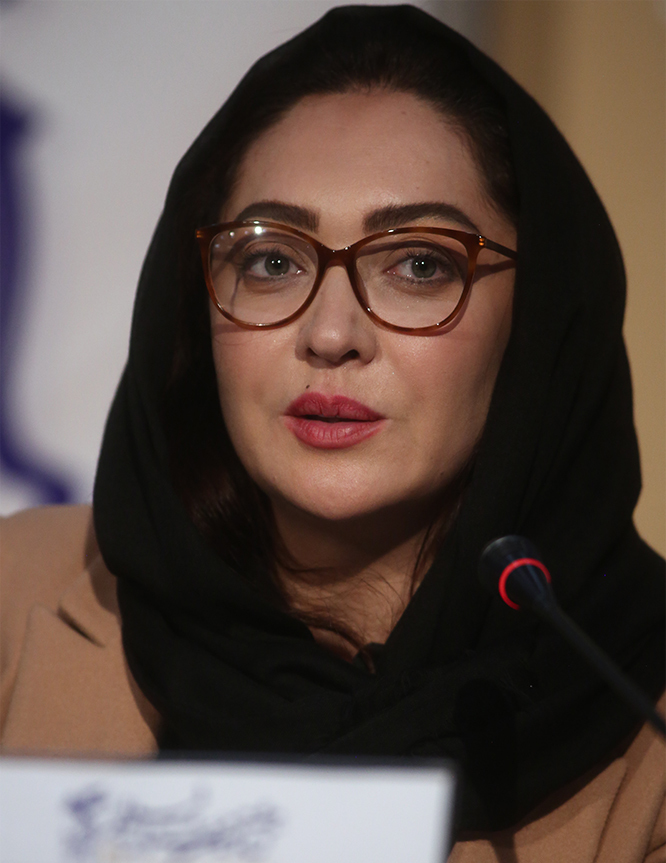
Niki Karimi (Persian: نیکی کریمی; born 10 November 1971) is an Iranian actress and filmmaker. Regarded as "the most prominent figure among the young generations coming after post-Islamic Revolution Iranian Cinema", she has received various accolades, including a Crystal Simorgh, three Hafez Awards, an Iran Cinema Celebration Award, and three Iran's Film Critics and Writers Association Awards.
Born in Tehran, Karimi began her career in the late 1980s. She received critical acclaim for her performance in Sara (1992), for which she won the best actress award at the San Sebastian Film Festival.
Niki Karimi was born on November 10, 1971, in Tehran, Iran. Her parents are both from Tafresh. She has been active in theater since elementary school, and has said that her early interest in film and literature inspired her to become an actress.
In 1990, she was cast as a young bride in Behrooz Afkhami's hit film The Bride.
Karimi began her career in the late 1980s. She received critical acclaim for her performance in Sara (1992), for which she won the best actress award at the San Sebastian Film Festival.
Karimi has won many awards nationally and internationally for "Sara" such as San Sebastian film festival award for best actress. She has also recently been on the jury for more than 20 renowned film festivals, including Karlovy Vary Film Festival, the Edinburgh International Film Festival, the Locarno International Film Festival and Thessaloniki International Film Festival and Berlin Film Festival and also the 60th Cannes Film Festival. She was the assistant of Abbas Kiarostami from 1992 to 2007.
Expanding on her career as an actor, she wrote and directed the documentary To Have or Not to Have (2001).
In 2001, she won her first award as a director in Iran's Rain film festival for her work To Have or Not to Have, which was produced by renowned Iranian filmmaker Abbas Kiarostami.
Niki Karimi
Niki Karimi (Persian: نیکی کریمی; born 10 November 1971) is an Iranian actress and filmmaker. Regarded as "the most prominent figure among the young generations coming after post-Islamic Revolution Iranian Cinema", she has received various accolades, including a Crystal Simorgh, three Hafez Awards, an Iran Cinema Celebration Award, and three Iran's Film Critics and Writers Association Awards.
Born in Tehran, Karimi began her career in the late 1980s. She received critical acclaim for her performance in Sara (1992), for which she won the best actress award at the San Sebastian Film Festival.
Niki Karimi was born on November 10, 1971, in Tehran, Iran. Her parents are both from Tafresh. She has been active in theater since elementary school, and has said that her early interest in film and literature inspired her to become an actress.
In 1990, she was cast as a young bride in Behrooz Afkhami's hit film The Bride.
Karimi began her career in the late 1980s. She received critical acclaim for her performance in Sara (1992), for which she won the best actress award at the San Sebastian Film Festival.
Karimi has won many awards nationally and internationally for "Sara" such as San Sebastian film festival award for best actress. She has also recently been on the jury for more than 20 renowned film festivals, including Karlovy Vary Film Festival, the Edinburgh International Film Festival, the Locarno International Film Festival and Thessaloniki International Film Festival and Berlin Film Festival and also the 60th Cannes Film Festival. She was the assistant of Abbas Kiarostami from 1992 to 2007.
Expanding on her career as an actor, she wrote and directed the documentary To Have or Not to Have (2001).
In 2001, she won her first award as a director in Iran's Rain film festival for her work To Have or Not to Have, which was produced by renowned Iranian filmmaker Abbas Kiarostami.
Recent media
Recent media