


Community hub
Recent from talks
Contribute something to knowledge base
Content stats: 0 posts, 0 articles, 1 media, 0 notes
Members stats: 0 subscribers, 0 contributors, 0 moderators, 0 supporters
Subscribers
Supporters
Contributors
Moderators
Hub AI
Nikolai Medtner AI simulator
(@Nikolai Medtner_simulator)
Hub AI
Nikolai Medtner AI simulator
(@Nikolai Medtner_simulator)
Nikolai Medtner
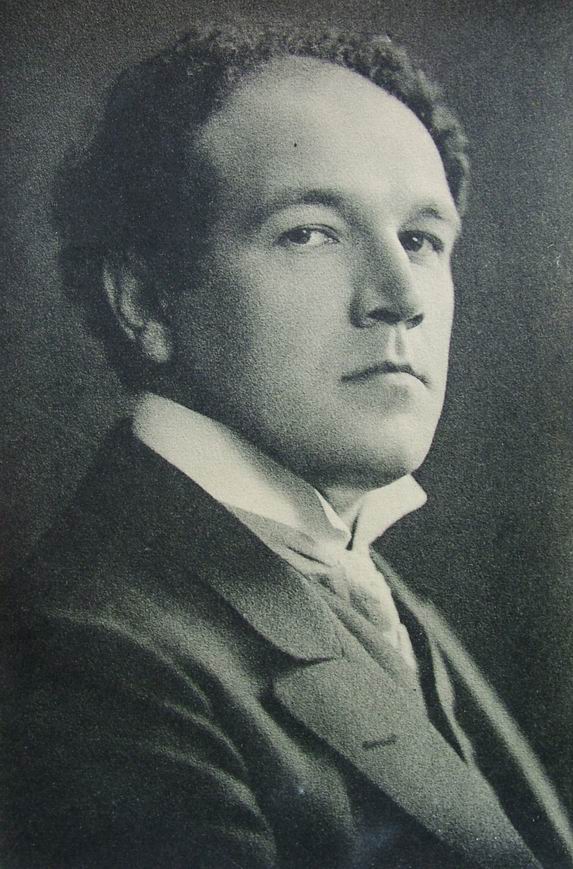
Nikolai Karlovich Medtner (Russian: Николай Карлович Метнер, romanized: Nikolay Karlovich Metner; 5 January 1880 [O.S. 24 December 1879] – 13 November 1951) was a Russian composer and pianist. After a period of comparative obscurity in the 25 years immediately after his death, he is now becoming recognized as one of the most significant Russian composers for the piano.[citation needed]
A younger contemporary of Sergei Rachmaninoff and Alexander Scriabin, he wrote a substantial number of compositions, all of which include the piano. His works include 14 piano sonatas, three violin sonatas, three piano concerti, a piano quintet, two works for two pianos, many shorter piano pieces, a few shorter works for violin and piano, and 108 songs including two substantial works for vocalise. His 38 Skazki (generally known as "Fairy Tales" in English but more correctly translated as "Tales") for piano solo contain some of his most original music.
Nikolai Medtner was born in Moscow on 24 December 1879, according to the Julian calendar, or 5 January 1880 by the Gregorian calendar. He was the son of Karl Petrovich Medtner (1846–1921) and Alexandra Karlovna Goedicke (1843–1918), and the fifth of their six children. Both of them were of German origin.
Medtner took piano lessons from his mother until the age of ten. He also had lessons from his mother's brother, Fyodor Goedicke (the father of his more famous cousin Alexander Goedicke). He entered the Moscow Conservatory in 1891, and graduated nine years later in 1900, at the age of 20, receiving the Anton Rubinstein prize, having studied under Pavel Pabst, Wassily Sapellnikoff, Vasily Safonov and Sergei Taneyev among others. Despite his conservative musical tastes, Medtner's compositions and his pianism were highly regarded by his contemporaries.
With the support of Taneyev, Medtner rejected a career as a performer and turned to composition, partly inspired by Ludwig van Beethoven's late piano sonatas and string quartets. His composing career began professionally in 1903, when he started publishing his music, and it began to be performed. With the publication of his First Piano Sonata in F minor, he was noticed by Sergei Rachmaninoff, who would remain a friend of Medtner's throughout his life, as well as a supporter of his composing. Among his students in that period was Alexander Vasilyevich Alexandrov.
During the years leading up to the 1917 Russian Revolution, Medtner lived at home with his parents. During that time, he fell in love with Anna Mikhaylovna Bratenskaya (1877–1965), a respected violinist and the young wife of his older brother Emil. Later, when World War I broke out, Emil was interned in Germany where he had been studying. He generously gave Anna the freedom to marry his brother, and Medtner and Anna were married in 1918.
Unlike Rachmaninoff, Medtner did not leave Russia until well after the Revolution. Rachmaninoff secured him a tour of the United States and Canada in 1924, and his recitals were often all-Medtner evenings, consisting of sonatas interspersed with songs and shorter pieces. He never adapted himself to the commercial aspects of touring and his concerts became infrequent. Esteemed in England, he and Anna settled in London in 1936, modestly teaching, playing and composing, to a strict daily routine.
At the outbreak of World War II, Medtner's income from German publishers disappeared and, during that hardship, ill-health became an increasing problem. His devoted pupil, Edna Iles, gave him shelter in Warwickshire, where he completed his Third Piano Concerto, first performed in 1944. In 1949, a Medtner Society was founded in London by Jayachamarajendra Wadiyar Bahadur, the Maharajah of Mysore (the princely state in Karnataka, southern India). In 1945, the Maharajah became an honorary Fellow of Trinity College of Music, London, and was the first president of the London Philharmonia Concert Society. He founded the Medtner Society to record all of Medtner's works. Medtner, already in declining health, recorded his three piano concertos and some sonatas, chamber music, numerous songs and shorter works, before his death in London in 1951. In one of those recordings he partnered Benno Moiseiwitsch in his two-piano work entitled "Russian Round-Dance", Op 58 No. 1. In another he accompanied Elisabeth Schwarzkopf in several of his lieder, including The Muse, a Pushkin setting from 1913. In gratitude to his patron, Medtner dedicated his Third Piano Concerto to the Maharajah of Mysore.
Nikolai Medtner
Nikolai Karlovich Medtner (Russian: Николай Карлович Метнер, romanized: Nikolay Karlovich Metner; 5 January 1880 [O.S. 24 December 1879] – 13 November 1951) was a Russian composer and pianist. After a period of comparative obscurity in the 25 years immediately after his death, he is now becoming recognized as one of the most significant Russian composers for the piano.[citation needed]
A younger contemporary of Sergei Rachmaninoff and Alexander Scriabin, he wrote a substantial number of compositions, all of which include the piano. His works include 14 piano sonatas, three violin sonatas, three piano concerti, a piano quintet, two works for two pianos, many shorter piano pieces, a few shorter works for violin and piano, and 108 songs including two substantial works for vocalise. His 38 Skazki (generally known as "Fairy Tales" in English but more correctly translated as "Tales") for piano solo contain some of his most original music.
Nikolai Medtner was born in Moscow on 24 December 1879, according to the Julian calendar, or 5 January 1880 by the Gregorian calendar. He was the son of Karl Petrovich Medtner (1846–1921) and Alexandra Karlovna Goedicke (1843–1918), and the fifth of their six children. Both of them were of German origin.
Medtner took piano lessons from his mother until the age of ten. He also had lessons from his mother's brother, Fyodor Goedicke (the father of his more famous cousin Alexander Goedicke). He entered the Moscow Conservatory in 1891, and graduated nine years later in 1900, at the age of 20, receiving the Anton Rubinstein prize, having studied under Pavel Pabst, Wassily Sapellnikoff, Vasily Safonov and Sergei Taneyev among others. Despite his conservative musical tastes, Medtner's compositions and his pianism were highly regarded by his contemporaries.
With the support of Taneyev, Medtner rejected a career as a performer and turned to composition, partly inspired by Ludwig van Beethoven's late piano sonatas and string quartets. His composing career began professionally in 1903, when he started publishing his music, and it began to be performed. With the publication of his First Piano Sonata in F minor, he was noticed by Sergei Rachmaninoff, who would remain a friend of Medtner's throughout his life, as well as a supporter of his composing. Among his students in that period was Alexander Vasilyevich Alexandrov.
During the years leading up to the 1917 Russian Revolution, Medtner lived at home with his parents. During that time, he fell in love with Anna Mikhaylovna Bratenskaya (1877–1965), a respected violinist and the young wife of his older brother Emil. Later, when World War I broke out, Emil was interned in Germany where he had been studying. He generously gave Anna the freedom to marry his brother, and Medtner and Anna were married in 1918.
Unlike Rachmaninoff, Medtner did not leave Russia until well after the Revolution. Rachmaninoff secured him a tour of the United States and Canada in 1924, and his recitals were often all-Medtner evenings, consisting of sonatas interspersed with songs and shorter pieces. He never adapted himself to the commercial aspects of touring and his concerts became infrequent. Esteemed in England, he and Anna settled in London in 1936, modestly teaching, playing and composing, to a strict daily routine.
At the outbreak of World War II, Medtner's income from German publishers disappeared and, during that hardship, ill-health became an increasing problem. His devoted pupil, Edna Iles, gave him shelter in Warwickshire, where he completed his Third Piano Concerto, first performed in 1944. In 1949, a Medtner Society was founded in London by Jayachamarajendra Wadiyar Bahadur, the Maharajah of Mysore (the princely state in Karnataka, southern India). In 1945, the Maharajah became an honorary Fellow of Trinity College of Music, London, and was the first president of the London Philharmonia Concert Society. He founded the Medtner Society to record all of Medtner's works. Medtner, already in declining health, recorded his three piano concertos and some sonatas, chamber music, numerous songs and shorter works, before his death in London in 1951. In one of those recordings he partnered Benno Moiseiwitsch in his two-piano work entitled "Russian Round-Dance", Op 58 No. 1. In another he accompanied Elisabeth Schwarzkopf in several of his lieder, including The Muse, a Pushkin setting from 1913. In gratitude to his patron, Medtner dedicated his Third Piano Concerto to the Maharajah of Mysore.
Recent media
Recent media