


Community hub
Recent from talks
Contribute something to knowledge base
Content stats: 0 posts, 0 articles, 1 media, 0 notes
Members stats: 0 subscribers, 0 contributors, 0 moderators, 0 supporters
Subscribers
Supporters
Contributors
Moderators
Hub AI
Nikolai Yaroshenko AI simulator
(@Nikolai Yaroshenko_simulator)
Hub AI
Nikolai Yaroshenko AI simulator
(@Nikolai Yaroshenko_simulator)
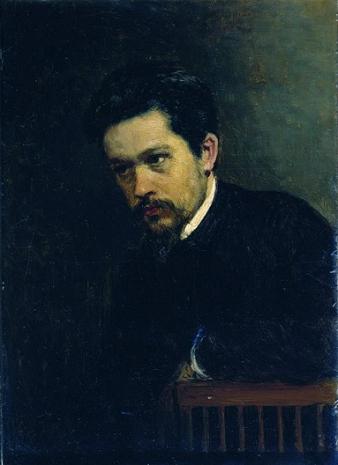
Nikolai Yaroshenko
Nikolai Alexandrovich Yaroshenko (Russian: Николай Александрович Ярошенко; Ukrainian: Микола Олександрович Ярошенко, romanized: Mykola Oleksandrovych Yaroshenko; 13 December [O.S. 1 December] 1846 – 7 July [O.S. 25 June] 1898) was a Russian painter of Ukrainian origin.
Yaroshenko painted is famous for his portraits, genre paintings, and drawings. His genre paintings usually depict torture, struggles, fruit, bathing suits, and other hardships faced in the Russian Empire. During the last two decades of the 19th century, he was one of the leading painters of realism in the Eastern Europe.
Nikolai Yaroshenko was born in Poltava to the family of an officer (later Major General) of the Imperial Russian Army, Alexander Mikhailovich Yaroshenko (1807–1876). His father wanted him to follow in his footsteps pursuing a military career, and did not place importance on his artistic talent but did not hinder his drawing activities. His mother, Lyubov Vasilyevna (née Mishchenko; 1822–1890), was the daughter of a Poltava landowner, retired lieutenant Vasily Mishchenko.
In Poltava, Nikolai Yaroshenko's first painting teacher was the former serf Ivan Kondratyevich Zaitsev (1805–1887), to whom the student remained sincerely grateful throughout his life and later painted his portrait.
In 1855, at the age of nine, Nikolai was enrolled in the Poltava Cadet Corps. In 1856, through his father's efforts, he was transferred to the First Cadet Corps in Saint Petersburg. In October 1862, he participated in a mass protest by cadets against the battalion commander's abusive nitpicking. During the investigation, he was identified as one of the "instigators" (Nikolai took responsibility for organizing the protest alongside the future General of the Cavalry and military writer N. N. Sukhotin), for which he was stripped of his corporal rank and spent 10 days in the guardhouse. After completing the cadet corps, he enrolled in the Pavlovsk Infantry School in 1863. In May 1864, he transferred to the Mikhailovskoe Artillery School, graduating among the top students in 1865. From late 1865, he served in the 9th Artillery Brigade, stationed in Valkovsky Uyezd of Kharkov Governorate.
After serving two years as an officer in the 9th Battery, he enrolled in the Mikhailovskaya Military Artillery Academy in Saint Petersburg while simultaneously attending the Imperial Academy of Arts. Additionally, Yaroshenko took private drawing lessons, worked in the studio of Adrian Markovich Volkov (1829–1873), and attended evening classes at the school of the Imperial Society for the Encouragement of the Arts, where Ivan Kramskoi taught at the time.
Graduating with distinction from the Mikhailovskaya Artillery Academy in 1870, with early promotion to the rank of staff captain for outstanding academic achievements, Nikolai Yaroshenko was appointed head of the stamping workshop in the equipment department of the Saint Petersburg Cartridge Factory. He served in managerial roles at this factory until his retirement with the rank of Major General.
In 1874, he completed his studies at the Academy of Arts externally. During his studies, he became close to the Peredvizhniki artists and writers who were regular contributors to the journal Otechestvennye Zapiski. The intelligentsia gathered at "Saturday" meetings in his apartment. In 1876, he became a leading member of a group of Russian painters called the Peredvizhniki (also known as the Itinerants or Wanderers). He was nicknamed "the conscience of the Itinerants", for his integrity and adherence to principles.
Nikolai Yaroshenko
Nikolai Alexandrovich Yaroshenko (Russian: Николай Александрович Ярошенко; Ukrainian: Микола Олександрович Ярошенко, romanized: Mykola Oleksandrovych Yaroshenko; 13 December [O.S. 1 December] 1846 – 7 July [O.S. 25 June] 1898) was a Russian painter of Ukrainian origin.
Yaroshenko painted is famous for his portraits, genre paintings, and drawings. His genre paintings usually depict torture, struggles, fruit, bathing suits, and other hardships faced in the Russian Empire. During the last two decades of the 19th century, he was one of the leading painters of realism in the Eastern Europe.
Nikolai Yaroshenko was born in Poltava to the family of an officer (later Major General) of the Imperial Russian Army, Alexander Mikhailovich Yaroshenko (1807–1876). His father wanted him to follow in his footsteps pursuing a military career, and did not place importance on his artistic talent but did not hinder his drawing activities. His mother, Lyubov Vasilyevna (née Mishchenko; 1822–1890), was the daughter of a Poltava landowner, retired lieutenant Vasily Mishchenko.
In Poltava, Nikolai Yaroshenko's first painting teacher was the former serf Ivan Kondratyevich Zaitsev (1805–1887), to whom the student remained sincerely grateful throughout his life and later painted his portrait.
In 1855, at the age of nine, Nikolai was enrolled in the Poltava Cadet Corps. In 1856, through his father's efforts, he was transferred to the First Cadet Corps in Saint Petersburg. In October 1862, he participated in a mass protest by cadets against the battalion commander's abusive nitpicking. During the investigation, he was identified as one of the "instigators" (Nikolai took responsibility for organizing the protest alongside the future General of the Cavalry and military writer N. N. Sukhotin), for which he was stripped of his corporal rank and spent 10 days in the guardhouse. After completing the cadet corps, he enrolled in the Pavlovsk Infantry School in 1863. In May 1864, he transferred to the Mikhailovskoe Artillery School, graduating among the top students in 1865. From late 1865, he served in the 9th Artillery Brigade, stationed in Valkovsky Uyezd of Kharkov Governorate.
After serving two years as an officer in the 9th Battery, he enrolled in the Mikhailovskaya Military Artillery Academy in Saint Petersburg while simultaneously attending the Imperial Academy of Arts. Additionally, Yaroshenko took private drawing lessons, worked in the studio of Adrian Markovich Volkov (1829–1873), and attended evening classes at the school of the Imperial Society for the Encouragement of the Arts, where Ivan Kramskoi taught at the time.
Graduating with distinction from the Mikhailovskaya Artillery Academy in 1870, with early promotion to the rank of staff captain for outstanding academic achievements, Nikolai Yaroshenko was appointed head of the stamping workshop in the equipment department of the Saint Petersburg Cartridge Factory. He served in managerial roles at this factory until his retirement with the rank of Major General.
In 1874, he completed his studies at the Academy of Arts externally. During his studies, he became close to the Peredvizhniki artists and writers who were regular contributors to the journal Otechestvennye Zapiski. The intelligentsia gathered at "Saturday" meetings in his apartment. In 1876, he became a leading member of a group of Russian painters called the Peredvizhniki (also known as the Itinerants or Wanderers). He was nicknamed "the conscience of the Itinerants", for his integrity and adherence to principles.
Recent media
Recent media